Ready to ditch the chemicals and try the skincare powerhouse known as African black soap? At first glance, this crumbly, dark bar might look more like a brownie or a rock than a beauty product. But don’t let the appearance fool you; it is packed with skin-loving nutrients.
We researched the science, history, and production methods behind this West African staple to understand why it works so well for acne, eczema, and uneven skin tone. We wanted to separate the authentic, raw options from the mass-produced fakes.
Below, we compare top-rated brands and share our honest reviews of the five best products on the market. We selected these based on ingredient purity, fair trade sourcing, and overall value.
Keep reading to discover which African black soap deserves a spot in your shower routine.
- Comes with three bricks
- Good makeup remover
- Good for hair, body, and face
- Great for psoriasis
- One brick will last months
- Two-month guarantee
- Certified organic and natural
- Good for sensitive skin
- Helps control breakouts and detoxifies
What to Look For
Not all black soaps are created equal. Since this product has gained popularity, many knock-offs have flooded the market. Here is what you need to look for to ensure you get the real deal.
Ingredients
Authentic African black soap has a short ingredient list. You want a mix of locally harvested plants and natural oils.
- Look for: Plantain skins, cocoa pods, palm tree leaves, shea tree bark, palm oil, coconut oil, and shea butter.
- Avoid: Artificial dyes, charcoal (used to fake the color), synthetic fragrances, and harsh preservatives.
Scent
Real black soap has a distinct, earthy smell. It smells like soil and ash. If you find the natural scent too strong, look for a version infused with natural essential oils like lavender or lemongrass. However, if the soap smells like perfume or cologne, it is likely a synthetic imitation.
Color
Despite the name, the soap is rarely jet black. It is usually a multi-colored blend of dark browns, beiges, and blacks. If the bar is uniformly solid black and smooth, it likely contains artificial dyes or charcoal rather than traditional ash.
Texture
This is the biggest giveaway. Traditional soap is soft, pliable, and crumbly. It is not a hard, smooth block like a standard drugstore beauty bar. It often contains bits of plant matter or grain, which can be abrasive.
- Pro Tip: Never rub the raw bar directly on your face. Lather it in your hands first to avoid scratching your skin with tiny plant particles.
Production and Sourcing
Authentic soap is handmade by women in West African villages using centuries-old techniques. It is a labor-intensive process that supports entire communities.
- Fair Trade Matters: Look for “Fair Trade Certified” labels. This ensures the women making the soap are paid a living wage and work in safe conditions (1).
How It’s Made
True African black soap originates in West Africa, primarily Ghana (2). The process is entirely natural and relies on the sun and fire.
First, locally harvested plants (like plantain skins, cocoa pods, and shea tree bark) are sun-dried and roasted in a kettle at a constant temperature. This roasting produces the ash that gives the soap its dark color and cleansing properties.
Next, water and oils (palm, coconut, or shea butter) are added to the ash. The mixture is stirred and heated for 24 hours until it solidifies. Finally, the soap creates is scooped out and left to cure for two weeks before it is ready for use.
Key Ingredients and Their Benefits
One of the main reasons people switch to African black soap is the ingredient profile. It is devoid of sulfates, parabens, and triclosan found in commercial soaps. Instead, it relies on fatty acids and vitamins to heal and protect the skin.

Palm Oil
While often debated, sustainably sourced palm oil is excellent for skin health. It is rich in antioxidants and contains two forms of Vitamin E (tocopherols and tocotrienols), which may help treat acne and eczema. It also contains beta-carotene, an essential nutrient that helps repair cell damage caused by environmental toxins.
Palm Kernel Oil
Distinct from palm oil, this oil comes from the seed (kernel) rather than the fruit’s flesh. It is high in lauric acid, a fatty acid with strong antibacterial and antiviral properties (3). This makes the soap highly effective at killing germs and deeply cleansing pores without stripping the skin dry.
Cocoa Butter
Extracted from the cacao bean, cocoa butter is a powerhouse moisturizer. It creates a protective barrier that holds in moisture while improving skin elasticity (4). It is widely used to reduce the appearance of scars, stretch marks, and fine lines.

Shea Butter
Shea butter is a fat extracted from the nut of the African shea tree. It is non-comedogenic, meaning it won’t clog pores, yet it offers intense hydration. It contains cinnamic acid, which provides anti-inflammatory benefits to calm irritated skin, psoriasis, and dermatitis (5).
FAQs

How Often Should I Use African Black Soap?
If you are new to it, start by using it only two or three times a week. It is a powerful detoxifier and can be drying initially. Once your skin adjusts, you can slowly increase frequency to once daily. Always follow up with a good moisturizer.
Does African Black Soap Expire?
Because it contains no preservatives, it can degrade if not stored properly. However, if you keep it cool and dry, it can last for years. If it develops a moldy smell or slimy film that won’t wash off, toss it.
Why Does My Skin Tingle Or Burn When Using It?
A slight tingling sensation is normal due to the raw ingredients and deep cleansing action. However, if it burns or leaves your skin red and angry, stop using it. You may have an allergy to one of the natural ingredients, or the soap might be too alkaline for your specific skin type.
Can I Use This Soap On My Hair?
Yes, many people use it as a clarifying shampoo to remove product buildup. However, it can be stripping. If you use it on your hair, follow up with a deep conditioner or an apple cider vinegar rinse to balance the pH levels of your scalp.
Product Reviews
We tested textures, scents, and lather quality to bring you the best authentic black soaps available today.
Our Earth’s Secrets Premium Soap
Traditional and Effective
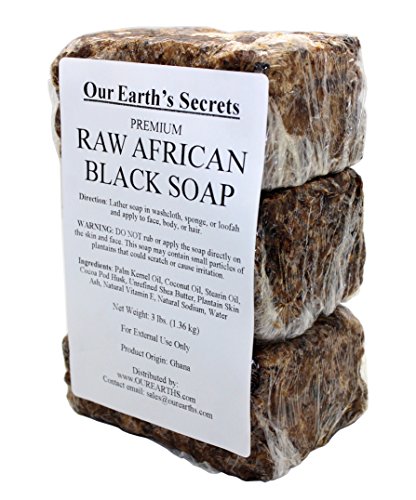
If you want the raw, unfiltered experience, Our Earth’s Secrets is a fantastic choice. Imported directly from Ghana, this soap stays true to traditional recipes. It is crumbly, earthy, and undeniably authentic.
Because it is a raw product, do not rub the block directly on your face. It may contain small bits of cocoa pod or palm husk that can scratch sensitive skin. Instead, break off a small piece, work it into a lather in your hands, and then apply the foam.
You get massive value here: the package includes three 1-pound bricks. Since a little goes a long way, this supply could easily last you six months or more. It is fragrance-free and ideal for tackling acne, oily skin, and dark spots.
Pros
- Huge value (3 lbs total).
- Excellent for deep pore cleansing.
- Versatile: works for face, body, and hair.
Cons
- Can be sticky in humid environments.
- Contains abrasive particles (must lather in hands).
Our Ratings
Allafia Authentic African Black Soap
Best All-In-One African Black Soap
Not everyone likes the mess of a crumbly bar soap. Alaffia solves that problem by liquefying the traditional recipe into a convenient pump bottle. This is a true multitasker: use it as a face cleanser, body wash, shampoo, hand soap, or even for shaving.
The formula relies on unrefined shea butter and West African palm oil. It is gentle enough for the whole family, though you should always patch-test essential oils on babies.
Speaking of oils, Alaffia adds natural scents like Wild Lavender (our favorite) or Eucalyptus Mint. If you are sensitive to smells, they offer an unscented version too. It doesn’t lather as thickly as synthetic soaps, but it cleans deeply without stripping moisture.
Pros
- Mess-free liquid pump bottle.
- Multipurpose (shampoo, shave, wash).
- Available in lovely natural scents.
- Fair trade and community empowerment focused.
Cons
- Thin, watery consistency runs out fast.
- Low lather may take getting used to.
Our Ratings
Wonderfully Natural African Black Soap
Popular Among Influencers

This brand has gained a cult following online, and for good reason. It is a 1-pound block of organic, fair-trade soap that delivers results. The company is proudly African-owned and prioritizes ethical sourcing.
One thing we love is their confidence: they offer a 60-day 100% satisfaction guarantee. If it doesn’t work for you, you aren’t out of pocket.
Users praise this specific bar for fading dark marks and managing flare-ups of psoriasis. Like other raw bars, it should be stored on a draining soap dish to prevent it from dissolving into a mushy puddle.
Pros
- Risk-free purchase (satisfaction guarantee).
- Effective on stubborn skin conditions.
- Long-lasting block.
Cons
- Potent formula can be drying for sensitive skin types.
Our Ratings
Shea Terra Organics African Soap Bar
Great for Added Scent
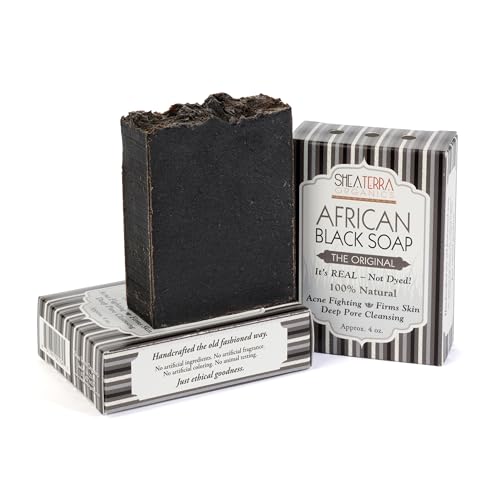
If the giant bricks of soap seem intimidating, Shea Terra offers a more manageable 4.5-ounce bar. It is USDA-certified organic and cruelty-free, making it a safe bet for conscientious shoppers.
This formula differs slightly from the others by including olive oil, which adds an extra layer of hydration. Shea Terra also infuses their bars with interesting natural ingredients like lemongrass or menthe, offering a spa-like experience.
For the best results, the brand suggests lathering the soap on your face and letting it sit for five to 10 minutes like a mask before rinsing. This helps the ingredients penetrate deeply to fight acne bacteria.
Pros
- Manageable bar size (great for travel).
- Includes hydrating olive oil.
- Mom-owned business.
- Certified organic and cruelty-free.
Cons
- Still contains husk pieces (watch for scratching).
Our Ratings
SheaMoisture Bath & Face Skincare Kit
The Whole Shebang
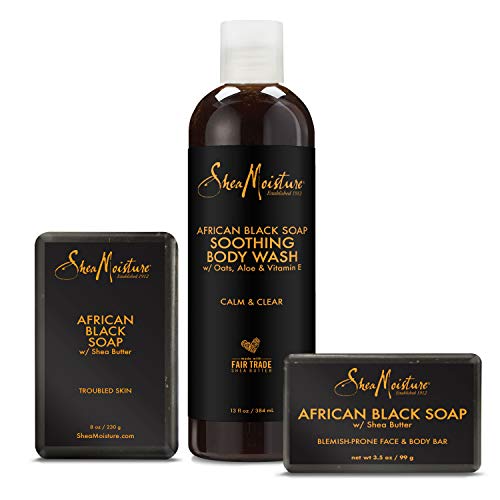
Sometimes a single bar isn’t enough. If you want a complete overhaul of your skincare routine, SheaMoisture’s kit is the way to go. This set is designed specifically for troubled skin, utilizing African black soap as the star ingredient across multiple formats.
The kit generally includes a facial bar, a body bar, and a body wash (configurations can vary). It takes the guesswork out of mixing and matching brands.
SheaMoisture enriches their formula with tea tree oil and willow bark extract, both known for combatting acne. It is processed more than the raw bars on this list, resulting in a smoother texture that is easier to use, though perhaps slightly less “authentic” than the crumbly blocks.
Pros
- Complete system for face and body.
- Smoother texture is easier to handle.
- Added tea tree oil fights breakouts.
Cons
- Scent can feel a bit medicinal or artificial to some.
- Lather is lighter than standard soaps.
Our Ratings
The Final Scrub
African black soap is more than just a trend; it is a time-tested remedy for clearer, healthier skin. Whether you choose a raw, crumbly block or a convenient liquid pump, you are giving your skin a break from harsh synthetic chemicals.
Remember to start slow. This soap is potent, and your skin might need a week or two to adjust. Keep your bar dry between uses, moisturize after every wash, and enjoy the glow.