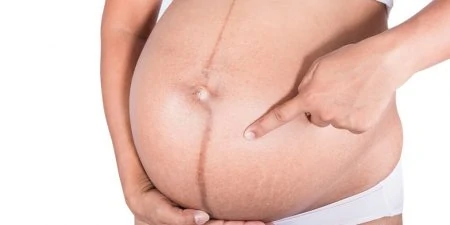
Spotting a dark stripe running down your belly? Don’t panic. You are seeing the linea nigra. It is a completely natural part of pregnancy, and over 75 percent of expecting moms experience it.
This line is simply a sign that your pregnancy hormones are doing their job. It poses no risk to you or your baby.
We will explain exactly what the linea nigra is, why it appears, and when you can expect it to fade.
Key Takeaways
- What it is: The linea nigra is a dark vertical line running down the belly, experienced by about 75% of pregnant women.
- The cause: Increased pregnancy hormones (estrogen) stimulate skin pigment production.
- Timing: It usually becomes visible during the second trimester (around week 20).
- Outlook: You cannot prevent it, but it typically fades a few months after delivery.
What Is The Linea Nigra?
Did You Know?
You have always had a line there, but you likely couldn’t see it.
Before pregnancy, this line running down your abdomen is called the linea alba (Latin for “white line”). It matches your skin tone perfectly. During pregnancy, pigmentation darkens it, transforming it into the linea nigra (Latin for “black line”).
Most women develop this line of pigmentation as their belly expands. Despite the name, it is rarely black. It usually appears as a light or dark brown streak running vertically from your pubic bone to your navel.
In some cases, the line extends upward past the belly button toward the rib cage. It is generally about a quarter to half an inch wide (1).
Anatomically, this line marks the meeting point of your left and right abdominal muscles. As these muscles separate to make room for your growing uterus, the skin stretches and the line becomes more visible.
The linea nigra is a skin change that many women struggle with. This pregnancy line usually vanishes following your baby’s birth. We encourage women to embrace the differences in their bodies as visual representations of their venture into motherhood. If this change is negatively affecting your self-worth, reach out to your obstetrician or mental health professional.

Editor's Note:
Caitlin Goodwin, MSN, RN, CNMAn Old Wives Tale
Can a stripe on your stomach predict your baby’s gender? Folklore says yes. One popular myth claims that if the line stops at your belly button, you are having a girl. If it continues up toward your ribs, you are carrying a boy.
While fun to think about, these are just myths. Your chances are still 50/50 regardless of how long the line is.
What Causes The Linea Nigra?
This dark line is a side effect of normal hormonal shifts. The specific cause is an increase in melanocyte-stimulating hormone.
During pregnancy, your placenta produces high levels of estrogen and progesterone. These hormones stimulate melanocytes, the cells in your skin responsible for producing melanin. Melanin is the pigment that gives skin its color. When production ramps up, your skin darkens.
Other Skin Changes During Pregnancy
The same process that creates the linea nigra causes other skin changes during pregnancy. You might notice:
- Chloasma: Often called “the mask of pregnancy,” this causes dark patches on the face.
- Darker Areolas: The area around your nipples often becomes darker and larger.
- Darker Scars: Existing freckles, moles, and scars may become more pronounced.
These changes are standard and typically temporary. If you notice irregular spots or changes that look suspicious, consult your healthcare provider.
When Does The Linea Nigra Appear?
While hormone levels rise early on, the linea nigra usually becomes visible in the second trimester, often around week 20.
Every body is different. Some women notice it earlier, while others never get it at all. Generally, the line is more pronounced in women with darker skin tones naturally, as they have more active melanocytes. Fair-skinned women may see a very faint line or none at all.
Can I Prevent Linea Nigra?
You cannot stop your hormones from doing their work, so you cannot prevent the linea nigra entirely. It is a biological response to pregnancy.
However, you can take steps to prevent the line from becoming darker than necessary:
- Block the sun: Ultraviolet (UV) rays intensify pigment changes. Use a broad-spectrum pregnancy-safe sunscreen (SPF 30 or higher) whenever you are outside. Wear protective clothing or stay in the shade during peak UV hours (10 a.m. to 4 p.m.).
- Focus on Folic Acid: Some research links folic acid deficiency to increased hyperpigmentation. Ensure your prenatal vitamin covers your daily needs. You can also eat folate-rich foods like leafy greens, oranges, and whole grains (2). This is vital for your baby’s neural development regardless of skin issues.
- Cosmetic cover-ups: If you are taking photos and want the line hidden, pregnancy-safe makeup or concealer works well for temporary coverage.
What To Avoid
Do not use skin bleaching creams. Many contain hydroquinone, which is not proven safe for pregnancy or breastfeeding. These products can carry risks like birth defects or severe skin irritation. Stick to natural remedies and patience.
Does The Linea Nigra Go Away?
Yes, the linea nigra usually fades after delivery. Once your hormone levels regulate, the extra melanin production stops.
For most women, the line disappears within a few months postpartum. However, there are exceptions:
- Breastfeeding: Hormones related to nursing may keep the line visible longer.
- Skin Tone: Women with darker complexions may find the line takes longer to fade or may not disappear completely.
- Sun Exposure: Tanning can make the pigmentation semi-permanent.
If the line persists and bothers you after you have finished breastfeeding, a dermatologist can discuss safe options for lightening the pigment.
Linea Nigra But Never Been Pregnant
Seeing a dark line without being pregnant can be confusing. If the line has always been there, it is likely just your natural pigmentation.
If a dark line appears suddenly and you are not pregnant, consult your doctor. This could signal a hormonal imbalance. Conditions like Polycystic Ovarian Syndrome (PCOS) or Addison’s disease can increase hormone levels that stimulate pigment. If you experience other symptoms like irregular periods, fatigue, or excess hair growth, seek medical advice (3).
FAQs

Is The Linea Nigra Dangerous For The Baby?
No. The linea nigra is purely cosmetic. It is a skin pigment change caused by hormones and has absolutely no negative effect on your baby or your pregnancy health.
Why Is My Belly Button Dark?
The same hormones causing the linea nigra also affect the navel. Because the skin inside and around the belly button is often thinner or folds over, the pigmentation can appear concentrated there. This will also fade postpartum.
Can I Scrub The Linea Nigra Off?
No. The pigmentation is deep within the skin cells, not sitting on the surface like dirt. Scrubbing harshly will only irritate your stretched skin and could cause rashes or scarring. Be gentle with your belly.
A Badge Of Motherhood
The linea nigra might look strange at first, but it is a harmless and temporary part of growing a human. It typically shows up in the second trimester and fades away in the months following birth.
If you want to minimize it, focus on sun protection and a healthy diet rich in folic acid. Otherwise, try to see it as a badge of honor. Your body is doing incredible work, and that line is just one small sign of the miracle happening inside you.