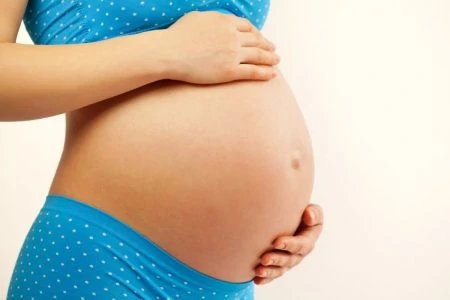
You might wake up one morning, look in the mirror, and realize your lifelong “innie” has suddenly become an “outie.” While it can be a bit startling to see your navel change shape, don’t panic.
Your body goes through wild transformations during pregnancy, and your belly button is right in the center of the action. These changes are almost always normal, temporary, and a sign that your baby is growing just fine.
In this guide, we will cover why the pop happens, when to expect it, and how to deal with sensitivity or piercings until your belly returns to normal.
Key Takeaways
- It is normal: Your belly button “popping” out is a standard result of your uterus expanding and pushing against the abdominal wall.
- Timing varies: Most moms notice this change around the 26-week mark (second or third trimester), though some stay flat the entire time.
- Comfort measures: The pop is usually painless, but friction against clothes can cause irritation; bandages or maternity belts can help.
- Post-birth recovery: These changes are temporary, and your navel will typically return to its pre-pregnancy state after delivery.
Why Your Belly Button Pops Out
Think of your abdomen as a crowded elevator. As your baby grows, the space inside your torso becomes incredibly limited. Your uterus expands rapidly to accommodate the little one, pushing your other organs aside.
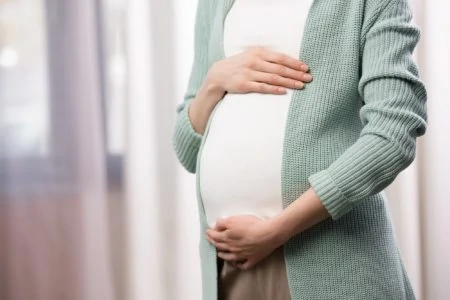
Because there is very little muscle covering your navel area, the pressure from your growing uterus pushes directly against it. Eventually, the only direction for your belly button to go is out (1).
Some moms worry that their skin might stretch to the breaking point. While it might look tight, your skin is highly elastic and knows its limits. Your belly button isn’t going to fall off or burst; it is just reacting to the crowded quarters inside.
When Does the Change Happen?
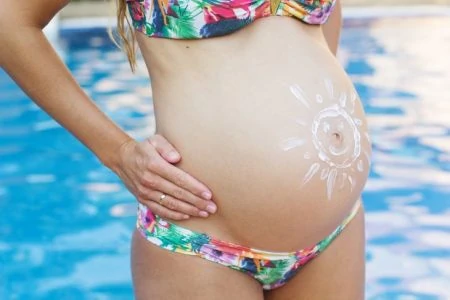
You will likely notice your navel making its move during the second or third trimester. For many women, this happens around the 26th week.
It is often compared to a pop-up turkey timer; once it pops, you know you are getting closer to the main event.
However, not every woman gets an outie. If your belly button stays flat or remains an innie, that is perfectly normal too. It often depends on your pre-pregnancy weight, torso length, and skin elasticity.
Some women even experience the pop in their first pregnancy but not their second. If yours stays put, it doesn’t mean anything is wrong; it just means your body is handling the pressure differently.
Does It Hurt?
For the vast majority of moms, the actual “popping” moment is completely painless. You probably won’t feel it happen at all. The biggest shock is usually visual rather than physical.
However, once it is out, you might deal with some new sensitivity.
Because your navel has spent its life protected as an innie, the skin there isn’t used to rubbing against fabric. When it protrudes, it creates a friction point with your clothes. This can feel raw or irritated, similar to chafing.
Some patients mention slight pain when their belly button pops out. This is usually due to the stretching of the skin in the thinnest region of the abdomen rather than the act of the belly popping out. If there is a sharp, consistent pain in the region, however, it is important to let the doctor know, as it can be referred pain from another organ in the abdomen.

Editor's Note:
Dr. Njoud Jweihan, MDIf the friction bothers you, try these tricks:
- Protective barrier: Place a circular band-aid or a piece of medical tape over the navel to stop the rubbing.
- Support gear: A maternity support belt acts as a buffer and lifts the weight of your belly, easing the pressure (2).
- Soft fabrics: Switch to looser, softer tops that won’t cling to the area.
Common Belly Button Symptoms
Aside from the shape change, you might notice a few other quirks around your midsection. Here is what to look out for:
Itchiness
As your skin stretches to accommodate the baby, it can get dry and itchy. This is especially common around the navel where the skin is thinnest. Keep the area moisturized with pregnancy-safe oils or lotions.
Note: If the itching becomes severe, spreads to your arms and legs, or keeps you up at night, contact your doctor. It could be a sign of a condition called cholestasis or PUPPP.
Umbilical Hernia
Sometimes, the pressure is strong enough to create a small hole in the abdominal muscle, allowing tissue to bulge through. This is called an umbilical hernia.
If you notice a soft lump near your navel that gets bigger when you cough, sneeze, or bend over, this might be the culprit. It can cause a dull ache or tenderness.
While scary sounding, many hernias resolve on their own after birth. However, you should mention it to your doctor to monitor it. If you feel sudden, severe pain or the lump becomes hard and discolored, seek medical help immediately (3).
Discoloration and Lines
You might see a dark ring forming around your belly button. This is usually due to skin pigmentation changes caused by hormonal surges.
You may also develop a Linea Nigra. This is a dark vertical line running from your pubic bone up through your navel. It is caused by increased melanin production. It is completely harmless, has nothing to do with the health of the baby, and typically fades a few months after delivery.
Can You Prevent the Pop?
The short answer is no. You cannot physically stop your belly button from popping out if your uterus pushes it there.
This is a structural change caused by internal pressure, not something you can control with exercises or creams. The best approach is to embrace it as a temporary badge of honor. It proves your body is doing exactly what it needs to do to grow a human.
If you feel self-conscious about the “button” showing through your shirt, try layering. Wearing a tight nursing tank or belly band under your main shirt can smooth out the silhouette.
Belly Button Piercings and Pregnancy
If you have a navel piercing, you might be wondering if you need to retire it. The answer depends on your body and your jewelry.
As your skin stretches, a standard metal barbell can become uncomfortable. It may pull, snag, or even migrate as the hole stretches, leaving a larger scar. If you feel a pulling sensation or the skin looks red and angry, it is time to take it out.
However, you don’t necessarily have to let the hole close up. You can swap your metal jewelry for a pregnancy piercing retainer. These are made of flexible PTFE (a type of medical-grade plastic) that bends and flexes with your growing bump.
Safety Tips:
- Hygiene is key: Your immune system is suppressed during pregnancy, making you more prone to infection. Keep the area clean.
- Listen to your doctor: If your provider asks you to remove it for an ultrasound or birth, follow their lead (4).
- No new holes: Avoid getting a new piercing while pregnant. The healing process is slower, and the infection risk is higher.
The Gender Prediction Myth
You will hear plenty of old wives’ tales, and one of the most popular is that your belly button shape predicts the gender. The rumor says an “outie” means a boy and an “innie” means a girl (or vice versa, depending on who you ask).
There is zero scientific evidence to support this. The shape of your navel is determined by your abdominal pressure and skin elasticity, not the baby’s gender. The only way to know for sure is through an ultrasound or blood test.
FAQs

Is My Belly Button Connected to My Fetus?
No, your belly button is not connected to your baby. It is essentially a scar from where your own umbilical cord was attached to your mother. Your baby is connected to the placenta via their own umbilical cord, which is separate from your navel.

Do All Belly Buttons Pop When Pregnant?
No, not everyone gets an outie. Whether yours pops depends on how much room you have in your torso, the position of your uterus, and the elasticity of your skin. Some women retain a shallow innie or a completely flat navel throughout the entire pregnancy.

What Is the Lump Inside My Belly Button?
A lump could indicate an umbilical hernia, which happens when tissue pushes through a weak spot in the abdominal wall. It is common during pregnancy due to high internal pressure. If the lump is painful, discolored, or hard, consult your doctor immediately.

What Happens If I Don’t Clean My Belly Button?
Ignoring hygiene here can lead to a buildup of sweat, lint, and dead skin, creating a breeding ground for bacteria or yeast. This can cause a foul smell or a minor infection. Gently wash the area with soap and water during your shower, especially if it has become an outie and is exposed to more friction.

Do Belly Buttons Go Back In After Pregnancy?
Yes, in most cases, your belly button will return to its pre-pregnancy “innie” state a few months after delivery as the uterus shrinks and the skin tightens. However, it may look slightly different or a bit more “stretched” than it did before, which is completely normal.

Is It Safe to Push My Belly Button Back In?
You can gently press on it, but it won’t stay there. Because the protrusion is caused by the physical volume of your uterus pushing outward, “pushing it back” won’t work until the baby is born and the uterus shrinks back down. Avoid taping it down tightly, as this can irritate the skin.
The Bottom Line
Pregnancy is a wild journey, and your changing belly button is just one small part of the ride. While an “outie” might look strange or feel sensitive, remember that it is a temporary side effect of the amazing work your body is doing.
Unless you have pain associated with a hernia or signs of infection, there is no need to worry. Wear soft clothes, moisturize the skin, and enjoy the countdown to meeting your little one.