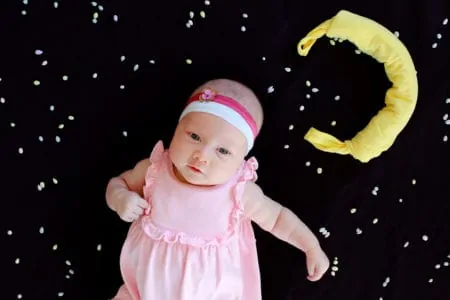
Having a baby is one of the happiest times of life. All the excitement spurs many parents to look for names that mean joy, and there’s no shortage of joyful names, as happiness is universal. We’ve gathered the world’s cutest titles in one place for your viewing pleasure.
Within this extensive roundup, you’ll find names, origins, meanings, fun facts, and more. Whether you’re looking for an exotic gem or a timeless American classic, we’ve got your back. We are “overjoyed” to provide you with a variety of cheery names for your gorgeous girl or boy.
100 Cheerful Names Meaning Joy
Find the best names that mean joy for your blissful blessing on the way.
Abigail
In the Bible, Abigail is the wife of King David, famous for her brains and beauty. Abigail is popular in America, but nearly every language has a variation of this title. Try Abigail if you’re looking for globally famous girl names that mean joy. Cute nicknames include Abby and Gail.
- Origin: Hebrew
- Meaning: My father’s joy
- Pronunciation: AH-bih-GAIL
- Variations: Abagail, Abigael
- Namesakes: Abigail Breslin, an American actress known for her role in Little Miss Sunshine.
- Popularity: In 2003, Abigail was the 6th most popular American girl’s name.
Ada
Ada will make you smile if you love palindrome names. There’s no shortage of impressive namesakes, including Ada Lovelace, a world-famous mathematician. Ada was famous in the 1900s but fell off American name charts until 2004. Ada will make the cut if you want a fun alternative to Ava.
- Origin: German
- Meaning: Noble, Happy
- Pronunciation: AY-dah, AH-dah
- Namesakes: Ada Negri, an Italian writer and poet.
- Popularity: In 2021, Ada was among the top 180 names for American girls.
Aine
In Irish mythology, Aine is the goddess of summer, optimal for the girl born in this season. Aine is also associated with agriculture, crops, and animals, bringing to mind a merry milkmaid. Aine is among Ireland’s favorite girl names but is rare in the U.S., possibly because of its deceiving pronunciation. Adorable nicknames for your little goddess include Anni (AH-nee).
- Origin: Irish, Celtic
- Meaning: Happiness, brightness
- Pronunciation: AHN-yah, AYN
- Namesakes: Aine Lawlor, an Irish radio broadcaster.
- Popularity: Aine is popular in Ireland but rare in the United States.
Alan
The earliest recorded usage of Alan was in 5th-century France, where it took Europe by storm. Alternate meanings include “handsome,” describing the boy with a sunny disposition. Nicknames for Alan are few, but Al is always a good choice. Perhaps your boy will be blessed with a positive outlook on life.
- Origin: Gaelic, German
- Meaning: Cheerful
- Pronunciation: AL-uhn
- Variations: Alann, Allen
- Namesakes: Alan Walker, a Norwegian music producer known for his hit song Faded.
- Popularity: Alan is popular in Spain, Ireland, Poland, and America.
Alanis
Moody singer Alanis Morissette gave this title a sad reputation. Unlike its namesake, Alanis represents joy and laughter. Many view Alanis as the female variation of Alan, making it an unexpected way to honor a family member. Cute nicknames include Lana.
- Origin: Greek, Hawaiian
- Meaning: Precious, cheerful
- Pronunciation: uh-LAN-iss, uh-LAH-niss
- Variations: Alaniss
- Namesakes: Alanis Obomsawin, a Canadian filmmaker.
- Popularity: Alanis is a globally unique name.
Allegra
Musical parents will recognize Allegra as a joyous high-tempo beat. Famous poet Lord Byron chose Allegra for his intelligent daughter, giving it a boost of fame. Allegra is a fabulous pick for the girl born with a song in her heart. You can call your lively gal Allie for short.
- Origin: Italian
- Meaning: Joyous
- Pronunciation: ah-LEG-rah
- Namesakes: Allegra Kent, an American ballet dancer, actress, and columnist.
- Popularity: Allegra is a unique name worldwide.
Ancel
With little recorded information, Ancel is one of the rarest boy names that mean joy. In German culture, Ancel means “God,” giving this title a spiritual air. With a unique title like Ancel, your boy will be the star of the show. You’ll constantly be reminded just how fortunate you are to have your little blessing.
- Origin: Yiddish, German
- Meaning: Fortunate, blessed, happy
- Pronunciation: an-SELL
- Popularity: Ancel is a globally unique name that doesn’t appear on name charts.
Anit
Anit describes the joy you felt when you learned you were expecting. Influenced by Hindu culture, Anit has an adorable appearance that will leave people in awe. Alternate meanings include “unguided one,” perfect for the free-spirited darling. May your little Anit always know unlimited happiness, as his name suggests.
- Origin: Indian
- Meaning: Unending joy, infinite happiness
- Pronunciation: uh-NEET
- Popularity: Anit is popular in India but rare in the U.S.
Aoife
In Irish mythology, Aoife is hailed as a powerful and beautiful woman warrior. Aoife has many Irish namesakes but has yet to catch on in the United States. With similarities to Eva, Aoife will blend in anywhere she goes. There’s no better name for the girl who brings joy to the world.
- Origin: Hebrew, Irish
- Meaning: Bringing joy
- Pronunciation: EE-fah
- Namesakes: Aoife Hoey, an Irish Olympic bobsledder.
- Popularity: Aoife is popular in Ireland but rare elsewhere.
Arcadia
Arcadia describes a land of peace and joy. Alternate meanings include “pastoral simplicity and happiness,” giving this title a spiritual aspect. Arcadia will always remind you that the smallest things bring the most peace. Cool nicknames include Cadi.
- Origin: Greek, Latin, Spanish
- Meaning: Place of contentment
- Pronunciation: ar-KAY-dee-uh
- Popularity: Arcadia is a globally unique title.
Arnan
Biblical Arnan was a descendant of King David, making him a distant relative of Jesus. Parents who want cool spiritual names will find Arnan appealing. Alternate meanings include “quick,” a perfect option for your little track star.
- Origin: Hebrew
- Meaning: Joyful
- Pronunciation: AR-nehn
Asher
In the Bible, Asher was a son of Jacob and the name of a prominent tribe in Israel. Asher was known for being prosperous, particularly in olive oil and baby boys. Asher is unisex but rarely used for little girls. Alternate meanings include “fortunate” and “blessed.”
- Origin: Hebrew
- Meaning: Happy one
- Pronunciation: ASH-er
- Namesakes: Asher Benjamin, an American architect.
- Popularity: In 2021, Asher was among the top 25 names for boys in the U.S.
Ayo
Ayo may be rare now, but anything is possible in a world that keeps names short and sweet. In slang, Ayo means “come on!” Ayo is gender-neutral and equally as famous for boys and girls. With multiple pronunciations, Ayo is an excellent option for parents who value flexibility.
- Origin: Nigerian, Yoruba
- Meaning: Joy
- Pronunciation: EYE-oh, AY-oh
- Namesakes: Ayo Bankole, a Nigerian composer.
- Popularity: Ayo is a popular title in Africa but rare elsewhere.
Bahjat
Bahjat is an unexpected nature name used to describe beautiful plants. What a fantastic option for your future botanist. Though Bahjat is unknown in Western culture, it has a prominent namesake in Libyan singer Bahjat Etorjman. Alternate meanings include “delight” and “splendor.”
- Origin: Arabic
- Meaning: Happiness
- Pronunciation: bah-JAHT
- Namesakes: Bahjat Talhouni, the 14th Prime Minister of Jordan.
- Popularity: Bahjat is a unique name worldwide.
Bayo
With its royal interpretation, Bayo is fit for a king. This playful African name stems from a clan of Madinkan people. Alternative interpretations include “to find joy,” a dream every parent has for their child. Your little one will hold his head high with this regal title.
- Origin: African, Nigerian
- Meaning: The crown meets joy
- Pronunciation: BAY-oh, BAH-yo
Beatrice
Beatrice was a popular choice for the highborn class in the late 1800s to 1934. Celebrities like Queen Victoria and Paul McCartney paved the way by choosing Beatrice for their daughters. Fictional characters include a protagonist in Shakespeare’s Much Ado About Nothing. Take a cue from the Ramona Quimby books and call your daughter Beezus for short.
- Origin: French, Latin, Italian
- Meaning: She who brings joy
- Pronunciation: BEE-uh-triss
- Variations: Beatrix
- Namesakes: Beatrice Hinkle, an American writer and feminist.
- Popularity: Beatrice peaked in 1910 but remained one of America’s top 600 names for girls.
Behati
An exotic variation of Beatrice, Behati is ready to steal the spotlight. Adam Levine’s beautiful wife made Behati well-known in America, but it has yet to take off. Perhaps your sweet daughter will make Behati high-fashion. You can call your little sunshine Bea for short.
- Origin: African
- Meaning: Blessed, she who brings happiness
- Pronunciation: bee-HAH-tee
- Namesakes: Behati Prinsloo, a Namibian model.
- Popularity: Behati is a globally unique name that doesn’t appear on name charts.
Bliss
Bliss describes a state of utter joy and peace. Many religions use Bliss when referring to meditation, giving this title hippy vibes. Alternate meanings include “intense happiness,” a great sentiment for any little one. Bliss is often used as a middle name but is rarely seen as a first name.
- Origin: British
- Meaning: Joy, cheer
- Pronunciation: BLISS
- Namesakes: Bliss Perry, an American literary critic and writer.
Bonnie
In Scotland, Bonnie is a pet name meaning “pretty,” giving this title a hint of whimsy. In America, Bonnie is associated with Bonnie and Clyde, a crime-loving couple from the Great Depression era. With this multifaceted title, your girl will always know she’s a beautiful badass.
- Origin: Scottish
- Meaning: Cheerful
- Pronunciation: BAH-nee
- Variations: Bonny
- Namesakes: Bonnie Bernstein, an American sportscaster.
- Popularity: In 2021, Bonnie was among the top 500 names for girls in the U.S.
Caia
In Latin mythology, Caia is the goddess of fire, healing, and women. What a fabulous legacy for the girl who breaks glass ceilings. Caia is the feminine form of Caius, a popular name in ancient Rome. Your sweetheart will light up the world with her fabulous personality.
- Origin: Latin
- Meaning: To rejoice, happy
- Pronunciation: KYE-uh
- Variations: Caiah
- Popularity: Caia is a unique name worldwide.
Carol
Get on your dancing shoes; Carol is on her way. If you want festive joy names, you’ll love Carol, a popular name for Christmas babies. Carol is technically unisex, but it became obsolete for boys in 1965. Cute nicknames include Carrie.
- Origin: British
- Meaning: Joyful song
- Pronunciation: KAIR-ohl
- Variations: Carole
- Namesakes: Carol Burnett, an American actress known for her role in Annie.
- Popularity: Carol fell off American name charts in 2006.
Cayo
From the Latin title Caius, Cayo is jubilant and jolly. Cayo doesn’t have many recorded namesakes, but your boy can be the hero of his own adventure. Adorable nicknames include Cai (KYE). In a world where Kyle reigns supreme, Cayo may be a refreshing alternative.
- Origin: Spanish, Latin
- Meaning: Rejoice
- Pronunciation: KYE-yoh
- Popularity: Cayo is a unique name worldwide.
Chara
Your little girl was destined to be yours, so why not give her a name written in the stars? Chara is the second brightest star in the Canes Venatici constellation and the most likely to house extraterrestrial beings. The Chara star represents hunting dogs, perfect for the little outdoorswoman. Alternate meanings include “glory.”
- Origin: Spanish, Greek
- Meaning: Joy
- Pronunciation: KAR-uh
- Variations: Cara
- Namesakes: Chara Dimitriou, a Greek football player.
- Popularity: Chara is popular in Greece but rare in the U.S.
Dayo
Many will associate Dayo with The Banana Boat Song, also known as Day-O. Dayo is gender-neutral but more common for African boys. Rules are meant to be broken, so Dayo could also be a popular girl’s name. You can’t help but feel cheerful when you look at your little Dayo.
- Origin: Nigerian
- Meaning: Joy arrives
- Pronunciation: DAY-oh
- Namesakes: Dayo Ade, a Canadian actor known for his role in Cracked.
- Popularity: Dayo is popular in Africa but rare in the United States.
Delicia
If you’re looking for a sweet alternative to Felicia, add Delicia to your list of possibilities. Delicia was first used to describe Roman children but now qualifies as a beautifully rare title. Alternative meanings include “pleasure,” perfect for the fun-loving girl. You can call your little heroine Dee for short.
- Origin: Latin, Roman, Spanish
- Meaning: Delight
- Pronunciation: dee-LEE-cee-ah, dee-LEE-shah
- Popularity: Delicia is a globally unique name.
Delilah
In the Bible, Delilah was tasked with seducing Samson into telling the secret of his strength. With her beauty, Delilah was successful in her mission, earning her a bad-girl reputation. Judging by Delilah’s popularity, most people overlook this slight error in judgment. Positive pop culture references include the song Hey There Delilah by the Plain White T’s.
- Origin: Hebrew, Arabic
- Meaning: Delight
- Pronunciation: duh-LYE-luh
- Namesakes: Delilah Luke, an American radio star and host of The Delilah Show.
- Popularity: In 2021, Delilah was among the top 60 names for American girls.
Dita
Parents who love vintage names will be elated to name their girl Dita. A fancier version of Edith, Dita describes a girl victorious in battle. Dita is commonly associated with Dita von Teese, an American burlesque dancer, and model. Alternate meanings include “prosperous.”
- Origin: Spanish
- Meaning: Happy warfare
- Pronunciation: DEE-tah
- Namesakes: Dita de Leon, a Puerto Rican actress known for her role in Bite Me.
Duscha
Duscha is a common Russian surname rarely seen as a first name. Notable women who claim Duscha as their last name include Ina Duscha, an Austrian film actress. In Poland, Duscha means “soul,” perfectly describing the lovebug that fills your soul with joy. If you want distinctly European joyful names, try Duscha on for size.
- Origin: Russian, German, Polish
- Meaning: Happy
- Pronunciation: doo-SHAH, DUSK-ah
- Popularity: Duscha is a globally unique title.
Eden
In the Bible, the Garden of Eden was known as a perfect place where ultimate happiness existed. Eden has made American name charts since 1900 but may have originated with the Puritans. Stars like Beverly Adams took a note from history by choosing Eden for their little girls. Eden is perfect for families who want biblical names with a rich history.
- Origin: Hebrew
- Meaning: Place of delight
- Pronunciation: EE-dehn
- Namesakes: Eden Sher, an American actress known for her role in The Middle.
- Popularity: Eden peaked in 2021 when it ranked #121 on American girl name charts.
Edith
Edith was a popular title among European queens, making your daughter a royal success. Teddy Roosevelt’s wife boosted Edith’s popularity in the early 1900s, as presidential names are always cool. Actress Cate Blanchett gave Edith new life when she chose it for her daughter in 2015. Stunning nicknames include Edie, made famous by actress Edie Falco.
- Origin: English, German, Scandinavian
- Meaning: Happy, rich
- Pronunciation: EE-dith
- Variations: Edithe
- Namesakes: Edith Falco, an American actress known for her role in Nurse Jackie.
- Popularity: Edith peaked in the early 1900s but remained one of America’s top 500 girl names.
Edna
Literature loves Edna, with female authors like Edna O’Brien bearing this title. Fans of The Incredibles film will associate Edna with Edna Mode, a sassy, petite character. Alternate meanings include “rejuvenation,” perfect for the girl who is a breath of fresh air.
- Origin: Hebrew
- Meaning: Delight
- Pronunciation: ED-nuh
- Namesakes: Edna St. Vincent Millay, an American poet.
- Popularity: Edna fell off American name charts in 1991.
Edwyn
A spunkier take on Edward, Edwyn is a rare gem waiting to be uncovered. Edwyn refers to a good friend who always brightens your day. Alternate meanings include “wealthy friend,” something no little boy would turn down. Edwyn is edgy on its own, but you can call your little man Eddy or Ed for short.
- Origin: German
- Meaning: Happy friend
- Pronunciation: ED-win
- Variations: Edwin
- Popularity: Edwyn is a globally unique name that doesn’t appear on name charts.
Faegan
If you’re looking for joyful names with Irish roots, you’ll be smitten with Faegan. This title joins the fad of surnames that make gorgeous first names. Other meanings include “energetic child,” a trait many children embody. With Faegan, every day will be a celebration.
- Origin: English, Irish
- Meaning: Joyful
- Pronunciation: FAH-gihn
- Variations: Fagan, Fagin, Fagen
- Popularity: Faegan is a unique name worldwide.
Fane
Fane was a Middle English pet name for an exceedingly happy little man. Though Fane is currently unknown, it has similarities to Dane and Zane, both popular with American boys. Some say Fane may stem from Stephen, which means “crown.” Perhaps your little man’s optimism will be what makes him royally famous.
- Origin: English
- Meaning: One who is very happy
- Pronunciation: FAYN
- Namesakes: Fane Flaws, a New Zealand artist and musician.
Farai
Happiness is never far with Farai by your side. This globally unique title originated in South Africa with the Shona people. Christian parents will adore Farai, as many believers use the word “rejoice” in spiritual settings. Westernize this exotic title by calling your little animal Ry for short.
- Origin: African
- Meaning: Rejoice, happy
- Pronunciation: fuh-RYE
- Popularity: Farai is a unique name worldwide.
Farrah
Millennials will associate this title with Farrah Abrahams from Teen Mom. With Arabic roots, Farrah is well-traveled. Farrah peaked in 1977 when Farrah Fawcett’s star was at an all-time high. 70s trends are coming back; who’s to say Farrah won’t be the next to climb the charts?
- Origin: Arabic
- Meaning: Happiness
- Pronunciation: FAIR-ah
- Variations: Farah
- Namesakes: Farrah Fawcett, an American actress known for her role in Charlie’s Angels.
- Popularity: Farrah fell off American name charts in 2016.
Felicity
90s babies will remember Felicity as a colonial American Girl doll. The makers of this character were historically accurate, as Felicity was once considered a Puritan virtue name. Felicity’s long-lasting fame may be due to a popular TV show by the same name. Cute monikers include Lissy.
- Origin: Latin
- Meaning: Good fortune, happy
- Pronunciation: fuh-LIH-sih-tee
- Namesakes: Felicity Huffman, an American actress known for her role in Desperate Housewives.
- Popularity: Felicity peaked in 2017 but remained one of America’s top 450 names for girls.
Felix
Felix is experiencing a boost in popularity that we haven’t seen since the early 1900s. Though Felix is trendy, it’s nothing new under the sun. Roman Emperor Sulla claimed Felix as his moniker after a woman prophesied he would bring luck to his country. With its deep historical background and many pop culture references, Felix will be famous for a long time.
- Origin: Latin
- Meaning: Happy, fortunate
- Pronunciation: FEE-liks
- Namesakes: Felix Mendelssohn, a German composer.
- Popularity: In 2021, Felix was among the top 195 names for American boys.
Freyda
Freyda is popular in Jewish circles but rare elsewhere. With a simple meaning of “joy,” Freyda is among straightforward joyful names. Freyda is a terrific choice for parents who want to honor their Jewish heritage in a merry way.
- Origin: Yiddish
- Meaning: Joy
- Pronunciation: FRAY-dah
- Variations: Frayda
Gale
If you’re looking for nonbinary names meaning joy, Gale will catch your eye. When used for men, Gale means “happy” or “jolly.” Americans thought Gale was strictly female, but the Hunger Games made it cool for boys again. Gale is also a strong wind, giving this title unexpected nature vibes.
- Origin: English, Greek
- Meaning: Jovial
- Pronunciation: GAYL
- Variations: Gail
- Namesakes: Gale Sayers, an American football player.
- Popularity: Gale fell off American name charts in the 1970s.
Gay
Gay is perhaps the most apparent joyful name, with a long history of representing happiness. Gay is unisex, but it was more common for girls, especially in the 1940s. Many used Gay as a moniker for names like Gaylord, giving this title sophistication. Gay keeps things short and sweet, just like your bundle of joy.
- Origin: French
- Meaning: GAY
- Pronunciation: GAY, GYE
- Namesakes: Gay Talese, an American author and journalist.
- Popularity: Gay fell off American name charts in 1969.
Geila
Geila is almost entirely off the books, giving your girl all the attention. Like many Hebrew names, Geila has a lively pronunciation. Like Sheila, Geila is familiar enough to fit in wherever she goes. Adorable nicknames include Gigi.
- Origin: Hebrew
- Meaning: Joy
- Pronunciation: GEE-lah
- Variations: Geela
Gil
For many years, Gil has been a moniker for Gilbert, but in Hebrew culture, it stands alone. Gil is commonly associated with Gil (Gilbert) Blythe from the hit book Anne of Green Gables. Alternate meanings include “bright promise,” perfect for the rainbow baby. Stay off the radar by using Gil’s standard pronunciation, or add pizazz by saying it the Hebrew way.
- Origin: Hebrew, Spanish
- Meaning: Joy
- Pronunciation: GIHL, GEEL
- Namesakes: Gil Birmingham, an American actor known for his role in Yellowstone.
- Popularity: Gil fell off American name charts in 1971.
Gili
We’ve got you covered if you’re looking for an exotic alternative to Jillian. Gili is a perfect option for parents who see their daughter as the apple of their eye. Life with little ones is full of intense joy, so why not name your daughter Gili? Gili already sounds like a nickname, but you can call your girl Li for short.
- Origin: Hebrew
- Meaning: My joy
- Pronunciation: GEE-lee
- Popularity: Gili is a unique name worldwide.
Gioconda
Art enthusiasts will recognize Gioconda as the alternate name for the Mona Lisa painting. Sadly the painting’s muse never gained possession of her portrait, as da Vinci kept it for himself. Gioconda is a popular name in Italy, where many musicians claim the title as their own. It’ll be no surprise when your little Gioconda goes through crayons like she’s the next Picasso.
- Origin: Italian
- Meaning: Delight
- Pronunciation: gee-oh-KAN-dah
- Namesakes: Gioconda Vessichelli, an Italian opera singer.
- Popularity: Gioconda is a globally unique title.
Gwyneth
Gwyneth is a variant of Gwynedd, a Welsh county known for having diverse tribes. Despite its beauty, Gwyneth is rare, making it onto American name charts three times since 1900. Notable namesakes include Gwyneth Lewis, a Welsh poet. Common nicknames include Gwen or Gwyn.
- Origin: Welsh
- Meaning: Happy
- Pronunciation: GWEH-neth
- Variations: Gwenyth
- Namesakes: Gwyneth Paltrow, an American actress known for her role in Iron Man.
- Popularity: Gwyneth fell off American name charts in 2013.
Halona
Halona is one of the most unique names that mean joy, as it doesn’t appear on name charts. In Hawaii, Halona is another word for “lookout,” and the name of many gorgeous beach spots. Your little one will remind you to always search for the good things in life. Call your girl Lona (LOO-nah) for short.
- Origin: Native American
- Meaning: Happy fortune
- Pronunciation: ha-LOO-nah, ha-LOH-nah
- Namesakes: Halona King, an American indie singer.
- Popularity: Halona is a unique name worldwide.
Helier
If you have ties to New Jersey, you’ll love Helier, Jersey’s patron saint. Saint Helier was a hermit who rarely left his home, an odd contrast to the name’s cheerful meaning. Nonetheless, Helier is remembered for his generosity and strong faith. Perhaps your little cherub will also find home delightful.
- Origin: Latin
- Meaning: Cheerful
- Pronunciation: HEL-ee-er, HEL-yer
Hillary
Hillary’s most prominent namesake is Hillary Rodham Clinton, the first female to run for president in the United States. Though this title may evoke mixed feelings, no one can deny it has girl power. Hillary hasn’t been popular in the U.S. since 2008, but your girl could be the one to make it cool. Neutral nicknames include Ree.
- Origin: Latin, Greek
- Meaning: Cheerful, happy
- Pronunciation: HILL-uh-ree
- Variations: Hilary, Hilarie
- Namesakes: Hillary Scott, an American singer and member of the band Lady A.
- Popularity: Hillary fell off the American name charts in 2008.
Ike
U.S. President Dwight Eisenhower made Ike a household name by claiming it as his moniker. Presidents are known for starting fads, and it’s no wonder that Ike was at its best during the 1950s. In a fast-paced world, short titles are all the rage. Perhaps Ike will be among the top three-letter joyful names.
- Origin: Hebrew
- Meaning: Laughter
- Pronunciation: EYEK
- Popularity: Ike fell off American name charts in 1957.
Ilaria
This exotic version of Hilary has taken Italy for the ride of its life. In 2006, Ilaria was among the top 10 names for Italian girls. Though Ilaria isn’t as famous in America, Alec Baldwin honored his wife’s heritage by choosing it for his daughter. Ilaria is a fabulous option for parents who want their daughters to have a high-fashion Italian title. Your little Ilaria will be strutting the catwalk in no time.
- Origin: Italian
- Meaning: Happy, cheerful
- Pronunciation: ee-LAR-ee-ah
- Namesakes: Ilaria Occhini, an Italian actress known for her role in Loose Cannons.
- Popularity: Ilaria is popular in Italy but rare elsewhere.
Isaac
In the Bible, Isaac was born to the patriarch Abraham and his wife, Sarah. When his mother learned she was to give birth in her old age, she burst into laughter. Isaac is popular in Judaism, Christianity, and Islam, making this title multicultural. Isaac is a fabulous option for parents who hope their son doesn’t take life too seriously.
- Origin: Hebrew
- Meaning: Laughter
- Pronunciation: EYE-zik
- Variations: Isac, Isak
- Namesakes: Isaac Stern, an American violinist.
- Popularity: In 2013, Isaac was among the top 30 names for American boys.
Jay
With its cool appearance, Jay can be a stand-alone title or a moniker for Jason. Jay represents the blue jay, which many see as a sign of good things to come. Alternate meanings include “healer,” making Jay a fabulous option for the future doctor. Go with the traditional spelling or spice things up with Jai.
- Origin: Latin, Indian
- Meaning: Happy
- Pronunciation: JAY
- Variations: Jai
- Namesakes: Jay Cutler, an American football player.
- Popularity: Jay peaked in the 1950s but remained one of America’s top 400 boy names.
Jevin
Jevin is a bit of a mystery, and everyone has a theory about this dashing title. Many say Jevin has Hebrew roots, but some say it’s a modern made-up name. With similarities to Kevin, anything is possible. Alternate meanings include “brave,” perfect for the boy who stands out from the pack.
- Origin: Hebrew
- Meaning: Joyful
- Pronunciation: JEH-vin
- Popularity: Jevin is a globally unique name.
Joy
Sunday school students will remember Joy as a fruit of the Spirit. Joy is found many times in the Bible and used in the Quran. Many parents choose Joy as their daughter’s middle name, but we think it deserves the spotlight. May your little Joy feel as much happiness as her name suggests.
- Origin: English
- Meaning: Happiness
- Pronunciation: JOY
- Namesakes: Joy Harjo, an American poet and musician.
- Popularity: Joy peaked in 1974 but remained among America’s top 400 girl names.
Joyce
In the 7th-century, Joyce was a boy’s name that originated with Saint Joyce. Joyce is technically gender-neutral, but today it’s considered feminine. Notable namesakes include Joyce Meyer, a prominent female evangelist. Break gender roles by choosing this unisex title for your little boy or girl.
- Origin: Irish, French, Celtic
- Meaning: Rejoice, happiness
- Pronunciation: JOYSS
- Namesakes: Joyce Randolph, an American actress known for her role in The Honeymooners.
- Popularity: Joyce peaked in the early 1900s but remained among America’s top 1,000 names for girls.
Jubilee
In Jewish circles, the Jubilee occurred once every seven years. During the Jubilee, leaders forgave debts, and extraordinary miracles took place. This Jewish custom is now obsolete, but every day can be a celebration with your lively Jubilee. Cute nicknames include Juju.
- Origin: Hebrew
- Meaning: Ram’s horn
- Pronunciation: JOO-buh-lee
- Popularity: Jubilee is a unique title worldwide.
Kaiko
Kaiko has many meanings based on the symbols someone uses when writing it. Interesting interpretations include “princess” and “beautiful,” both attributes any girl would be delighted with. Hawaiians interpret Kaiko as a “strong current of the sea,” giving this title seaside flair. Kaiko could be an excellent choice for the happiest girl on the beach.
- Origin: Japanese, Hawaiian
- Meaning: Joy
- Pronunciation: KYE-koh, KAY-koh
- Variations: Keiko
- Popularity: Kaiko is popular in Japan but rare in the U.S.
Kalea
Kalea brings to mind visions of tropical drinks and palm trees. This sweet title consistently makes the top 100 girl names in Hawaii. Alternate meanings include “flower wreath,” making one think of Hawaiian leis. Flowers symbolize beauty and friendship, all marvelous traits for your little rosebud.
- Origin: Hawaiian
- Meaning: Joy, happiness
- Pronunciation: KAH-lee-ah, KAY-lee-uh
- Popularity: Kalea is popular in Hawaii but rare elsewhere.
Kay
Kay is usually a girl’s name, but medieval myths crafted a masculine character, Sir Kay. Kay is among those with Greek, Irish, Scandinavian, and Native American roots. Some say Kay is the feminine form of Gaius, giving parents something else to ponder. Prominent namesakes include Miss Kay of the Duck Dynasty family.
- Origin: Latin, French, Greek
- Meaning: To rejoice, happiness
- Pronunciation: KAY, KYE
- Namesakes: Kay Panabaker, an American actress known for her role in Cyberbully.
- Popularity: Kay fell off American name charts in 1984.
Kiki
Repetitive syllables are a common trend for the French, with Kiki as a prime example. In Greek, Kiki means “Sunday,” making it a fabulous choice for a baby born on this day. The Norse viewed Kiki as a spiritual title with an interpretation of “anointed” or “Christian.” Kiki could be a wonderful fit for the girl whose faith brings her joy.
- Origin: French, Japanese, Greek
- Meaning: Double happiness
- Pronunciation: KEE-kee
- Variations: Keke
- Namesakes: Kiki Willems, a Dutch fashion model.
Leda
In Greek mythology, Leda was the Queen of Sparta who gave birth to twins. Mythical Leda was said to have black hair, making this title perfect for your raven-haired beauty. Leda has an old-time feel that makes people think of vintage films. There’s no better name for the beautiful girl who rules the roost.
- Origin: Greek
- Meaning: Happy
- Pronunciation: LEE-dah
- Namesakes: Leda Gloria, an Italian actress known for her role in Don Camillo.
- Popularity: Leda fell off American name charts in 1920.
Luana
Like most Hawaiian titles, Luana has a melodic pronunciation, pleasing to the ear. Albanians claim Luana is the female variant of Luan, which means “lion.” Lions symbolize majesty, beauty, and loyalty to family. Adorable nicknames include Lu and Ana.
- Origin: Albanian, Hawaiian
- Meaning: Happiness
- Pronunciation: loo-AH-nah
- Namesakes: Luana Patten, an American actress known for her role in Song of the South.
- Popularity: Luana fell off American name charts in 1949.
Lykke
If you’re into the Danish concept of hygge (“hoo-gah”), you’ll adore Lykke. Hygge is the art of making life cozy and comfortable, while Lykke focuses on finding joy. Lykke is becoming well-known in the United States, with many books released about the Danish way of life. Bring a touch of European charm to your world by choosing Lykke for your joyful girl.
- Origin: Danish, Swedish
- Meaning: Happiness, good fortune
- Pronunciation: LEE-kah, LOO-kah
- Namesakes: Lykke Friis, Former Minister for Gender Equality in Denmark.
- Popularity: Lykke is popular in Sweden but rare elsewhere.
Mabbina
Mabbina is an unusual variation of Mabel. If you’re on the hunt for joyful names with B, Mabbina will have you seeing double. Mabbina is a perfect option for the girl who brings happiness to everyone she meets. You can call your little girl Abbi or Bea for short.
- Origin: Irish, French
- Meaning: Happiness
- Pronunciation: mah-BEE-nah
- Variations: Mabena
- Popularity: Mabbina is a globally unique title that doesn’t appear on name charts.
Macario
Macario is a popular surname seldom seen as a forename. Though Macario doesn’t have many namesakes, there is a 1960s film by the same name. Greek and Latin variations of Macario are better known, often referring to gods. Alternate meanings include “extremely blessed,” giving Macario a spiritual slant.
- Origin: Spanish, Filipino, Latin
- Meaning: Happy
- Pronunciation: muh-KAR-ee-OH
- Popularity: Macario is a unique name worldwide.
Maeve
Queen Maeve is one of Irish mythology’s greatest goddesses. Maeve was the goddess of intoxication, famous for her beauty and alluring figure. Though Maeve had her downfalls, she’s hailed for her bravery and strength. Maeve is a perfect option for parents who hope their daughter is beautiful and fearless.
- Origin: Irish, Celtic
- Meaning: She who brings great joy
- Pronunciation: MAYV
- Variations: Maev
- Namesakes: Maeve Sherlock, a British Baroness, and member of the U.K.’s House of Lords.
- Popularity: In 2021, Maeve was among the top 125 American girl names.
Makenna
Makenna once stemmed from an Irish surname describing the son of Kenneth. This historical fact makes Makenna unisex, though only some choose this title for boys. Alternate meanings include “many gathered,” perfect for the little party animal. You could keep with a gender-neutral theme by nicknaming your baby Mac.
- Origin: Irish, African
- Meaning: The happy one
- Pronunciation: muh-KEN-uh
- Variations: Makena, Mackenna
- Namesakes: Makenna Cowgill, an American voice actress known for her role in Megamind
- Popularity: Makenna peaked in 2010 but remained among America’s top 500 girl names.
Marnin
If you’re looking for joy names nearly unheard of, Marnin is the man for the job. His positivity will charm those lucky enough to know Marnin. Describing someone who creates joy, Marnin reminds us that sometimes, we craft our own happiness.
- Origin: Hebrew
- Meaning: One who creates joy
- Pronunciation: MAR-nihn
- Popularity: Marnin is a unique name worldwide.
Merry
Merry brings to mind Christmas celebrations, making it a fabulous pick for the December baby. Lord of the Rings made Merry cool for boys by creating a lovable Hobbit namesake. Merry is also the name of a popular DC Comic character known as Gimmick Girl. This season of your life will surely be “Merry” and bright.
- Origin: English
- Meaning: Happy, lighthearted
- Pronunciation: MAIR-ee
- Variations: Meri
- Namesakes: Merry Lepper, an American long-distance runner who broke world records.
- Popularity: Merry fell off American name charts in 1969.
Naim
There’s no shortage of amazing men named Naim. Prominent namesakes include tennis players, politicians, actors, and poets. Naim is prevalent in countries like Iraq and Turkey, but it has Scottish roots, too. Alternate meanings include “river with trees,” making Naim as tranquil as it is joyful.
- Origin: Scottish, Arabic
- Meaning: Happy
- Pronunciation: nah-EEM
- Variations: Naime
- Namesakes: Naim Talu, the former Prime Minister of Turkey.
- Popularity: Naim is popular in Arabic countries but rare elsewhere.
Naomi
In the Bible, Naomi was Ruth’s mother-in-law, making her a distant relative of Christ. Naomi had a hard life but found joy in her family and friends. Parents who want biblical titles that are up and coming will adore Naomi, which had its best year in 2020. Alternate meanings include “beautiful,” perfect for the girl with a winning smile.
- Origin: Hebrew
- Meaning: Pleasantness, happy
- Pronunciation: nay-OH-mee, nye-OH-mee
- Namesakes: Naomi Campbell, a British model and actress.
- Popularity: Naomi peaked in 2020 but remained among America’s top 60 names for girls.
Nara
Nara spans multiple countries and has a different meaning in each region. The Celtic meaning of “happy” is widely known, while the Japanese interpretation, “God,” is rare. Your little girl will integrate into many cultures with a title like Nara. Nara is a fabulous choice for parents who want joyful names with anonymity.
- Origin: Japanese, Celtic, Indian, Mongolian
- Meaning: Happy, pomegranate tree, sun
- Pronunciation: NAR-uh
- Namesakes: Nara Noian, a French-Armenian pianist.
- Popularity: Nara is a globally unique title.
Nario
Nario is often passed over for other Italian titles like Mario, but we think it’s worth a look. Those with Italian heritage or a desire to see Italy will adore Nario’s authentic pronunciation. Nario has no prominent namesakes, but your little guy can be his own champion. Alternate meanings include “cheerful,” perfect for the good-natured cutie.
- Origin: Italian
- Meaning: Happy
- Pronunciation: NAR-ee-oh
- Popularity: Nario is a unique name worldwide.
Noam
Noam is a popular boy’s name in Israel but obsolete elsewhere. Many see Noam as the male version of Naomi, even though it’s autonomous. Alternate interpretations include “pleasantness” and “charm,” ideal for the charismatic leader. With similarities to Noah, Noam will blend right in with other Hebrew titles.
- Origin: Hebrew,
- Meaning: Joy, delight
- Pronunciation: NOHM
- Namesakes: Noam Pitlik, an American actor and television director known for his work on Barney Miller.
- Popularity: Noam is famous in Israel but rare in the United States.
Onni
Onni is a permanent fixture on Finland’s top 10 name charts but has yet to reach the U.S. Cute titles can bring whimsy to the dullest days, especially when they have foreign charm. Alternate meanings include “prosperity” and “luck.” Your little Onni is the best good luck charm you could ask for.
- Origin: Finnish
- Meaning: Happiness
- Pronunciation: AH-nee
- Namesakes: Onni Pellinen, a Finnish Olympic wrestler.
- Popularity: Onni is popular in European countries but rare elsewhere.
Oron
Oron is the perfect title for the boy who lights up your world. Though Oron is rare, its masculine ending makes it seem run-of-the-mill. Alternate meanings include “light,” describing the positivity of a joyful person. Cute nicknames include Ronny.
- Origin: Hebrew
- Meaning: Joy
- Pronunciation: or-AHN
- Variations: Oran
- Popularity: Oron is a unique name worldwide.
Preeda
Look no further if you’re on the hunt for Thai girl names that mean joy. Preeda is a rare title with a sunny pronunciation, ideal for the optimistic sweetheart. Preeda is almost entirely off the record, leaving room for your girl to be who she wants. Your pretty Preeda will enrapture everyone.
- Origin: Thai
- Meaning: Joyful
- Pronunciation: PREE-dah
- Popularity: Preeda is a globally unique title.
Radomir
If you want people to describe your boy as a gentle giant, name him Radomir. This European title was the surname of a powerful medieval czar, giving Radomir a badass reputation. Similar to Vladimir, Radomir appeals to parents who like strong Slavic forenames. Alternate meanings include “famously happy” and “peace.”
- Origin: Slavic
- Meaning: Happy world
- Pronunciation: RAH-doh-meer
- Namesakes: Radomir Reljic, a Serbian painter.
- Popularity: Radomir is widespread in Serbia but rare elsewhere.
Rafa
With its holistic interpretation, Rafa is ideal for parents who believe a healthy body is a happy body. Rafa is powerful enough to stand on its own, but many use it as a moniker for Raphael. Alternate meanings include “God heals,” a good option for the boy who knows the joy of the Lord. You can call your healthy baby Rafi (RAH-fee) for short.
- Origin: Arabic, Hebrew
- Meaning: Happiness, well-being
- Pronunciation: RAH-fah
- Popularity: Rafa is a globally unique name that doesn’t appear on name charts.
Revel
Revel’s official meaning is “to enjoy oneself in a lively and noisy way,” describing toddlers to a tee. Though Revel is a rare forename, it’s a popular surname in European countries. Shorten this fun title by calling your little noisemaker Revvy. Life is meant to be a celebration, and your little Revel will remind you to find joy in the little things.
- Origin: English
- Meaning: Joyous
- Pronunciation: REH-vuhl
- Namesakes: Revel Guest, a British filmmaker and author.
- Popularity: Revel is an unusual name worldwide.
Ronel
Christian families will adore Ronel because it speaks of the joy of the Lord. Alternate meanings include “song of Jehovah,” referring to praise and worship of God. Despite its spiritual inclination, Ronel didn’t catch on as David did. Anglicize this Hebrew title by nicknaming your little psalmist Ron or Ronny.
- Origin: Hebrew
- Meaning: Joy of the Lord
- Pronunciation: ROHN-el
- Popularity: Ronel is a unique title that doesn’t appear on name charts.
Ronli
Ronli is the perfect name for the girl who protects her peace. Families with members named Ron will appreciate this unique way to pay homage to a loved one. Alternate meanings include “my joy,” an excellent description of your little princess. Cute nicknames include Roni (ROH-nee).
- Origin: Hebrew
- Meaning: Joy is mine
- Pronunciation: RAHN-lee, ROHN-lye
- Popularity: Ronli is a globally unique name.
Saeed
Saeed is famous in Muslim culture, as it’s a Quranic name with a positive meaning. Parents love Saeed because of its many variations. Alternate meanings include “patient” and “blessed.” May your little Saeed be blessed with the patience of a saint.
- Origin: Arabic
- Meaning: Happy, successful
- Pronunciation: sye-EED
- Variations: Sayeed, Sa’id
- Namesakes: Saeed Ajmal, a Pakistani cricketer.
- Popularity: Saeed is popular in Arabic countries but rare elsewhere.
Seeley
In the medieval era, Seeley was a pet name for an eternally optimistic person. Monikers make fabulous forenames; who says Seeley can’t join the club? Seeley is gender-neutral and equally as rare for boys and girls. Nonbinary nicknames include Lee.
- Origin: French, English
- Meaning: Happy
- Pronunciation: SEE-lee
- Popularity: Seeley is a unique name that doesn’t appear on name charts.
Selig
Selig puts a name to every parent’s wish that their child will discover what makes them happiest. In Europe, you’ll find many boys named this title, contrasting to America, where Selig is rare. Alternate meanings include “blessed,” making Selig a fabulous choice for religious families.
- Origin: German, Yiddish
- Meaning: Happy in life
- Pronunciation: SEE-lihg
- Variations: Zelig
- Namesakes: Selig Brodetsky, a Russian mathematician.
- Popularity: Selig is popular in Europe but rare in the U.S.
Simcha
Simcha is an upbeat name for parents who enjoy a hint of tomfoolery. The C in this title is silent, leaving you with a pronunciation of “SIM-ha.” Simcha is the Jewish word for “happiness” or “celebration.” Lively nicknames include Simi.
- Origin: Hebrew
- Meaning: Gladness, joy
- Pronunciation: SIM-hah
- Popularity: Simcha is a globally unique name that doesn’t appear on charts.
Tarub
Little is recorded about Tarub except for its meaning and origin. Though Tarub isn’t a Quranic name, its positive purpose makes it a suitable choice for Muslims. Alternate meanings include “lively” and “gleeful,” perfect for your little jumping bean.
- Origin: Arabic
- Meaning: Happy, merry
- Pronunciation: TAIR-uhb
- Popularity: Tarub is a unique name worldwide.
Tate
Tate is among the trendiest names that mean happy, jumping almost 50 spots on American name charts in 2021. Hollywood adores the simplicity of Tate, with celebrities like Andrea Barber claiming the title for their sons. Pop culture references include characters in Sex and the City and American Horror Story.
- Origin: English, Norse
- Meaning: Joy, cheerful, happy
- Pronunciation: TAYT
- Namesakes: Tate Donovan, an American actor known for his role in Hercules.
- Popularity: In 2021, Tate was among the top 310 names for American boys.
Toshan
In the Hindu religion, Toshan describes someone who practices contentment. Many say happiness and being content go hand in hand, giving Toshan a spiritual slant. Your little one will be a reminder to show gratitude in all circumstances. Cute nicknames include Shan (SHAWN).
- Origin: Indian
- Meaning: Satisfaction, happiness
- Pronunciation: toh-SHAWN
- Popularity: Toshan is a unique name worldwide.
Ullas
Ullas is a traditional Indian title that’s virtually obsolete. Alternate interpretations include “light.” In many religions, light symbolizes a deity or angelic beings. Many find joy in their faith, making Ullas a fantastic option for the future priest.
- Origin: Indian
- Meaning: Joy
- Pronunciation: OO-liss
- Popularity: Ullas is an unusual name that doesn’t appear on name charts.
Ulo
Ulo may be all the rage in Estonia, but it has Finnish roots too. This diversity means Ulo has two interpretations that describe a joyful, noble person. Ulo will appeal to parents who enjoy playful pronunciations and simple appearances. There’s no better title for the little man who finds joy in virtue.
- Origin: Estonian, Finnish
- Meaning: Joy, noble
- Pronunciation: OOH-loh
- Namesakes: Ulo Sooster, an Estonian nonconformist painter.
- Popularity: Ulo is well-known in Estonia but rare elsewhere.
Vidor
Vidor is a common surname rarely used as a forename, even in Hungary, where it originated. Prominent namesakes include King Vidor, an American film director with a 67-year career. Vidor is another word for “victor,” making it ideal for the guy who loves winning. Unconventional nicknames include Vee.
- Origin: Hungarian
- Meaning: Happy, conqueror
- Pronunciation: VEE-dor, VYE-dor
- Popularity: Vidor is famous in Europe but rare in the United States.
Vuyo
Vuyo has deep Xhosa roots, a superb pick for parents with South African heritage. Like many authentic African titles, Vuyo is entirely off the map. With little recorded information, Vuyo is open to interpretation. Perhaps your little man will be the main protagonist of Vuyo’s story.
- Origin: African
- Meaning: Happiness
- Pronunciation: VEE-yoh
- Variations: Viyo
- Popularity: Vuyo is a globally unique name.
Whelan
The Whelan clan was a powerful Middle English family known as “the clan of the wolf.” Wolves carry weight in many religions, symbolizing intuition, loyalty to family, and beauty. Notable namesakes include George Whelan, the former mayor of San Francisco. Whelan may be rare, but you can call your little man Wells for short.
- Origin: Irish, Gaelic
- Meaning: Joyful, wolf
- Pronunciation: WELL-ihn
- Popularity: Whelan is a popular surname but a rare forename.
Winifred
Winifred is a title describing the little girl who finds happiness in good friendships. The most famous namesake is Winifred, the patron saint of unwanted advances. Hollywood loves Winifred, with movies like Mary Poppins and Tuck Everlasting claiming the title for characters. Adorable nicknames include Winnie or the tomboyish Freddie.
- Origin: Welsh
- Meaning: Joy, peace
- Pronunciation: WIHN-uh-fred
- Namesakes: Winifred Greenwood, an American silent film actress.
- Popularity: Winifred fell off American name charts in 1965.
Winston
Winston was at its best when Winston Churchhill was in office, but it remains an American classic. Lily Aldridge gave Winston a boost of fame by choosing it for her son in 2019. Bibliophiles will recognize Winston as the main character in George Orwell’s novel 1984. Winston is a “winning” title for the boy who longs to carry on a legacy.
- Origin: English
- Meaning: Joyful stone
- Pronunciation: WIHNS-tuhn
- Variations: Winstin
- Namesakes: Winston Churchhill, a British soldier, and Prime Minister.
- Popularity: Winston peaked in 1941 but remained among America’s top 500 boy names.
Yuki
Yuki is fashionable in Japan, where there’s no shortage of actors, artists, politicians, and athletes who use it. Yuki has many different interpretations based on the way the name is written. Interesting interpretations include “snow” or “snow flower,” a fabulous pick for the winter child. Cute nicknames include Kiki, which means “double happiness.”
- Origin: Japanese
- Meaning: Happiness, valuable, reason
- Pronunciation: YOO-kee
- Namesakes: Yuki Shimizu, a Japanese manga artist known for her work in Love Mode.
- Popularity: Yuki is a popular name in Japan but rare in the United States.
Zahal
Zahal is primarily known as Israel’s defense force, appealing to those with military backgrounds. Joyful names that pertain to war are rare, so snatch Zahal while you can. Z names are a hot commodity, making your little warrior on point.
- Origin: Hebrew
- Meaning: Joy
- Pronunciation: zuh-HAL
- Popularity: Zahal is a globally unique title.
Zorian
Zorian is a traditional Basque title that was once popular with people living in Spain and France. Some say Zorian is a variation of Orion, a hunter in Greek mythology. Zorian is somewhat unusual, but you can westernize this title by calling your boy Rian (RYE-uhn).
- Origin: Basque, Greek
- Meaning: Happiness
- Pronunciation: ZOR-ee-uhn, zoh-RYE-uhn
- Popularity: Zorian is a globally unique name.