Breastfeeding makes you thirsty. It is a biological fact. You have probably heard you need to drink a gallon a day to keep your milk supply up, but that is a daunting task for a busy new mom.
So, how much water do you really need? And is there such a thing as drinking too much?
We looked at current medical guidelines and consulted lactation experts to separate the hydration myths from the facts. Here is the lowdown on staying hydrated while nursing.
Key Takeaways
- Aim for about 128 ounces (16 cups) of total fluid per day, but use your thirst as the ultimate guide.
- Adequate hydration fights off fatigue, headaches, and constipation while keeping your milk production consistent.
- Common signs of dehydration include dark yellow urine, dry lips, dizziness, and feeling irritable.
- Keep water within arm’s reach of your nursing chair and try electrolyte drinks if you feel depleted.
How Much Water Should You Drink When Breastfeeding?
New moms often forget to care for themselves because they are so focused on the baby. However, your hydration needs jump significantly when you are lactating. General guidelines suggest non-nursing women drink about nine cups of fluids daily.
Breastfeeding moms should aim for closer to 16 cups (128 ounces) of total fluid per day. This number accounts for the fluid you lose through milk production. It sounds like a lot, but this total includes water, milk, juice, soup, and water-rich foods (1).
Will drinking that much water dilute your milk? No. Your body regulates the composition of your breast milk regardless of intake. Since breast milk is about 87% water, your body pulls fluids from your reserves to make it (2). If you do not drink enough, your body will prioritize making milk, leaving you dehydrated and drained.
Is there such a thing as “overhydration”? Yes. Forcing yourself to drink gallons of water when you are not thirsty is unnecessary. It will not magically boost your supply beyond its limit. Instead, it leads to frequent bathroom trips and can actually be uncomfortable. The best approach is to drink to thirst.
While overhydration isn’t typically dangerous for a healthy woman, it can lead to dangerous changes in body chemistry for people with certain conditions (3).

Editor's Note:
Michelle Roth, BA, IBCLCWhy You Should Drink Water
You heard “eating for two” during pregnancy. Now, think of it as “drinking for two.” Everything you consume impacts your recovery and energy levels.
Here are three reasons to keep that water bottle full:
1. It Keeps You Healthy
Your body is smart. It prioritizes your baby’s nutrition. This means your system diverts fluids to milk production first.
If you do not replenish those fluids, you suffer the consequences. Dehydration leads to headaches, muscle cramps, and extreme fatigue. Drinking water ensures you have the energy to care for your little one.
2. It Fights Constipation
Postpartum constipation is a nightmare. Your body is healing, and your hormones are fluctuating. The last thing you want is a painful bathroom experience.
Water softens your stool and keeps your digestive system moving. It is one of the easiest ways to prevent hemorrhoids and anal fissures during the postpartum period.
3. It Supports Milk Volume
Does water increase milk supply? Not exactly. Drinking excess water won’t give you an oversupply. However, being dehydrated can negatively impact your production (4).
If you are severely dehydrated, your volume may drop. Your baby might have to nurse longer or more frequently to get what they need. Staying hydrated keeps your production stable and your body efficient.
Top Signs That You Are Dehydrated
Dehydration sneaks up on you. One minute you are fine, and the next you have a pounding headache. The easiest way to check your status is the “toilet test.” Your urine should be pale yellow. If it looks like apple juice, you need to drink water immediately.
Watch out for these common symptoms:
- Dry or chapped lips.
- Hard stools or constipation.
- Headaches that won’t go away.
- Dizziness upon standing.
- Muscle cramps.
- Moodiness or irritability.
- Urinating less than four times a day.
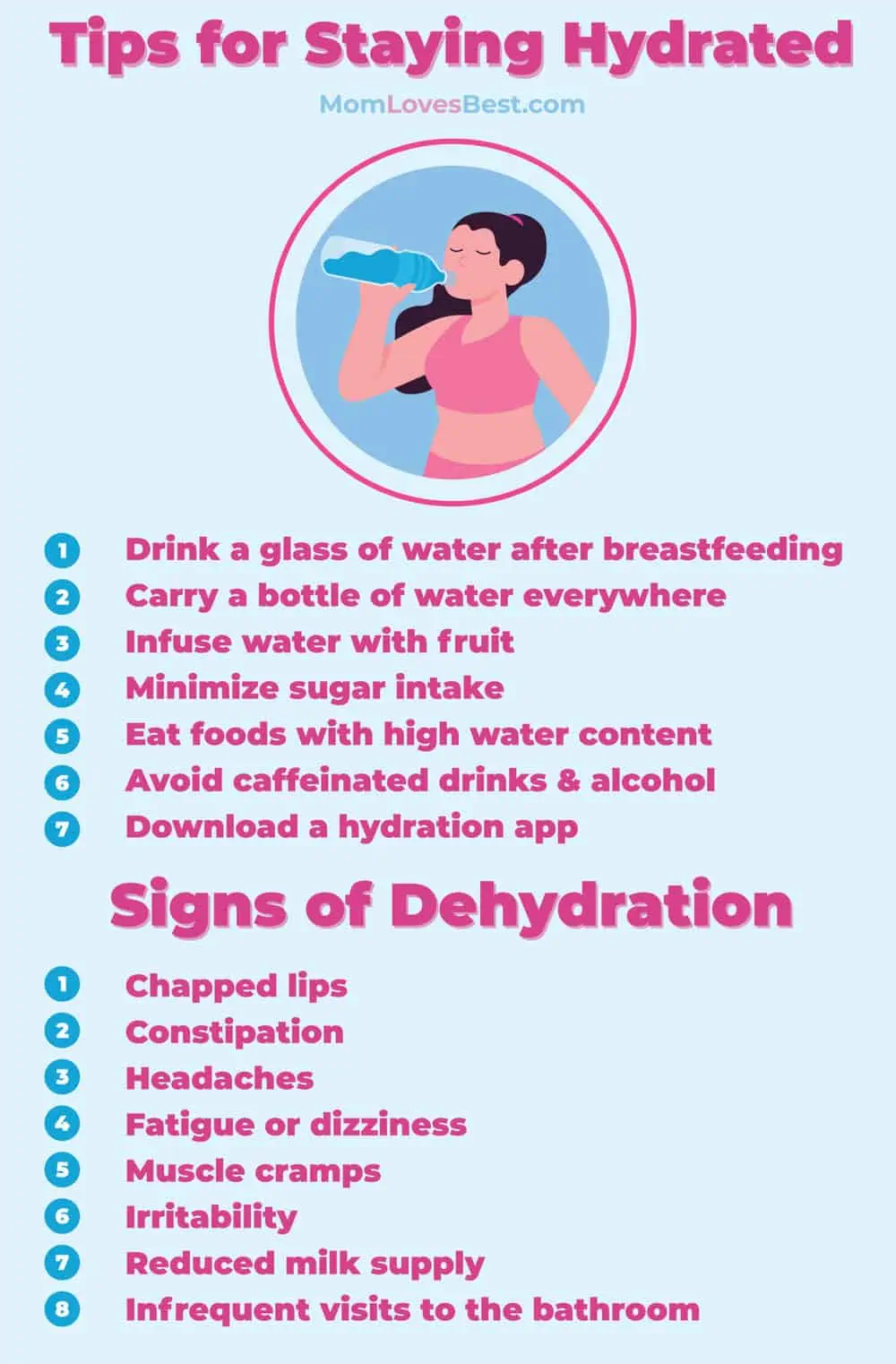
Tips for Staying Hydrated
It is hard to hold a cup when your hands are full of a baby. You need a strategy to ensure you get those ounces in.
Here are a few ways to hack your hydration habits:
- Create a nursing station: Keep a large stash of water bottles and snacks next to the chair where you feed the baby.
- Trigger habit: Drink one full glass of water every time you sit down to nurse or pump. Oxytocin (the letdown hormone) naturally triggers thirst, so listen to it.
- Flavor it up: If plain water is boring, infuse it with cucumber, lemon, or berries.
- Eat your water: Snack on watermelon, cucumber slices, oranges, and soups.
- Limit diuretics: Go easy on caffeine and alcohol, as they can dehydrate you further.
- Use a straw: It sounds silly, but many moms find they drink more volume faster when using a large tumbler with a straw.
- Track it: Use a free app like Waterlogged to log your ounces if you struggle to remember.
FAQs

What Drinks Help Produce Breast Milk?
Water is the best choice, but lactogenic drinks can help too. Many moms see success with oat milk, coconut water (for electrolytes), and herbal teas containing fenugreek or blessed thistle. Stay away from sugary sodas, as they offer no nutritional value.

What Should You Not Drink While Breastfeeding?
You should limit caffeine (coffee, soda, energy drinks) to about 200-300mg per day. Avoid heavy alcohol consumption; if you do have a drink, wait 2 hours per drink before nursing. Avoid high-sugar beverages that spike your blood sugar without hydrating you effectively.

How Many Oz of Water Should I Drink a Day?
The Institute of Medicine suggests lactating women consume about 128 ounces (16 cups) of total fluid daily. This varies based on your weight, activity level, and climate. The best rule of thumb is to drink whenever you feel thirsty and ensure your urine remains pale yellow.

Is It Easy to Get Dehydrated While Breastfeeding?
Yes, it is very easy. Your body uses a significant amount of water to create breast milk. Combined with the busyness of caring for a newborn and potential sleep deprivation, many moms ignore their thirst cues until they are already dehydrated.

How Do I Know If My Breastfed Baby Is Dehydrated?
Monitor your baby’s diapers. A well-hydrated newborn should have at least 6 wet diapers and 3 to 4 dirty diapers in a 24-hour period (after the first week). Other warning signs include a sunken soft spot (fontanelle), dry mouth, lack of tears when crying, and lethargy.

Do Electrolyte Drinks Help with Breastfeeding?
Yes, electrolyte drinks can be very helpful. Breastfeeding depletes your body of electrolytes like sodium, potassium, and magnesium. Drinks like coconut water or low-sugar sports drinks can help replenish these minerals and may help you feel more energized than plain water alone.