Cleaning dried milk out of a baby bottle isn’t easy with a standard kitchen sponge. You need a tool specifically designed to reach those deep corners and scrub away residue.
A great bottle brush is your best defense against bacteria buildup. It reaches the nooks and crannies regular brushes miss, ensuring your baby’s feeding gear stays sanitary.
We’ve researched and tested the top options to help you find the best brush to get those bottles sparkling clean.
- Comes with a nipple brush
- Non-slip grip
- Very affordable
- Holds up well with repeated uses
- Works well for washing dishes
- Easy to access nipple brush
- Use it on all sizes and brands
- Little risk of damage to nipples
- Sponge dries quickly
- Fits in very narrow bottles
- Evenly and quickly cleans bottles bottoms
- Soft and scratch-free nylon bristles
- Bristles are angled for thorough cleaning
- Effectively removes dried milk
- Versatile
How to Choose a Bottle Brush
Here are the key factors to look for when picking the right cleaning tool for your bottles.

Length
Your brush needs to reach the very bottom of the baby bottle with room to spare. If the handle is too short, your hand gets stuck in the bottle neck. Aim for a brush around 11 or 12 inches long for optimal reach and maneuverability.

Types of Bristles
The best brushes feature a mix of textures. You want soft bristles for gentle cleaning and stiffer ones to scrape off dried milk. Nylon bristles are durable and common, while silicone bristles are hygienic and resistant to odors. Angled bristles help you scour the tricky transition area between the bottle base and the walls.

Non-Slip Handle
Bottle cleaning is a wet, soapy job. A smooth plastic handle will twist right out of your grip. Look for a brush with a rubberized or textured handle. This gives you the leverage you need to scrub effectively without dropping the tool.

Sponge Tip
Some brushes include a sponge at the tip to mop up fluid and wipe the bottle bottom. It’s great for speed, but sponges trap moisture and bacteria. If you choose a sponge-tip brush, rinse it thoroughly and let it dry completely between uses. Be aware that the sponge portion often tears apart faster than nylon bristles.

Flexible Neck
A flexible neck acts like a shock absorber and allows the head to pivot. This helps the bristles maintain contact with the bottle walls as you rotate the handle. It makes reaching tight spots much easier than using a rigid stick.
Product Reviews
We’ve tested and ranked the best baby bottle brushes to ensure a deep, hygienic clean for your feeding gear.
Oxo Tot Bottle Brush with Nipple Cleaner and Stand
Best Brush with a Stand
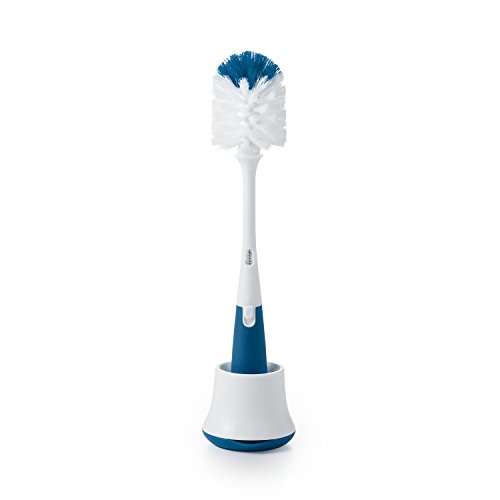
The Oxo Tot checks every box for functionality. The head features two bristle types: soft for gentle sweeping and firm for scrubbing tough film. The flexible neck navigates corners effortlessly, ensuring no milk residue remains.
We love the rubberized grip, which prevents slipping during vigorous scrubbing. A silicone nipple cleaner hides in the handle, perfect for small parts and breast pump valves.
Here are the pros and cons:
Pros
- Ventilation: The nipple cleaner features holes to dry quickly and prevent mold.
- Storage: It includes a dedicated stand to keep the brush upright and fresh.
- Easy maintenance: The entire unit is dishwasher safe for deep cleaning.
Cons
- Size: The large head doesn’t fit well inside very small or narrow bottles.
- Wear and tear: Nylon bristles may flatten out after months of heavy use.
Our Ratings
Munchkin Bristle Bottle Brush
Best Nipple Brush Combo

This Munchkin brush balances softness with scrubbing power. It cleans thoroughly without scratching plastic walls. The ergonomic handle features a non-slip grip, making long washing sessions much more comfortable.
The wide bristle array reaches inner ridges effectively. A hidden bonus is the nipple brush tucked into the handle base. It uses soft rubber to clean nipples without causing micro-tears, extending the life of your bottle parts.
Here is why we like it:
Pros
- Efficient design: The nipple brush has 360-degree bristles for fast cleaning.
- Good grip: The handle stays secure in wet, soapy hands.
- Value: It is highly affordable compared to similar models.
Cons
- Compatibility: The wide head may struggle to squeeze into narrow-neck bottles.
Our Ratings
Dr. Brown’s Bottle Brush
Best Budget Pick

Dr. Brown’s brush uses a hybrid approach: a sponge tip for wiping and bristles for scrubbing. This combination targets tricky crevices that standard bristles miss. Just remember to replace it frequently, as the sponge wears out faster than nylon.
It features a suction cup base to stand upright near your sink, plus a storage clip if you prefer hanging it. The base also has fixed chevron channels specifically designed to scrub nipples.
Check out the pros and cons:
Pros
- Suction base: The brush stands on its own to dry.
- Budget-friendly: It is significantly cheaper than many competitors.
- Dual head: You get the benefits of both a sponge and durable bristles.
Cons
- Splash back: The bristles can flick water when pulling it out of narrow bottles.
- Durability: The sponge tip may detach or tear after heavy use.
Our Ratings
Philips Avent Bottle and Nipple Brush
Best Brush for Everyday Use
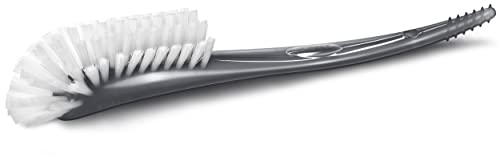
The curved brush head mirrors the rounded shape of most baby bottles. This design allows for easier sweeping of the bottom corners. The handle features a molded, rigid tip specifically for scrubbing inside nipples.
It’s durable enough for daily scrubbing yet gentle enough to prevent scratches on plastic. The entire brush is BPA-free and dishwasher safe, making sanitation simple.
Here are the pros and cons:
Pros
- Long-lasting: The high-quality bristles resist flattening.
- Versatile: The shape works surprisingly well for general dishwashing.
- Accessible: The nipple cleaner is molded onto the handle, so no parts to lose.
Cons
- Fit: It is too wide for standard or narrow-neck bottles.
- Coverage: Bristles are only on one side rather than a full 360-degree head.
Our Ratings
Moomoo Baby Triple Brush Set
Best Sponge Brush

This Moomoo Baby set features soft, firm foam that polishes the bottle surface without scratching. It eliminates the soapy spray back common with bristle brushes. The sponges detach, allowing you to swap them out when they get grimy.
The set includes a nipple brush and a tiny straw cleaner for vents or sippy cups. The foam dries relatively fast, reducing bacterial growth compared to standard kitchen sponges.
Here is why we picked it:
Pros
- Universal fit: The sponge squeezes into almost any bottle brand or size.
- Gentle: There is almost no risk of scratching or damaging delicate silicone.
- Hygiene: The sponge material is designed to dry quickly.
Cons
- Replacements: Swapping the sponge heads can be tricky.
- Handle strength: Some users report the handle snapping under heavy pressure.
Our Ratings
Munchkin Sponge Bottle Brush
Best Brush for Narrow Bottles
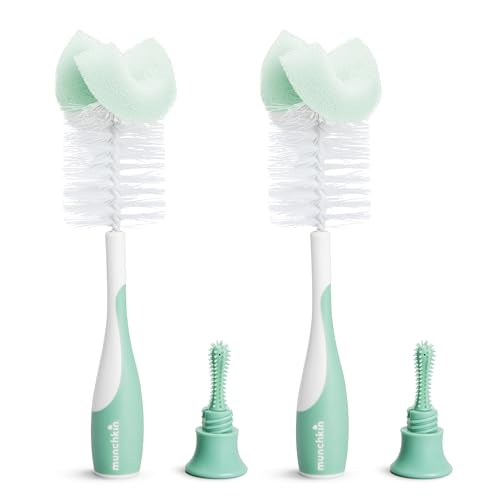
This brush stands upright on its base to air dry. It features a sponge tip to soap up the bottle base and soft nylon bristles for the walls. It works safely on both plastic and glass baby bottles.
A small nipple brush screws into the handle base, keeping your tools together. The non-slip grip helps you maintain control when wet. Plan to replace this unit every 30 to 45 days for optimal hygiene.
Here are the pros and cons:
Pros
- Slim profile: The stem fits easily into very narrow openings.
- Sponge tip: It cleans the bottle bottom faster than bristles alone.
- Combo head: You get scrubbing power and wiping ability in one.
Cons
- Stability: It lacks a suction cup, so it knocks over easily.
- Exposure: The metal wire tip isn’t fully covered, posing a scratch risk if the sponge wears down.
Our Ratings
Nuk Bottle & Teat Brush
Best Multipurpose Brush

The Nuk brush is designed with serious scrubbing in mind. The bristles wipe away filmy residue, while the firmer tip attacks crusty milk deposits. It cleans thoroughly without damaging bottle surfaces.
The small nipple brush nests inside the handle. Ventilation holes in the handle allow air to circulate, keeping the nipple brush dry and sanitary.
Here is why we recommend it:
Pros
- Reach: Angled bristles hit every corner of the bottle.
- Power: The hard scrubber tip effectively removes dried-on milk.
- Versatile: It handles bottles, nipples, and pump parts equally well.
Cons
- Price: It can be slightly more expensive than basic models.
Our Ratings
How to Clean a Baby Bottle
The golden rule of bottle cleaning: do it immediately. If you leave a bottle in the diaper bag for two days, the milk cakes on and smells terrible. A quick rinse right after feeding saves you major scrubbing time later.
You need a brush that reaches where your hand can’t. Here is the best routine:
- Rinse immediately: Flush the bottle with water as soon as the baby is finished.
- Prep the sink: Use a dedicated plastic basin or a freshly scrubbed sink. Fill it with hot water and dish soap.
- Disassemble: Take apart every piece—bottle, ring, nipple, and cap.
- Scrub: Use your bottle brush to scrub the walls and bottom. Use the nipple brush for the teat and threaded ring.
- Rinse and dry: Rinse all soap away with clean water. Place items on a drying rack or clean paper towel to air dry completely.
Baby Bottle Brush FAQs

How Do You Sterilize a Bottle Brush?
You typically don’t need to sterilize the brush unless your baby is ill or immune-compromised. Regular cleaning with hot soapy water is usually sufficient. However, if you want a deep clean, place the brush in the top rack of your dishwasher or use a bottle sterilizer if the manufacturer says it is heat-safe.

Can You Put a Bottle Brush in the Dishwasher?
Yes, most nylon and silicone bottle brushes are top-rack dishwasher safe. Always check the packaging to be sure. A hot cycle sanitizes the bristles and keeps the brush smelling fresh. If your brush has a sponge tip, check the label, as high heat can sometimes degrade the foam.

What Dish Soap Is Best for Baby Bottles?
Regular dish soap works fine as long as you rinse thoroughly. Many parents prefer fragrance-free or natural plant-based soaps to avoid chemical residues. Dedicated baby bottle soaps are often formulated to break down milk fat and proteins more effectively than standard grease-cutting detergents.

Which Bottle Brush Is Best?
The best brush depends on your specific bottles. For general use, the Oxo Tot Brush is a top contender because of its stand and dual-bristle design. If you have narrow-neck bottles, look for a slim profile brush. The key is finding one that reaches the bottom and scrubs the sides without getting stuck.

Are Silicone Brushes Better for Bottles?
Silicone brushes are excellent for durability and hygiene. They don’t absorb odors, shed bristles, or harbor bacteria as easily as nylon or sponges. However, they are often softer and slippery, so some parents find they don’t scrub off stuck-on grime as aggressively as traditional nylon bristles.

How Often Should I Replace My Bottle Brush?
Replace your bottle brush every 30 to 45 days, or sooner if it shows signs of wear. If the bristles look matted, the sponge is tearing, or it develops an odor, toss it immediately. A worn-out brush won’t clean effectively and can become a breeding ground for bacteria.

Do Silicone Brushes Hold Bacteria?
Silicone is naturally non-porous, making it much more resistant to bacteria than sponges or nylon. While they resist germs better, they aren’t magic. You still need to rinse them well and let them air dry completely. Occasional boiling (if heat safe) ensures they remain sterile.

How Often Should I Clean My Bottle Brush?
Rinse your brush thoroughly with hot water after every single use. Squeeze out excess water and store it upright in a ventilated area. Once a week, give it a deeper clean in the dishwasher or by soaking it in hot, soapy water to ensure it stays sanitary.
The Bottom Line
The Oxo Tot bottle brush is our clear winner. It combines two bristle types to handle both fresh milk and dried-on residue effortlessly. It’s tough enough for neglected bottles yet gentle enough for daily use.
The flexible neck ensures you hit every angle, and the silicone nipple cleaner protects delicate parts from tears. The included stand is the game-changer, keeping the brush off dirty counters and ensuring it dries hygienically between uses.