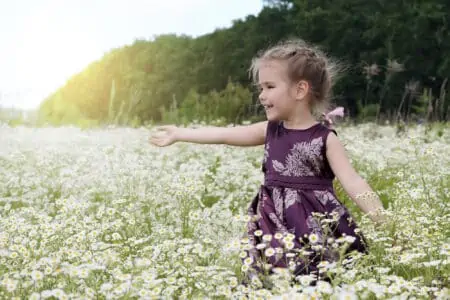
This name literally translates to “day’s eye,” a poetic nod to the flower opening its petals at dawn. It is a name that promises optimism. Unlike other floral names that might feel delicate or shrinking, Daisy has a spunky resilience, think of the stubborn beauty of a wildflower rather than a hothouse orchid.
Verdict: Daisy is the perfect choice for parents seeking a name that is recognizable but not overused. It offers a timeless, happy sound that fits a baby, a teenager, and a professional woman equally well.
Daisy Overview
- Meaning: Day’s Eye
- Gender: Female
- Origin: Old English
- Pronunciation: “Day-zee”
- Popularity: Top 150 most popular in the US
- Nicknames: Day, Z, Daze
- Variations: Dazey, Dasi, Daisie
- Namesakes: Daisy Buchanan, Daisy, Princess of Pless
What Does Daisy Mean?
The meaning of Daisy is far more poetic than a simple botanical reference. It translates to “day’s eye.” This comes from the biological behavior of the Bellis perennis (the common daisy). The flower closes its petals tightly at night to protect itself and opens them again at the first touch of sunlight, literally the “eye” of the day opening to greet the morning.
Because of this etymology, the name is historically associated with the sun, light, and energy. It implies a fresh start, innocence, and an ability to find joy in the daylight. In the language of flowers, which was a complex system of communication in the 19th century, the daisy symbolized innocence and purity.
Where Does the Name Daisy Come From?
The name is of Old English origin, derived from the phrase dægeseage. It is one of the oldest and most enduring nature names in the English-speaking world.
While the word has existed for centuries, Daisy did not become a common given name until the late Victorian era (late 1800s). This period saw a massive “Flower Name Craze,” where nature names like Rose, Lily, and Violet surged in popularity. Daisy quickly became a favorite because it was accessible, cheerful, and less aristocratic than names like Victoria or Augusta.
Interestingly, Daisy also has a history as a nickname for Margaret. This is because the French name for the daisy flower is Marguerite. Consequently, many women named Margaret in history, including royals, went by the name Daisy.
How Popular is the Name Daisy?
Daisy is a certified “timeless classic” that has successfully transitioned from a vintage hit to a modern staple. It was a top-tier favorite during the Victorian era and the Roaring Twenties, capturing the energy of the Jazz Age.
According to US Social Security Administration data (1), the name cooled off significantly during the mid-20th century as parents shifted toward mid-century names like Linda and Susan. However, Daisy began a robust comeback in the 1990s and has been climbing or holding steady ever since.
Currently, it sits comfortably in the Top 150. It is in the “Goldilocks” zone of popularity: familiar enough that everyone can spell and pronounce it, but not so ubiquitous that your child will be one of three Daisies in her kindergarten class.
How Do I Pronounce Daisy?
Daisy is pronounced phonetically as DAY-zee.
It rhymes with “crazy,” “hazy,” and “lazy.” It is a two-syllable name with the stress placed firmly on the first syllable. Because it is an English word name, pronunciation issues are virtually non-existent in English-speaking countries.
Is Daisy a Boy or Girl Name?
Daisy is traditionally and overwhelmingly used as a female name. While nature names for boys (like River or Ash) are rising in popularity, floral names like Daisy, Rose, and Lily remain strictly feminine in modern usage.
Variations of Daisy
Because Daisy is an English word name, direct variations usually involve spelling changes. However, if you look at the name through its connection to “Margaret” or the flower itself, you find beautiful international cousins.
- Marguerite (French) – The direct French translation for the flower.
- Margarita (Spanish) – The Spanish word for the flower (and a pearl).
- Margherita (Italian) – The Italian variation.
- Margaryta (Polish) – A Slavic variation.
- Daisey (English) – A spelling variant emphasizing the “ey” ending.
- Daisie (English) – A vintage spelling popular in the early 1900s.
Nicknames for Daisy
Daisy is short and sweet, often serving as a nickname itself. However, parents love to shorten even the shortest names. Here are the most natural diminutives, including a few creative options for a more unique flair.
- Day: The most intuitive short form.
- Daze: A cool, edgy option.
- Dee: Simple and retro.
- Dee-Dee: A playful, high-energy nickname.
- Zee: Focuses on the zippy second syllable.
- Zaza: A spicy, eccentric twist.
- Sunny: A thematic nickname based on the flower’s appearance.
- Doo: A cute “pet name” often used by parents (Daisy-Doo).
Names Similar to Daisy
If you love the vibe of Daisy but want to explore other options, consider these names. They share Daisy’s “old-fashioned but fresh” energy or her botanical roots.
- Poppy: Like Daisy, this is a spunky, high-energy floral name that feels very British and modern.
- Violet: A softer, more vintage floral choice that was also popular in the Victorian era.
- Sadie: Shares the “vintage nickname” style and the ending “ee” sound.
- Ruby: A gemstone name that matches Daisy’s short, punchy, and colorful vibe.
- Ivy: A nature name that is slightly more serious and grounded than the bubbly Daisy.
- Maisy: Rhymes with Daisy but stems from Margaret/Mairead; it feels slightly more Scottish and quiet.
- Iris: A floral name that also means “rainbow,” sharing the theme of light and color.
- Lily: The ultimate classic flower name, though much more popular statistically than Daisy.
Middle Names for Daisy
Daisy is a two-syllable name ending in a vowel sound, which makes it highly versatile. It pairs beautifully with single-syllable middle names for a snappy rhythm, or longer, elegant names for a more sophisticated feel.
Classic & Elegant
These names ground the whimsy of “Daisy” with royal-sounding tradition.
Vintage & Spunky
Lean into the 1920s vibe with these energetic pairings.
Modern & Cool
To give Daisy a contemporary edge, try these sleek middle names.
Sibling Names for Daisy
Creating a sibset for Daisy is fun because she fits into so many categories: nature names, vintage names, and classic names.
For a Brother
You generally want a name that feels gentlemanly and established, rather than overly modern or sci-fi.
For a Sister
Look for names that are equally feminine and spirited. Avoid other flower names if you don’t want a strict “garden” theme, or embrace it if you do!
Famous People Named Daisy
Daisy has been worn by princesses, actresses, and models, proving it has range beyond just being “cute.”
- Daisy Ridley: The British actress who shot to global stardom as Rey in the Star Wars sequel trilogy.
- Daisy Edgar-Jones: An acclaimed English actress known for her role in Normal People and Where the Crawdads Sing.
- Daisy Lowe: A high-profile British fashion model.
- Daisy Fuentes: A trailblazing TV host and model, appearing often on MTV in the 90s.
- Daisy, Princess of Pless: A famous Edwardian socialite and memoirist known for her beauty and lavish lifestyle.
Daisy in Pop Culture
Fiction writers love the name Daisy because it immediately establishes a character as desirable, bubbly, or innocently charming.
- Daisy Buchanan: The beautiful, wealthy, and elusive love interest in F. Scott Fitzgerald’s classic The Great Gatsby.
- Daisy Duck: Donald Duck’s glamorous and long-suffering girlfriend in the Disney universe.
- Daisy Duke: The cousin in The Dukes of Hazzard, famous for her cut-off denim shorts.
- Daisy Jones: The lead singer and protagonist in the hit book and show Daisy Jones & The Six.
- Princess Daisy: The ruler of Sarasaland in the Super Mario video game franchise.
- Daisy Mason: The kitchen maid turned assistant cook in the TV series Downton Abbey.
FAQs About the Name Daisy

What Does the Daisy Flower Symbolize?
The daisy flower can symbolize several ideas, including purity, childbirth, new parents, new beginnings, happiness, and joy. They also bring to mind the sunrise and the beginning of the day, since they bloom first thing in the morning (2).

Are Daisies Important in Mythology?
The daisy flower plays a role in the mythologies of several cultures. In Roman culture, the daisy is the result of a nymph who transformed herself into a flower after running away from a god. In Celtic mythology, gods put daisies on the graves of dead children to try to cheer up their parents. The daisy is associated with Freya in Norse mythology, and by extension, it is also associated with love, fertility, and childbirth.

Is Daisy a Nickname for Margaret?
Yes, historically Daisy has been a common nickname for Margaret. This originated because the French word for the daisy flower is “Marguerite.” However, in the modern era (post-1950s), Daisy is almost exclusively used as a standalone given name rather than a nickname.
What Is the Birth Flower for Daisy?
The daisy is the birth flower for the month of April. This makes the name an especially fitting choice for babies born in the spring. However, because the flower is associated with summer happiness generally, it fits a baby born in any sunny month.
Is Daisy a Biblical Name?
No, the name Daisy does not appear in the Bible. It is a nature name of Old English origin. However, it can be paired with Biblical middle names (like Daisy Ruth or Daisy Leah) if parents wish to incorporate faith into the name.
What Are Good Double Barrel Names With Daisy?
Daisy is excellent for double-barrel names because of its rhythm. Popular combinations include Daisy-Mae, Daisy-Lou, Daisy-Rose, Daisy-Jo, and Daisy-Faye. The Southern tradition of double names suits Daisy particularly well.
Is the Name Daisy Too Popular?
While Daisy is popular (Top 150), it is not “trendy” in the way that names like Harper or Luna have been recently. It has a stable popularity that makes it familiar without feeling overused. It is a safe choice for parents who want a recognized name that isn’t in the Top 10.