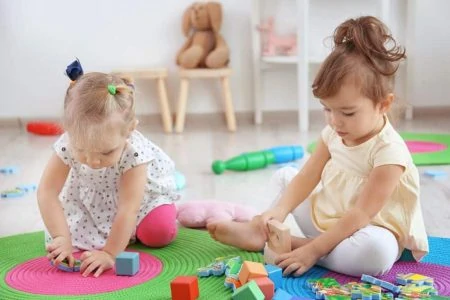
Finding a board game that actually holds a preschooler’s attention is an art form. You want something engaging enough to keep them at the table, but simple enough to avoid a meltdown over complicated rules.
We spent countless family game nights rolling dice, spinning spinners, and testing patience to find the true winners. We looked for durability, replay value, and that magical ability to teach skills without feeling like homework.
Here are the best board games for preschoolers that will actually make game night fun for the parents, too.
- Enhance memory skills
- Develop social skills
- Educational Game
- Develop strategic thinking
- Develop motor Skills
- educational Game
- Encourages teamwork
- Builds confidence
- Reinforces matching skills
- Cultivate emotional development
- Creative problem solving
- Cooperative game
- Quick and easy to play
- Fun for all ages
- Easy to set up and put away
- Develop logical thinking
- Develop strategy-building skills
- Easy to understand
- Teaches color recognition
- No reading required
- Fun illustrations
- Develop counting skills
- No reading required
- Classic game
Benefits of Board Games for Preschoolers
Before tablets and streaming services took over our living rooms, board games were the ultimate Friday night activity. Bringing that tradition back does more than just cut down on screen time; it actively helps your child grow (1).
Here is why you should clear off the dining table and open a game box:
- Stealth learning: Best of all, they don’t know they are learning. Games naturally introduce counting, color recognition, and pattern matching. It is education disguised as play.
- Language expansion: Kids get chatty when they play. They have to explain their moves, ask for pieces, or cheer for themselves. This constant back-and-forth is amazing for vocabulary growth.
- Emotional regulation: Losing is hard, especially when you are four. Board games provide a safe space to practice “being a good sport” and handling disappointment in small doses.
- Focus training: Sitting still isn’t a preschooler’s strong suit. A good game stretches their attention span by giving them a specific goal to focus on for 15 to 20 minutes.
- Social skills: Turn-taking is a major life skill. Games force kids to wait, watch others, and sometimes work together as a team to win.
How to Choose Board Games for Preschoolers
Not every game with a cartoon character on the box is a winner. Here is what you need to look for to avoid buying a game that gathers dust:
- Check the complexity: Look strictly at the age recommendation. If a game requires reading or complex strategy, your preschooler will check out immediately. Look for games that rely on colors, pictures, or simple counting.
- Match their interests: If your kid is obsessed with dinosaurs, a dino-themed game is an easy win. Leveraging their current obsession helps keep them engaged longer.
- Watch the clock: A preschooler has an attention span of about 15 minutes. Avoid games that drag on for an hour. Quick, snappy rounds are always better than one long marathon.
- Durability matters: Cards will get bent and pieces will get dropped. Look for games with thick cardboard, sturdy plastic pieces, and boxes that hold up to rough handling.
- Parental sanity: You are going to be playing this too. Try to find games that involve some strategy or humor so you aren’t bored to tears moving a piece in a circle for the hundredth time.
Keep Safety In Mind
Product Reviews
We tested these games for fun, durability, and educational value to bring you the top 25 picks for your next game night.
Orchard Toys Shopping List
Best Board Game Overall

The Shopping List game by Orchard Toys is a massive hit in the preschool circuit because of its simplicity and replay value. It is essentially a memory game with a purpose, perfect for kids aged 3 to 7.
Players flip over cards to find items that match the groceries on their list. The first one to fill their cart wins. It is brilliant for teaching memory skills and vocabulary without feeling like a lesson. The illustrations are bright and clear, making it easy for non-readers to play independently.
The components are made from sturdy, recycled cardboard that stands up to enthusiastic grabbing.
Product Specs
| Time to Play | N/A |
| Number of Players | Two to four |
| Minimum Age | Three years |
Educational Insights The Sneaky, Snacky Squirrel
Best Board Game for Learning Colors
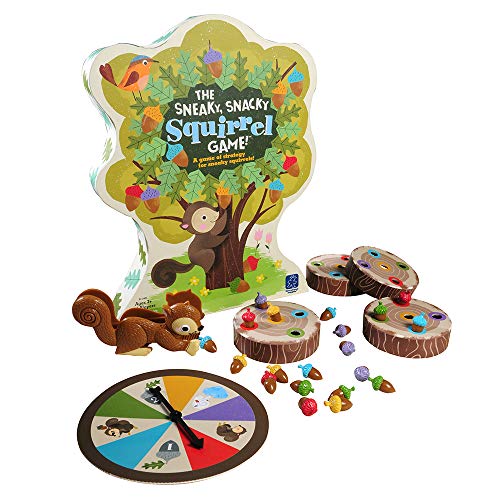
The Sneaky, Snacky Squirrel is hands-down one of the best games for developing fine motor skills. It combines color learning with physical dexterity in a way that feels like pure fun.
Kids spin a spinner and use “squirrel squeezer” tongs to pick up matching colored acorns and place them in their log. The catch is that you can also spin to steal an acorn or lose a turn, adding a tiny bit of competitive spice.
Using the squirrel tongs is excellent pre-handwriting practice for little hands. Just keep an eye on the acorns; they are small and can easily roll under the couch.
Product Specs
| Time to Play | N/A |
| Number of Players | Two to four |
| Minimum Age | Three years |
ThinkFun Zingo Bingo
Best Bingo Game for Preschoolers

Zingo takes the classic Bingo concept and makes it fast-paced and kid-friendly. Instead of a boring caller, there is a fun “Zinger” dispenser that slides out plastic tiles.
It is perfect for pre-readers because it uses pictures and words together. Players race to match the tiles to the images on their card. The first one to fill their card yells “Zingo!” to win.
The slider mechanism is incredibly satisfying for kids to operate, and because it supports up to seven players, it is great for larger families or playdates.
Product Specs
| Time to Play | N/A |
| Number of Players | Two to seven |
| Minimum Age | Four years |
Wonder Forge Richard Scarry's Busytown
Best Busytown Board Game

If you want a game where everyone wins or loses together, Busytown is the gold standard. It features a massive 6-foot-long game board filled with Richard Scarry’s famous illustrations.
This is an “Eye Found It” style game. Players work as a team to make it to the ferry before the pigs eat all the food. When the spinner lands on Goldbug, everyone scrambles to find hidden objects on the board.
It promotes teamwork rather than rivalry, which is a lifesaver if you have a child who struggles with losing.
Product Specs
| Time to Play | N/A |
| Number of Players | Two to four |
| Minimum Age | Three years |
Peaceable Kingdom Hoot Owl Hoot
Best Color-Matching Board Game

Hoot Owl Hoot is another fantastic cooperative game from Peaceable Kingdom. The goal is simple: help the owls fly back to their nest before the sun comes up.
There is no reading required. Kids draw color cards and fly an owl to the next corresponding space. The strategy comes in when players realize they can help each other move faster. Since everyone plays against the “sun” rather than each other, it eliminates the tears that come with losing to a sibling.
Product Specs
| Time to Play | N/A |
| Number of Players | Two to four |
| Minimum Age | Four years |
PlayMonster Yeti in My Spaghetti
Best Silly Board Game for Preschoolers

Sometimes you just want a game that makes everyone giggle. Yeti in My Spaghetti is less about strategy and more about physics and suspense.
You place plastic noodles across a bowl and sit a Yeti figure on top. Players take turns carefully pulling out one noodle at a time without letting the Yeti fall into the bowl.
It creates a lot of tension and laughter. It is quick to set up, easy to understand, and helps refine those steady hand movements.
Product Specs
| Time to Play | 5 minutes |
| Number of Players | Two or more |
| Minimum Age | Four years |
Sequence for Kids Game
Best Sequence Game for Preschoolers

Sequence for Kids takes the classic logic game and adapts it perfectly for non-readers. Instead of standard playing cards, this version uses adorable animal illustrations.
The goal is to get four of your chips in a row on the board. You play a card from your hand and place a chip on the matching animal. It introduces basic strategy, do you block your opponent or build your own line?
There are fun twists like Unicorn cards (wilds) and Dragon cards (remove an opponent’s chip), which keep the gameplay exciting.
Product Specs
| Time to Play | 15 minutes |
| Number of Players | Two to four |
| Minimum Age | Three years |
The Yoga Garden Game
Best Board Game for Preschooler and Parents
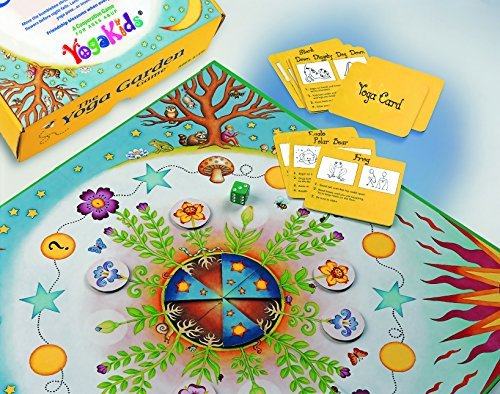
If you need to burn off some energy but keep things calm, The Yoga Garden Game is a unique choice. It was created by a yoga teacher to help kids learn poses and mindfulness.
It is a cooperative game where players work to plant a flower garden before night falls. Along the way, they land on spaces that require them to do simple yoga poses.
It is a great way to introduce physical movement into board game time. The illustrations are beautiful, and it helps kids work on balance and coordination.
Product Specs
| Time to Play | N/A |
| Number of Players | N/A |
| Minimum Age | Four years |
Hasbro Gaming Candy Land Kingdom Of Sweet Adventures
Best Candy-Inspired Board Game for Preschoolers

Candy Land is the quintessential first board game for many families. There is absolutely no reading or counting involved, making it accessible for even the youngest toddlers.
Players draw a color card and move their gingerbread pawn to the next matching square. It is a game of pure luck, which levels the playing field between parents and kids.
While it might not be the most stimulating game for adults, seeing the excitement on a child’s face when they draw the “Queen Frostine” card is worth it.
Product Specs
| Time to Play | N/A |
| Number of Players | Two to four |
| Minimum Age | Three years |
Chutes and Ladders Board Game
Best Basic Number Board Game

Chutes and Ladders is a classic for teaching numbers and the concept of consequences. The goal is to be the first to reach the 100 square at the top of the board.
It is great for counting practice as kids move their pieces along the grid. The “ladders” reward good deeds with a shortcut, while “chutes” punish bad deeds by sliding you back down.
Be warned: sliding down a huge chute when you were winning can cause some tears, so it is a good opportunity to practice being a resilient player.
Product Specs
| Time to Play | N/A |
| Number of Players | Two to four |
| Minimum Age | Three years |
Hasbro Hi Ho! Cherry-O Board Game
Best Board Game for Teaching Math Skills

Hi Ho! Cherry-O is the ultimate introduction to basic addition and subtraction. Each player gets a tree full of fruit and a basket.
You spin the spinner to see if you pick fruit (add to your basket), spill your basket (subtract everything), or have a bird or dog eat some. It makes abstract math concepts tangible and easy to grasp.
The little fruit pieces are great for fine motor skills, though they are definitely a choking hazard for babies, so keep this one on the table.
Product Specs
| Time to Play | N/A |
| Number of Players | Two to four |
| Minimum Age | Three years |
Ravensburger World of Disney Eye Found It
Best Disney-Inspired Board Game

This version of “Eye Found It” combines the cooperative gameplay of the Busytown version with the magic of Disney. The 6-foot board travels through Peter Pan’s London, Alice’s Wonderland, and more.
Players work together to get to Cinderella’s castle before the clock strikes midnight. The search elements are fantastic, with over 1,000 hidden treasures to find.
It is engaging for the whole family because spotting the tiny hidden items is genuinely challenging and fun, even for adults.
Product Specs
| Time to Play | 15 minutes |
| Number of Players | Two to three |
| Minimum Age | Four years |
Outfoxed! Gamewright Board Game
Best Investigative Board Game for Preschoolers
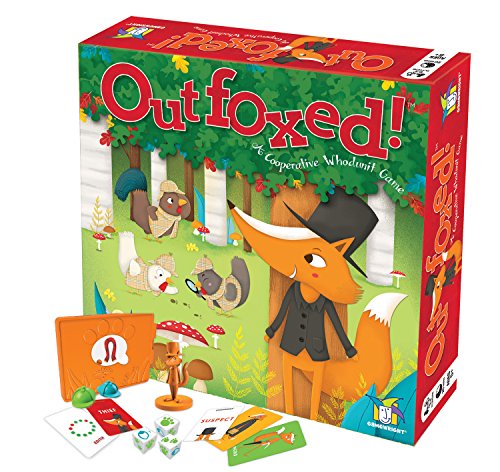
Think of Outfoxed! as a cooperative version of Clue for kids. Someone stole Mrs. Plumpert’s pot pie, and players have to figure out which fox did it.
You roll dice to either reveal suspects or search for clues. The game uses a cool “clue decoder” that lets you check if the thief is wearing items like a hat or glasses. It teaches deduction and logic in a way that is totally accessible to a 5-year-old.
It is cooperative, so you win or lose as a team against the fox moving across the board.
Product Specs
| Time to Play | 20 to 30 minutes |
| Number of Players | Two to four |
| Minimum Age | Five years |
Carcassonne Board Game
Best Board Game for Older Preschoolers
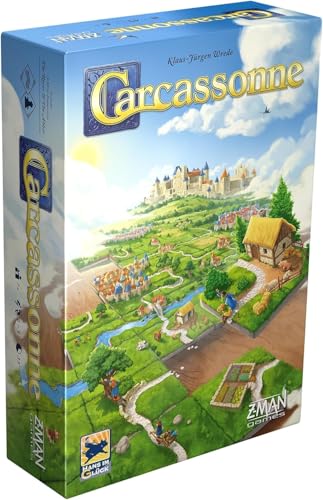
Carcassonne is usually considered an adult strategy game, but the core mechanic is simple tile-laying, which many older preschoolers enjoy. This listing refers to the standard version, though there is a “My First Carcassonne” specifically for kids.
Players draw a tile and connect it to the growing map, building roads and cities. For young kids, you can simplify the scoring rules and just enjoy building the map together.
It is a great spatial reasoning exercise and introduces the concept of planning ahead.
Product Specs
| Time to Play | 20 minutes |
| Number of Players | Two to five |
| Minimum Age | Eight years |
Hasbro Gaming Marvel Spider-Man Web Warriors
Best Spider-Man Board Game

If your child finds the regular Chutes and Ladders too “babyish,” this Spider-Man version might be the hook you need. The gameplay is identical to the classic version, but the theme is pure Marvel action.
Players race to the 100 mark, climbing webs (ladders) and sliding down chutes. The characters include Spider-Man, White Tiger, Iron Spider, and more.
It is an easy way to get reluctant gamers to the table simply because they get to play as their favorite superhero.
Product Specs
| Time to Play | 20 minutes |
| Number of Players | Two to four |
| Minimum Age | Three years |
Peaceable Kingdom Dinosaur Escape
Best Board Game for Dinosaur-Loving Preschoolers

Dinosaur Escape is a cooperative memory game with a tense twist. Players have to rescue three dinosaurs and get them to the island before the volcano erupts.
You move around the board flipping over tokens to find matching dinosaur gear. But if you flip over the T-Rex, you have to run! It requires players to remember where items are and work together to solve the puzzle.
The 3D volcano centerpiece adds a fun visual element that gets kids excited about the “danger.”
Product Specs
| Time to Play | N/A |
| Number of Players | Two to four |
| Minimum Age | Three years |
Pete The Cat, The Missing Cupcakes
Best Get-Up-and-Move Board Game

This game brings the beloved Pete the Cat book to life. The Grumpy Toad has stolen the cupcakes, and players have to win them back.
What sets this apart is the physical activity. Some cards require kids to sing a song, do a dance, or act something out to earn a cupcake. It keeps the energy high and prevents the wiggles that come with sitting too long.
It is a cooperative game, so everyone wins the party together. The little plastic cupcakes are adorable and fun to collect.
Product Specs
| Time to Play | N/A |
| Number of Players | Two to four |
| Minimum Age | Three years |
The Ladybug Game
Best Board Game for Bug Lovers
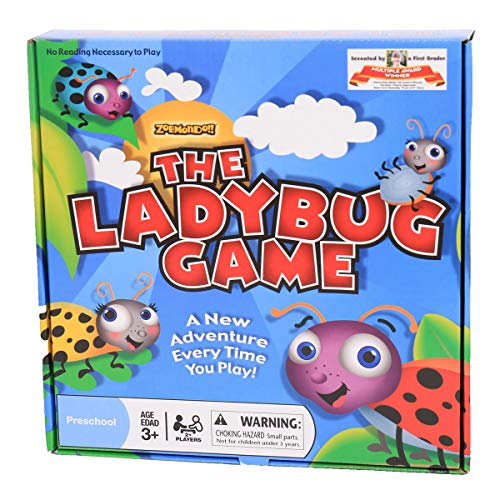
Invented by a first-grader, The Ladybug Game captures exactly what kids find fun. The goal is to get your ladybug home to the Rose Garden while dodging praying mantises and feeding aphids.
The gameplay uses a simple narrative structure that makes kids feel like they are on an adventure. It reinforces reading for beginners, but the color-coded cards mean non-readers can play too.
The board is vibrant and the mechanics are simple enough for independent play once they know the rules.
Product Specs
| Time to Play | 20 minutes |
| Number of Players | Two to four |
| Minimum Age | Three years |
Gotrovo Treasure Hunt Game
Best Preschool Scavenger Hunt Game

Gotrovo isn’t a sit-down board game; it is a full-blown scavenger hunt in a box. It comes with clue cards, a treasure map, and a gold bar to hide.
You can set it up indoors or outdoors. The cards use pictures, words, and riddles, so you can tailor the difficulty to your child’s age. One clue might be a picture of a washing machine, leading them to the next spot.
It is brilliant for getting kids moving and thinking critically about their environment.
Product Specs
| Time to Play | N/A |
| Number of Players | One and more |
| Minimum Age | Three years |
Frankie's Food Truck Fiasco Game
Best Matching Board Game for Preschoolers
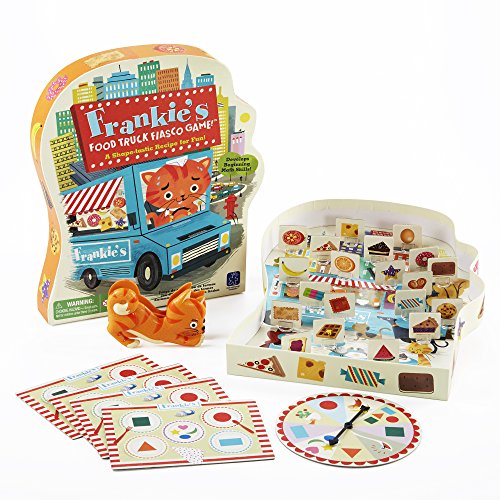
From the makers of Sneaky Snacky Squirrel comes Frankie’s Food Truck Fiasco. This time, the tool is a “cat squeezer” and the goal is to collect different food shapes.
It teaches geometric shapes in a practical way. Players spin to find a course (like a pizza triangle or a burger circle) and use the tool to grab it.
The game is fast, fun, and sneaks in shape recognition and fine motor practice. The food truck theme is super appealing to young kids.
Product Specs
| Time to Play | N/A |
| Number of Players | Two to four |
| Minimum Age | Four years |
HABA Orchard Game
Best Jigsaw Board Game

HABA is known for high-quality wooden components, and the classic Orchard Game is their masterpiece. This is a cooperative game where players race against a raven to pick fruit from the trees.
On each turn, you either pick a fruit or add a piece to the raven jigsaw puzzle. If the puzzle is finished before the fruit is picked, the raven wins.
The wooden fruit pieces are beautiful and tactile. It is a wonderful “first game” because the concept is easy to grasp and encourages teamwork.
Product Specs
| Time to Play | N/A |
| Number of Players | Two to eight |
| Minimum Age | Three years |
Candy Land Disney Princess Edition
Best Board Game for Girls

This edition wraps the classic Candy Land mechanics in a sparkly Disney Princess theme. Instead of the gingerbread man, players move plastic figures of Cinderella, Rapunzel, or Ariel.
The gameplay is exactly the same as the original, draw colors and move, but for kids who live and breathe princesses, the theme makes a huge difference in engagement.
It is simple, quick, and requires zero reading, making it perfect for independent play between siblings.
Product Specs
| Time to Play | N/A |
| Number of Players | Two to three |
| Minimum Age | Three years |
Pete the Cat Groovy Buttons Game
Best Pete the Cat Board Game

Based on the popular book, this game is all about collecting buttons. Players move around the board and use a spinner to add buttons to their jar.
However, just like in the story, buttons can “pop off” (be lost) or be traded. It introduces basic counting and the concept of exchange.
The game is colorful and captures the laid-back vibe of Pete the Cat perfectly. It is a great choice for teaching counting without it feeling like a math drill.
Product Specs
| Time to Play | N/A |
| Number of Players | Two to four |
| Minimum Age | Three years |
Hasbro Operation Electronic Board Game
Best Board Game for Future Physician

Operation is the ultimate test of steady hands. While it can be tricky for younger preschoolers, it is fantastic for developing fine motor control.
The goal is to remove plastic ailments from Cavity Sam without touching the metal sides and setting off the buzzer. The sudden noise always elicits squeals of surprise and laughter.
For preschoolers, you might want to play without the buzzer first to practice, as it can be a little startling for sensitive kids.
Product Specs
| Time to Play | N/A |
| Number of Players | Two to four |
| Minimum Age | Four years |
ThinkFun Robot Turtles Board Game
Best Introduction to Programming Board Game
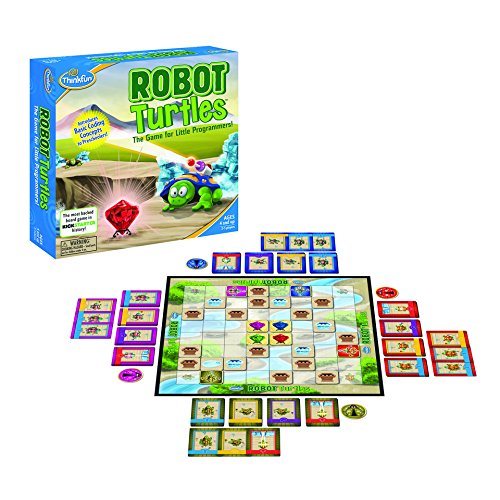
Robot Turtles is a genius game that teaches the logic of coding without using screens. It was designed by a programmer father and became a Kickstarter sensation.
Players use cards to “program” their turtle’s path to a jewel. The parent acts as the computer, moving the turtle exactly according to the cards played.
It teaches cause and effect, sequencing, and debugging (fixing mistakes). It is incredibly empowering for kids to be the ones giving the commands.
Product Specs
| Time to Play | N/A |
| Number of Players | Two to five |
| Minimum Age | Four years |
| Product | Best | Play Time | No. of Players | Minimum Age |
| Orchard Toys Shopping List | Overall Choice | N/A | 2 to 4 | 3 years |
| Educational Insights | Learning Colors | N/A | 2 to 4 | 3 years |
| ThinkFun Zingo Bingo | Bingo Game | N/A | 2 to 7 | 4 years |
| Wonder Forge Richard | Busytown Game | N/A | 2 to 4 | 3 years |
| Peaceable Kingdom Hoot Owl Hoot | Color-Matching Game | N/A | 2 to 4 | 4 years |
| Yeti in My Spaghetti | Silly Board Game | 5 mins | 2 and up | 4 years |
| Sequence for Kids Game | Sequence Game | 15 mins | 2 to 4 | 3 years |
| The Yoga Garden Game | With Parents | N/A | N/A | 4 years |
| Hasbro Gaming Candy Land | Candy-Inspired | N/A | 2 to 4 | 3 years |
| Chutes and Ladders Board Game | Basic Number Game | N/A | 2 to 4 | 3 years |
| Hasbro Hi Ho! Cherry-O | Teaching Math Skills | N/A | 2 to 4 | 3 years |
| Ravensburger Eye Found It | Disney-Inspired | 15 mins | 2 to 3 | 4 years |
| Outfoxed! Gamewright Game | Investigative Game | 20 to 30 mins | 2 to 4 | 5 years |
| Carcassonne Board Game | Older Preschoolers | 20 mins | 2 to 5 | 8 years |
| Hasbro Gaming Web Warriors | Spider-Man Game | 20 mins | 2 to 4 | 3 years |
| Peaceable Kingdom Dinosaur Escape | Dinosaur-Loving Preschoolers | N/A | 2 to 4 | 3 years |
| Pete The Cat The Missing Cupcakes | Get-Up-and-Move Game | N/A | 2 to 4 | 3 years |
| The Ladybug Game | Early Entomologists | 20 mins | 2 to 4 | 3 years |
| Gotrovo Treasure Hunt Game | Treasure Hunt-Inspired | N/A | 1 or more | 3 years |
| Frankie’s Food Truck Fiasco Game | Matching Board Game | N/A | 2 to 4 | 4 years |
| HABA Orchard Game | Jigsaw Board Game | N/A | 2 to 8 | 3 years |
| Candy Land Disney Princess Edition | Girls | N/A | 2 to 3 | 3 years |
| Pete the Cat Groovy Buttons Game | Pete the Cat Game | N/A | 2 to 4 | 3 years |
| Operation Electronic Board Game | For Future Physician | N/A | 2 to 4 | 4 years |
| ThinkFun Robot Turtles Board Game | Introduction to Programming | N/A | 2 to 5 | 4 years |
Preschoolers Board Games FAQs

What Is the Easiest Board Game to Play?
Simple board games like Candy Land or Chutes and Ladders are easy and ideal for preschoolers since they rely on luck and colors rather than strategy.
What Board Games Teach Kids About Money?
Games like Monopoly Junior introduce basic money concepts, rent, and purchasing to preschoolers in a simplified way.
What Is the Most Common Card Game for Kids?
Go Fish and Old Maid are widely popular card games for kids because they help with memory, matching skills, and taking turns.
What Board Games Teach Kids Math?
Games like Hi Ho! Cherry-O are excellent for teaching basic math skills like addition and subtraction through physical counting.
What Do Preschoolers Learn by Playing Board Games?
Preschoolers learn essential skills including turn-taking, following rules, emotional regulation, fine motor coordination, and basic counting or literacy skills.
Are Cooperative or Competitive Games Better for Preschoolers?
Cooperative games are often better for younger preschoolers (ages 3 to 4) because everyone wins or loses together, reducing meltdowns and teaching teamwork.