A maternity photo shoot does more than provide you with content for your social media feed. It gives your future child a chance to see the love you held for them before you even met.
We dug into the best advice from professional photographers and seasoned moms to help you plan the perfect session. Here is how to capture the glow, the bump, and the excitement without the stress.
Key Takeaways
- Timing is everything: Schedule your shoot between 28 and 34 weeks for a nice round bump without the late-pregnancy swelling.
- Comfort comes first: Wear form-fitting clothes to show off the curve, but bring comfortable slip-on shoes for walking between shots.
- Light matters: Aim for the “golden hour” (just before sunset) if shooting outdoors for that dreamy, soft glow.
- Keep it personal: Incorporate simple, meaningful props like a pair of baby shoes or an ultrasound photo.
When Should You Book Your Maternity Shoot?
Timing is the most critical logistical factor of your shoot. You want your bump to be round and obvious, but you don’t want to be so far along that you are miserable.
Most experts recommend scheduling the session between 28 and 34 weeks.
If you do it too early, you might just look like you had a big lunch rather than looking pregnant. If you wait until the very end, you run the risk of missed opportunities if the baby comes early. Plus, moving around for poses becomes exhausting once you hit the 36-week mark. You want to feel glowing, not swollen and tired.
What Should You Wear for a Maternity Photo Shoot?
The goal is to accentuate the bump, not hide it behind layers of fabric. Tent-like shirts tend to make you look larger overall without defining your shape.
Stick to these clothing guidelines for the best results:
- Go form-fitting: A stretchy maternity dress or a tight top helps define the silhouette of the belly.
- Texture over prints: Heavy patterns can distract from your face and bump. Instead, look for textures like lace, chunky knits, or chiffon to add visual interest.
- Solid colors: Neutrals, pastels, and jewel tones photograph beautifully. Avoid neon colors or giant logos.
If you prefer a softer, more ethereal look, a maxi dress works wonders. Your photographer will likely ask you to place a hand under your belly to cinch the fabric and reveal the curve.
Some moms opt for semi-nude or boudoir-style maternity shoots to celebrate the body’s changes. If you go this route, skip the spray tan (it can look orange on camera) and wear loose clothing for two hours before the shoot to prevent elastic marks on your skin.
Pro Tip
Should You Incorporate Props?
Props can be a cute addition, but they should never distract from the main subject (you and the baby). Keep it simple and meaningful.
Consider bringing:
- Ultrasound photos: A classic way to introduce the baby.
- Baby shoes: Tiny booties held against the bump show scale.
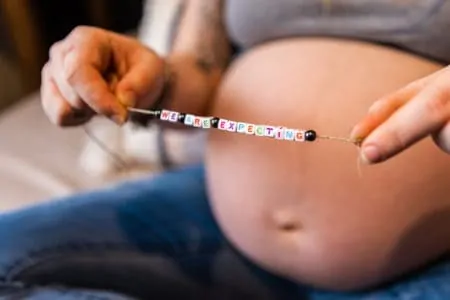
- Letter boards: Great for announcing the name or due date.
- Heirlooms: A special toy or blanket passed down through the family.
If a prop feels forced or cheesy, ditch it. The emotional connection is what matters most.
Where To Have Your Maternity Photos Done
Your location sets the mood for the entire gallery. Most shoots happen in one of three places, and each has a different vibe.
Outdoor Sessions
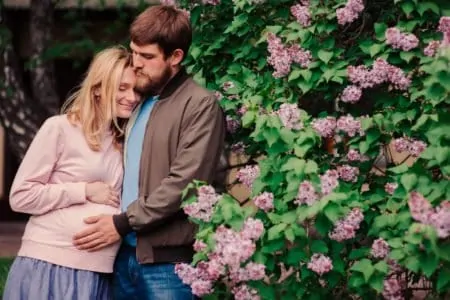
Nature provides the best backdrops. Beaches, fields, and forests are popular for a reason. The key here is lighting. Aim for “Golden Hour,” which is the hour leading up to sunset. The light is soft, warm, and flattering (1).
In-Studio
Studio shoots offer controlled lighting and privacy. This is ideal if you want stylized, editorial-looking images or if you are doing semi-nude photos. You also don’t have to worry about the weather.
In-Home Lifestyle
For a cozy, intimate feel, have the photographer come to your house. These shoots are relaxed and often take place in the nursery or on the master bed. It captures the “nesting” phase perfectly.
How To Choose a Maternity Photographer
Because pregnancy is such a vulnerable and personal time, you need a pro who makes you feel safe and confident.
Consider these factors before signing a contract:
- Style match: Look at their Instagram or portfolio. Do they shoot bright and airy? Dark and moody? Candid or posed? Pick someone whose visual style matches your vision.
- Personality: You will be posing in intimate ways, so you need to click with the person behind the lens. A quick phone call can help you gauge their vibe.
- Portfolio diversity: Check if they have experience photographing women with your body type. A true professional knows how to pose every shape flatteringly.
- Budget and deliverables: Clarify exactly what you are paying for. Does the fee include digital files, or do you have to pay extra for prints?
How To Pose for a Maternity Shoot
Good posture and angles make the difference between an awkward photo and a magazine-worthy shot. While your photographer will guide you, knowing a few go-to moves helps.
Here are five flattering poses to try.
1. The Bump Cradle
This is the quintessential maternity pose. Place one hand above the bump and one below, or both hands underneath to “hold” the baby. It draws the eye immediately to the belly and emphasizes the connection.
Relax your fingers so they look soft and natural rather than stiff or claw-like.
2. The High Angle
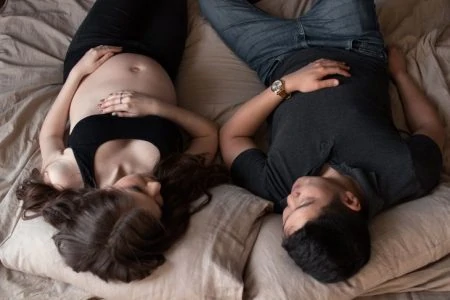
Shooting from above is universally flattering. It slims the face, eliminates double chins, and puts the focus strictly on your eyes and your belly. This works great when you are lying on a blanket in the grass or sitting on a bed.
3. The Look-Away
Direct eye contact with the camera can sometimes feel intense. Looking down at your belly or off into the distance creates a softer, more candid feel.
Avoid tucking your chin all the way to your chest when looking down. Instead, look at a spot on the floor about three feet in front of you to keep your neck long.
4. The Pop-and-Stand
Standing flat-footed can make you look stiff. Shift your weight to your back leg and pop your front knee slightly. This creates a curve in your hips (an “S” curve) that balances out the belly.
5. The Profile Shot
Turning 90 degrees to the camera is the absolute best way to show the size of the bump. You can look back at the camera over your shoulder or look forward for a silhouette effect (2).
Family Matters
Including your partner and older children adds a layer of storytelling to your gallery.
For partners, focus on connection. Have them whisper in your ear, hold your hand, or place a hand on the baby bump.
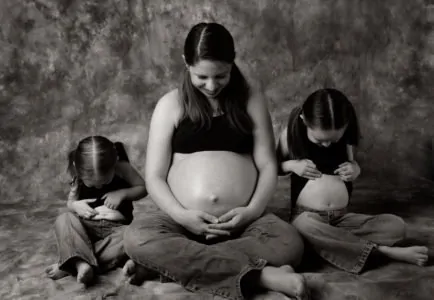
For siblings, lower your expectations. Toddlers rarely sit still for long. Bring bribes (non-messy snacks) and let them run around. The best shots are often the candid ones where they are interacting with your belly naturally.
And don’t forget the pets. If you bring a dog to an outdoor shoot, bring a friend or “wrangler” to hold the leash when the dog isn’t in the photo.
Maternity Photo Shoot FAQs

What Should You Not Do Before a Photoshoot?
Avoid eating a heavy meal immediately before the shoot to prevent bloating or lethargy. Stay out of the sun in the days leading up to it to avoid sunburns or distinct tan lines, and skip tight socks or bras that leave elastic marks on your skin.

Should I Get Makeup Done for a Maternity Photoshoot?
Professional makeup is a great idea because camera lights and outdoor sun can wash out your features. A pro knows how to apply products that look natural in person but pop on camera. If you do your own, go slightly heavier on blush and mascara than usual.

How Much Should You Spend on Maternity Photos?
Prices vary wildly by region and experience level, ranging from $150 to over $1,000. Set a budget beforehand, but remember that cheaper isn’t always better. You are paying for the photographer’s time, editing skills, and equipment.

What Is the Best Color to Wear for Maternity Pictures?
Solids are your best friend. Cream, white, sage green, blush pink, and dusty blue are timeless choices. If you want something bolder, deep reds or navy blues look stunning in outdoor winter settings. Avoid small checkered patterns as they can distort on camera.

How Long Does a Maternity Shoot Take?
Most standard maternity sessions last between 60 and 90 minutes. This provides enough time for a few outfit changes and different backdrops without exhausting the mom-to-be. Mini-sessions are shorter, usually 20 minutes, which is great if you have impatient toddlers.
What Happens If It Rains?
If you booked an outdoor session, have a backup plan. Most photographers will either reschedule for the next sunny day or move the shoot to an indoor studio. Discuss the “rain check” policy with your photographer before booking.
The Bottom Line
Your pregnancy might feel long right now, but once the baby arrives, you will miss that bump. A photo shoot is the perfect way to freeze this moment in time and celebrate the incredible work your body is doing.
Don’t overthink the poses or the imperfections. Hire a photographer you trust, put on an outfit that makes you feel powerful, and just breathe. Years from now, you won’t be looking at your hair or your makeup; you will be looking at the beginning of your child’s story.