Half a kilo of eucalyptus a day, and still time to pose for a portrait.
Koalas are made for coloring. A round head, two oversized fluffy ears and one big dark nose give you a face that reads well even when a four year old goes outside the lines.
This set holds 25 free printable koala coloring pages. They run from chunky kawaii joeys with huge shiny eyes through to fine-hatched portraits that reward a sharp pencil, with a Christmas koala, a Valentine’s koala and a birthday koala mixed in.
Below the sheets you will find what real koala fur actually looks like, which pages suit which age, and five activities for the finished pictures. Print, color, and keep the afternoon going.
Kawaii Koala with Big Eyes
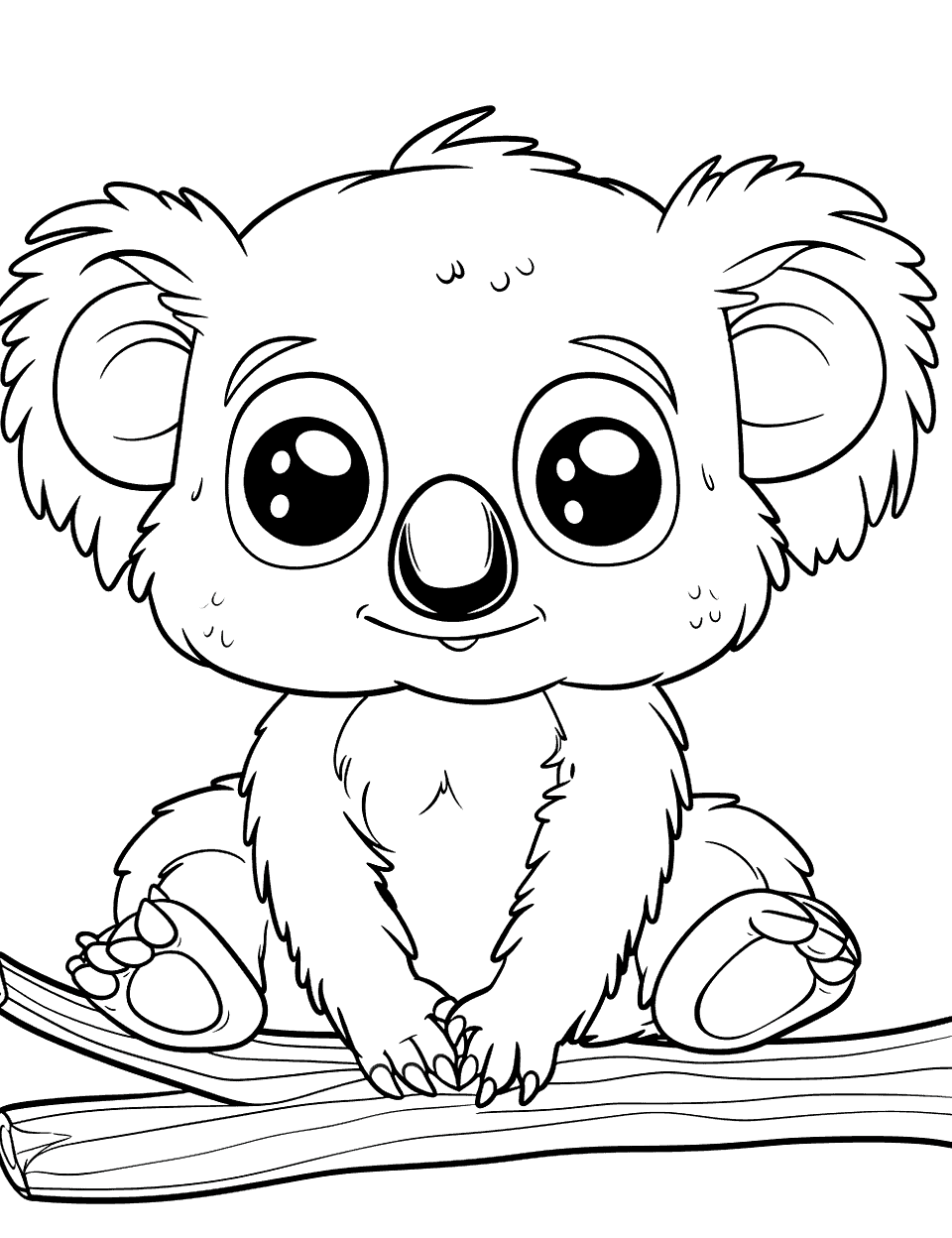
Huge round eyes take up most of this koala’s face, and the outlines are thick enough that a small hand can stay inside them. It sits squarely on a branch with its back paws sticking out to the sides. Keep the body one flat grey and let the ears carry the color. This is one of the simplest sheets here, which makes it a good warm-up before the detailed ones.
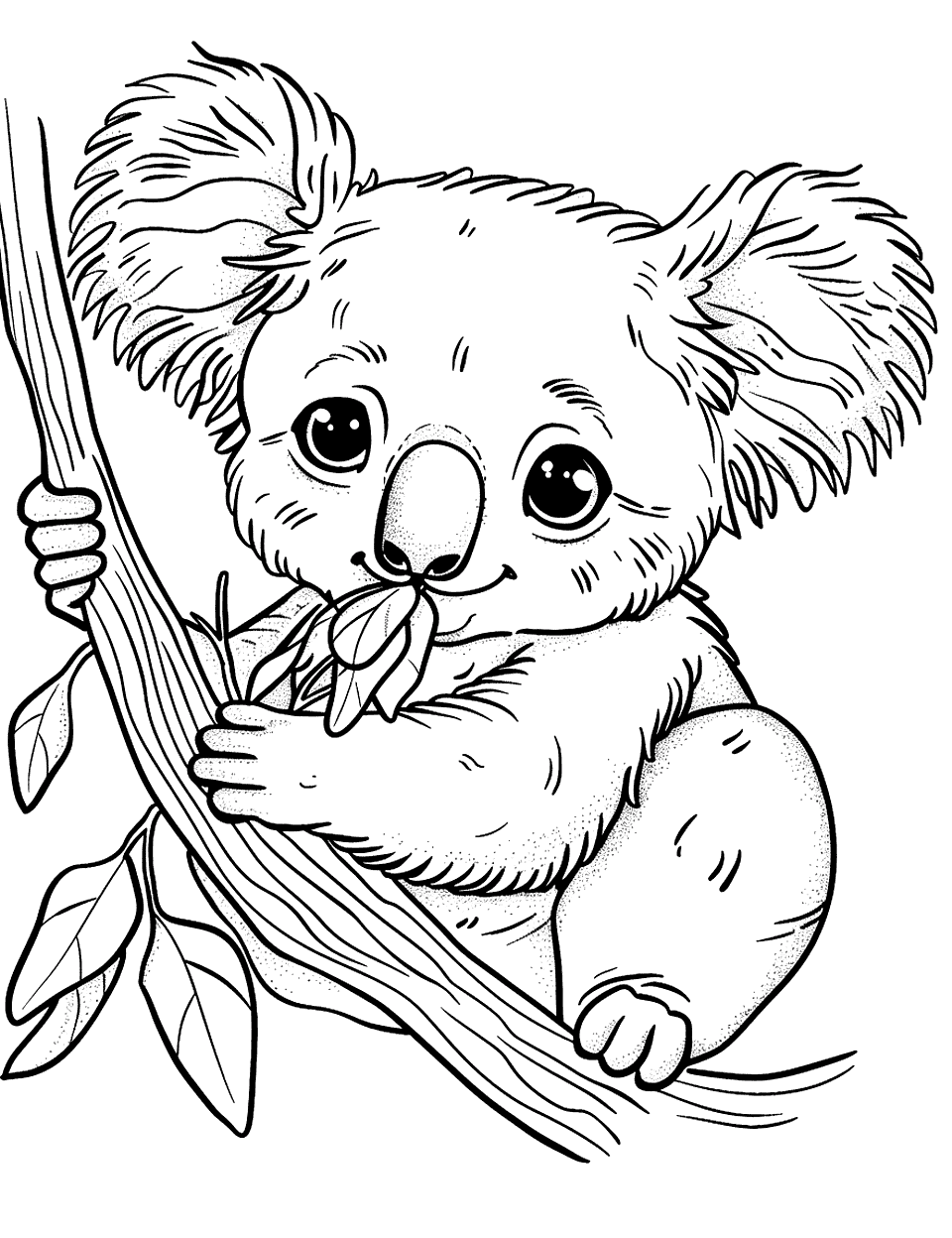
A eucalyptus sprig is lifted right up to this koala’s mouth, held there by one paw while the other grips the branch. The leaves are drawn large enough to color one by one, so try two or three greens across the sprig. Soft stippled shading runs through the fur, which takes colored pencil better than marker.
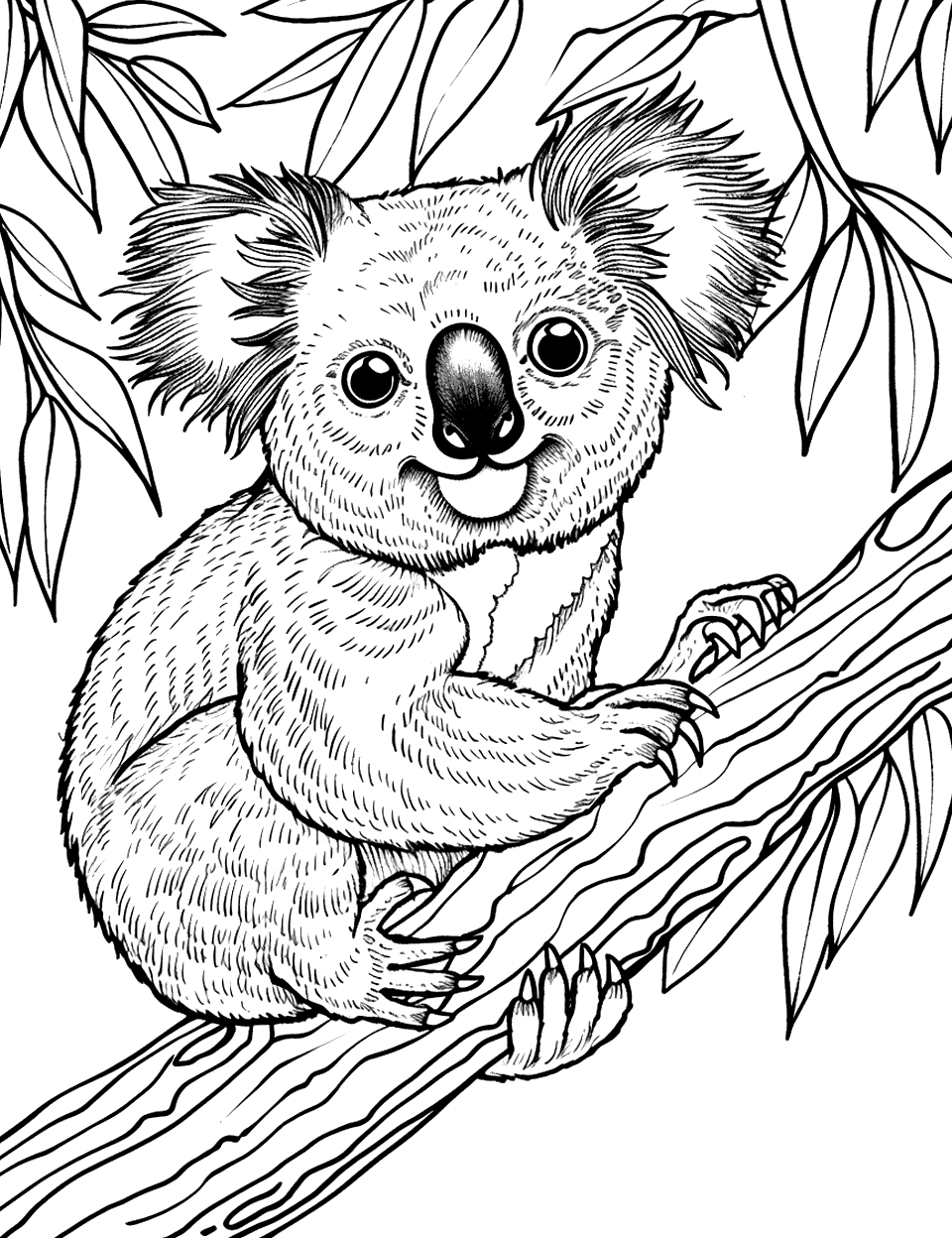
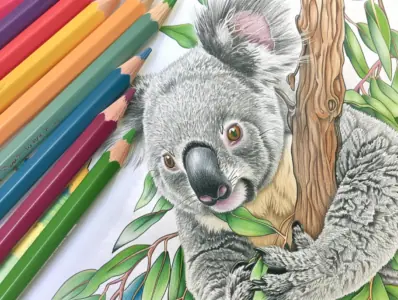
Long eucalyptus leaves hang across the top and both sides of this page while the koala grips a thick branch below. The fur is drawn as fine hatching, so pencils will hold the detail where markers would flood it. Fill the leaves with several greens and leave the chest pale so it separates from the body. Older kids and adults will get the most out of this one.
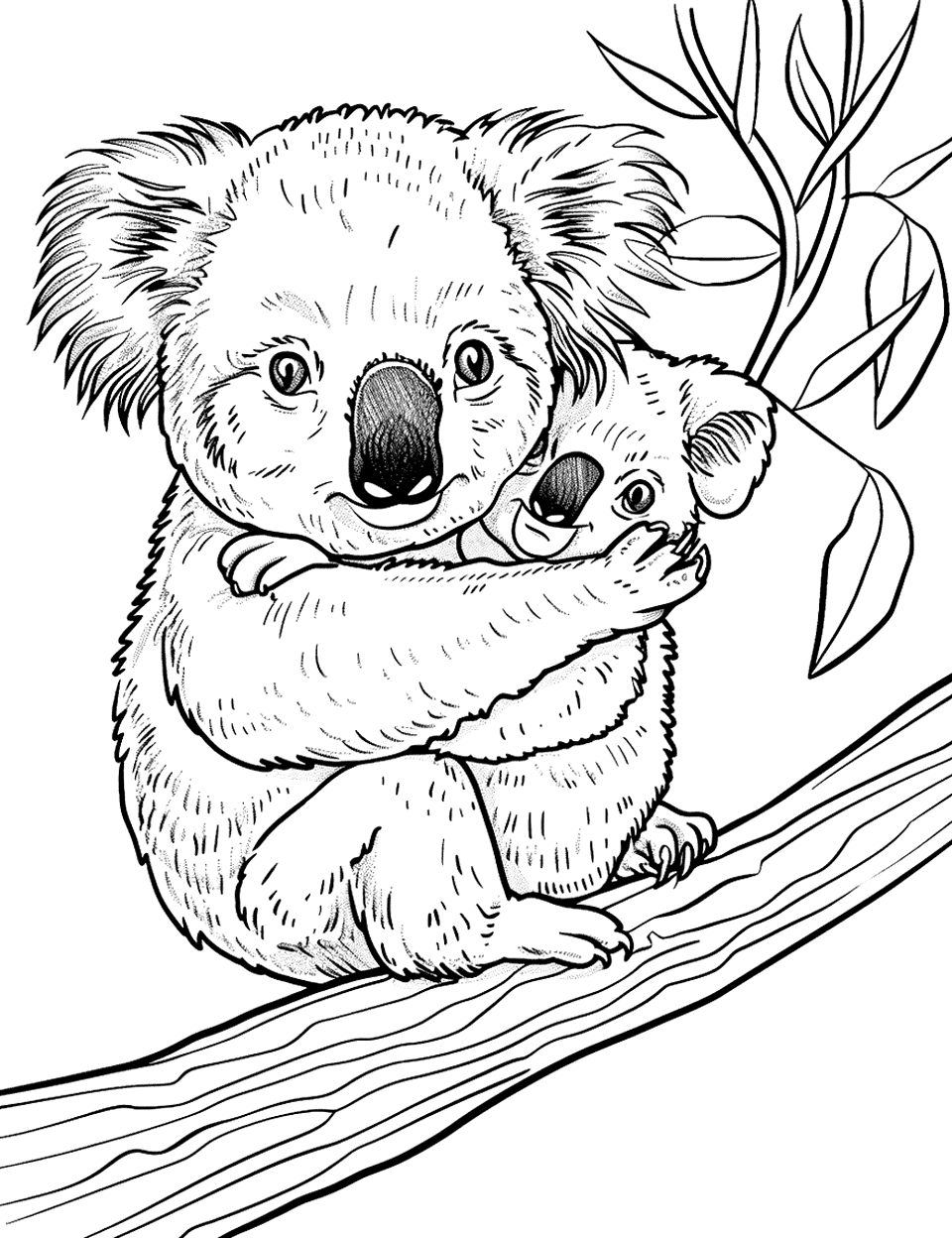
A mother koala has both arms wrapped around her joey, and the joey’s face is tucked in beside her chin. Their fur is textured differently, so two shades of grey will keep the pair readable. A eucalyptus sprig hangs in the top corner if you want a spot of green. Joeys spend about six months in the pouch before they are weaned onto leaves (1), which is worth mentioning while a child colors it.
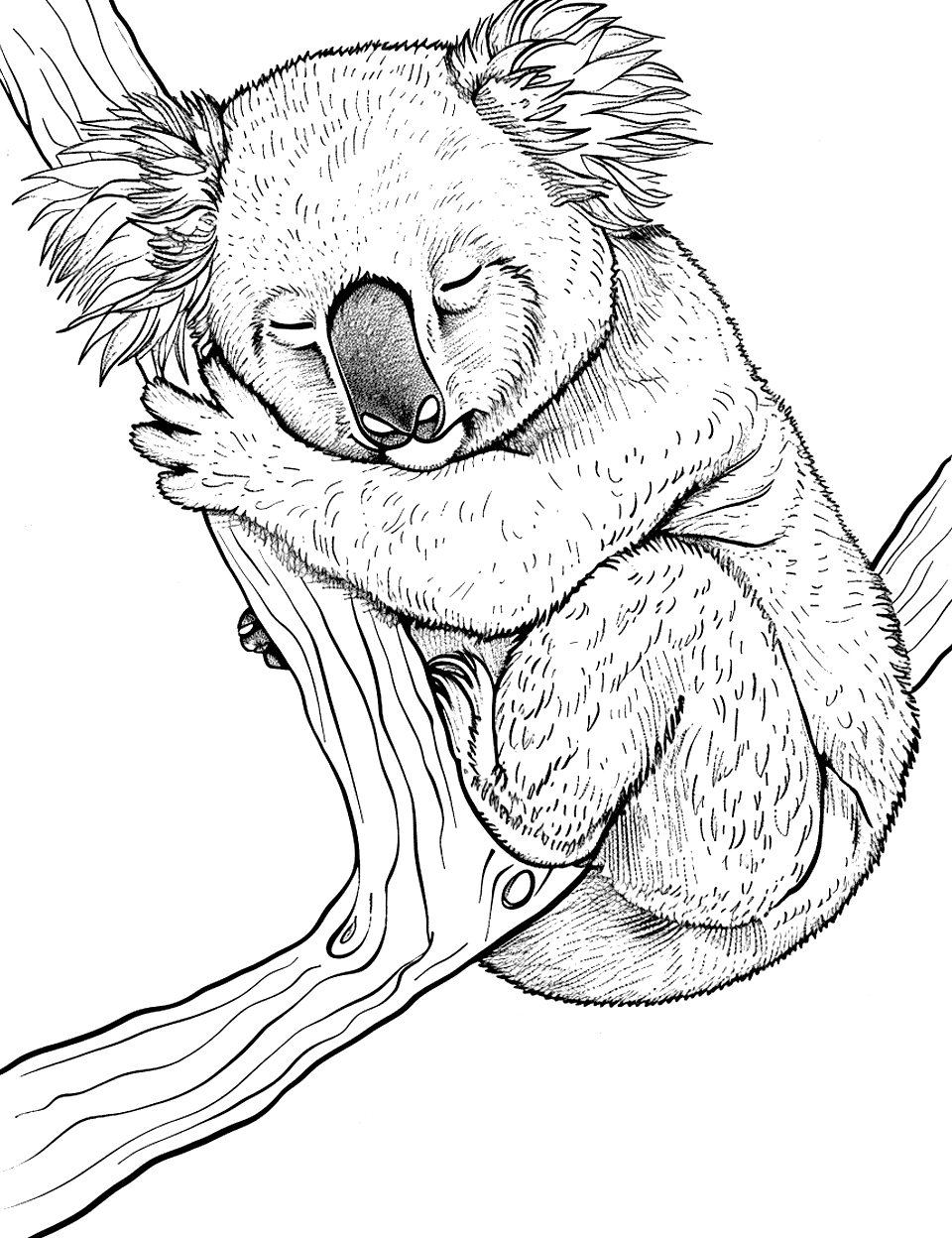
Eyes closed and head resting on one paw, this koala is fast asleep across a branch. The bark is drawn with long flowing lines that are satisfying to fill with browns. Keep the whole animal soft and pale so the sleeping mood carries through. Koalas rest for most of the day because eucalyptus leaves give them so little energy.
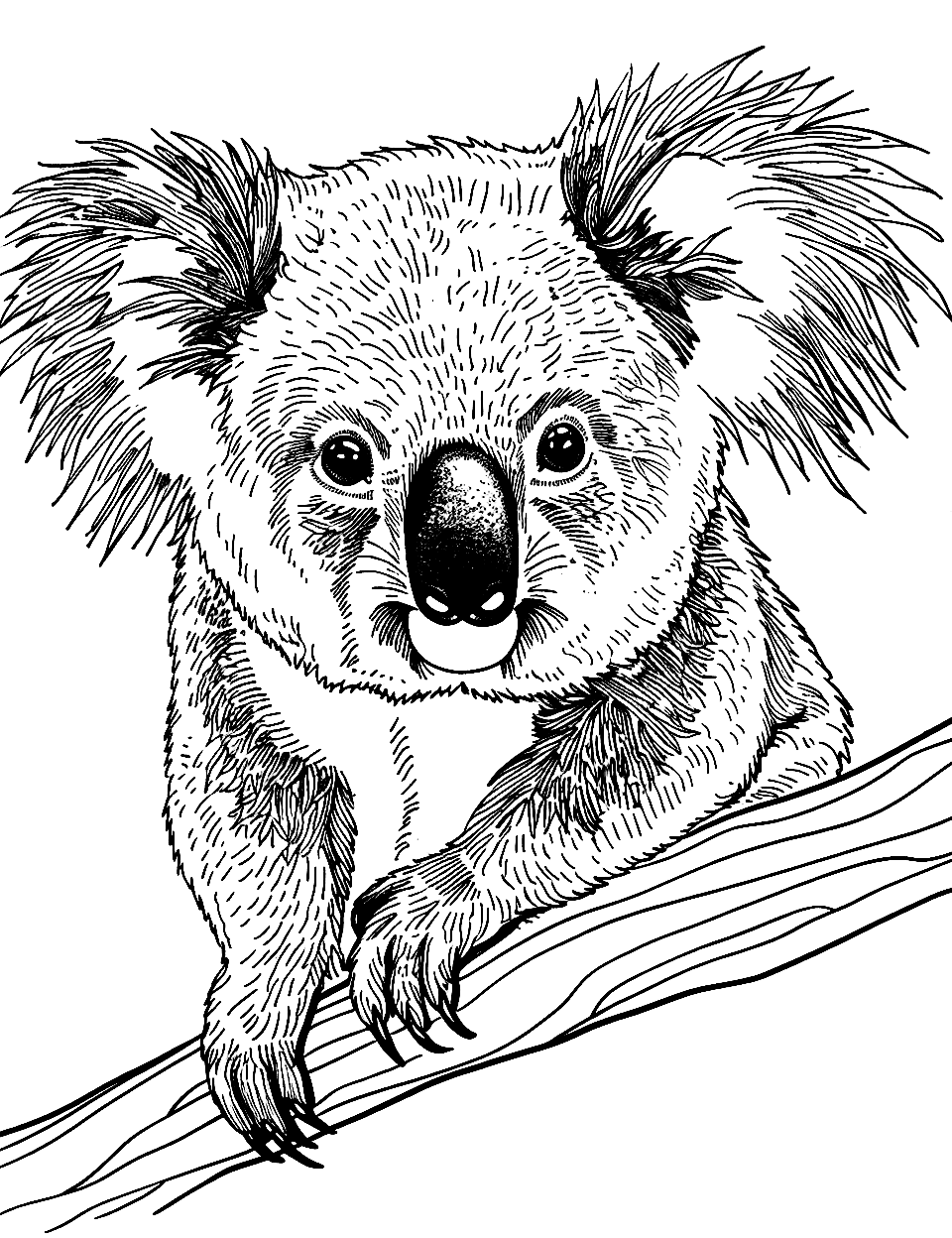
This is the most detailed face in the set, built almost entirely from fine hatching. The nose is one solid dark shape and the ear fringes fan out in long strokes. Work in light layers of grey and brown rather than a single flat tone, and save the nose for last so it stays clean. Adults coloring to unwind will get further with this sheet than a young child will.
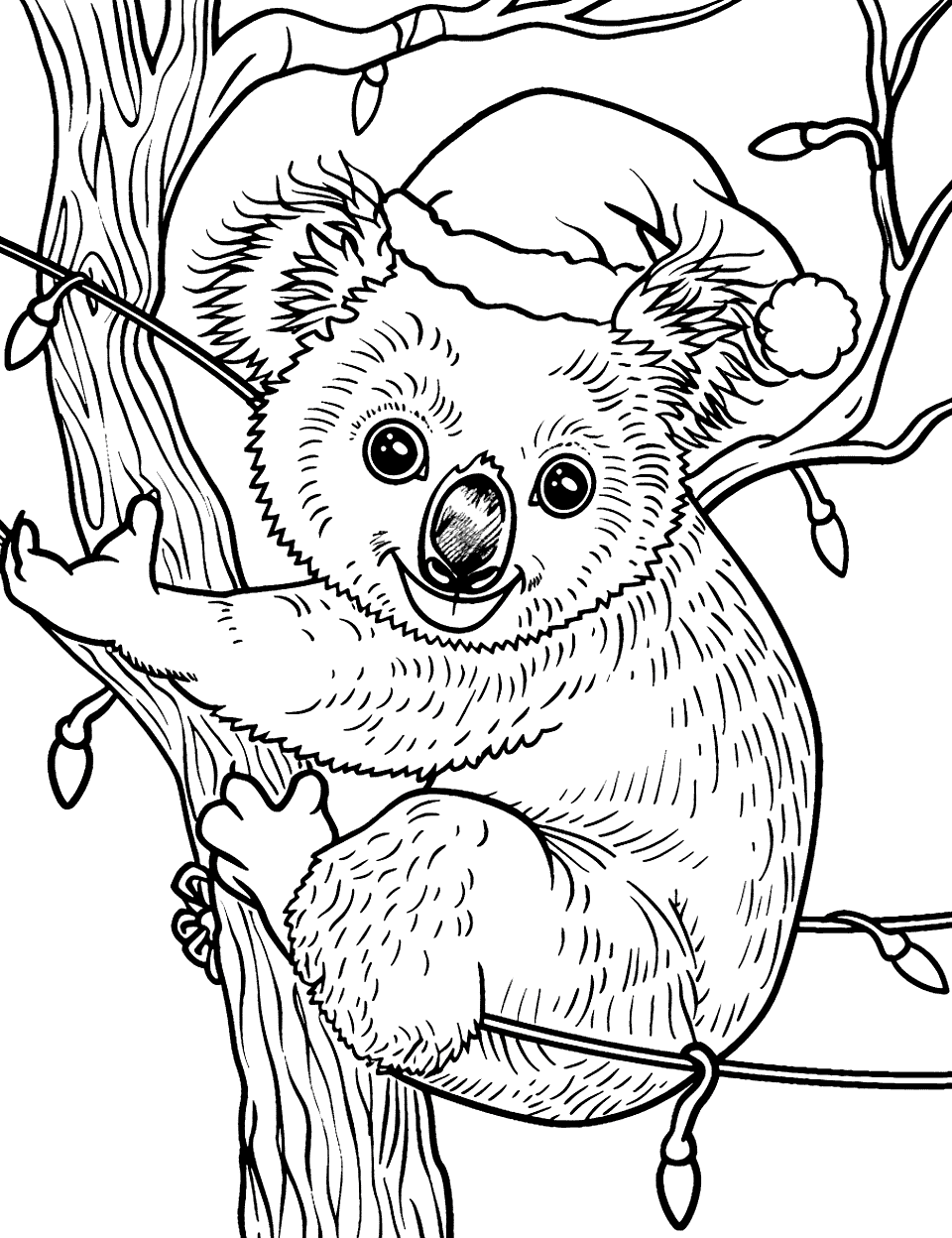
A Santa hat with a floppy pompom sits over one ear while this koala hugs the trunk. A string of bulb lights runs through the branches behind it, and every bulb is big enough to take its own color. Red hat, grey koala, rainbow lights is the obvious route and still the best one. Christmas falls in summer in Australia, which is a fun aside to drop while the crayons are out.
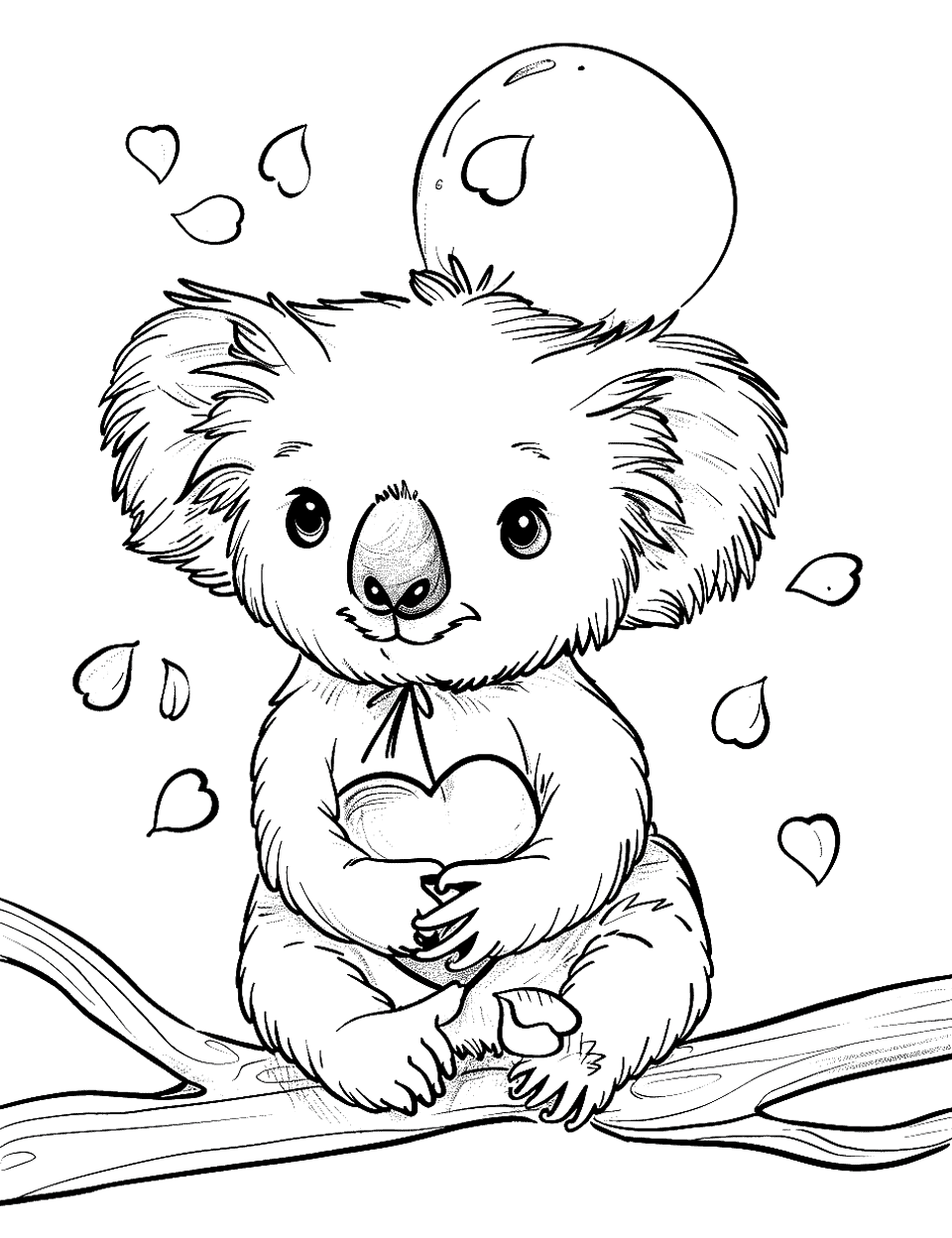
This koala holds a heart against its chest with a ribbon tied at its neck. A round balloon floats above its head and rose petals drift across the background. Pinks and reds do the heavy lifting, though a grey koala in front of them looks better than a pink one. Cut the heart out afterwards and you have a homemade Valentine’s card.
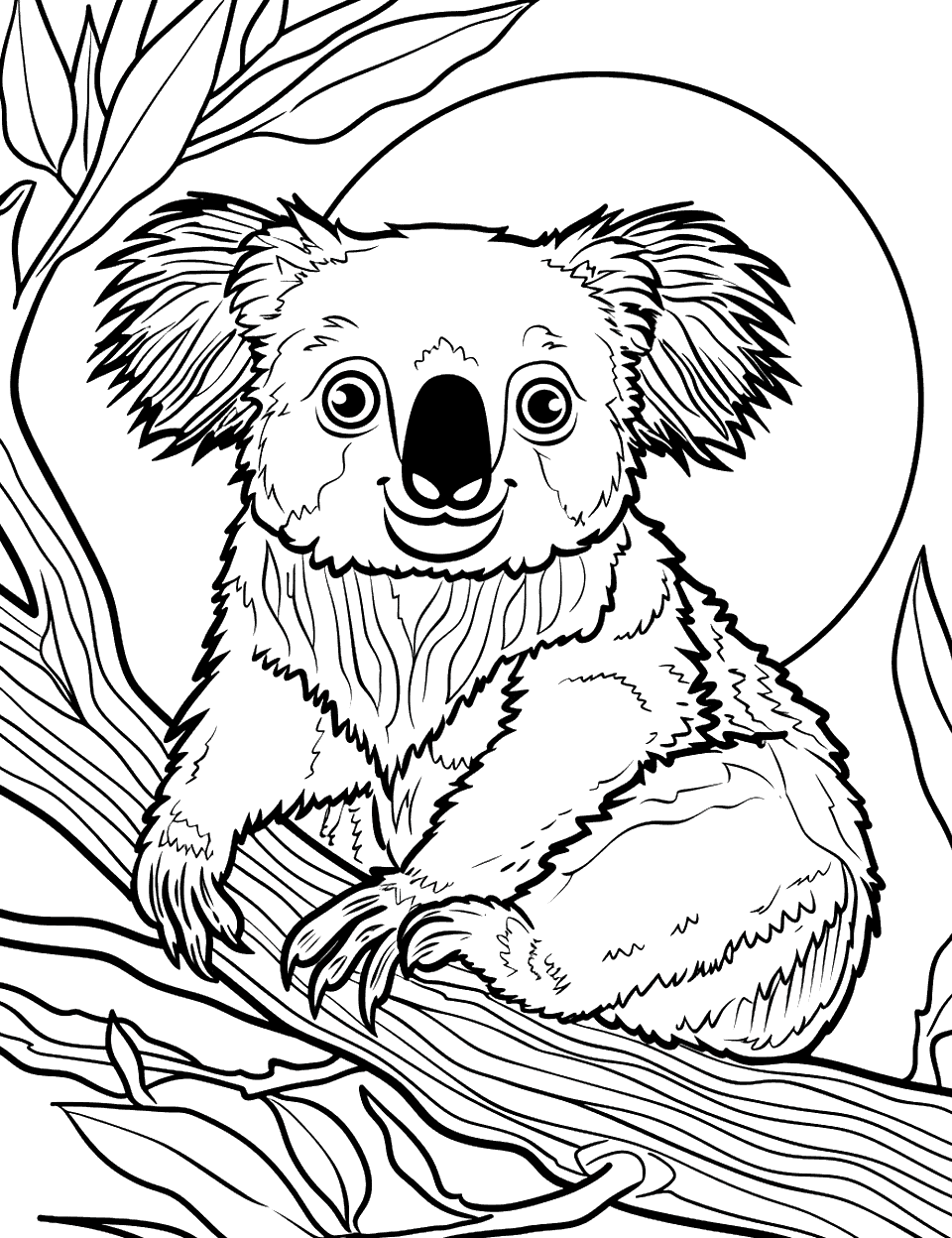
A large circle sits behind this koala like a low sun, filling most of the background. The koala is drawn in a chunkier, zigzag-edged style than the realistic sheets, with eucalyptus leaves framing the corners. Warm orange inside the circle against a grey koala gives the strongest contrast on the page.
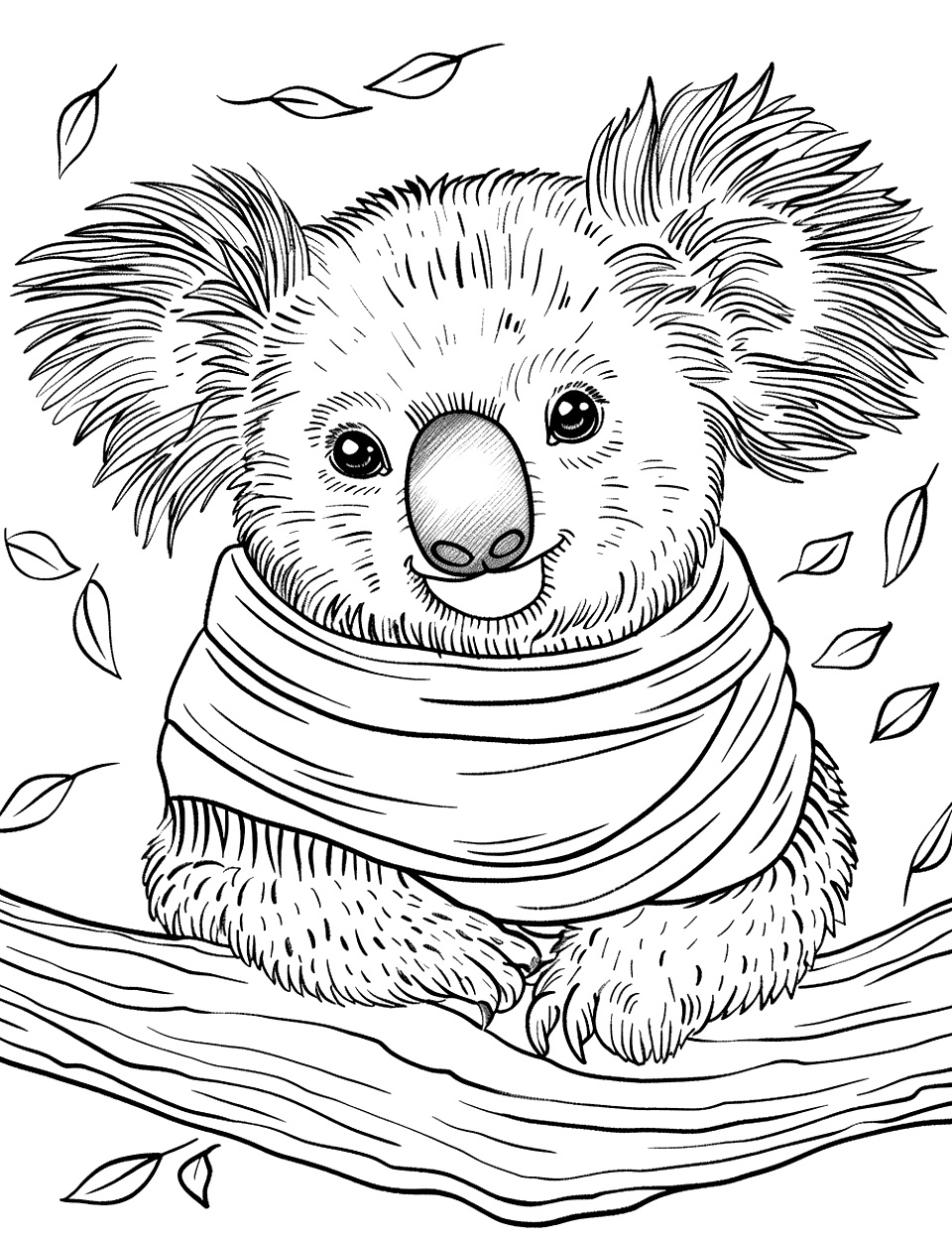
A wide scarf is wound several times around this koala’s neck and covers most of its chest. Leaves blow past on both sides, which is a fair excuse for autumn oranges and reds. The scarf’s folds are drawn as broad bands, so it is the natural home for the boldest color here. Print it on the first cold morning of the year.
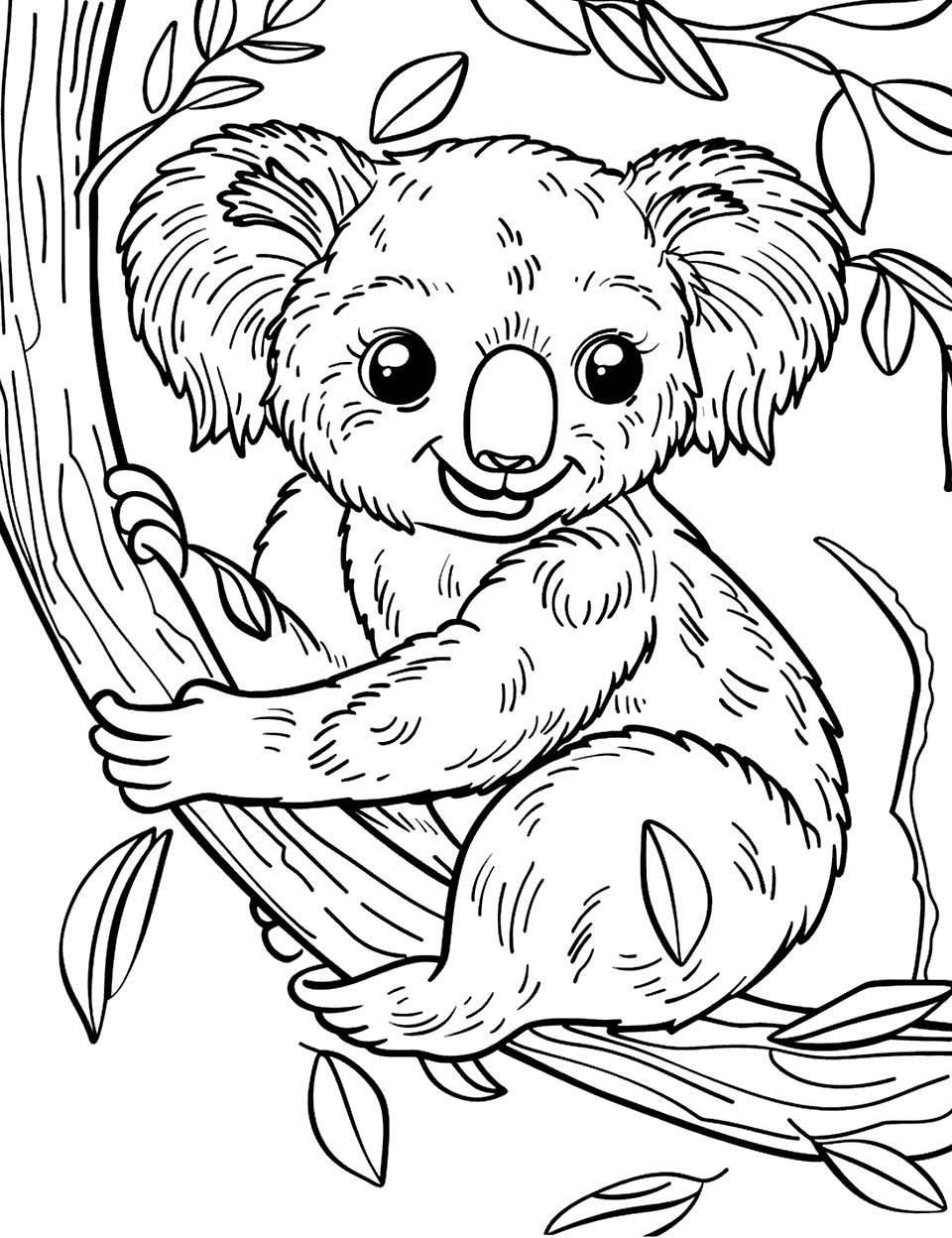
Eucalyptus leaves fill the space around this koala, above it, below it and drifting loose across the page. The koala hugs a branch and looks straight out at you with a wide smile. Because the leaves are separate shapes, this is a good sheet for practicing a different green on each. A younger child can take the leaves while an older one handles the fur.
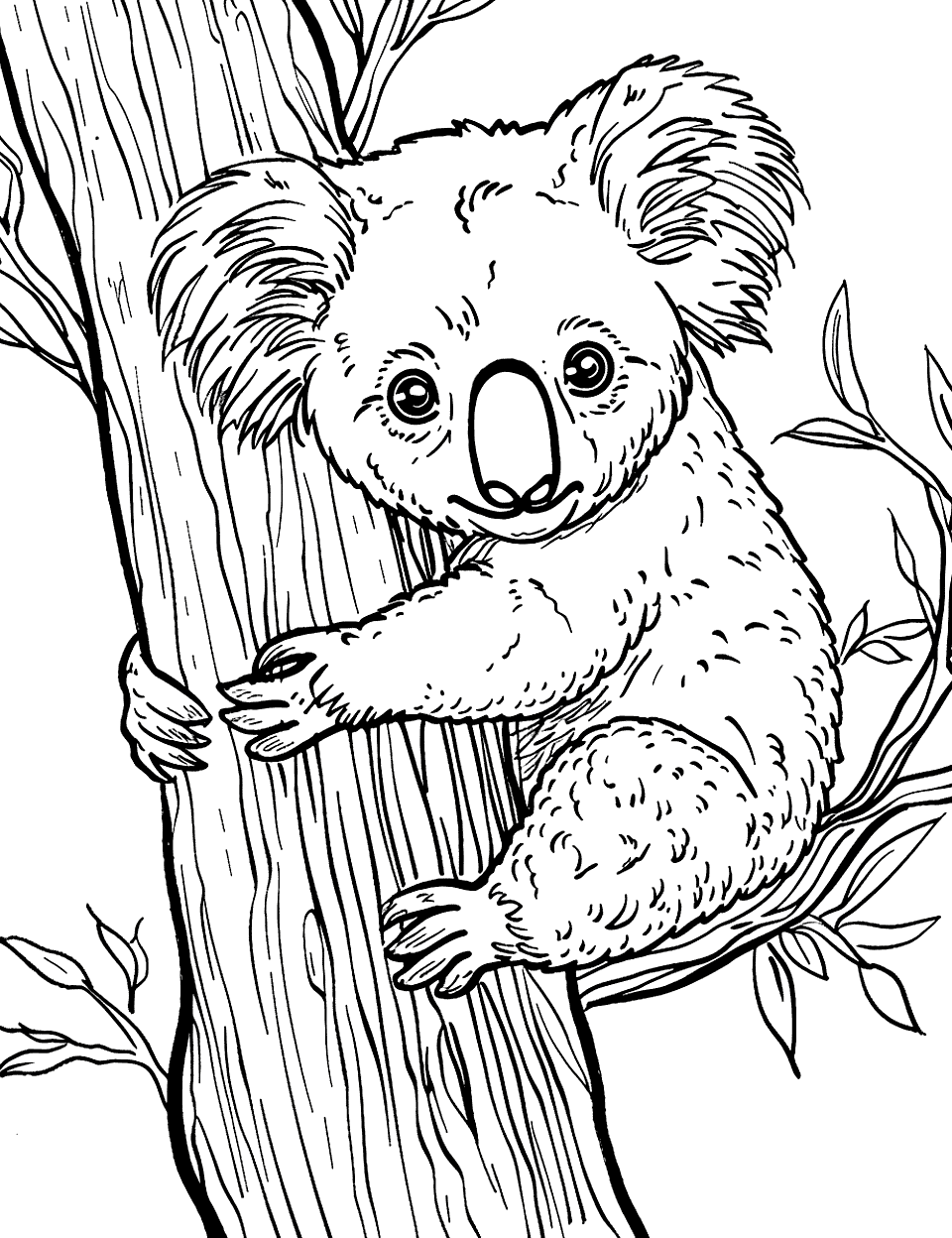
A thick trunk runs the full height of the page and the koala clings to it with all four paws. The bark is drawn as long vertical lines, so it takes browns well and gives small hands a big easy area to fill. Eucalyptus branches reach in from the right side. The face carries the finest detail, so leave it until last.
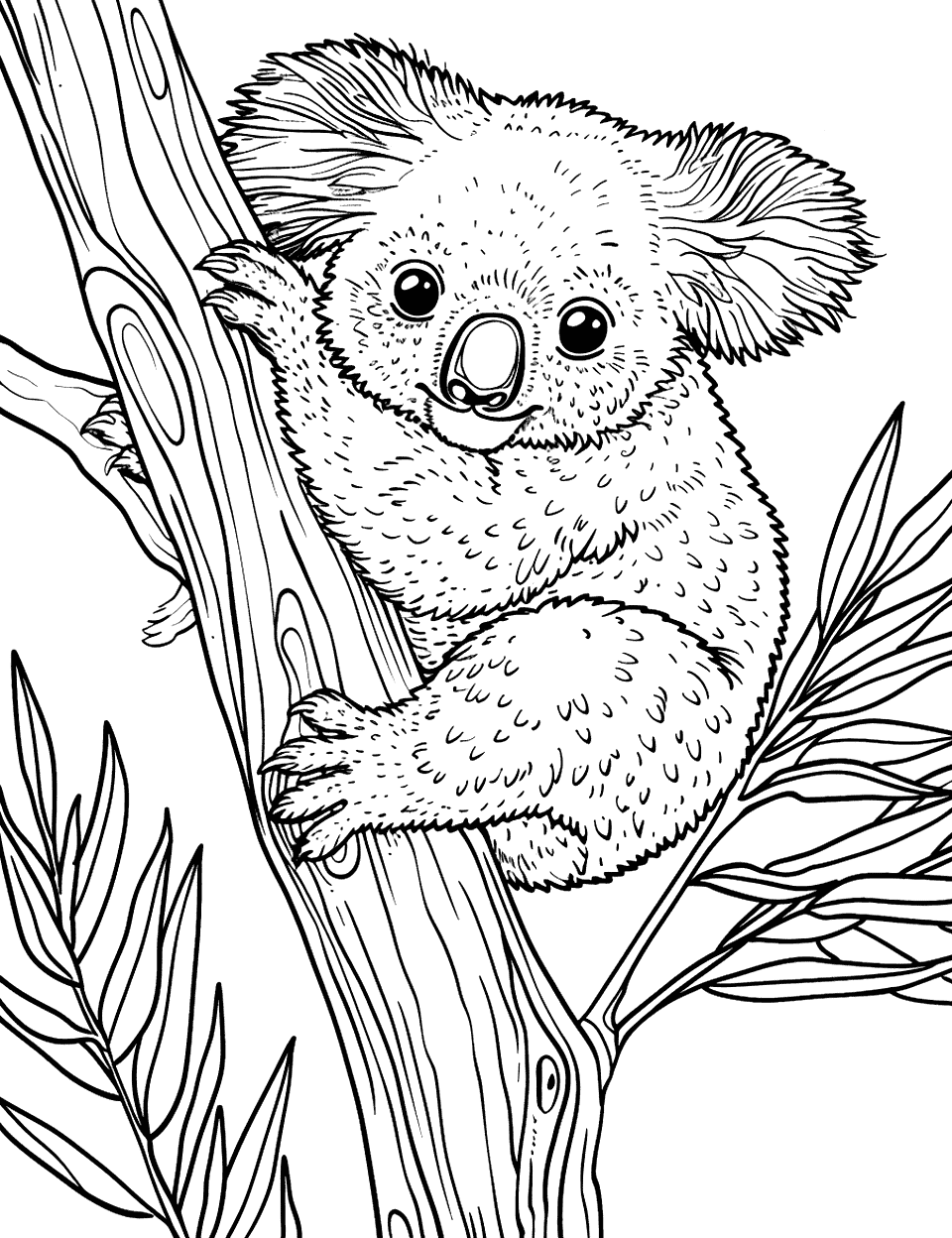
Here the koala is partway up a leaning trunk, gripping the bark with both front paws. Its fur is drawn as small dashes rather than solid strokes, which gives a speckled look under a light grey pencil. Eucalyptus fronds fan out at the bottom on both sides. The pose reads as movement, so it makes a good partner to the sleeping sheet.
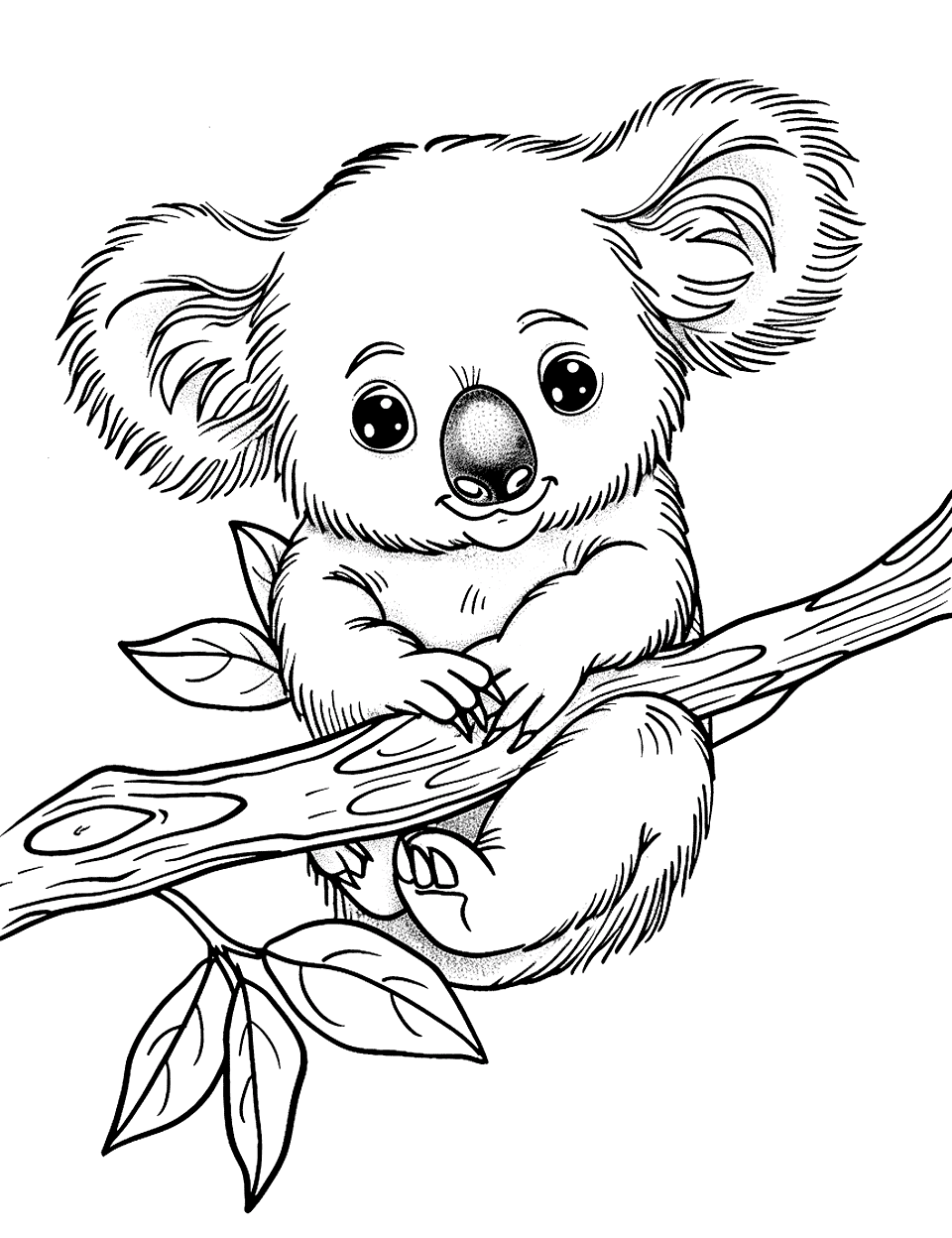
This koala is draped over a horizontal branch with both front paws resting on top of it. The outlines are smooth and rounded, with light shading dotted through the fur. A few eucalyptus leaves sprout from the branch on either side. It sits in the middle for difficulty: simpler than the portraits, busier than the kawaii sheet.
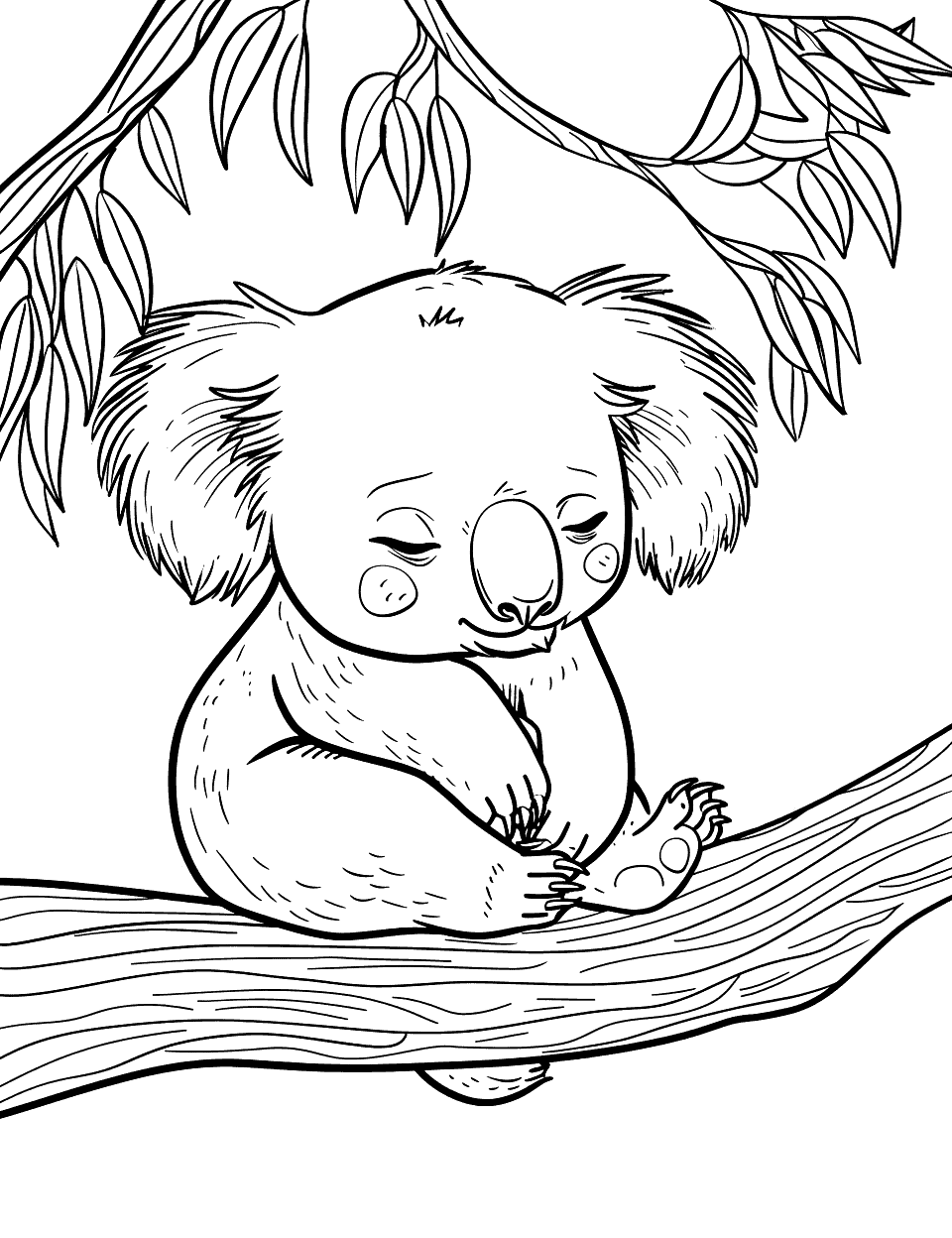
Eyes closed and arms folded across its front, this koala looks entirely content on its branch. Round blush circles sit on both cheeks, so give those a soft pink. Eucalyptus branches hang down from the top of the page and frame the whole scene. The shapes are large and clean, which makes it a good wind-down sheet before bed.
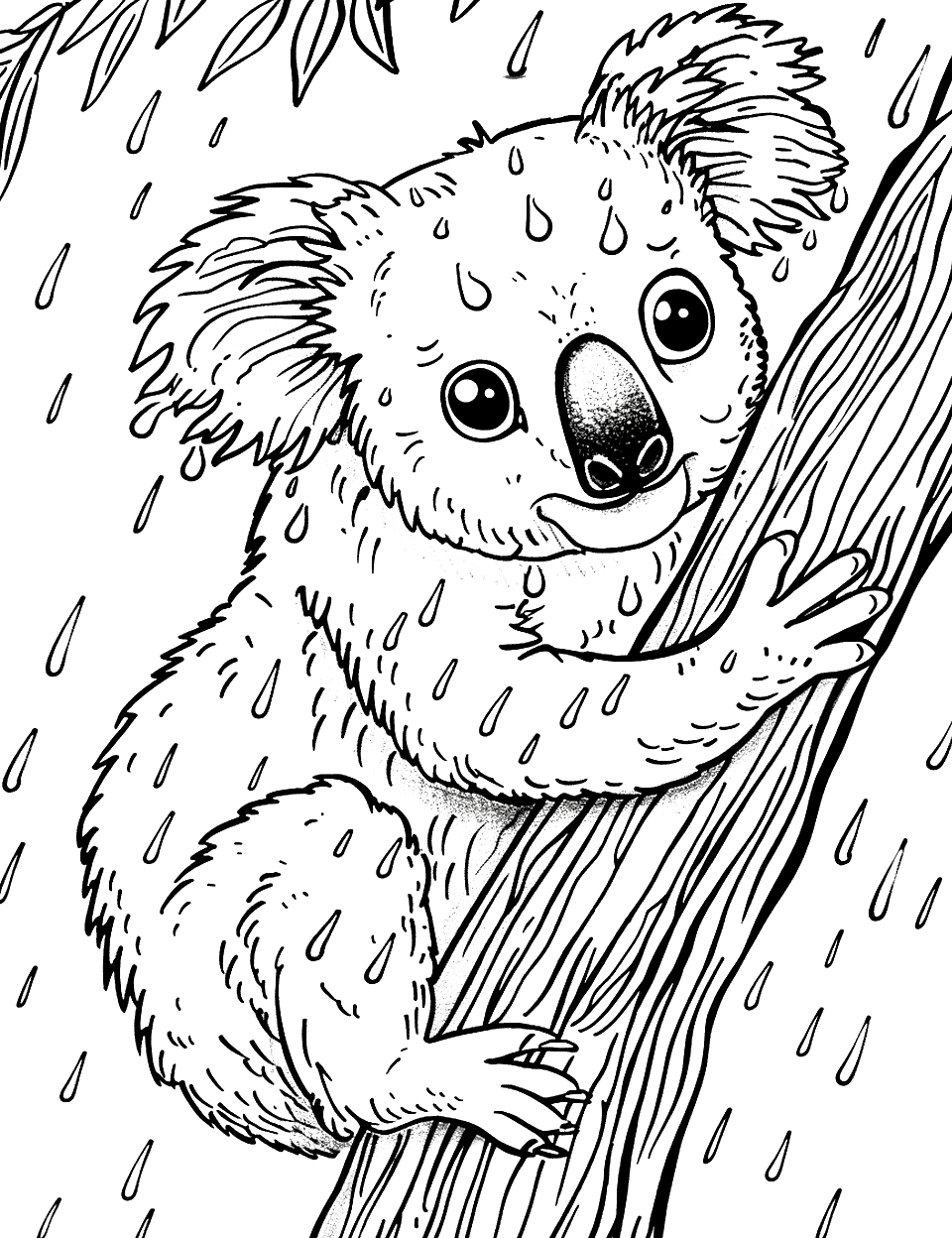
Raindrops fall across the whole page here, and several land right on the koala’s face and back. It holds the trunk with both paws and still looks pleased about the weather. Leave the drops white, or give them the palest blue so they read as water against grey fur. Print this one on a wet afternoon and the mood matches.
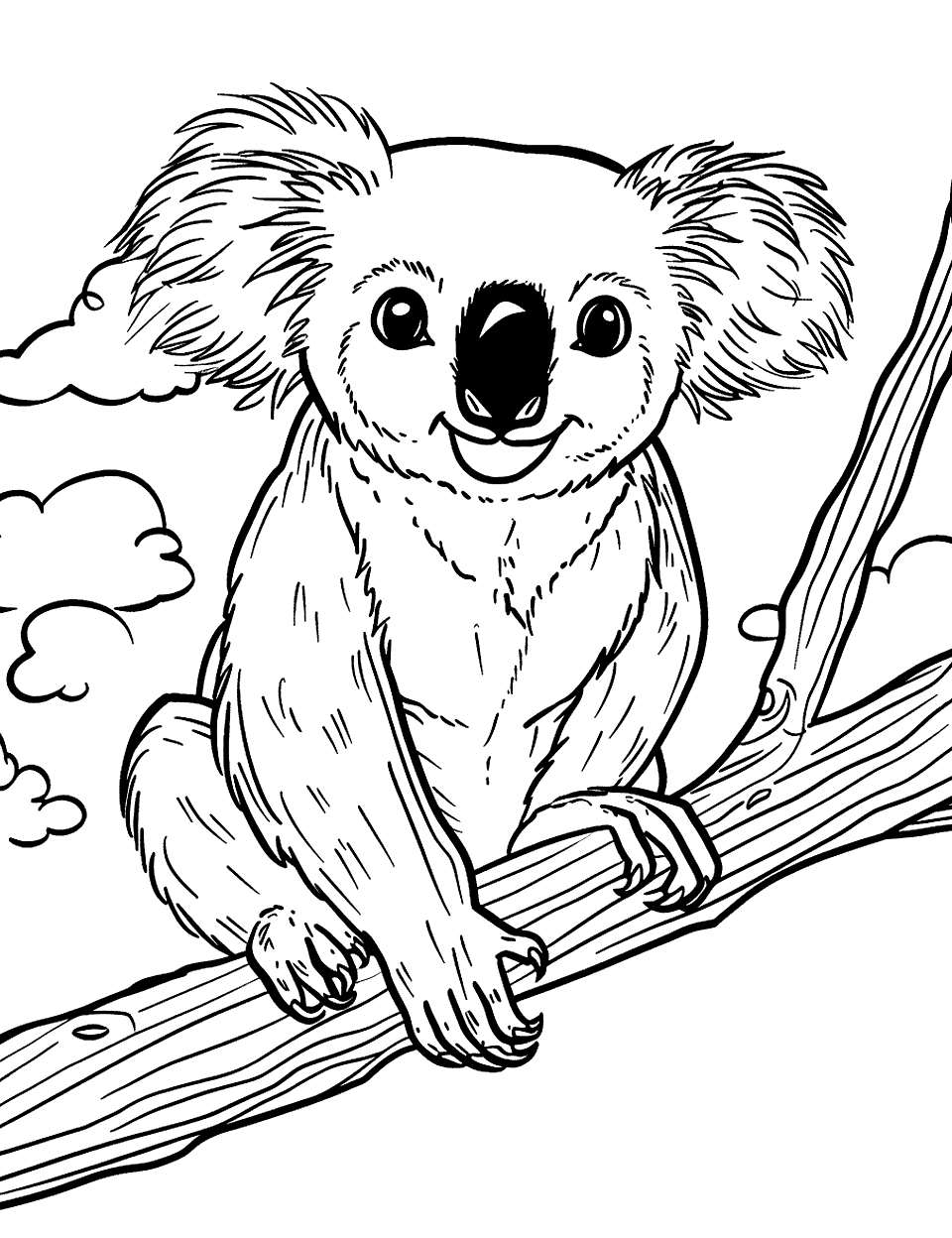
Soft cloud shapes fill the background behind this koala and leave a lot of open space to color. The koala sits high on a branch with both front paws forward and a wide smile. Pale blue sky with white clouds is the easy version; a sunset gradient is the harder, prettier one. Those wide empty areas also make this a good sheet for paint or chalk pastels.
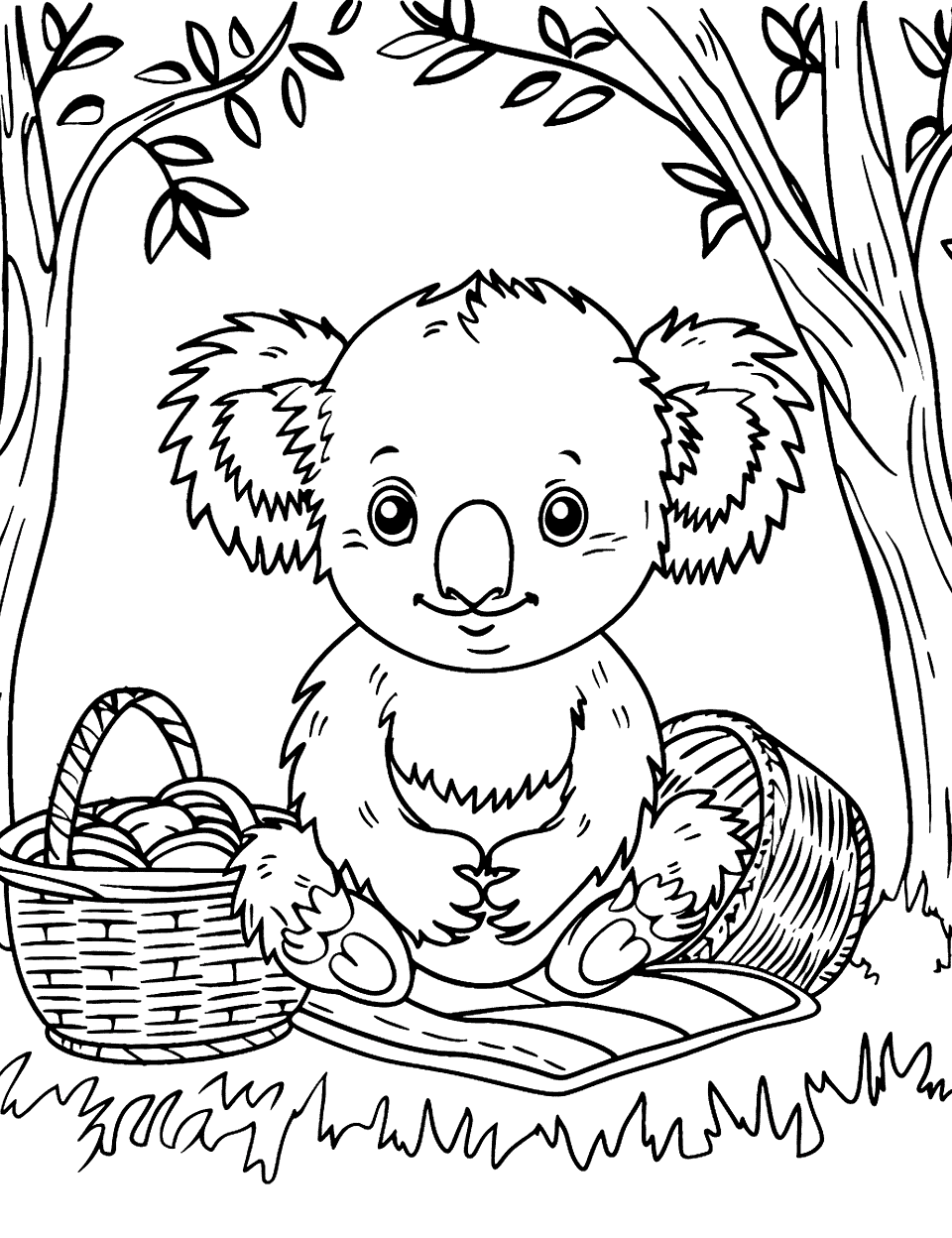
A picnic blanket is spread out under the trees with the koala sitting in the middle of it. A basket of round fruit rests on one side and a second basket has tipped over on the other. Grass, trees, blanket and baskets give you four separate areas to plan colors for. It is one of the busier scenes here, so allow more time than the portrait sheets need.
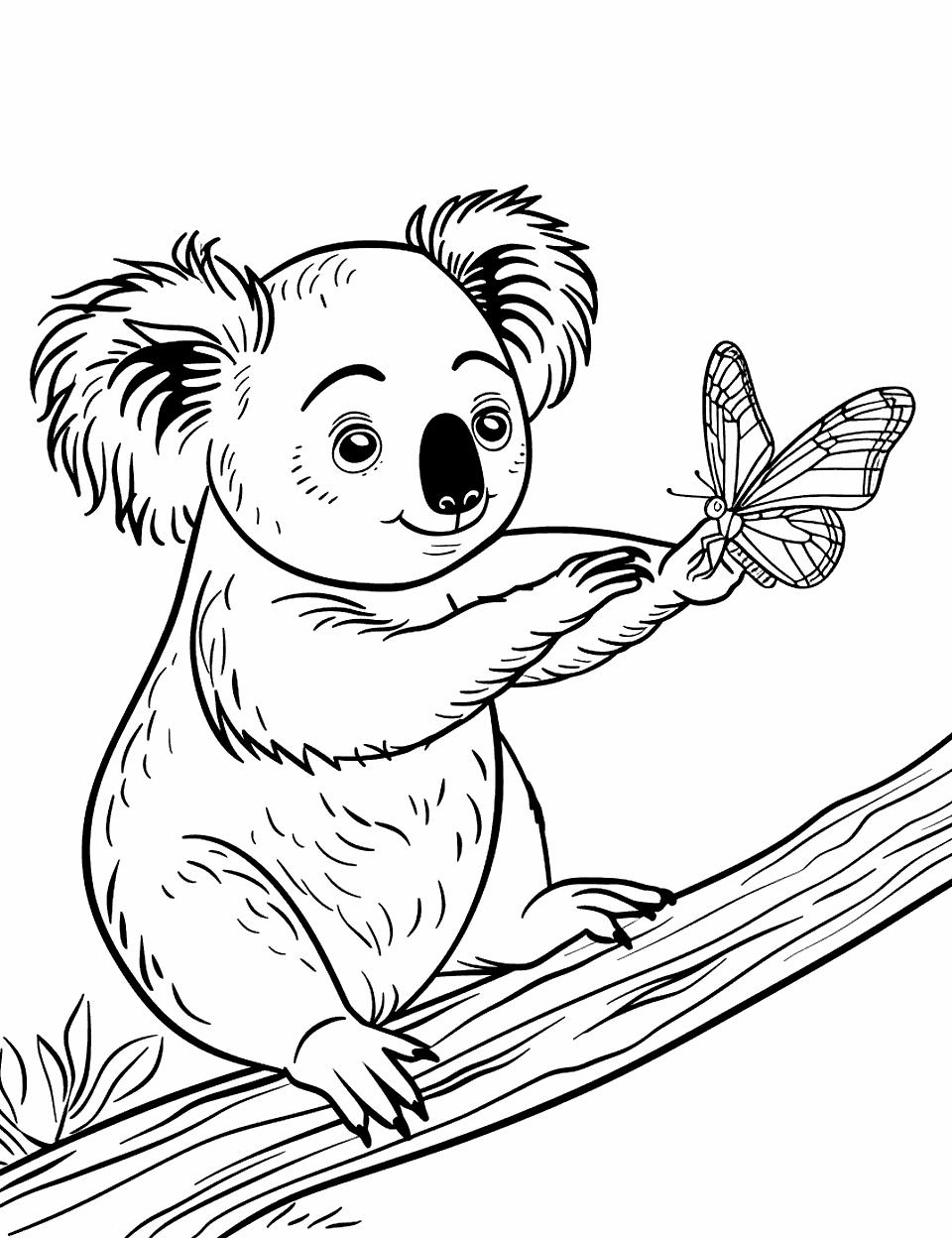
A butterfly has landed on this koala’s outstretched paw, and the koala is looking straight at it. The wings carry fine vein lines, so they are the one spot on the page that wants a small tip. Everything else is clean, open outline work that suits crayons. Bright wings against a grey koala is the contrast this sheet is built around.
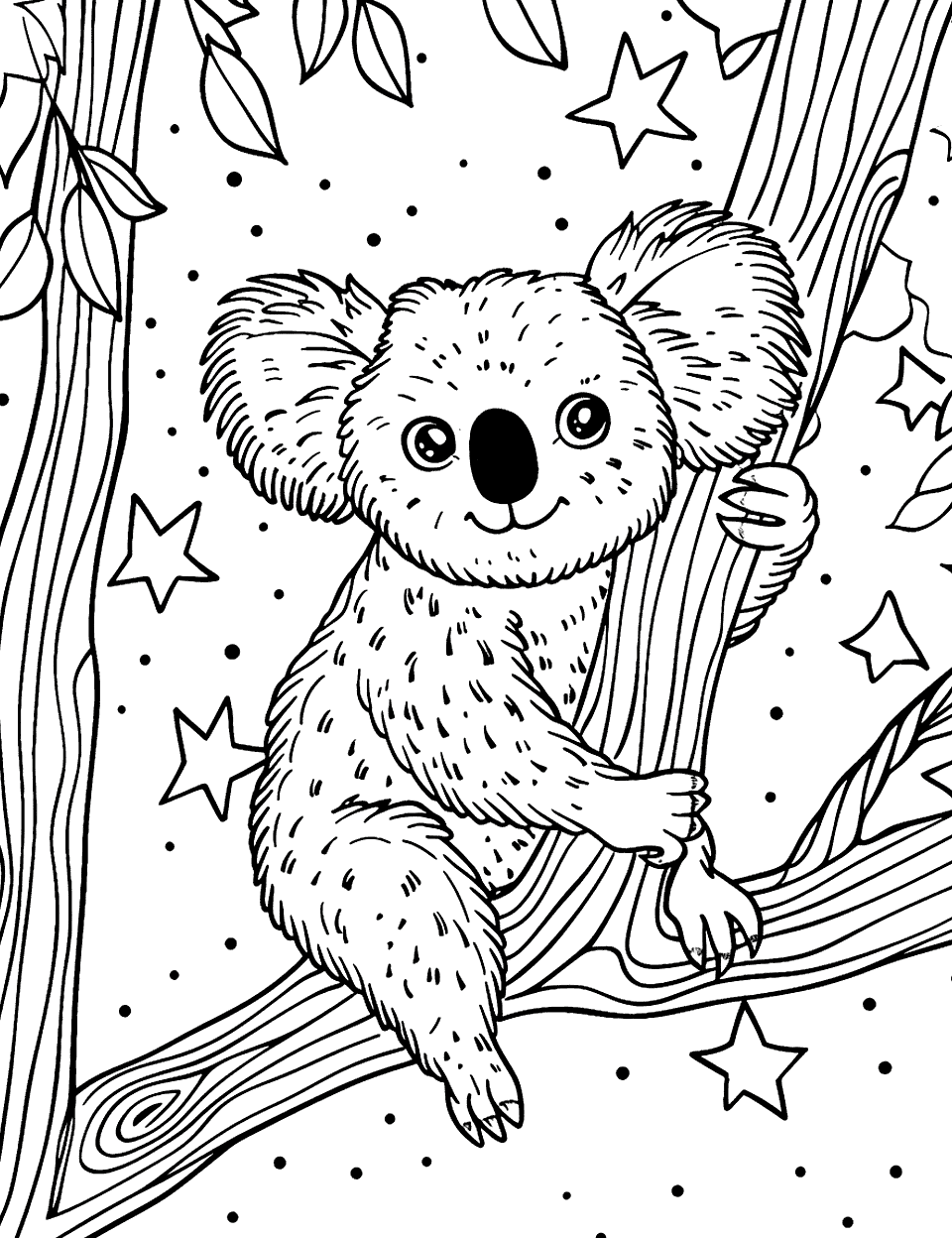
Stars and small dots are scattered across the whole background while the koala clings to a trunk in the middle. Dark blue or black behind them makes every outline pop, though filling that much background takes patience. Eucalyptus leaves hang in from the top corners. White or metallic gel pens on top of a dry background finish it nicely.
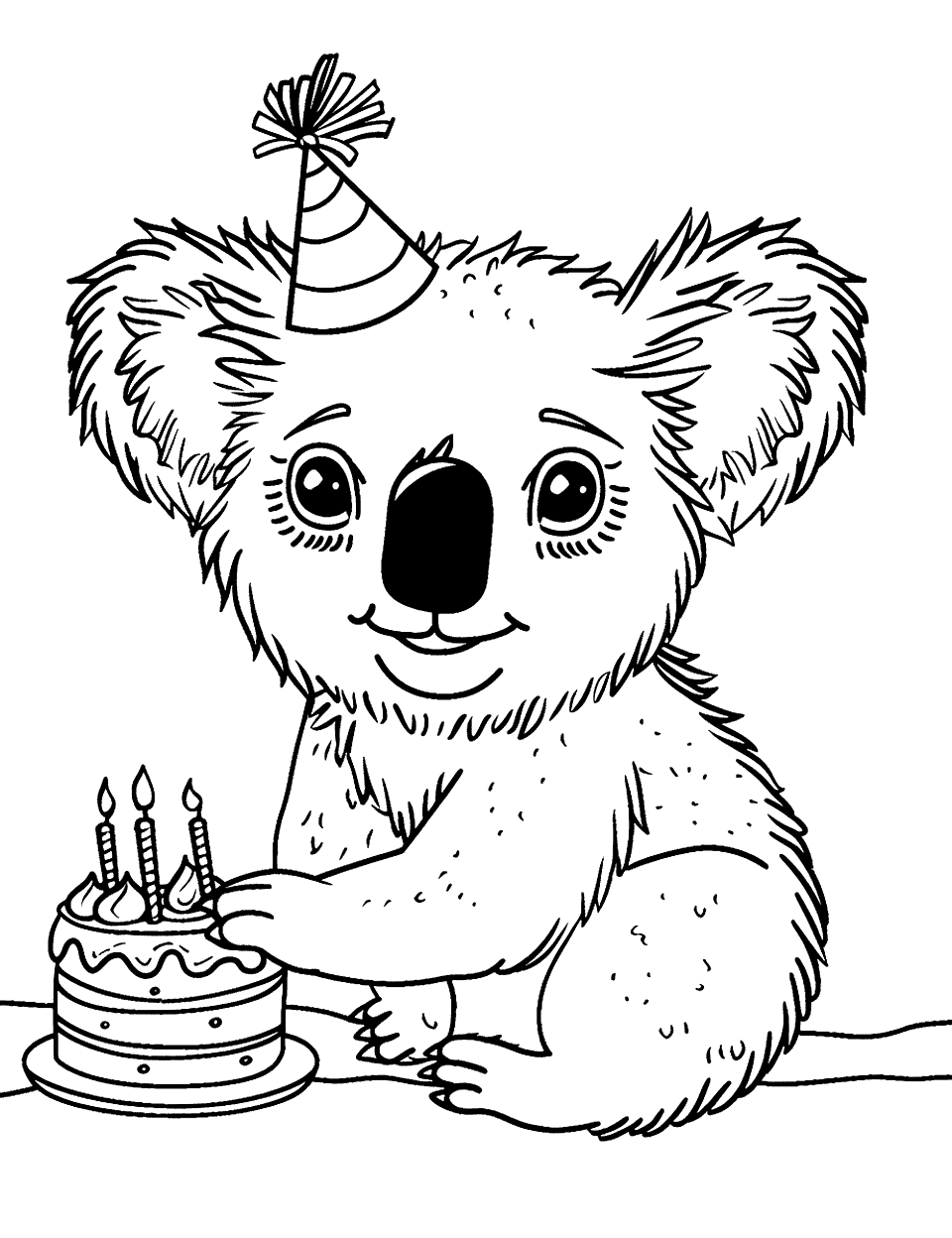
A striped party hat with a tassel sits between this koala’s ears, and one paw rests against a small round cake. Three candles stand on top of the frosting, ready for whatever colors the birthday kid picks. The face fills most of the page, so it is easy going for small hands. Color it, trim it, and it becomes the front of a birthday card.
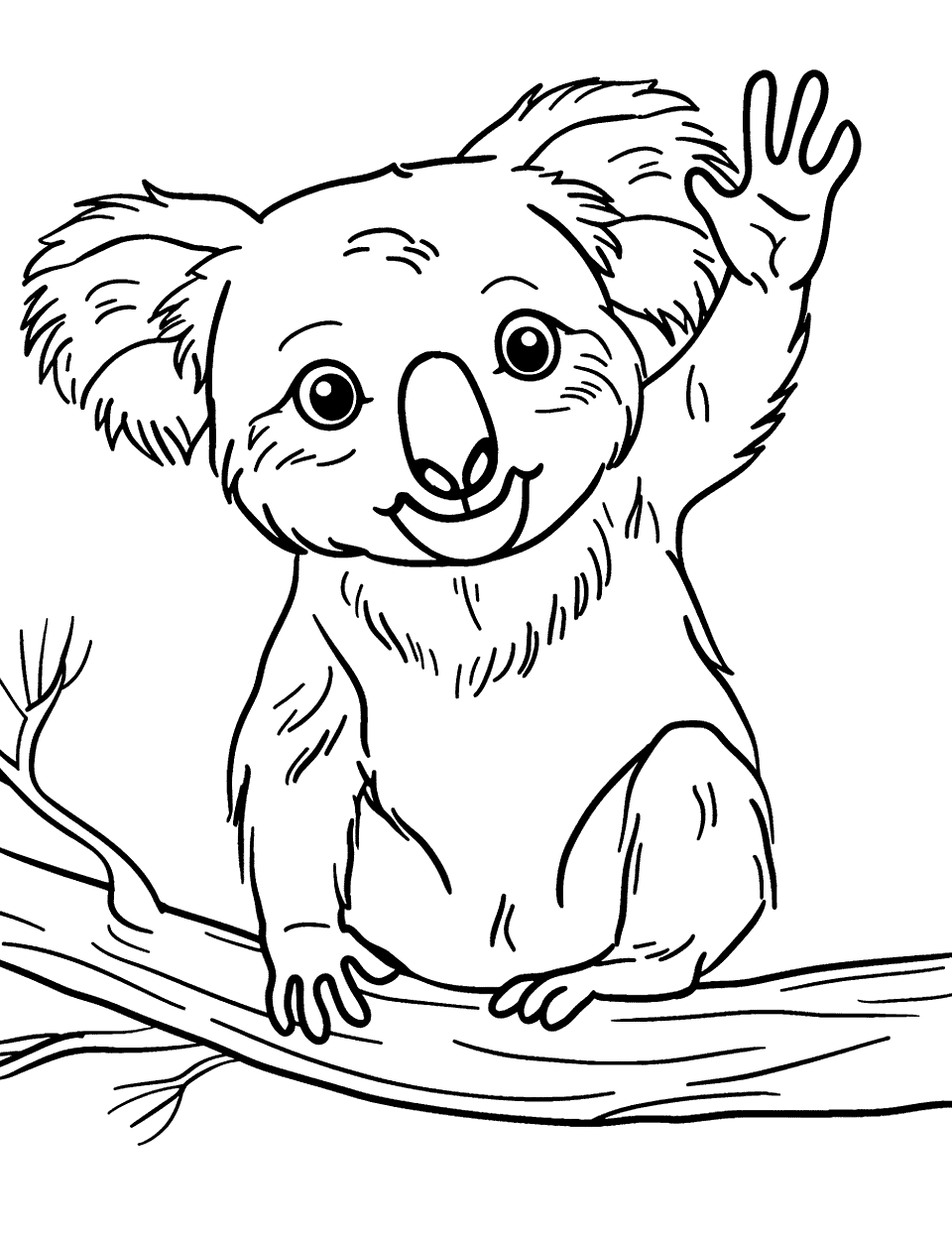
One paw is raised in a wave and the smile is wide open, which makes this the friendliest face in the set. The linework is bold and uncluttered with almost no background to fill. A bare twig pokes in from the left end of the branch. Good for a young child who wants something finished quickly.
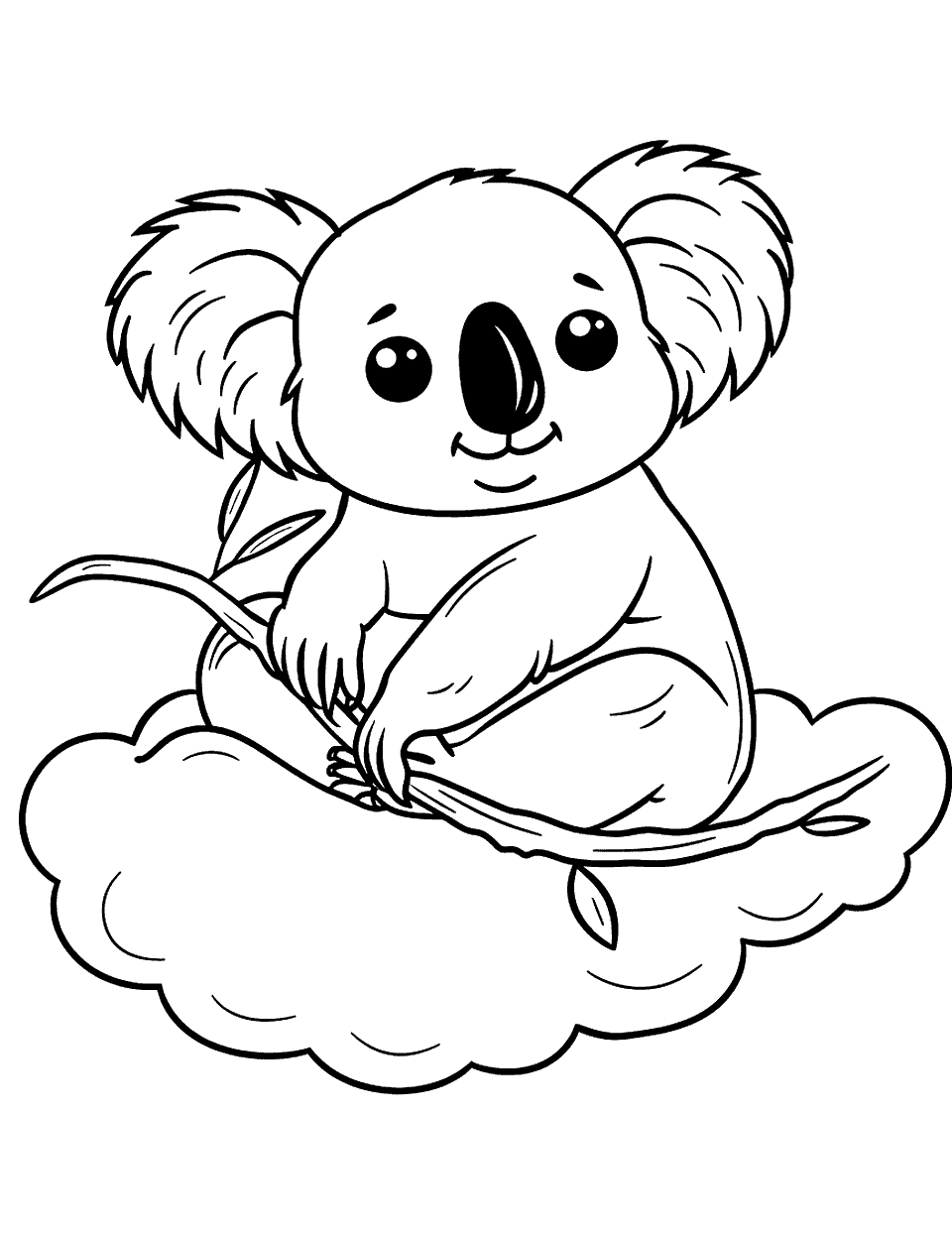
This koala sits on top of a big fluffy cloud with a eucalyptus branch across its lap. The lines are simple and rounded with no shading at all, which makes it the lightest sheet here. A pale grey cloud under a brighter koala flips the usual color plan in a fun way. It also holds up when printed small, so several fit on a page if you are making a garland.
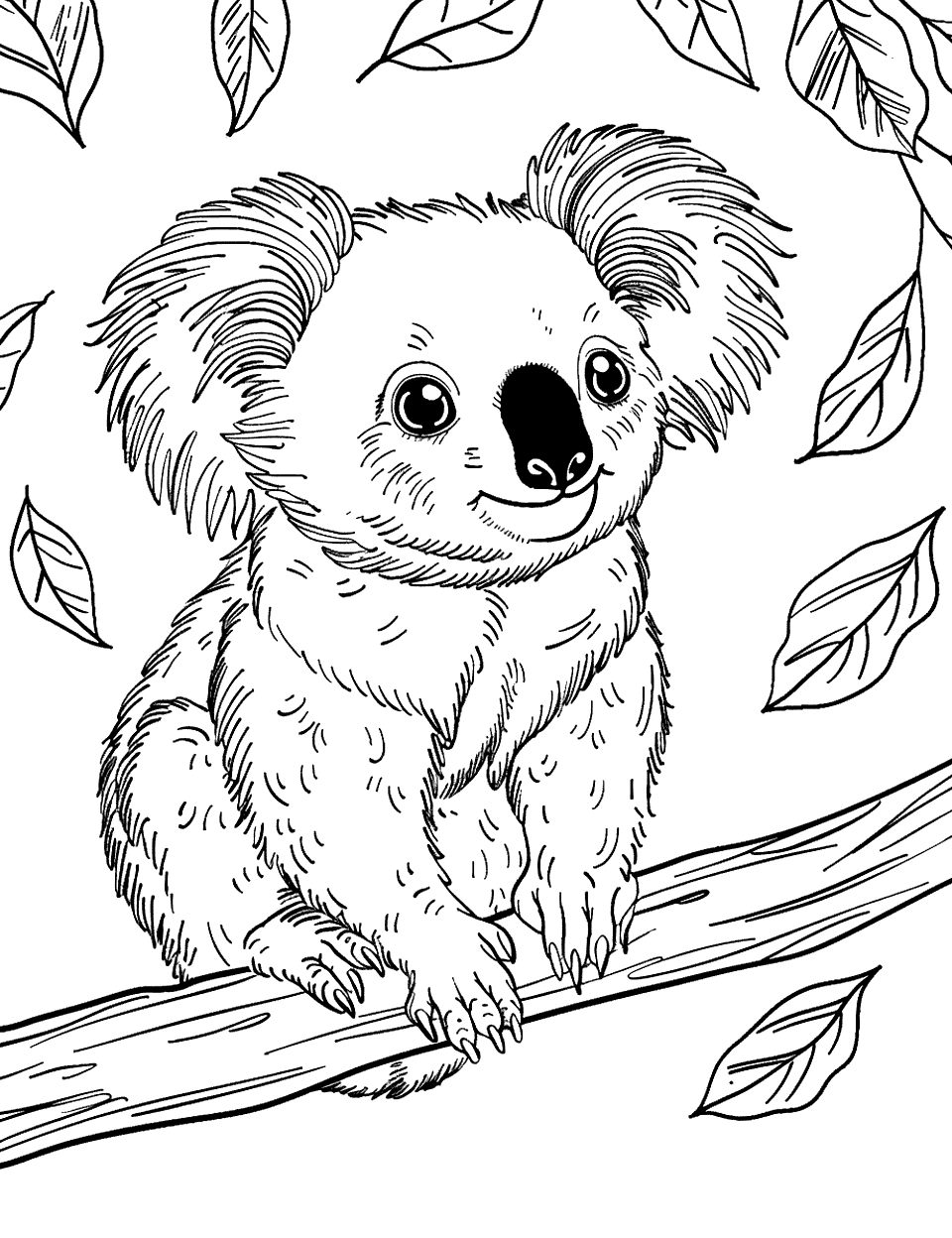
Large leaves float loose all around this koala rather than sitting on a branch. The koala grips a bare limb below with both paws and looks up and out at you. Each leaf carries clear vein lines, so each can take a different autumn shade. Fine hatching runs through the fur, which again suits pencils better than thick markers.
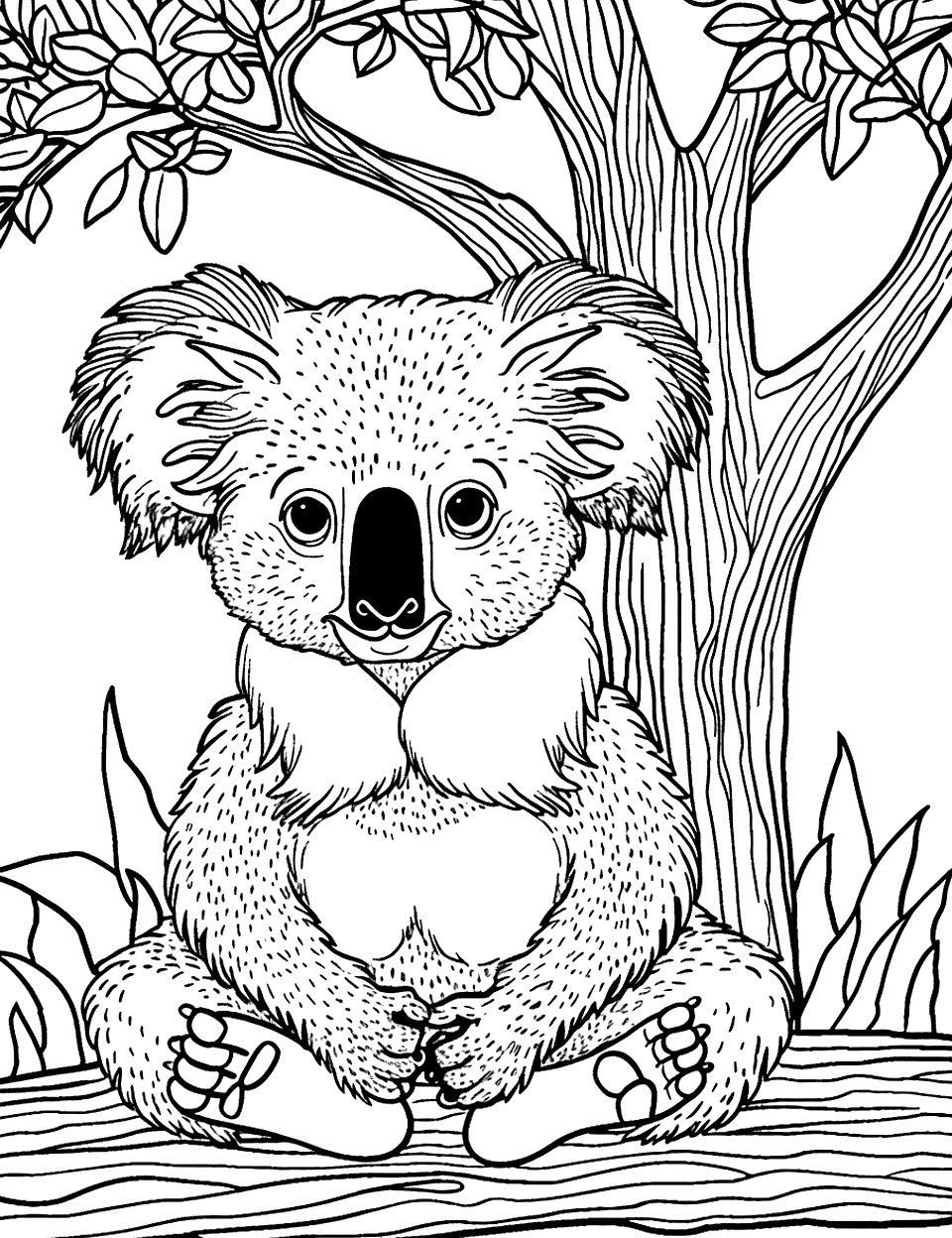
This koala sits cross-legged with its paws together in front and its toes turned out. A tree trunk rises behind it while grass and leaves fill the lower corners. Dense stippling covers the fur, so build the grey in light layers instead of pressing hard. It is the calmest sheet in the collection and a fitting one to finish on.
By using our free coloring pages, you acknowledge and agree to our full disclaimer. All materials are for personal, non-commercial use only and all rights belong to their respective license holders.
What Does a Real Koala Look Like?
A real koala is ash-grey to light brown with a white chest, a big dark nose and round ears fringed in long pale hair. Southern koalas carry darker, thicker and sometimes browner fur than northern ones, and koalas are the only animal besides primates with individual fingerprints like ours (2). Adults weigh anywhere from 4 to 14 kilograms according to the New South Wales environment department, so the round, heavy-looking koalas on these sheets are not much of an exaggeration.
For a realistic result, build the grey up in light layers rather than pressing hard, keep the chest and the ear fringes close to white, and leave the nose until the end so it stays a clean dark block. Everything after that is up to whoever is holding the pencil.
Which Koala Sheets Suit Which Age?
Bold-outline sheets like the kawaii koala, the cloud koala and the waving koala suit three and four year olds, mid-detail sheets like the scarf koala and the picnic scene suit six to ten year olds, and the fine-hatched portraits suit older kids and adults. Line weight is the real guide, not subject, so use it to match a sheet to whichever age is coloring.
The middle group, including the scarf koala, the picnic scene and the branch sheets, works well from about six to ten. Those pages have enough separate areas to plan a color scheme without any detail small enough to defeat a crayon.
The fine-hatched portraits belong to older children and adults, and they turn out far better with colored pencils than with markers. Adult koalas measure 68 to 82 cm according to the Australian Museum, so printing one portrait enlarged across four sheets and taping them together gives a classroom a near life-size koala.
How Should You Print These Koala Coloring Pages?
Print on standard copy paper for crayons and colored pencils, and switch to cardstock for markers, paint or watercolor. Thin paper buckles under water and lets marker ink bleed through onto the table.
Set the printer to fit-to-page so the ears are not clipped at the top edge, and choose grayscale or black ink only so a low color cartridge cannot leave you with a faded outline. Each sheet is a single page, so print them one at a time as your child picks the next one.
Activities to Do With Koala Coloring Pages
A finished sheet does not have to go straight on the fridge. These five ideas stretch one coloring session into a whole afternoon.
Create a 3D Koala Habitat
Turn a shoebox on its side and build the eucalyptus forest inside it. Color and cut out two or three koalas, glue each to a folded cardboard tab so it stands up, then add real twigs, dried leaves and strips of green paper for foliage. Stand the box on its end and the trunk sheets become a backdrop.
Koala Mask Party
The close-up faces, especially the realistic portrait and the waving koala, make the best masks. Color the face, cut around the head and ears, then cut out the eyes and punch a hole beside each one for elastic. Add a strip of grey paper behind the ears if you want them to stand proud of the face.
Texture Collage
Swap crayons for materials that feel like fur. Glue grey cotton wool or short lengths of grey yarn over the body, press real dried leaves onto the branches, and use a scrap of sandpaper for bark. The sheets with big open bodies, like the cloud koala, take this better than the finely hatched ones.
Fact Sheet Poster
Mount a finished page in the middle of a large sheet of card and write koala facts around it. Have your child look up what koalas eat, how long a joey stays in the pouch and why their forests are shrinking, then write one fact per corner. It turns a coloring page into a small research project.
Koala Storytelling
Cut out several koalas, tape each to a craft stick, and you have a puppet cast. Paint a simple gum forest on a sheet of paper for a backdrop, then let your child name each koala and act out a story about the joey getting lost. Recording it on a phone gives them something to play back.
FAQs
Are Koalas Bears?
No, koalas are not bears. They are marsupials, which means the mother carries her tiny newborn in a pouch instead of giving birth to a fully formed baby. The nickname koala bear stuck anyway, but the pouch is the giveaway. If your child asks while coloring the mother-and-joey sheet, that is the answer.
What Colors Should I Use for Koalas?
Grey and brown. Koala fur runs from light grey through to brown with a pale chest, so a silver-grey body, a cream chest and a solid dark nose reads as realistic. Keep the ear fringes a shade lighter than the body. None of it is compulsory on a coloring page, and a purple koala is a perfectly good decision.
What Do Koalas Eat?
Eucalyptus leaves, almost exclusively. A koala eats about 500 grams of leaves a day (3), and takes them from certain eucalypt species rather than any tree it happens to be sitting in. The leaves are tough and low in energy, and most other animals cannot digest them at all. Several sheets here show a koala holding or reaching for a sprig.
Where Do Koalas Live in the Wild?
In the eucalypt forests along the eastern and southeastern coasts of Australia. The New South Wales environment department puts a wild koala’s lifespan at 10 to 20 years and lists the species as vulnerable to extinction under that state’s Biodiversity Conservation Act 2016. Coloring a koala is a decent opening for a conversation about why those forests matter.
Do Koalas Have Fingerprints?
Yes. Koalas are the only animal besides primates with individual fingerprints like ours, according to the Australian Koala Foundation. The prints sit on the front paws that grip the trunk in the climbing and rainy-day sheets. It is a good detail to hand a child right as they start coloring the paws.
Can I Use Watercolors on These Pages?
Yes, as long as you print on cardstock or another thick paper first. Standard copy paper buckles and lets the paint bleed through to whatever is underneath. Tape the edges down to a board, work with light washes rather than heavy water, and let each color dry before adding the one beside it. Markers want the same heavier paper.
Why Do Koalas Sleep so Much?
Because eucalyptus leaves give them very little energy. Koalas rest for most of the day to conserve what they do get from a tough, low-energy diet, which is why so many photographs catch them asleep in a fork of a tree. The sleeping koala and the eyes-closed koala in this set are honest portraits of an average koala day.