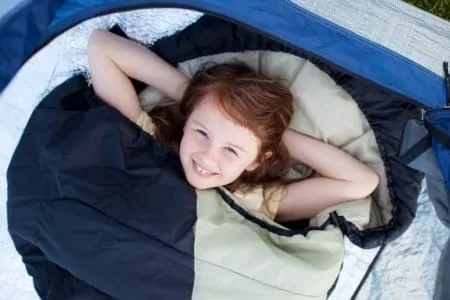
Finding the right sleeping bag is the difference between a happy camper and a shivering, grumpy kid. You want something warm enough for the woods but cool enough for a living room fort.
Do you need a technical mummy bag for hiking, or will a rectangular character bag work for sleepovers? What about temperature ratings and insulation types?
We researched the market to help you navigate these choices. Here is everything you need to know to pick the best kids’ sleeping bag for your next adventure.
- Can be used as a comforter
- Dries quickly when damp
- Comes with matching stuff sack
- Added padding around shoulders
- Moisture-wicking flannel liner
- Has internal pockets
- Fun design
- Has a “roll control” system
- Has thermolock draft tube
- Cozy synthetic insulation
- Offset quilt construction
- Spacious footbox
- Glow-in-the-dark design
- Youth size
- Elastic style hood
- Useful sleeve design
- Loops at the end
- Easy to transport.
- Accommodates children
- Cute honey bee design
- Value for money
- Cute design
- Comes with a matching stuff sack
- Machine washable
- Stuff sack is designed for kids
- Equipped with carrying straps
- Includes cleaning instructions
- Meets AAP safe sleep guidelines
- Unzips from the bottom
- Suitable for babies
What to Look For
Start by defining the adventure. Where will your child sleep?
A backyard campout requires different gear than a trek into the mountains. If your child mostly attends indoor sleepovers, a heavy-duty thermal bag will overheat them. However, unheated cabins at summer camp demand better heat retention.
For tent camping, you must look at temperature ratings. Always aim for a bag rated for temperatures lower than you expect to encounter.
Once you know the destination, consider these specific features.

Sleeping Bag Fit and Shape
Length matters. A bag that is too huge creates cold air pockets near the feet. A bag that is too small restricts movement and compresses insulation, making it less effective.
Shape dictates warmth.
- Mummy bags: These taper at the feet. They are thermally efficient and great for hiking because they pack down small.
- Rectangular bags: These offer room to sprawl. They are better for restless sleepers, backyard camping, and sleepovers.

Temperature Ratings
Kids get cold faster than adults. Manufacturers list temperature ratings, but you should treat these as survival limits rather than comfort guarantees.
If a bag is rated for 40 degrees, your child will likely feel cold at 40 degrees. A good rule of thumb is to choose a bag rated 10 to 15 degrees colder than the lowest temperature you expect.
Head Room and Hoods
For outdoor camping, a hood is essential. We lose significant heat through our heads. A mummy bag with a drawstring hood cinches around the face to lock in warmth.
For indoor use, a hood acts more like a built-in pillow holder. It prevents the pillow from sliding away on slick nylon surfaces.

Shell Material
Most shells use polyester or nylon treated with a Durable Water Repellent (DWR) finish. This repels light moisture and condensation inside a tent.
Cotton shells are soft and popular for slumber parties, but they absorb water and dry slowly. Avoid cotton for serious outdoor camping.

Insulation Type
You usually have two choices for stuffing.
- Synthetic: This is the most common for kids. It is affordable, hypoallergenic, and keeps you warm even if it gets wet. It is also easier to wash.
- Down: This is lighter and compresses smaller. It offers a better warmth-to-weight ratio but loses insulating power when wet. It is also more expensive.

Zipper Guards
Snagged zippers cause tears and tantrums. Look for a sleeping bag with a “draft tube” or a stiff fabric guard along the zipper track. This prevents the thin lining fabric from getting chewed up by the zipper teeth.

Storage and Portability
If your child carries their own gear, check the packed size. Mummy bags usually come with compression sacks that squash the bag down to the size of a football. Rectangular bags often just roll up, which can be bulky and frustrating for small hands to manage alone.
Product Reviews
We analyzed warmth, durability, and kid-friendliness to bring you these top picks. Here are the 10 best kids’ sleeping bags for everything from living room forts to mountain trails.
Core Youth Indoor/Outdoor Sleeping Bag
Best Kids' Sleeping Bag for Warm Weather
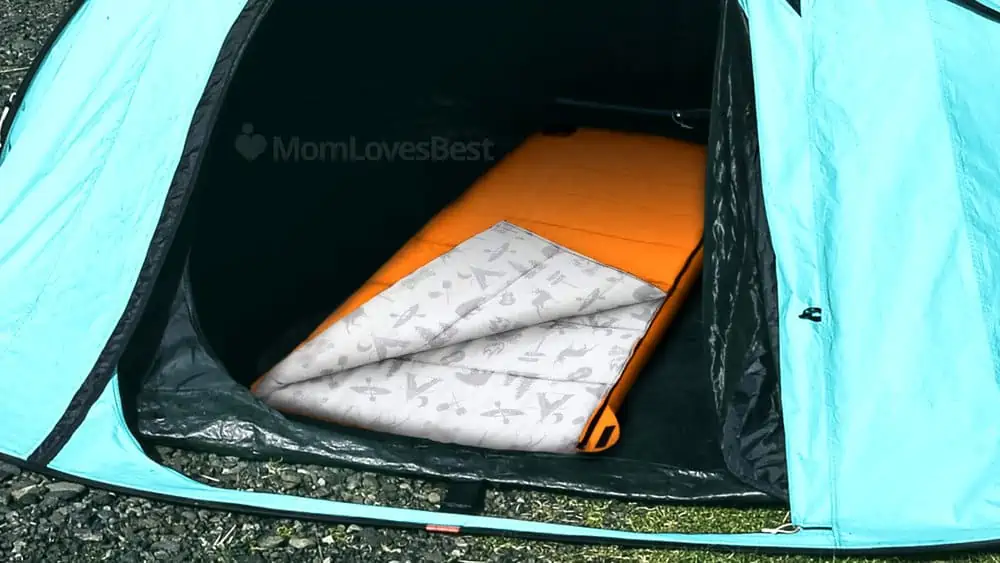
The Core Youth bag strikes a great balance for summer camping. It uses a hollow fiber fill that stays fluffy and warm without overheating your child on muggy nights.
The rectangular shape gives restless sleepers plenty of legroom. If it gets too warm, your child can unzip the bottom for ventilation.
The best feature is the versatility. You can unzip the bag entirely to use it as a large comforter. If you buy two, you can zip them together to create a double-wide sleeping space. This is perfect for siblings who feel safer sleeping near each other in a new environment.
Pros
- Converts into a flat blanket for versatile use.
- Synthetic fill dries quickly if it gets damp.
- Includes a color-matched stuff sack.
Cons
- Lack of a hood limits warmth on chilly nights.
Product Specs
| Seasons | Summer only |
| Temperature Rating | 50 degrees Fahrenheit |
| Weight | 2.14 lbs |
| Dimensions | 64 x 30 inches |
| Material | Envelope: 100% Polyester Insulation: 100% Polyester |
Our Ratings
Teton Sports Celsius Junior Kids’ Bag
Best Kids' Sleeping Bag for Camping
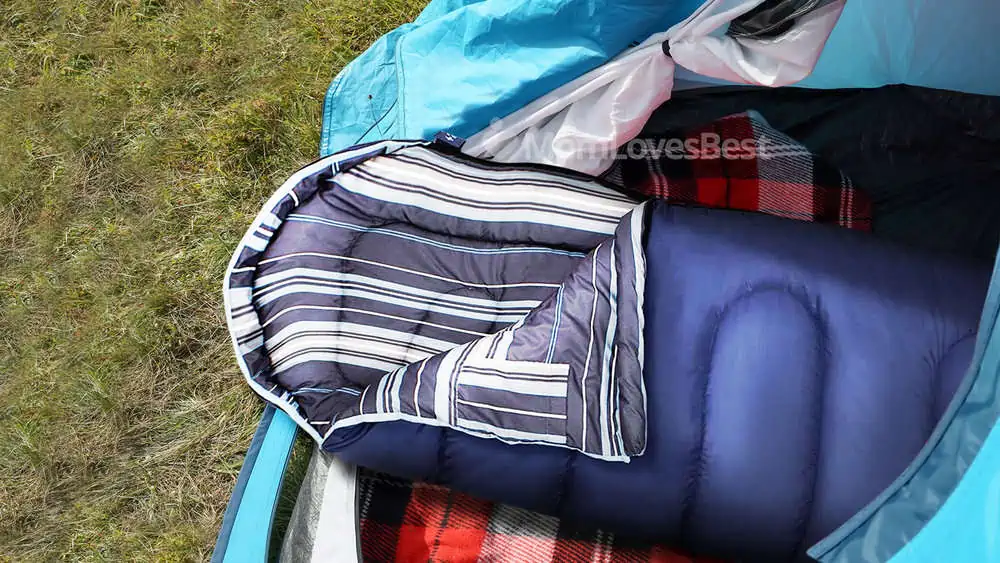
The Teton Sports Celsius Junior is a serious bag for little campers. It mimics adult technical bags but sizes them down for better heat retention.
It features a curved hood, which keeps pillows in place and locks heat around the head. The interior lining is brushed flannel, which feels much softer against the skin than the cold, slippery nylon found in cheaper bags.
Durability is high here. The zipper has robust anti-snag taping, so your child can get in and out without help. It is rated for cooler temperatures, making it a reliable choice for spring and autumn trips.
Pros
- Draft tubes along the zipper prevent cold air leaks.
- Flannel liner is cozy and wicks moisture.
- Internal pocket keeps flashlights handy.
Cons
- Cannot unzip fully flat to use as a comforter.
- Slightly bulkier to pack than mummy-style bags.
Product Specs
| Seasons | Spring, summer, and fall |
| Temperature Rating | Down to 20 degrees Fahrenheit |
| Weight | 2.65 lbs |
| Dimensions | 66 x 26 inches |
| Material | Envelope: Taffeta Lining: 100% Brushed Poly Flannel Insulation: SuperLoft Elite 4-Channel Hollow Fiber |
Our Ratings
Coleman Kids’ Sleeping Bag
Best Kid's Sleeping Bag for Summer Camp
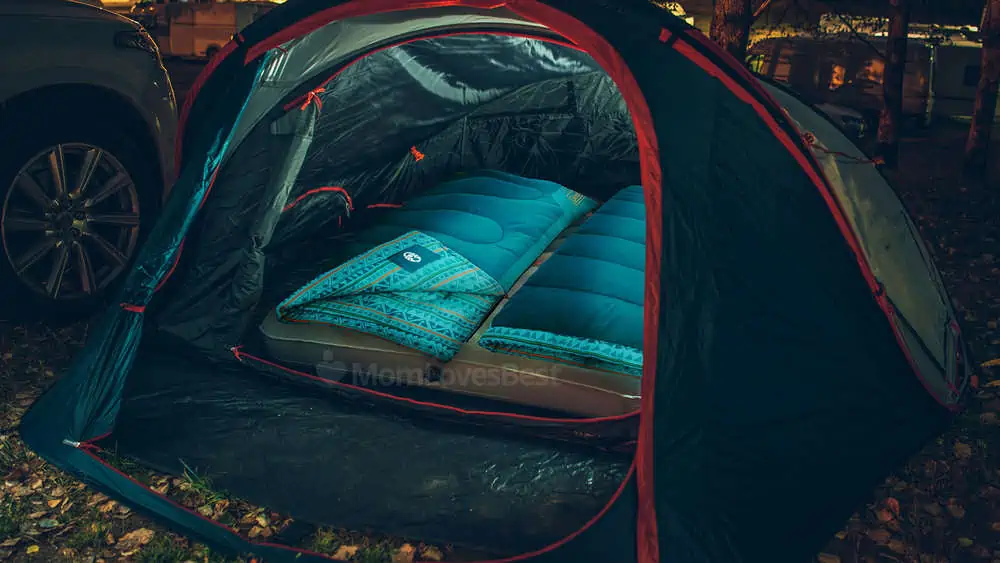
This Coleman bag bridges the gap between a toy and gear. The glow-in-the-dark design thrills kids, making bedtime in a strange tent less scary.
It is rated for 50 degrees, making it ideal for summer camps, sleepovers, or backyard nights. It uses Coleman’s Thermolock system to reduce heat loss through the zipper.
Packing up is usually a struggle for kids, but Coleman includes a “Roll Control” system. This locks the bag in place while rolling, helping small hands manage the task without frustration.
Pros
- Glow-in-the-dark elements appeal to young campers.
- ZipPlow feature pushes fabric away from zipper teeth.
- Comfort Cuff fabric adds softness around the face.
Cons
- Insulation can bunch up after machine washing.
- Not warm enough for shoulder season (spring/fall) camping.
Product Specs
| Seasons | Spring, summer, fall |
| Temperature Rating | 45 degrees Fahrenheit |
| Weight | 2.43 lbs |
| Dimensions | 60 x 26 inches |
| Material | Envelope: 100% polyester Insulation: 100% polyester |
Our Ratings
Kelty Kids CloudLoft Mistral Synthetic Sleeping Bag
Best Kids' Sleeping Bag with Stuff Sack
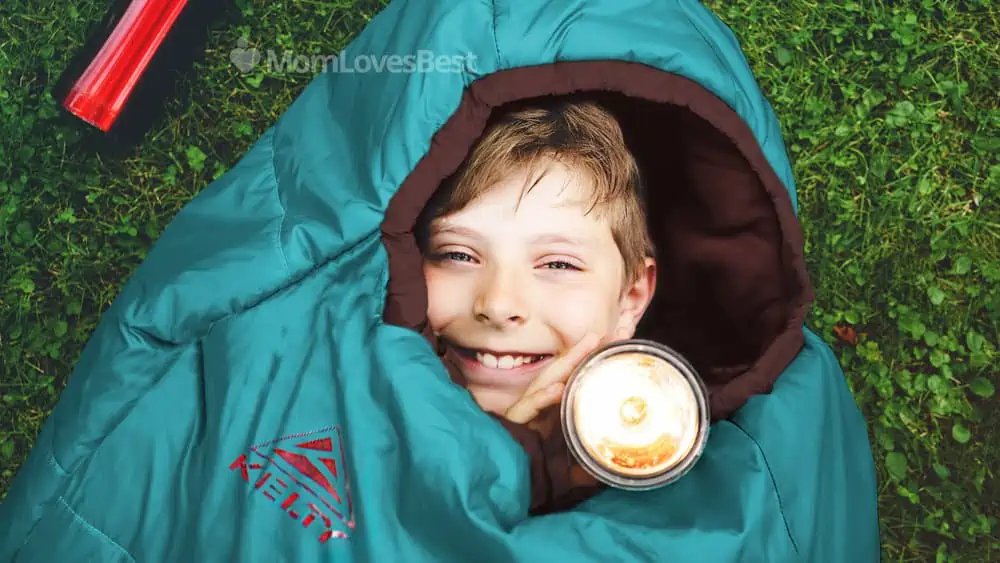
If you plan on hiking to your campsite, the Kelty Mistral is the way to go. It is a true mummy bag, meaning it tapers at the feet to reduce weight and maximize warmth.
The CloudLoft synthetic insulation provides a high warmth-to-weight ratio. Even if the weather turns damp, this bag keeps insulating.
The footbox is “natural fit,” which gives toes a bit more wiggle room than standard mummy bags. It packs down tight into the included stuff sack, making it easy for your child to carry in their own backpack.
Pros
- Mummy shape retains heat efficiently.
- Offset quilt construction prevents cold spots.
- Lightweight and easy to carry on hikes.
Cons
- Tight fit might feel restrictive to active sleepers.
Product Specs
| Seasons | Spring, summer, fall |
| Temperature Rating | 20 degrees Fahrenheit |
| Weight | 2.65 lbs |
| Dimensions | 68.9 x 35.83 inches |
| Material | Envelope: 50D 300T Polyester Insulation: Cloudloft Synthetic |
Our Ratings
AceCamp Kids’ Sleeping Bags
Best Kids’ Sleeping Bag For Sleepovers
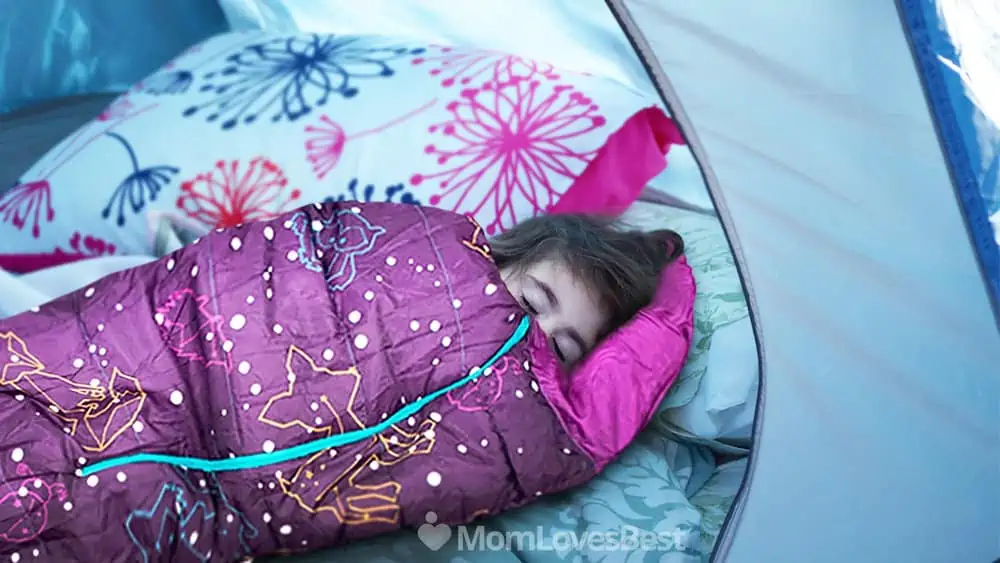
The AceCamp bag features a unique “tadpole” shape. It has the hood of a mummy bag but a wider foot area, giving kids room to thrash around without sacrificing too much warmth.
The glow-in-the-dark constellations are educational and fun. It uses a center zipper rather than a side zipper, which is often easier for younger children to manipulate when they are half-asleep.
The hood uses an elastic band rather than a drawstring. This is a smart safety feature that eliminates the risk of cords wrapping around a child’s neck.
Pros
- Hybrid shape balances warmth with legroom.
- Elastic hood is safer than drawstring versions.
- Durable embossing withstands frequent use.
Cons
- Sizing runs small; check height limits carefully.
Product Specs
| Seasons | Spring, summer, fall, mild winter |
| Temperature Rating | 30 degrees Fahrenheit |
| Weight | Kids: 2 lbs Youth: 2 lbs 7oz |
| Dimensions | Kids: 60 x 24 inches Youth: 67 x 28 inches |
| Material | Envelope: 100% polyester Insulation: 100% polyester |
Our Ratings
Big Agnes Little Red Sleeping Bag
Best Ultralight Kids’ Sleeping Bag
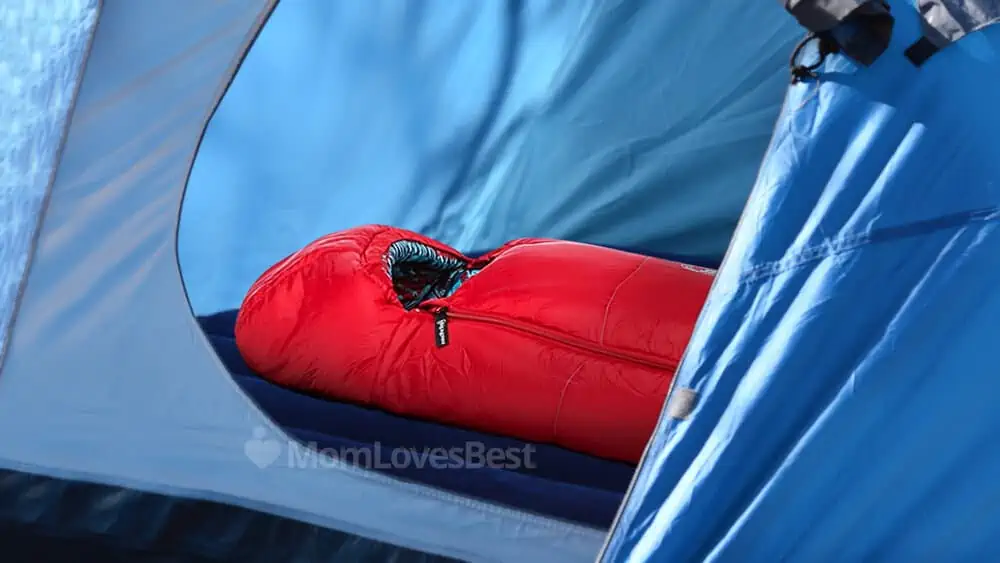
Big Agnes solves the biggest problem with kids camping: sliding off the sleeping pad. This bag features an integrated sleeve on the bottom. You slide your sleeping pad into it, and the child stays cushioned all night.
Because the bottom lacks insulation (relying on the pad instead), the bag is incredibly light and packs down to the size of a water bottle.
This is a premium choice for backpacking families. It is an investment, but it ensures your child carries less weight and actually stays on their bed.
Pros
- Pad sleeve guarantees the child stays on the mattress.
- Extremely packable and lightweight.
- Sculpted hood provides excellent coverage.
Cons
- Must be used with a sleeping pad for warmth.
- Higher price point than standard recreational bags.
Product Specs
| Seasons | Year-round |
| Temperature Rating | 15 degrees Fahrenheit |
| Weight | 1 lb 12 oz |
| Dimensions | 58 x 24 inches |
| Material | Envelope: 100% polyester Insulation: 100% polyester |
Our Ratings
Coleman Plum Fun 45 Youth Sleeping Bag
Best Budget Kids' Sleeping Bag
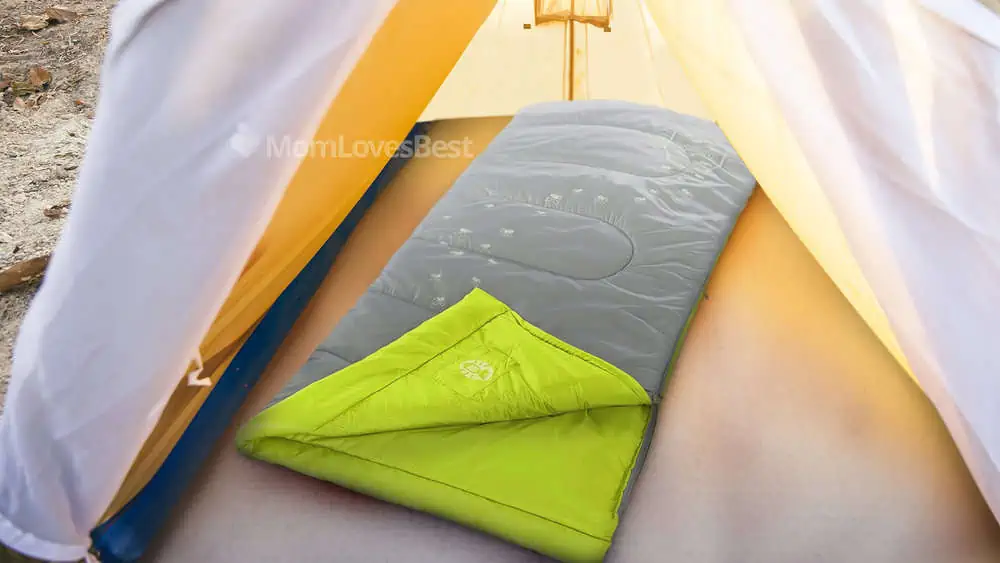
If you need a simple bag for a first sleepover or living room campout, the Coleman Plum Fun is the answer. It is wallet-friendly and cute.
The polyester cover is durable enough for indoor play, and the interior pocket lets kids stash a flashlight or small toy. It fits children up to 5 feet 5 inches, so it has decent longevity.
However, this is not for cold weather. It lacks a hood and draft tubes. Keep this one strictly for indoor use or very warm summer nights in the backyard.
Pros
- Very affordable entry-level option.
- Cute design appeals to younger children.
- Interior storage pocket is a handy feature.
Cons
- Not suitable for temperatures below 50 degrees.
- Filling is thin compared to camping-specific bags.
Product Specs
| Seasons | Summer |
| Temperature Rating | 45 degrees Fahrenheit |
| Weight | 2 lbs |
| Dimensions | 66 x 26 inches |
| Material | Envelope: 100% polyester Insulation: 100% polyester |
Our Ratings
Happy Nappers Pillow & Sleepy Sack
Best Sleeping Bag for Toddlers
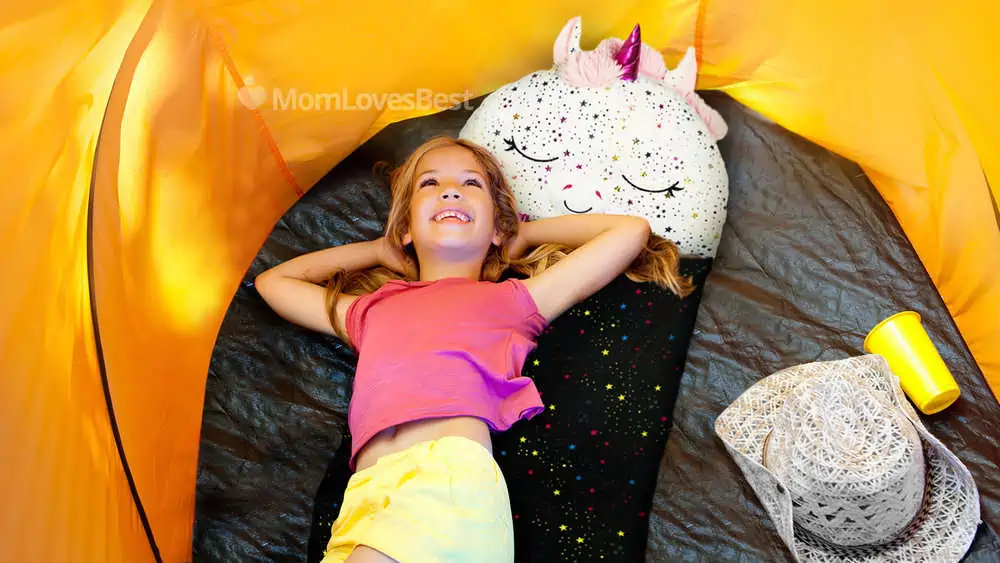
This isn’t a camping bag; it’s a comfort object. The Happy Nappers Sack transforms from a plush pillow into a sleeping sack, making it perfect for daycare naps or travel.
The transition is simple enough for a toddler to handle. It provides a sense of familiarity when sleeping away from home.
The entire thing is machine washable, which is non-negotiable for toddler gear. While it won’t keep them warm in a tent, it is the best option for indoor naps.
Pros
- Acts as both a toy/pillow and a blanket.
- Machine washable for easy cleaning.
- Helps toddlers feel secure during naps away from home.
Cons
- Expensive for what is essentially a blanket.
- Strictly for indoor use only.
Product Specs
| Seasons | Spring, summer, fall |
| Temperature Rating | N/A |
| Weight | 3.55 lbs |
| Dimensions | 66 x 30 inches |
| Material | Not specified |
Our Ratings
Tundra Wolf Kids’ Sleeping Bag
Best Kids’ Sleeping Bag With Glow-in-the-Dark Zipper
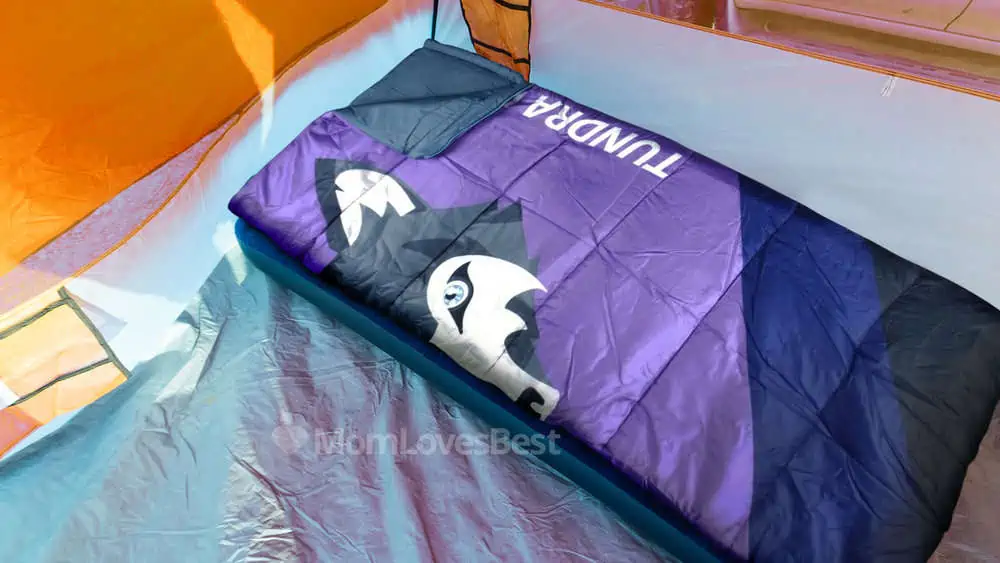
The Tundra Wolf focuses on usability. The zipper glows in the dark, which helps prevent midnight panic when your child needs to use the bathroom.
It also features a separate zipper at the bottom. This allows kids to stick their feet out to walk around (shuffle, really) without leaving the warmth of the bag, perfect for chilly mornings.
The stuff sack is compression-style, meaning you don’t have to roll the bag perfectly. Kids can just stuff it in and cinch it down.
Pros
- Dual zippers allow for walking/ventilation.
- Stuff sack converts into a backpack.
- Compression packing is easier for kids than rolling.
Cons
- Glow feature fades relatively quickly.
Product Specs
| Seasons | Spring, summer, fall |
| Temperature Rating | 23 degrees Fahrenheit |
| Weight | 2 lbs 9oz |
| Packed | 67 x 28 inches |
| Material | Envelope: Nylon Insulation: Hollow fiber polyester |
Our Ratings
Morrison Little Mo Sleeping Bag
Best Kids’ Sleeping Bag For Babies
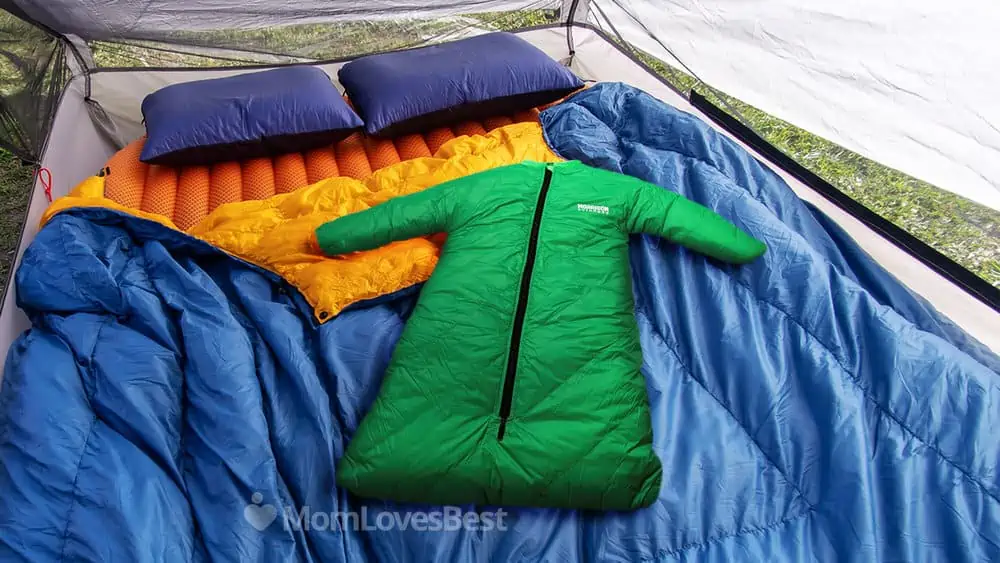
Standard sleeping bags are dangerous for infants due to suffocation risks from loose fabric. Morrison Outdoors solved this with the Little Mo. It is a wearable sleeping bag designed specifically for camping safety.
It has snug arm openings and a neck collar that prevents the baby from slipping down inside. There are no hoods or drawstrings to worry about.
It uses high-loft down insulation, making it incredibly warm for its weight. The two-way zipper allows for diaper changes without exposing the baby’s upper body to the cold air.
Pros
- Meets AAP safe sleep guidelines (no loose fabric).
- Bottom zipper access simplifies diaper changes.
- Real down insulation provides excellent warmth.
Cons
- Limited lifespan as baby grows quickly.
- Should not be used indoors (risk of overheating).
Product Specs
| Seasons | Spring, summer, fall |
| Temperature Rating | 20 degrees Fahrenheit |
| Weight | 10.4 oz |
| Packed Dimensions | Not specified |
| Material | Envelope: 100% Ripstop Nylon Insulation: 650 fill-power RDS-Certified White Duck Down |
Our Ratings
| Product | Best | Seasons | Temp. Rating | Weight | Dimensions | Material (Envelope/Insulation) |
| Core Youth Indoor/Outdoor | Warm Weather | Summer only | 50 F | 2.14 lbs | 64 x 30″ | 100% Polyester; 100% Polyester |
| Teton Sports Celsius Bag | Camping | Spring, summer, & fall | 20 F | 2.65 lbs | 66 x 26″ | Taffeta; Hollow Fiber |
| Coleman Kids’ Sleeping Bag | Summer Camp | Spring, summer, fall | 45 F | 2.43 lbs | 60 x 26″ | 100% polyester; 100% polyester |
| Kelty Kid’s Mistral | Stuff Sack | Spring, summer, fall | 20 F | 2.65 lbs | 68.9 x 35.83″ | 50D Polyester; Cloudloft Synthetic |
| AceCamp Kids’ Sleeping Bags | Sleepovers | Spring, summer, fall, mild winter | 30 F | 2 lbs | 60 x 24; 67 x 28″ | 100% polyester; 100% polyester |
| Big Agnes Little Red | Ultralight | Year-round | 15 F | 1 lb 12 oz | 58 x 24″ | 100% polyester; 100% polyester |
| Coleman Plum Fun 45 Youth | Budget | Summer | 45 F | 2 lbs | 66 x 26″ | 100% polyester; 100% polyester |
| Happy Nappers Pillow & Sleepy Sack | Toddlers | Spring, summer, fall | N/A | 3.55 lbs | 66 x 30″ | N/A |
| Tundra Wolf Kids’ Sleeping Bag | Glow-in-the-Dark | Spring, summer, fall | 23 F | 2 lbs 9oz | 67 x 28″ | Nylon; Hollow fiber polyester |
| Morrison Little Mo Sleeping Bag | Babies | Spring, summer, fall | 20 F | 10.4 oz | N/A” | Ripstop Nylon; White Duck Down |
Sleeping Bag FAQs
Here are answers to the most common questions about keeping your little campers comfortable.
When Can I Put My Baby In a Sleeping Bag?
You should never put an infant in a standard adult or youth sleeping bag. The loose fabric poses a suffocation risk. The American Academy of Pediatrics advises that babies need a firm sleep surface free of loose bedding (1).
For camping with infants (6 months+), use a wearable baby sleeping bag like the Morrison Little Mo, which has no loose material around the face. For indoor sleep, stick to a standard sleep sack.

How Can I Make My Kids’ Sleeping Bag Warmer?
If the temperature drops lower than expected, try these tricks:
- Add a liner: A silk or fleece liner can add 5 to 10 degrees of warmth.
- Wear a hat: We lose significant heat through our heads.
- Use a sleeping pad: The cold ground sucks heat away faster than the air. A good insulated pad is mandatory.
- Hot water bottle: Fill a bottle with hot water and place it in the foot of the bag before bed.

How Do I Clean a Sleeping Bag?
Avoid washing the bag after every trip, as this degrades the insulation.
- Spot Clean: Use a damp sponge and mild soap to wipe dirty areas like the hood or footbox.
- Machine Wash: Only use a front-loading washer on a gentle cycle. Use a specific technical cleaner (like Nikwax), never standard detergent or fabric softener. Tumble dry on low with tennis balls to fluff the insulation.

Where to Put a Sleeping Bag on a Kids’ Pack?
Ideally, stuff the sleeping bag into the bottom compartment of the backpack. This keeps the weight centered and low. If the bag is too big to fit inside, strap it to the bottom outside of the pack. However, ensure it is in a waterproof stuff sack, or it will get wet when the child sets their pack down on damp ground.

How Should I Store a Sleeping Bag?
Never store a sleeping bag compressed in its stuff sack for long periods. Compression damages the fibers and ruins the loft (fluffiness), which is what keeps you warm. Store the bag loosely in a large cotton storage sack, or hang it up in a closet.