Buying a drone for a child is a gamble. You want something cool enough to spark their imagination, but cheap enough that you won’t cry when it inevitably gets stuck on the roof.
We’ve been there. After purchasing more than a few duds that broke on the first landing, we dove deep into the market. We tested flight stability, battery life, and durability to find the flyers that actually last.
We’ll guide you through the features that matter, like safety guards and auto-hover, and skip the marketing fluff. Here are the coolest, safest, and most durable drones for kids available right now.
- X5C control
- Four operating directions
- Six axis gyroscope
Key Features to Look For
Choosing a drone isn’t just about picking the coolest color. You need a balance of durability, ease of use, and battery life. Here is what you need to look for.
Age
If your child is still in the “break everything” phase, hold off on a pricey drone. We recommend waiting until a child is at least 6 years old before handing them the controller.
Start small. Buy an inexpensive “beater” drone first. Let them crash that one a few times before upgrading to a model with a camera or higher speed settings.

Location
Where will they fly? This determines the size of the drone you need.
- Indoors: You want a small, lightweight drone with propeller guards. These won’t damage walls or hurt pets if they crash.
- Outdoors: You need a heavier drone with stronger motors to fight wind resistance. Micro-drones will vanish in a light breeze.
Always choose a wide-open space like a soccer field. Avoid trees, power lines, and bodies of water until your pilot masters the controls.

Camera
Kids love seeing their house from the sky. While toy drones won’t shoot cinema-quality footage, a decent 720p or 1080p camera adds a lot of replay value.
Look for FPV (First Person View). This transmits the video feed directly to a smartphone app, so your child feels like they are sitting inside the cockpit.
Keep In Mind

Easy to Fly
You want a drone that practically flies itself. Look for “RTF” (Ready to Fly) models with these specific beginner features:
1. One Key Takeoff/Landing
This is a lifesaver. Instead of managing throttle sensitivity, the child presses one button, and the drone lifts to a hover or gently lands. It prevents hard crashes during the hardest parts of the flight.
2. Hover Mode / Altitude Hold
Without this, the drone will drop to the ground the second you let go of the stick. Altitude hold uses air pressure sensors to keep the drone steady at a specific height, allowing the child to focus on steering.
3. Headless Mode
Orientation is the hardest skill to learn. Normally, if the drone turns left, “forward” becomes “left.” In Headless Mode, pushing the stick forward always moves the drone away from the pilot, regardless of which way the drone’s nose is pointing.
4. Return To Home (RTH)
On GPS-enabled drones, this button summons the aircraft back to its launch point. It is the ultimate panic button if the drone flies too far away.

Safety
Drones are flying blenders. Even plastic propellers can sting or cut skin at high speeds.
- Propeller Guards: Essential for beginners. These plastic cages prevent the blades from hitting walls, fingers, or the dog.
- Eye Protection: Safety glasses are a smart precaution for young pilots.
- Battery Safety: Lithium-ion batteries can be fire hazards if mistreated. Teach kids never to puncture them or charge them unattended.

Flight Time
Here is the reality check: toy drones have terrible battery life. Expect 7 to 10 minutes of flight time per battery.
Always buy a model that comes with at least two batteries (three is better). This gives you 20+ minutes of fun before heading back to the charger. Look for modular batteries that slide in and out easily, rather than ones with tiny, fragile wires.

Entertainment
Flying in circles gets boring. Look for drones with pre-programmed stunts.
- 3D Flips: Most toy drones can do a barrel roll with a single button press.
- Waypoints: Some apps let you draw a line on the screen, and the drone will fly that path.
- Obstacle Courses: Use hula hoops or pool noodles to create a race track in the backyard.

Rules and Regulations
If your drone weighs under 0.55 pounds (250 grams), you do not need to register it with the FAA. Most toy drones fall under this weight limit.
However, everyone flying a drone for fun in the USA must now pass The Recreational UAS Safety Test (TRUST). It is a free online quiz that teaches safety basics. You also cannot fly near airports or emergency response efforts (2).
Product Reviews
We analyzed flight stability, durability, and battery efficiency to find the best flyers. We also checked parent reviews to see which models survived actual playdates.
Here are the top seven drones for kids on the market.
Holy Stone HS340 Mini FPV RC Drone
Easy to Maneuver
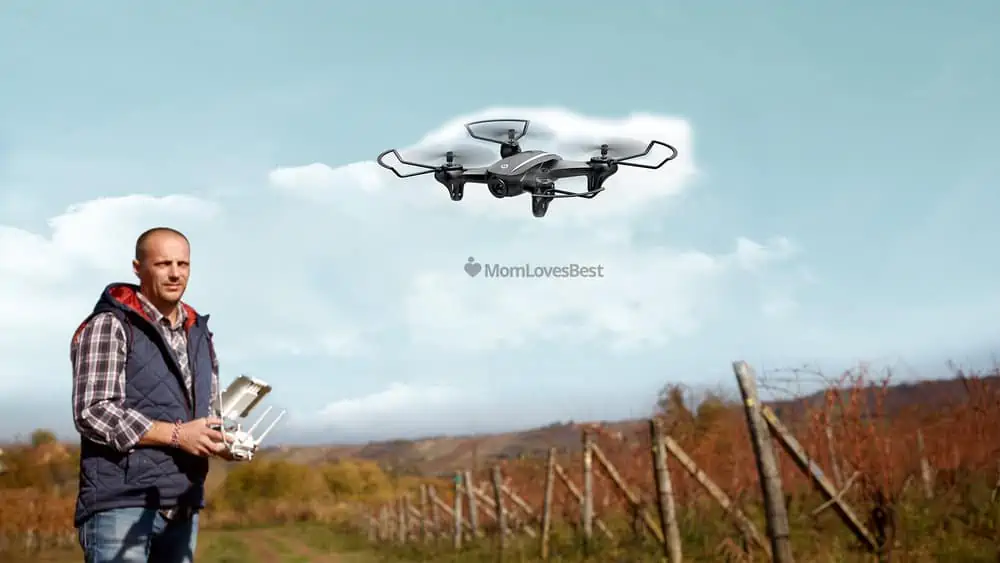
The Holy Stone HS340 hits the sweet spot between a toy and a hobby drone. It features a “One-Key Start,” which eliminates the frustration of manual pairing and throttle management for newbies.
What makes it stand out is the intelligent flight system. You can draw a path on your phone screen, and the drone will follow it using “Waypoint Fly.” It also supports voice control and gesture photos, meaning you can flash a peace sign to the camera to snap a selfie.
It comes with propeller guards fully installed, making it safe for indoor bumping. The 720p camera is decent for the price, streaming video directly to your phone.
What We Like
Solid Build Quality
Unlike flimsy generic brands, this drone feels sturdy. The guards protect the blades well, and the battery life is respectable, offering about 20 minutes of total playtime thanks to the two included batteries.
Speed Modes
It grows with your child. Start on the lowest speed setting to learn orientation, then crank it up to high speed for backyard racing once they get confident.
Beginner Friendly
The “One Key Start” and landing features are flawless. A toddler could technically launch this (with supervision), making it a great entry point into aviation.
What We Don't Like
Struggles in Wind
Despite its decent motors, it is still a lightweight mini drone. Any wind stronger than a light breeze will drift it off course. Keep it indoors or fly on calm days.
Product Specs
| Size | 6.73 inches by 6.22 inches by 3.35 inches |
| Weight | 1.76 ounces |
| Cell phone control | No |
| Camera | Yes |
| Recommended age | 14 years and up |
Our Ratings
Holy Stone F181W RC Drone
Best for Flips and Tricks
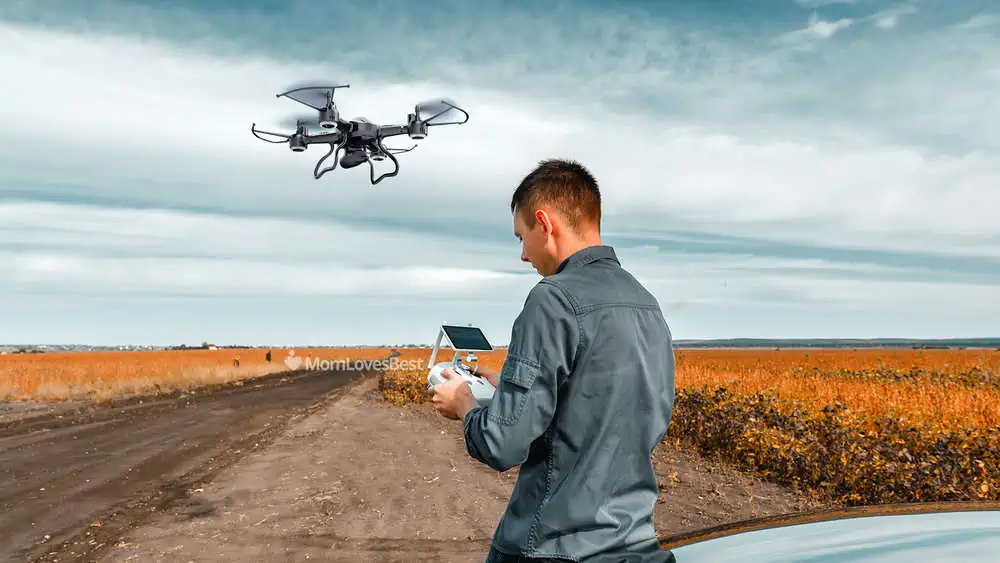
If you have a teenager looking for something bigger than a “micro” drone, the F181W is a solid choice. It is larger, louder, and comes with a better 1080p wide-angle camera.
The controller feels more like a gaming pad, which kids love. It excels at stunts; with a simple button press, it performs 360-degree flips in four directions. It’s flashy, fun, and looks impressive in the air.
It also includes bright LED lights, which help you keep track of orientation during dusk flights. The Wi-Fi transmission lets you see what the drone sees in real-time.
What We Like
Acrobatic Ability
The flip function is responsive and tight. It recovers quickly after a roll, so you don’t lose too much altitude. It makes the pilot look like a pro instantly.
One-Key Return
While it lacks GPS, it has a basic “return” direction feature. If the drone gets too far, hitting this button brings it back toward the transmitter signal. It’s a helpful safety net.
Altitude Hold
The air pressure sensor works well here. You can release the throttle stick, and the drone stays parked in mid-air, which is crucial for getting steady video footage.
What We Don't Like
Old School Motors
It uses brushed motors with gears. Over time, these can wear out or get jammed with hair and dust. You might need to replace a motor eventually (replacements are usually available).
Wind Sensitivity
Despite its larger size, the plastic body is light. It handles light breezes better than mini drones, but strong gusts will still push it around.
Product Specs
| Size | 12.6 inches by 3.3 inches by 12.6 inches |
| Weight | 5.7 ounces |
| Cell phone control | Yes |
| Camera | Yes |
| Recommended age | 14 to 17 years old |
Our Ratings
Drocon Spacekey DC-014 Drone
Panoramic Views
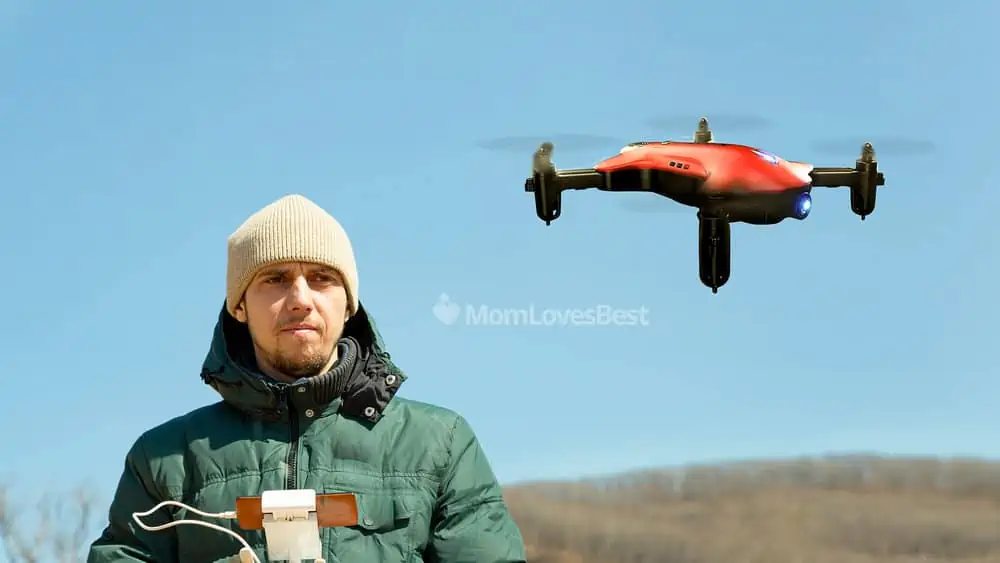
Portability is the main selling point here. The Drocon Spacekey features a foldable design where the arms tuck into the body, making it easy to shove into a backpack without snapping a propeller.
It sports a 120-degree wide-angle lens, capturing more of the horizon than standard toy drones. You can control it entirely via smartphone if you don’t want to carry the remote, giving it a modern, tech-savvy feel.
Built with PA plastic, it’s surprisingly resilient to crashes. It’s a great travel companion for family trips to the park or beach.
What We Like
App Integration
The FPV (First Person View) is seamless. Seeing the live feed on your phone while flying adds a layer of immersion that standard remote-only drones lack.
Foldable & Compact
We love that it folds down. It protects the arms during transport and takes up minimal space. It’s the best design for kids who want to take their drone to a friend’s house.
Dual Control Options
Using the phone’s gravity sensor to fly (tilting the phone to steer) is intuitive for kids raised on tablets. The physical controller is there if they prefer tactile feedback.
What We Don't Like
One Battery Included
Unlike others on this list, it often ships with just one battery. With a short flight time, the fun ends quickly unless you buy spares immediately.
Featherweight
It is incredibly light. While this helps it survive falls (less mass on impact), it means you have zero chance of fighting a moderate wind gust.
Product Specs
| Size | 5.4 inches by 5.4 inches (folded: 3.92 inches by 2.75 inches) |
| Weight | 15.5 ounces |
| Cell phone control | Yes |
| Camera | Yes |
| Recommended age | 12 years and up |
Our Ratings
Deerc D20 Mini Drone
Best for Video
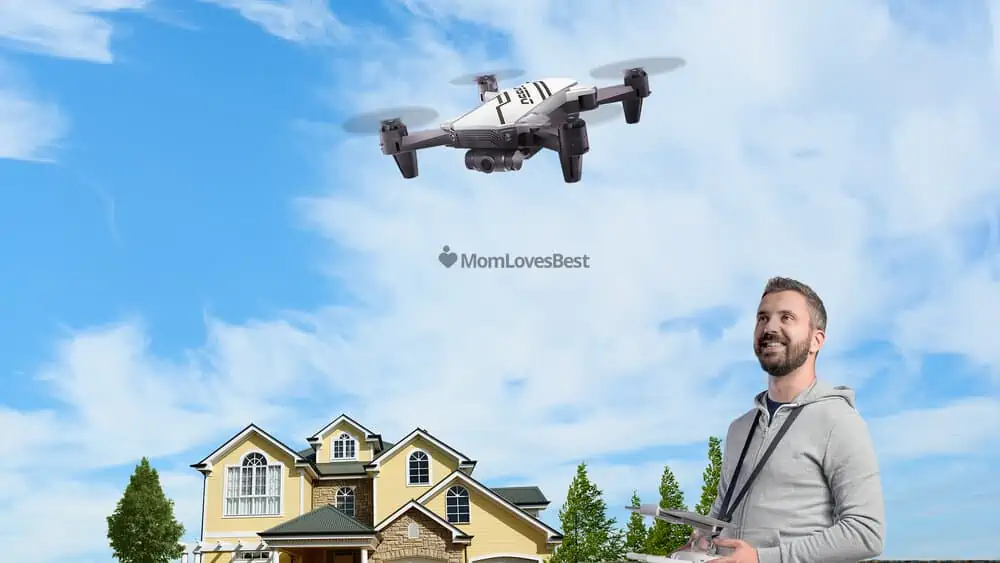
The Deerc D20 is a tiny powerhouse. It’s small enough to fly in the living room but packs a 720p HD camera. It’s one of the most popular starter drones because it balances features and price perfectly.
It includes voice control commands like “Take off” and “Landing,” which makes kids feel like wizards. The safety features are top-notch, including four propeller guards and an emergency stop button that cuts the motors instantly if you’re about to hit the TV.
What We Like
Emergency Stop
This is a parent’s favorite feature. If the drone is heading toward a wall (or a sibling), one button kills the power immediately. It saves the drone from internal damage and protects the surroundings.
Selfie Mode
The gesture control is genuinely useful. Making a “V” sign triggers the photo timer. It turns the drone into a flying tripod, which is great for group photos.
Voice Control
It sounds gimmicky, but it works. Being able to launch the drone with a voice command is a fun party trick that younger kids adore.
What We Don't Like
Battery Limitations
You get about 10 minutes per battery. It’s standard for the size, but always land before the battery is fully drained to avoid it dropping out of the sky unexpectedly.
Fragile Gears
The propeller shafts are exposed. If you crash into sand or long hair, it can wrap around the shaft and jam the motor. Keep it away from the carpet if possible.
Product Specs
| Size | 7 inches by 4.7 inches by 1.7 inches |
| Weight | 2.43 ounces |
| Cell phone control | Yes |
| Camera | Yes |
| Recommended age | 14 years and up |
Our Ratings
Potensic Upgraded A20 Drone
Most Fun for Beginners
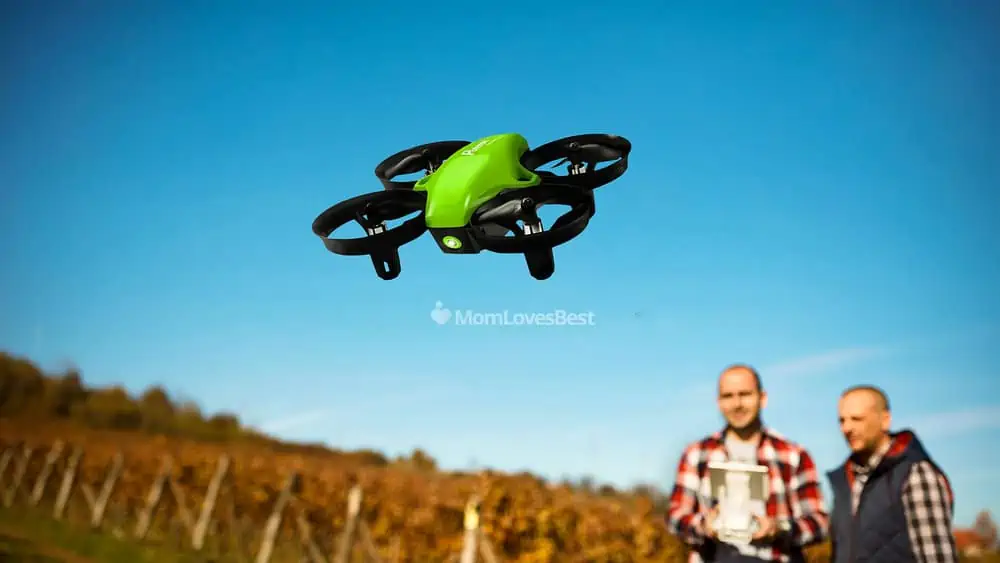
The Potensic A20 is widely considered the king of indoor mini drones. It doesn’t have a camera, but it makes up for it with incredible durability and flight stability.
The propeller guards are built into the frame, creating a robust shell that bounces off walls. It is fast, agile, and incredibly responsive. If your goal is simply to teach a child how to pilot a drone without distractions, this is the one to get.
It comes with three batteries in the box, which is a rare and generous inclusion, giving you plenty of practice time.
What We Like
Tank-Like Durability
We’ve crashed this thing hundreds of times. The integrated guards protect the props from almost every angle. It is very hard to break this drone.
Three Batteries Included
Having three batteries right out of the box is a huge value add. You get nearly 20-25 minutes of total flight time, which is unheard of at this price point.
Perfect Stability
The hover is locked in. It doesn’t drift as much as cheaper models. The Headless Mode and Altitude Hold work perfectly, making it the least frustrating learning experience for kids.
What We Don't Like
No Camera
This is purely for flying. There is no video feed or photo capability. If your child is dead set on taking pictures, look elsewhere.
Tiny Battery Connector
The batteries are small, and the connector plug can be fiddly for large adult fingers. Kids with smaller hands might actually find it easier to swap them.
Product Specs
| Size | 3.5 inches by 3.1 inches by 1.25 inches |
| Weight | 6.4 ounces |
| Cell phone control | No |
| Camera | No |
| Recommended age | 8 years and up |
Our Ratings
Syma X5C Explorers Quad Copter
Best for Playing Indoors or Outdoors
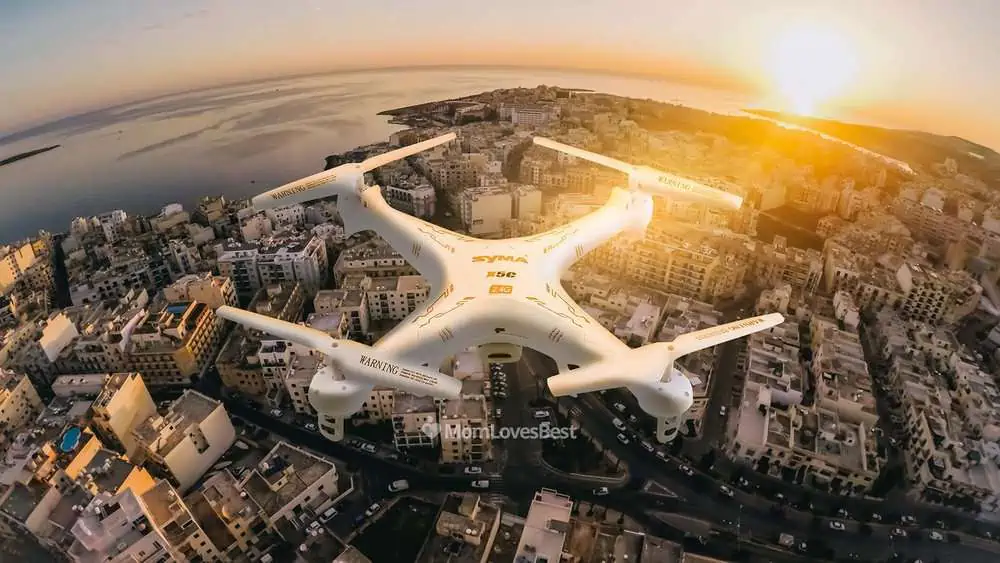
The Syma X5C is a classic. It has been around for years because it works. It’s a larger quadcopter that handles outdoor flight better than the minis.
It uses a 6-axis gyroscope for stabilization, meaning you can toss it into the air and throttle up, and it will level itself out. It comes with a basic camera, but the real joy here is the flight dynamics. It feels sporty and responds well to control inputs.
The 2.4GHz spectrum technology ensures you can fly it reasonably far (about 50 meters) without losing signal or dealing with interference.
What We Like
Throw-to-Fly
The gyro stabilization is excellent. The “throw-to-fly” capability is a fun way to launch and proves how quickly the computer corrects the drone’s orientation.
Modular Design
Because this drone is so popular, spare parts are everywhere. If a motor dies or a leg snaps, you can easily buy cheap replacement parts and fix it, which is a great lesson in electronics for kids.
Outdoor Capability
It has enough weight and power to handle a light breeze, unlike the Potensic A20 or the Deerc D20.
What We Don't Like
Loud Motors
It’s noisy. The gears grind a bit louder than modern drones. If you are recording video, the audio will just be a loud buzz.
Dated Tech
It lacks some modern conveniences like Altitude Hold. You have to manually control the throttle to keep it hovering, which is harder to learn but teaches better piloting skills in the long run.
Product Specs
| Size | 16.5 inches by 12.2 inches by 3.8 inches |
| Weight | 25.6 ounces |
| Cell phone control | No |
| Camera | Yes |
| Recommended age | 14 years and up |
Our Ratings
Force1 UFO 3000 Drone
Best Mini Drone
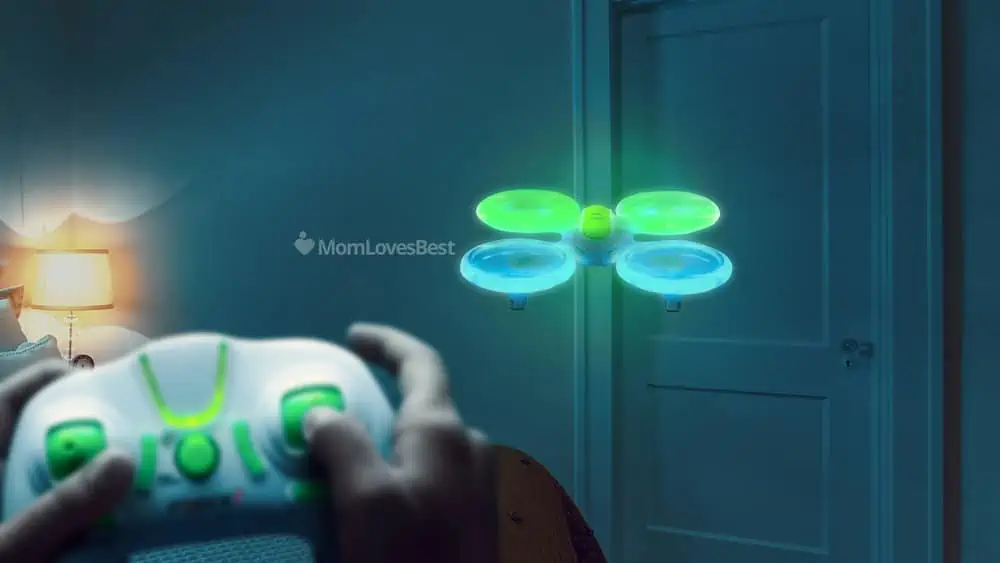
If your kid loves lights, this is the winner. The UFO 3000 is wrapped in ultra-bright blue and green LEDs. It looks spectacular at night and is impossible to lose sight of.
Designed for durability, it features thick plastic bumpers around the propellers. It’s strictly a stunt drone, no camera, just action. It performs high-speed spins and 360-degree flips with ease.
It comes with two batteries, which is great because kids will want to keep the light show going. It’s fast, responsive, and arguably the coolest-looking drone on this list when the sun goes down.
What We Like
Night Flight
Most drones are black or gray and vanish in low light. The UFO 3000 glows superbly, making it the only drone on this list we recommend for evening flights.
Sturdy Bumpers
The guards are robust. They bounce off walls and furniture effectively, protecting both the house and the drone’s internals.
Multi-Player Racing
Because of the distinct LED colors and interference-free remote channels, it is perfect for siblings. You can race two of them together without signals crossing.
What We Don't Like
Charging Time
The batteries take a while to charge relative to the flight time. You get about 7 minutes of flight for a 45-60 minute charge.
Propeller Vulnerability
While the guards are good, hard impacts can still pop a propeller off. Always keep track of where they land if one flies loose.
Product Specs
| Size | 8.3 inches by 7 inches by 4.2 inches |
| Weight | 12.8 ounces |
| Cell phone control | No |
| Camera | No |
| Recommended age | 14 years and up |
Our Ratings
| Product | Best | Size | Weight | Cell phone control | Camera | Recommended age |
| Holy Stone HS340 Mini RC | Easy to Maneuver | 6.73″ x 6.22″ x 3.35″ | 1.76 oz | No | Yes | 14 yrs and up |
| Holy Stone F181W RC | For Flips and Tricks | 12.6″ x 3.3″ x 12.6″ | 5.7 oz | Yes | Yes | 14 – 17 yrs old |
| Drocon Spacekey DC-014 | Panoramic Views | 5.4″ x 5.4″ | 15.5 oz | Yes | Yes | 12 yrs and up |
| Deerc D20 Mini | For Video | 7″ x 4.7″ x 1.7″ | 2.43 oz | Yes | Yes | 14 yrs and up |
| Potensic Upgraded A20 | Beginners | 3.5″ x 3.1″ x 1.25″ | 6.4 oz | No | No | 8 yrs and up |
| Syma X5C Explorers | Playing Indoors or Outdoors | 16.5″ x 12.2″ x 3.8″ | 25.6 oz | No | Yes | 14 yrs and up |
| Force1 UFO 3000 | Mini Drone | 8.3″ x 7″ x 4.2″ | 12.8 oz | No | No | 14 yrs and up |
FAQs

Should I Buy My Kid a Drone?
Yes. Drones teach spatial awareness, hand-eye coordination, and basic mechanics. It gets kids off the couch and outside. Just stick to age-appropriate toy models first.

What is a Toy Grade Drone?
Toy-grade drones are affordable (usually under $100), lightweight, and built with durability in mind. They often lack GPS and advanced sensors but are perfect for learning the basics of flight without risking expensive equipment.

What is the Easiest Drone For Kids to Fly?
The easiest drones feature “Altitude Hold” and “Headless Mode.” The Potensic A20 and Holy Stone HS340 are top contenders because they hover automatically and don’t require complex throttle management.

How High Can a Toy Drone Fly?
Most toy drones have a range of 50 to 150 feet. However, we recommend keeping them below tree level (about 30 feet) to prevent them from getting caught in wind currents and drifting away.

How Long Do Toy Drones Last?
With care, they can last years. However, the motors are usually brushed and will wear out after 10-20 hours of total flight time. Batteries also degrade over time. Expect to replace parts or the whole unit after heavy use.

Do I Need a License to Fly a Toy Drone?
You do not need a license, but you must pass “The Recreational UAS Safety Test” (TRUST). It is a free online safety quiz required by the FAA for all recreational flyers in the US, regardless of drone size.
What Happens if the Drone Gets Stuck in a Tree?
Don’t climb the tree! It is dangerous. Try to dislodge it by throwing a soft object (like a football) near it, or use a long pole. If it’s too high, wait for the wind to blow it down.