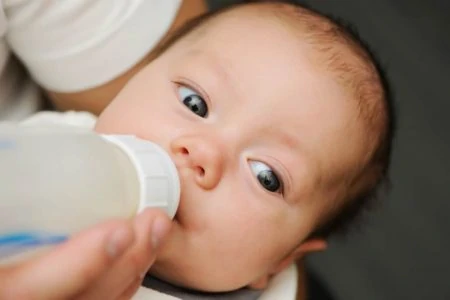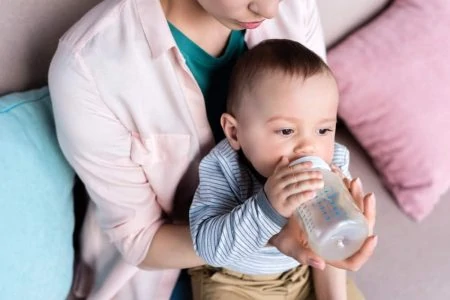
I remember staring at my son, wondering if he would ever grab the bottle so I could finally fold the laundry piling up next to us. The good news is that your baby will eventually develop the motor skills to feed themselves.
While every child follows their own timeline, we can look at general milestones to help you manage expectations. Here is what you need to know about when babies hold their own bottles, how to encourage the skill, and safety tips you cannot ignore.
Key Takeaways
- Timeline: Most babies develop the fine motor skills to hold a bottle between 6 and 10 months old.
- Safety First: Never leave a baby unattended with a bottle or prop it up, as this increases the risk of choking and ear infections.
- Encouragement: You can help by guiding their hands to the bottle during feeds or using easy-grip handles.
- No Pressure: Some babies prefer the comfort of being fed by a parent and may refuse to hold the bottle themselves; this is normal.
When Do Babies Hold Their Own Bottle?
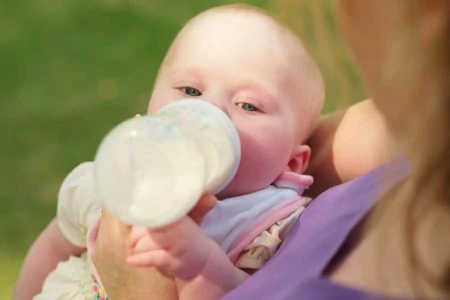
Most babies develop the coordination and strength to hold a bottle between six and 10 months of age (1).
However, this is a broad range. Some eager eaters might grasp the bottle as early as six months, while others might happily let you do the work until their first birthday. Both scenarios are perfectly normal.
Holding a bottle requires fine motor skills. Your baby needs to be able to grasp objects, bring them to their mouth, and hold them there for an extended period. This often coincides with other milestones, such as sitting up independently or reaching for toys.
Remember that babies develop at different rates (2). Try not to compare your child to your friend’s baby who might be chugging milk solo at five months. Your little one will get there when they are ready.
Is It a Problem If They Won’t Do It?
If your baby shows zero interest in holding their bottle while their peers are already self-feeding, do not panic. I spent way too much time stressing over milestones with my firstborn, checking off lists in baby books like my life depended on it.
Some babies simply associate feeding with comfort. My son, for example, loved the closeness of me holding the bottle. It was his time to relax, and he refused to do the heavy lifting. I worried he was behind, but he wasn’t. He just liked the service.
As long as your child is meeting other developmental milestones like grabbing toys or clapping hands, refusing the bottle is usually just a preference (3). If you have genuine concerns about their motor skills, check in with your pediatrician, but otherwise, enjoy the extra cuddles while they last.
How to Teach Your Baby to Hold a Bottle
If you are ready to encourage some independence, there are a few tricks to help your baby get the hang of it.
Here are a few ways to practice:
- Start Empty: A full bottle is heavy. Let your baby play with an empty bottle during playtime so they can get used to the shape and weight without the pressure of eating.
- Guide Their Hands: During a feed, gently place your baby’s hands on the bottle while you support the weight. This helps them understand the connection between their hands and the food source.
- Use Accessories: Consider using bottles with handles or adding a silicone grip sleeve. These make it easier for tiny fingers to grasp.
- Wait for the Reach: When your baby is hungry, show them the bottle and wait a split second to see if they reach for it before you offer it.
Safety Rules for Independent Feeding
Even when your baby becomes a bottle-holding pro, your job isn’t entirely done. Independent feeding does not mean unsupervised feeding.
Keep these critical safety tips in mind:
- No Propping: Never use pillows or blankets to prop a bottle in your baby’s mouth. This is a major choking hazard and can lead to fluid aspiration.
- Stay Close: Always stay in the room and watch your baby while they eat. If they start to choke or gag, you need to be right there to intervene.
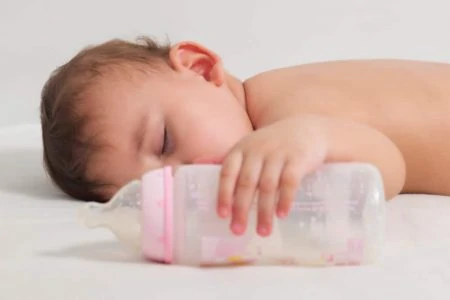
- Avoid Bedtime Bottles: Do not let your baby fall asleep with a bottle in the crib (4). Milk pooling in the mouth causes “bottle rot” (tooth decay) and increases the risk of ear infections as liquid flows into the eustachian tubes (5).
- Monitor Flow: Make sure the nipple flow isn’t too fast. If they are in control of the bottle, a fast flow can overwhelm them and cause coughing.
FAQs

Is Bottle Propping Ever Safe?
No, bottle propping is never safe. It poses a significant choking risk because the baby cannot push the bottle away if the milk flows too fast. It is also linked to an increased risk of ear infections and tooth decay.
Why Does My Baby Push the Bottle Away?
Babies push bottles away to signal they are full, need a break, or want to be burped. It is an important sign of self-regulation. If they push it away, do not force them to finish the milk.
When Should We Transition to a Cup?
The American Academy of Pediatrics suggests introducing a cup around six months of age and aiming to wean off bottles entirely by 12 to 18 months. This helps prevent tooth decay and promotes oral motor development.
Embrace the Pace
Just when you resign yourself to holding that bottle forever, your baby will surprise you by grabbing it and shoving it into their mouth. It happens suddenly, and you will wonder why you spent so much time worrying about it.
Until then, take a deep breath and enjoy the bonding time. Whether they master the skill at six months or 10, they will get there.
If you want to nudge them along, remember to:
- Show them how to hold it by guiding their hands.
- Invest in easy-to-grip bottles or handles.
- Keep safety a priority and never leave them alone to eat.
Your baby is on their own unique path, and right now, that path just involves a little extra help from mom.