While a missed period remains the most reliable indicator, many women notice subtle shifts much sooner. Your body undergoes massive chemical changes the moment conception happens, and these often manifest as physical symptoms before you ever take a test.
We will break down the earliest signs of pregnancy, explain the science behind them, and offer practical tips to manage the discomfort.
Key Takeaways
- Hormonal shifts trigger early symptoms like nausea, fatigue, and mood swings.
- Sore breasts and light spotting are often the very first signs of conception.
- Digestive issues like bloating, constipation, and food aversions are common.
- Every pregnancy is unique; you might experience all symptoms or none at all.
Hormones Drive Pregnancy Symptoms
Why do we have to deal with so many troublesome symptoms? You can blame the hormones.
Several hormones play distinct roles in supporting your baby. Their rapid increase causes the physical side effects you feel.
These are the main hormones at play during pregnancy (1):
1. Human Chorionic Gonadotropin (hCG)
This is the “pregnancy hormone” that test kits look for. It is produced by the placenta shortly after implantation.
hCG levels double every few days in early pregnancy. This hormone handles several critical tasks:
- It tells your body to stop menstruation.
- It supports the development of the umbilical cord.
- It aids in the growth of fetal organs.
Unfortunately, rapidly rising hCG is also the primary culprit behind nausea and vomiting (2).
2. Human Placental Lactogen (hPL)
Produced by the placenta, hPL helps provide nutrition to the fetus. It also stimulates milk glands in your breasts in preparation for breastfeeding. If your breasts feel heavy or leak slightly, hPL is likely the cause.
3. Estrogen
Estrogen levels skyrocket during pregnancy. This hormone helps mature fetal organs like the lungs and liver (3). It also increases blood flow, which can lead to the “pregnancy glow” or, less pleasantly, a stuffy nose.
4. Progesterone
Progesterone thickens the uterine lining to allow the fertilized egg to implant securely. It also relaxes smooth muscles to prevent premature contractions.
However, this relaxation effect slows down your gastrointestinal (GI) tract. This sluggish digestion often causes constipation, indigestion, and heartburn (4).
Common Early Pregnancy Signs
Every woman experiences pregnancy differently. You might tick every box on this list, or you might sail through the first trimester with zero symptoms.
Here are the most common early indicators to watch for.
1. Sore or Sensitive Breasts
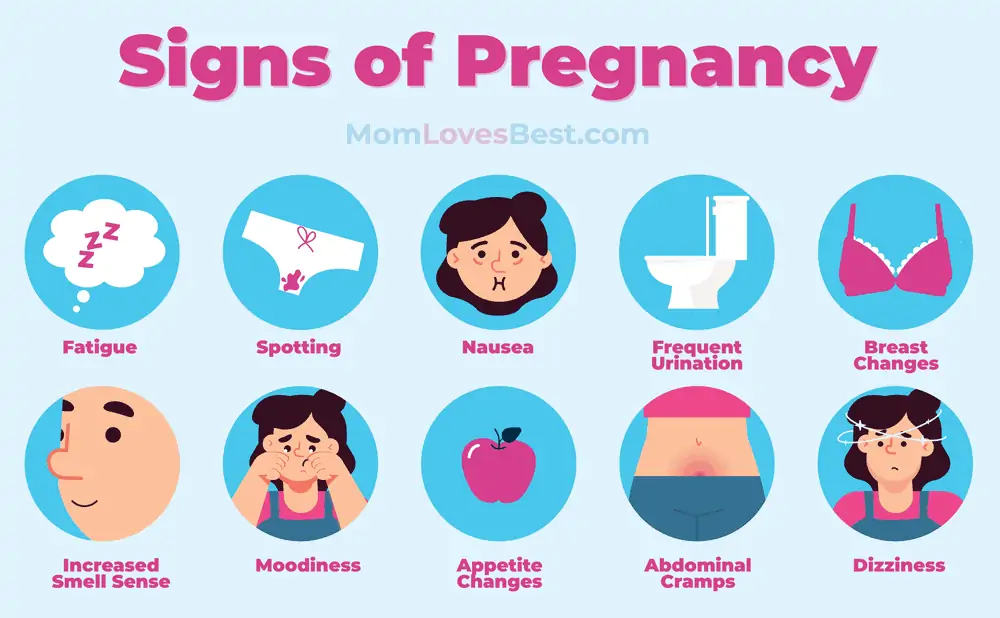
This is often the very first sign of pregnancy, sometimes appearing as early as one week after conception. Your breasts may feel tender, heavy, or swollen. The areolas (the skin around your nipples) may also darken or become bumpy.
Hormones are prepping your body for milk production. The soreness usually eases up after a few weeks as your body adjusts to the hormonal surge.
2. Implantation Bleeding
You might notice light spotting or pinkish discharge about 6 to 12 days after conception. This is called implantation bleeding, and it happens when the fertilized egg attaches to the lining of the uterus.
It is easily mistaken for a light period, but it is typically much shorter and lighter in color.
3. Nausea (Morning Sickness)
Despite the name, nausea can strike at any time of day or night. You might feel queasy, gag at specific smells, or vomit. This usually kicks in around the sixth week of pregnancy.
While unpleasant, nausea is often a sign of a healthy pregnancy and high hormone levels (5).
Try these tips to manage the queasiness:
- Eat a few dry crackers before getting out of bed.
- Avoid strong smells and hot environments.
- Suck on lemon drops or ginger candies.
- Drink fluids between meals rather than with them.
- Ask your doctor about safe medications if vomiting becomes severe.
4. Extreme Fatigue
You might feel exhausted even after a full night of sleep. Your body is working overtime to build a life support system (the placenta) and generate extra blood.
Progesterone acts as a natural sedative, contributing to this drowsiness (6).
How to handle the slump:
- Prioritize naps and go to bed earlier.
- Delegate household chores.
- Limit caffeine, especially if you love coffee, and switch to water.
- Listen to your body; if you need rest, take it.
5. Excess Saliva
Waking up with a wet pillow is surprisingly common. This condition, known as ptyalism, often accompanies nausea and heartburn (7).
While harmless, it is annoying. Here is how to cope:
- Sip water frequently.
- Use mouthwash or brush your teeth often.
- Chew sugarless gum to help swallow the excess fluid.
6. Bloating and Gas
Progesterone relaxes your muscles, including those in your intestine. This slows digestion and leads to gas buildup, burping, and passing wind. You might feel bloated even before your baby bump shows.
To reduce the bloat:
- Hydrate well to prevent constipation.
- Keep a food journal to identify triggers.
- Exercise gently to keep digestion moving.
- Skip carbonated sodas.
7. Heartburn and Indigestion
That feeling of something “stuck in your throat” or burning in your chest is likely Gastroesophageal Reflux Disease (GERD).
The valve between your stomach and esophagus relaxes during pregnancy, allowing acid to leak upward (8).
Relieve the burn with these habits:
- Eat several small meals instead of three large ones.
- Stop eating three hours before bed.
- Avoid lying down immediately after meals.
- Wear loose, comfortable clothing.
8. Heightened Sense of Smell
Sudden revulsion to your partner’s cologne or the smell of coffee? Estrogen can make your nose hypersensitive (9).
Manage the smells:
- Switch to unscented laundry detergents and lotions.
- Ask family members to apply perfume in a different room.
- Eat cold or room-temperature foods, which release fewer aromas.
- Ventilate your kitchen while cooking.
9. Pregnancy Rhinitis (Stuffy Nose)
If you have a cold that won’t quit, it might be pregnancy rhinitis. Increased blood volume and hormones cause the mucous membranes in your nose to swell.
Additionally, your immune system naturally lowers to protect the baby, making you more susceptible to actual colds (10).
Boost your defenses:
- Stay hydrated.
- Eat nutrient-rich fruits and veggies.
- Wash hands frequently.
- Consult your doctor about a flu shot.
10. Vaginal Discharge
An increase in milky white discharge (leukorrhea) is normal. It helps prevent infections from traveling up to the uterus.
You should always avoid douching, whether expecting pregnancy or not. Douching is harmful to normal vaginal flora.
Editor's Note:
Caitlin Goodwin, MSN, RN, CNMUse panty liners for comfort but avoid tampons and douching, as these can introduce bacteria. If the discharge is green, yellow, or foul-smelling, see your doctor to rule out infection.
11. Abdominal Pulling and Cramps
You might feel a pulling sensation or mild cramping, similar to menstrual cramps. This is caused by implantation or the uterus stretching to make room for the embryo (11).
Soothe the ache:
- Change positions or lie down.
- Take a warm (not hot) bath. Hot tubs are unsafe during pregnancy.
- Stay hydrated.
- Try gentle yoga or stretching.
12. Mood Swings
One minute you are weeping over a commercial; the next, you are raging because the dishwasher wasn’t loaded correctly.
Fluctuating hormones affect neurotransmitters in your brain, leading to “runaway emotions” (12). Fatigue and financial stress often amplify these feelings.
Keep your emotional balance:
- Communicate openly with your partner.
- Identify stress triggers and avoid them.
- Eat balanced meals to avoid sugar crashes.
- Seek professional counseling if you feel overwhelmed.
13. Cravings and Aversions
Your body might suddenly demand pickles and ice cream or completely reject your favorite meal.
Cravings often signal a need for specific nutrients (13). Conversely, food aversions may be a protective mechanism against foods that could be harmful.
If you crave non-food items like dirt or chalk (pica), contact your doctor immediately, as this indicates a nutritional deficiency.
14. Frequent Urination
Your kidneys work harder to filter the extra blood volume, and your growing uterus presses on your bladder. This results in many trips to the bathroom.
Manage the flow:
- Cut back on caffeine, which acts as a diuretic.
- Drink water throughout the day but reduce intake before bed.
- Practice Kegel exercises to strengthen your pelvic floor.
15. Dizziness and Lightheadedness
Progesterone widens your blood vessels to increase flow to the baby, which can drop your blood pressure and cause dizziness. Low blood sugar or anemia can also contribute (14).
Stay steady:
- Stand up slowly.
- Eat small, frequent snacks to stabilize blood sugar.
- Avoid standing in one place for too long.
- Request an iron check from your doctor.
FAQs

How Soon Do Early Pregnancy Symptoms Start?
Some women notice symptoms as early as one week after conception (before a missed period), while others may not feel anything until weeks 6 or 7. Symptoms like breast tenderness and fatigue often appear first.
Can I Have Pregnancy Symptoms and Not Be Pregnant?
Yes. Many early pregnancy symptoms, such as bloating, breast tenderness, and mood swings, are identical to Premenstrual Syndrome (PMS). The only way to know for sure is to take a pregnancy test.
What Is the Difference Between Implantation Bleeding and a Period?
Implantation bleeding is typically lighter, shorter (lasting 1 to 3 days), and pink or brown in color. A menstrual period usually starts light but becomes heavier and bright red, lasting 4 to 7 days.
In Conclusion
Navigating the “two-week wait” or the early days of a potential pregnancy is emotionally taxing. Your body is doing a lot of work behind the scenes, and those strange symptoms are proof of the massive changes taking place.If you suspect you are pregnant, take a home test or visit your doctor for blood work. Regardless of the result, listen to your body, rest when you need to, and give yourself grace during the process.