
Pregnancy is a life-changing journey, but let’s be honest: it isn’t always a glowing fairytale. While society focuses on the joy and excitement of expecting, we often ignore the less photogenic emotions.
If you feel anxious, worried, or downright furious, you are not alone. We have been there, and we have spoken to countless moms who felt like volcanoes ready to erupt.
You don’t have to spend the next nine months feeling like a ticking time bomb. We consulted experts to bring you this guide on understanding your emotions and a simple five-step process to manage anger during pregnancy.
Key Takeaways
- Hormonal fluctuations (specifically estrogen and progesterone) and physical discomfort are primary triggers for pregnancy anger.
- Chronic, high-level stress can impact your baby’s health, but occasional outbursts are normal and usually harmless.
- Rest, blood sugar management, and setting boundaries are the most effective ways to regulate mood swings.
- If anger impacts your daily life or relationships for more than two weeks, consult a healthcare provider to rule out perinatal mood disorders.
Why Do I Feel So Angry?
The primary culprit behind extreme emotional responses during pregnancy is your shifting hormonal landscape. As your body supports growing life, levels of estrogen and progesterone skyrocket.
These hormonal surges affect the neurotransmitters in your brain that regulate mood. The result? You might cry over a spilled coffee or feel rage when your partner breathes too loudly.
However, hormones aren’t the only factor. Good old-fashioned stress plays a massive role.
You are navigating a major life transition. Between financial worries, preparing a nursery, and dealing with unsolicited advice, your patience wears thin. Additionally, physical discomforts like nausea, fatigue, and back pain lower your tolerance for irritation.
When to Seek Professional Help
Expect a few meltdowns; they are part of the human experience, especially when you are growing a human.
However, you need to distinguish between standard hormonal irritability and something more serious. Your baseline matters here. Rely on trusted loved ones to help you gauge if your reactions seem out of character.
Take Note
Does Anger Affect the Baby?
This is a common fear, but context is key. Getting mad at traffic once in a while won’t hurt your child. However, chronic anxiety and anger trigger the release of cortisol, the body’s stress hormone.
When you stay in “fight or flight” mode for weeks or months, it creates an inflammatory response in your nervous system.
Take Note
Do not let this information panic you. Stressing about your stress creates a vicious cycle. Instead, use this knowledge as motivation to prioritize your mental health and implement the management strategies below.
5 Ways to Manage Pregnancy Rage
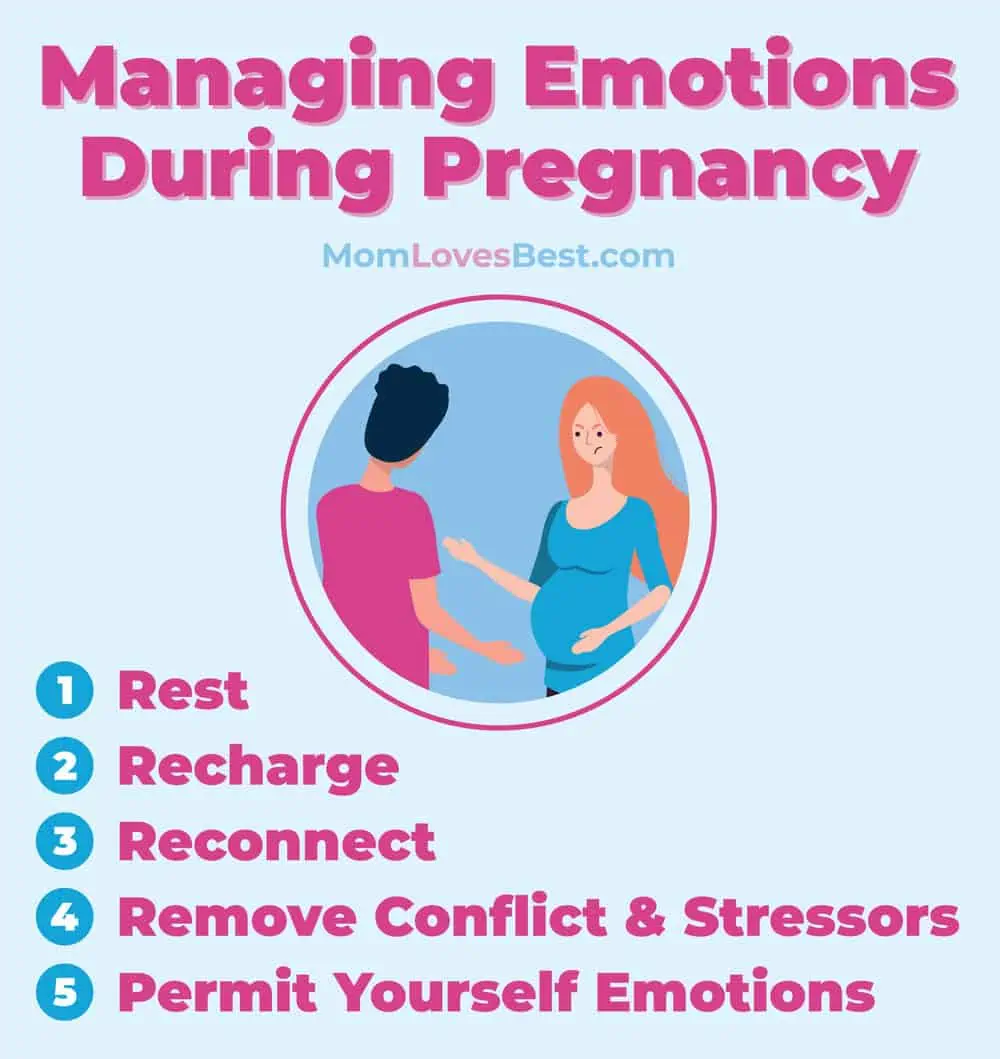
1. Rest
Fatigue destroys emotional regulation. If you are exhausted, your fuse is naturally shorter.
It is tempting to push through the tiredness to prepare the house or finish work projects, but this taxes a body already under immense strain. You must slow down.
Prioritize your physical recovery by aiming for these milestones:
- Take breaks: Sit down for ten minutes for every hour you spend on your feet.
- Nap smart: Squeeze in a 20 to 30-minute nap whenever possible.
- Sleep deep: Protect your seven to eight hours of quality sleep every night.
Adequate rest helps minimize physical irritants like swollen feet, back pain, and headaches, making you less prone to outbursts.
2. Recharge
You cannot pour from an empty cup. Your baby is literally draining your resources, so you must replenish them constantly.
Blood sugar crashes are a major trigger for “hangry” episodes. If you go too long without food, your mood will plummet.
Remember
Physical movement is another vital way to recharge. A regular, mild exercise routine burns off excess adrenaline and releases feel-good endorphins.
Incorporate these recharging habits into your daily routine:
- Move your body: Try 20 minutes of mild activity like gardening, swimming, or walking.
- Eat often: Consume small, nutrient-dense meals or snacks five to six times per day.
3. Reconnect
It is easy to become roommate-parents who only discuss logistics and baby gear. Don’t let your romantic connection slide.
Take Note
You also need to reconnect with yourself. You are more than just an incubator. Continue to pursue the hobbies and interests that made you happy before the positive test.
Whether it is reading, prenatal yoga, or painting, take 10 minutes a day for yourself. When you fill your own cup, you have more patience for everyone else.
4. Remove Conflict
You cannot avoid all stress, but you can curate your environment. If you have a toxic coworker or a demanding family member, now is the time to set boundaries.
If you feel your temperature rising, walk away. Whether it is an argument with your partner or a toddler throwing a tantrum, it is acceptable to take a “time out” for yourself.
Step into another room, take deep breaths, and regain your composure before engaging.
Also, look at your to-do list. If a task isn’t essential for survival, cross it off. Lowering your load decreases the feeling of being overwhelmed.
5. Release
Society expects pregnant women to be perpetually blissful. Release that expectation.
It is okay to hate the nausea. It is okay to mourn your old life. Suppressing these feelings often leads to an explosion later.
Take Note
Writing in a pregnancy journal is a powerful tool. Putting your fears on paper can stop them from looping in your mind. Give yourself grace; you are doing hard work.
FAQs

When Does Irritability Start In Pregnancy?
Many moms notice increased irritability starting around week six, coinciding with the first major hormone surge. These mood swings often persist through the first trimester. You may get a reprieve during the second trimester, but irritability often returns in the third trimester as physical discomfort increases and sleep becomes difficult.

Why Can’t I Control My Emotions When Pregnant?
It feels like a loss of control, but it is actually a biological response. Your brain chemistry is altering due to rapid hormone fluctuation. Combined with sleep deprivation and anxiety about the impending life change, your emotional regulation center is compromised. Be patient with yourself; this is temporary.

Can Stress Cause Birth Defects?
Standard stress does not cause birth defects. However, severe, chronic stress over a long period can impact fetal development. It is linked to risks like preterm birth or low birth weight. If you feel your anger is constant and unmanageable, seeking professional help is the best way to protect your baby’s health.

Can Being Angry Cause Miscarriage?
There is no evidence that getting angry or upset causes a miscarriage. While extreme, prolonged stress can raise blood pressure and impact health, an isolated argument or a bad day will not cause you to lose the baby. Miscarriages are usually caused by chromosomal abnormalities or health conditions, not emotions.

How Can My Partner Help With My Mood Swings?
Your partner can help by not taking the anger personally and understanding it is often hormonal. They can support you by ensuring you get enough food and sleep, taking over household chores to reduce your mental load, and simply listening when you need to vent without immediately trying to “fix” the problem.
Getting A Grip On Anger
As a society, we’re finally beginning to recognize and speak about postpartum depression and anxiety. However, some conditions specifically occur during pregnancy. This is called antenatal depression or anxiety. It is less known but affects 7 to 20% of all pregnant women (3).
In my practice, I saw antenatal depression nearly as often as postpartum depression, yet mothers rarely discuss it.
If you are feeling more emotional, you are not alone! Most pregnant women feel emotions more intensely. If the anger turns into sadness or persists, you could be dealing with an antenatal mental health disorder. Seeking counseling is an effective way to improve your symptoms and take back your pregnancy. Let your healthcare provider know what your concerns are so that they can keep both of you safe.

Editor's Note:
Caitlin Goodwin, MSN, RN, CNMIf you use these tips and still feel like you are drowning in anger, do not suffer in silence. Just as you wouldn’t ignore a physical symptom like bleeding, you shouldn’t ignore your mental health. Speak to your provider and get the support you deserve.