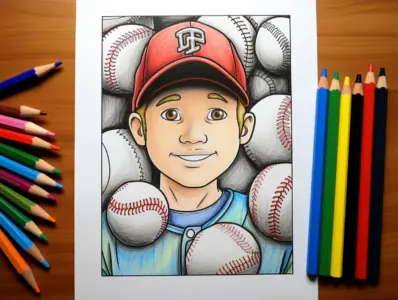
Rained out again? Play a few innings on paper instead.
These free baseball coloring pages cover 30 sheets, ready to print whenever the game gets rained out or the wait for first pitch drags.
The set runs from chunky cartoon batters a preschooler can finish in one sitting to fine-line stadium scenes that hold a teenager or an adult. Every position turns up somewhere: batters, a catcher in full gear, a pitcher set to throw, fielders, and a whole page of gloves.
There are wide ballpark views with nobody in them at all, plus Mickey Mouse in a uniform for the youngest fans. Print the ones you like and get the crayons out.
Baseball Player at Bat
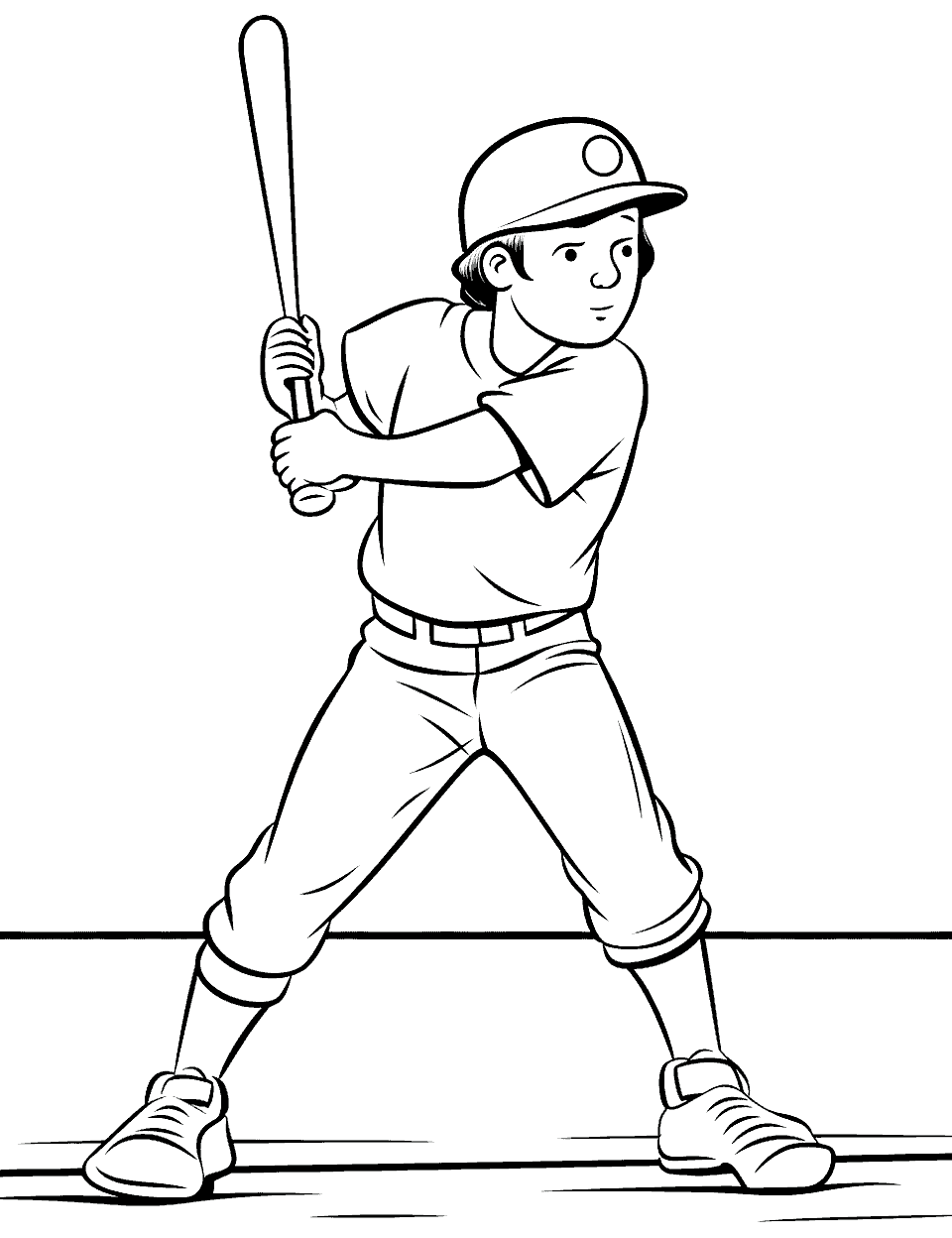
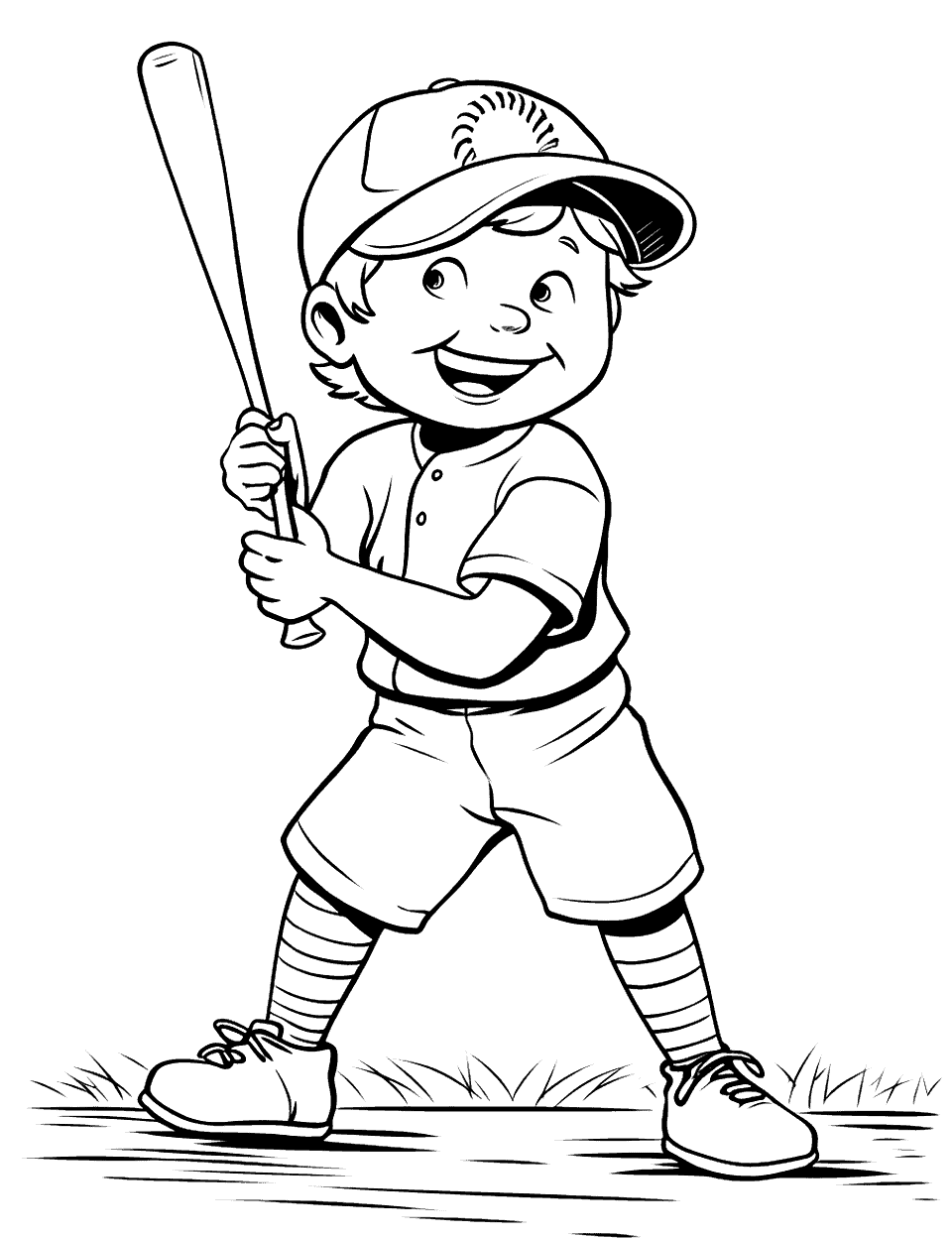
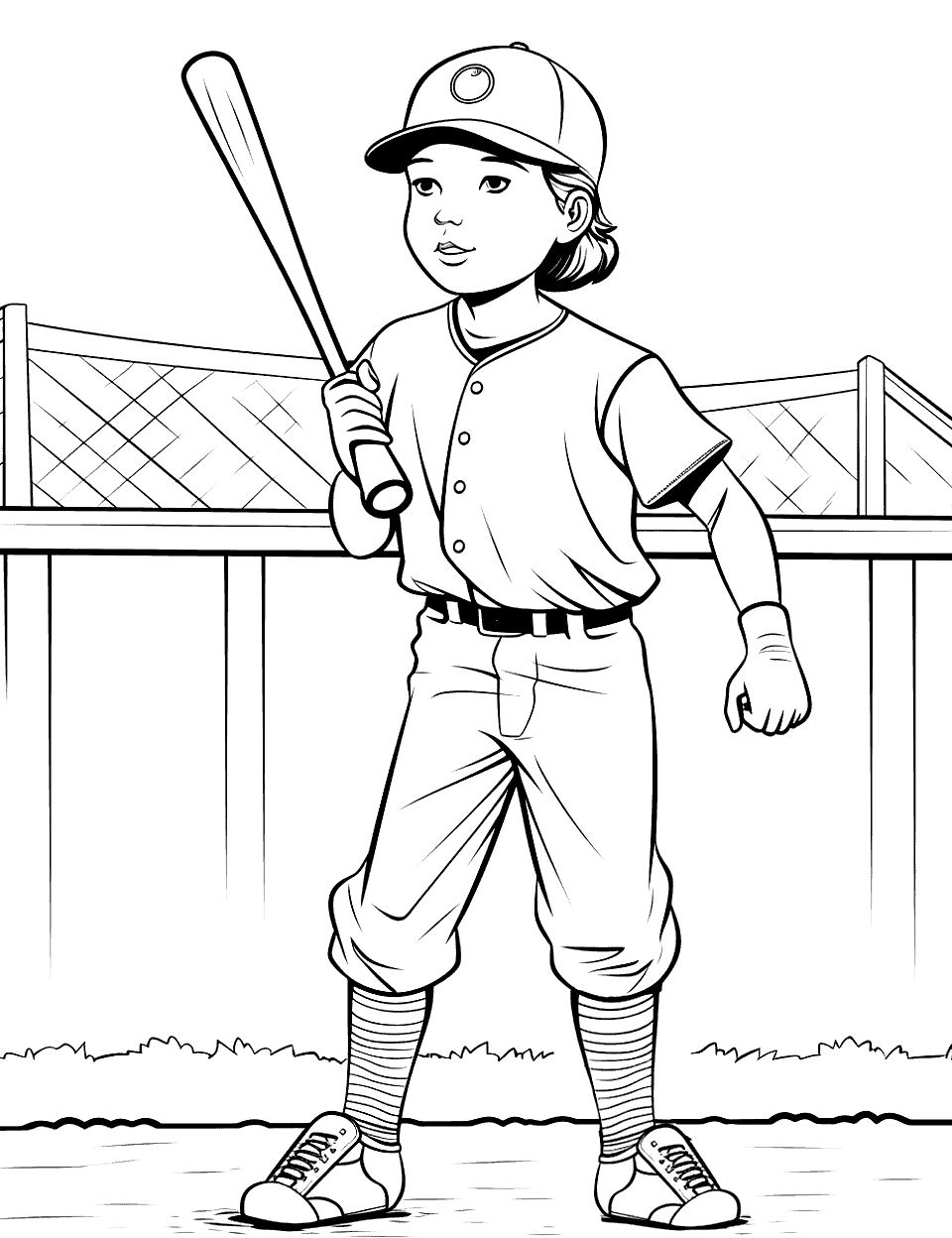
The batter stands square to the plate with the bat cocked back over his shoulder, waiting on the pitch. Thick, clean outlines make this an easy one for younger colorers to fill without much slipping. Pick two team colors for the jersey and pants, then go lighter on the helmet so the round patch on its side still shows. Regular printer paper is fine here.
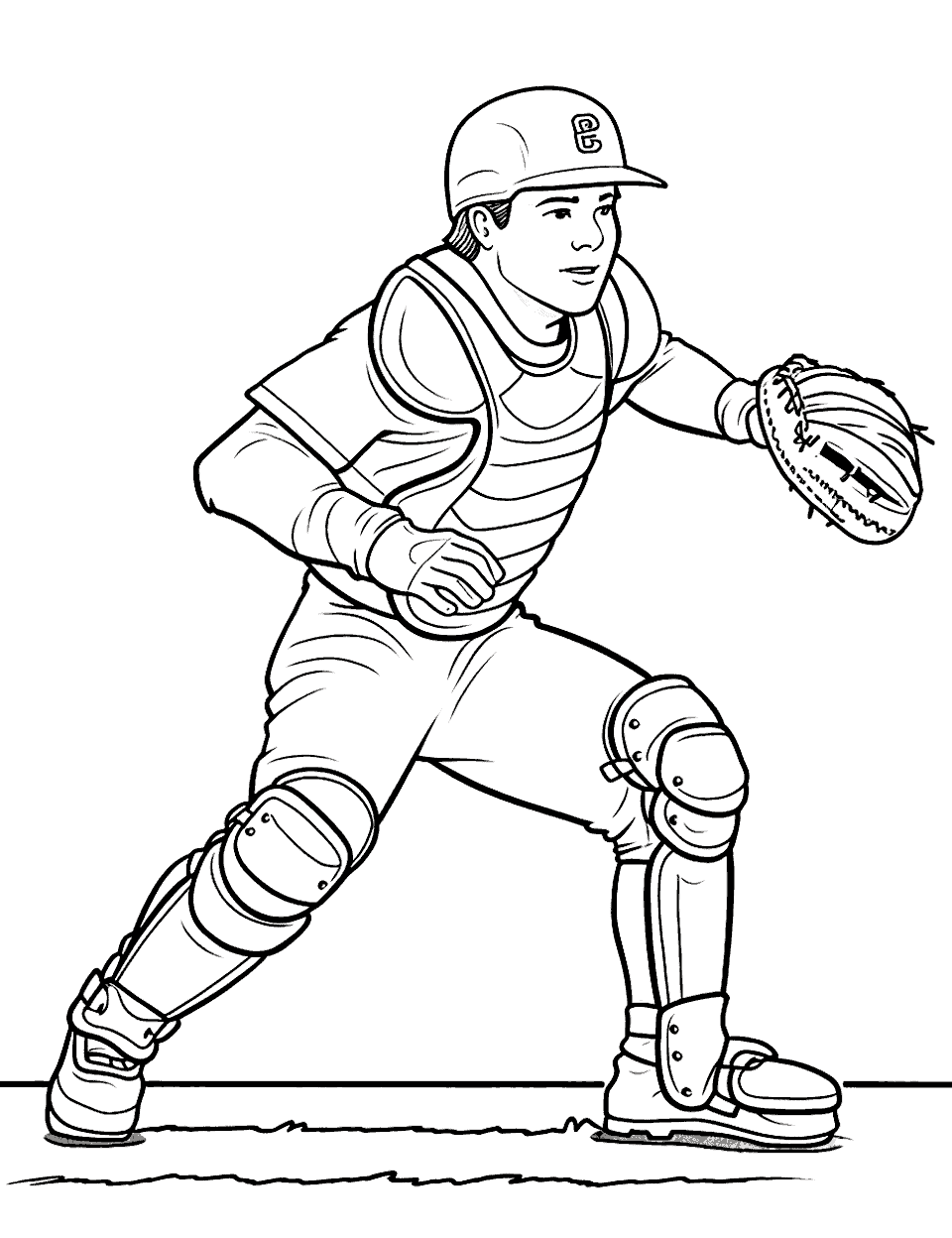
Full catcher’s gear is the draw on this sheet: helmet, chest protector, shin guards on both legs, and a laced mitt held out to one side. His other hand holds the ball down near his waist. All those straps and buckles reward colored pencils more than fat crayons. Try a dark chest protector against a pale jersey so the padding lines stay visible.
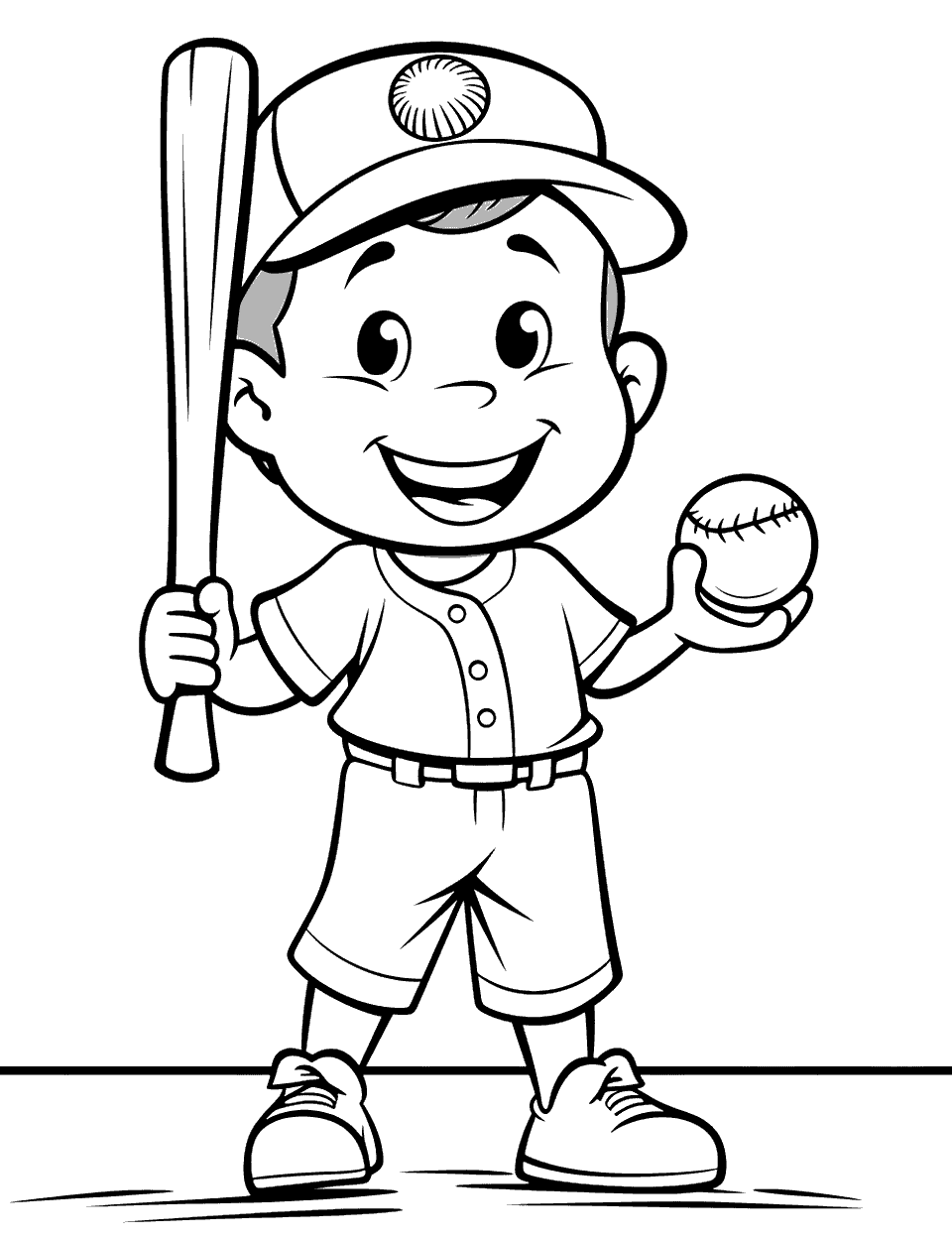
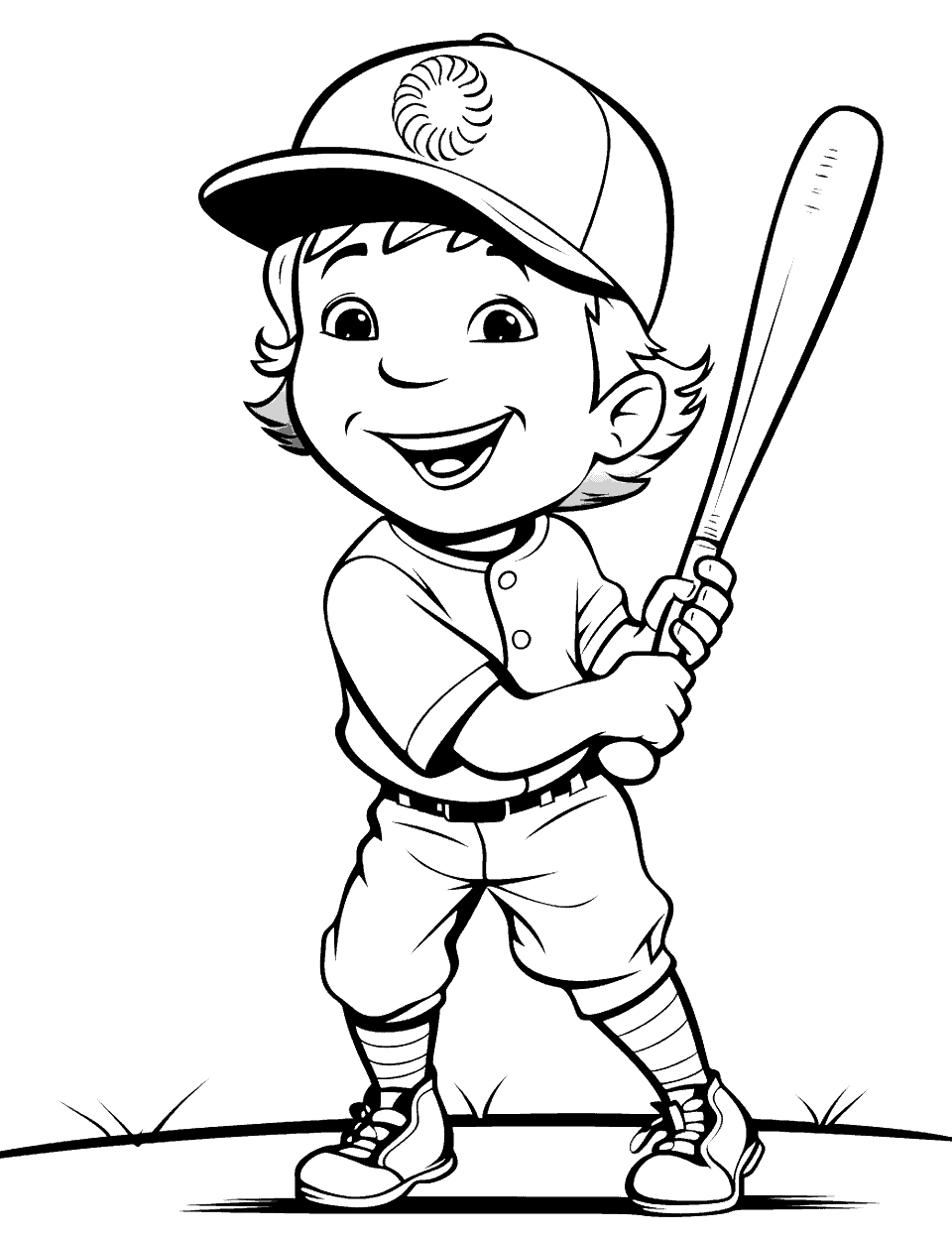
A round-faced cartoon player grins from ear to ear, a bat raised in one hand and a baseball balanced in the other. The shapes are big and simple, which suits preschoolers and shaky grips. Silly colors work better here than real team colors. The stitching on the ball is a good spot for a red pencil.
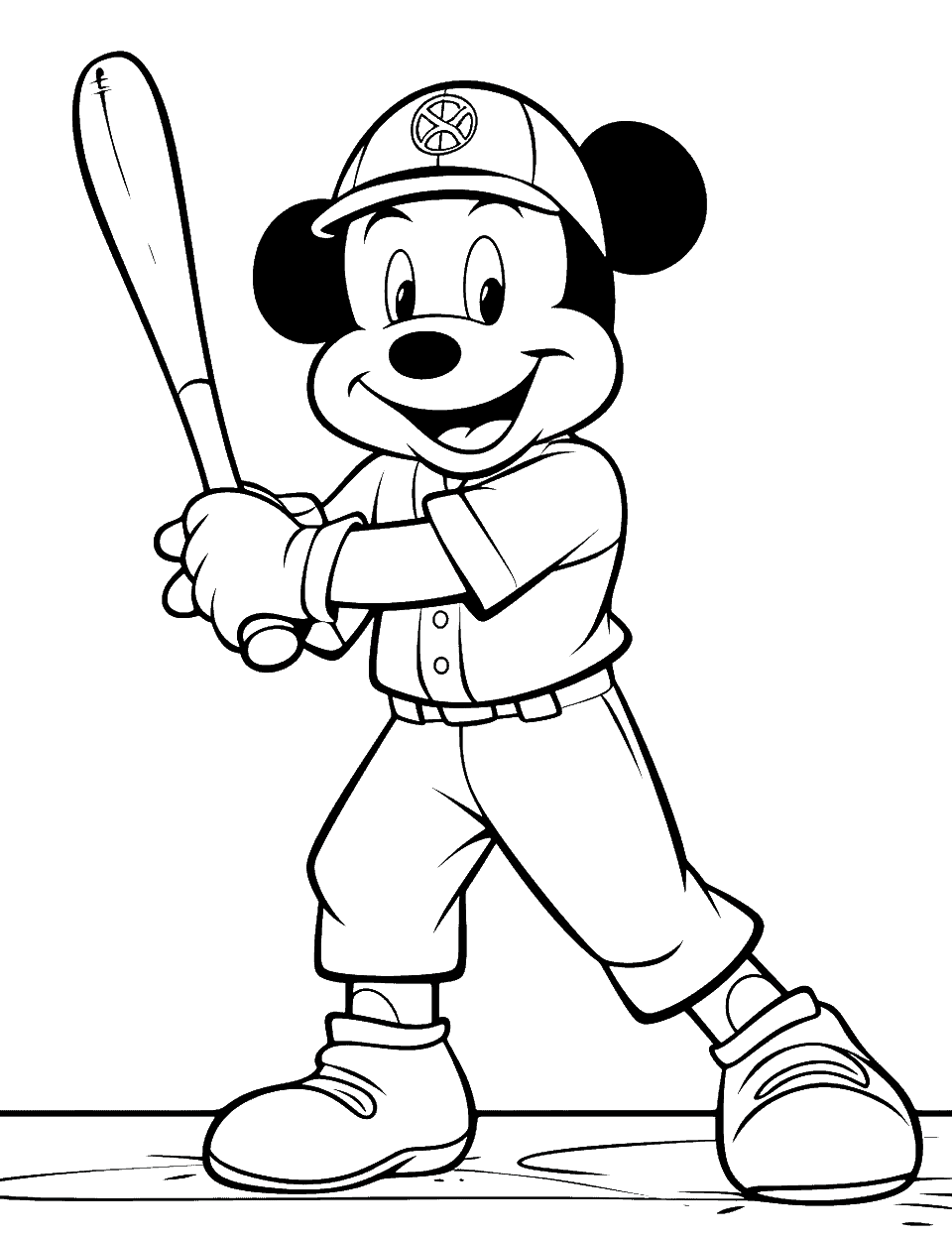
Mickey Mouse swings through in a cap and buttoned uniform with the bat carried up behind him. His ears and shoes are already solid black in the drawing, so the color work sits in the jersey, pants, and cap. Red and yellow keep him on model, though inventing a team kit for him is more fun. This one is a good pick for a themed party table.
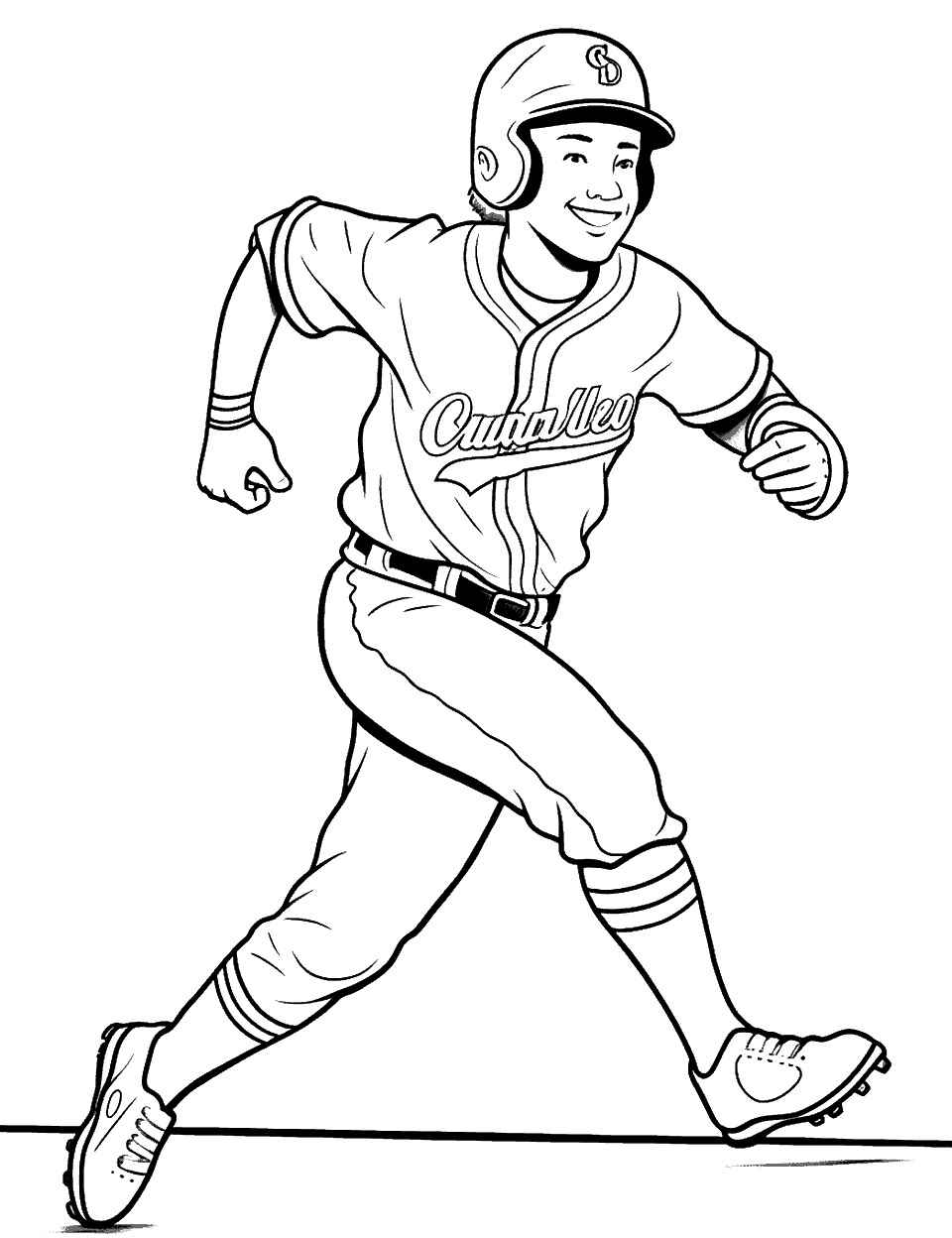
This runner is caught mid-stride with a wide smile, script lettering across the jersey chest, and striped socks above the cleats. Wristbands, belt, and jersey piping give an older child plenty of small pieces to work through. Use one accent color on the piping and the socks so the uniform reads as a real set. The blank background can become a crowd or stay white.
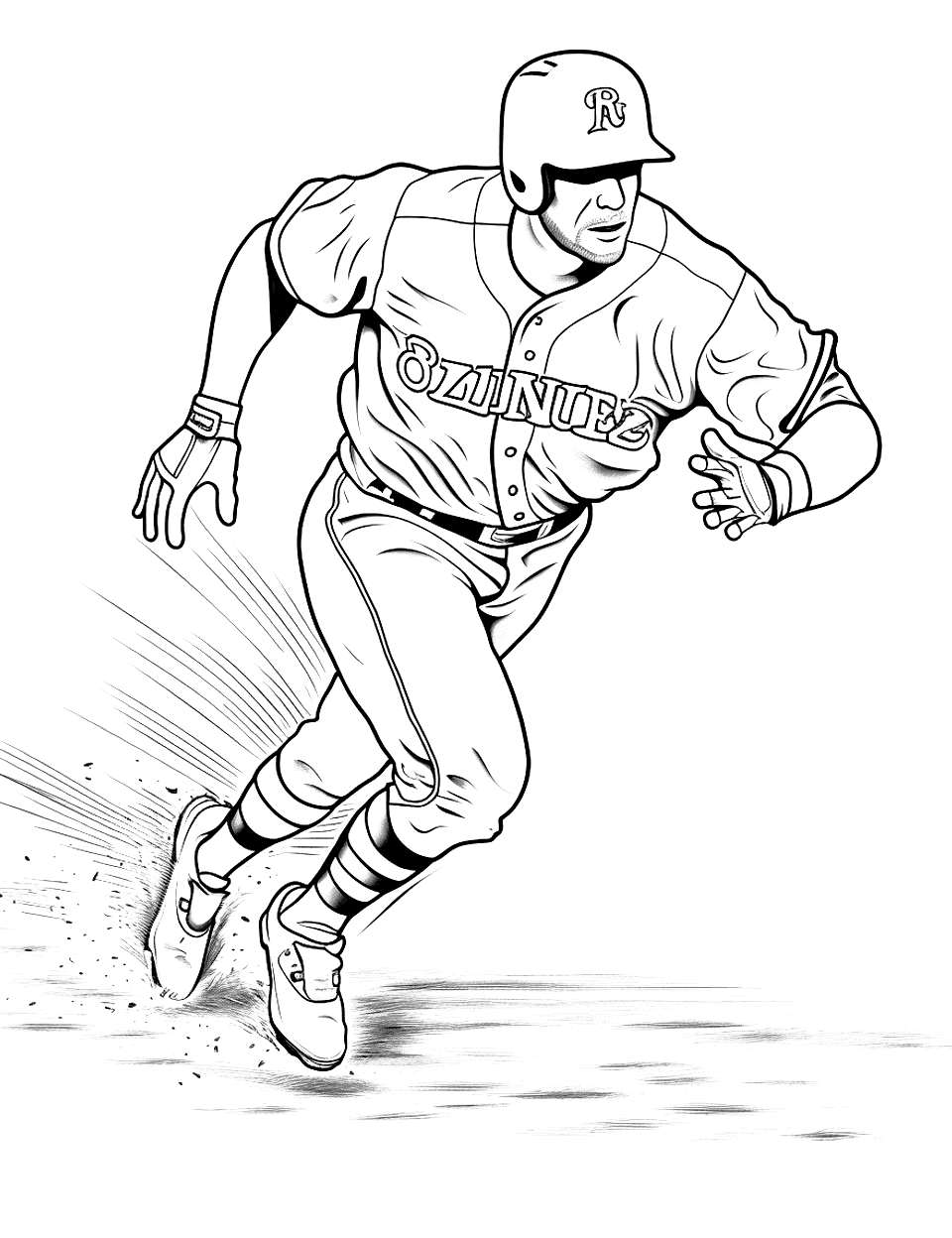
Speed lines and scattered dirt trail behind this runner as he digs for the next base. It is one of the more detailed player sheets in the set, with shading marks already drawn into the pants and sleeves. Colored pencils layer over those marks better than markers do. Save it for a teen or an adult who wants to sit with a page for a while.
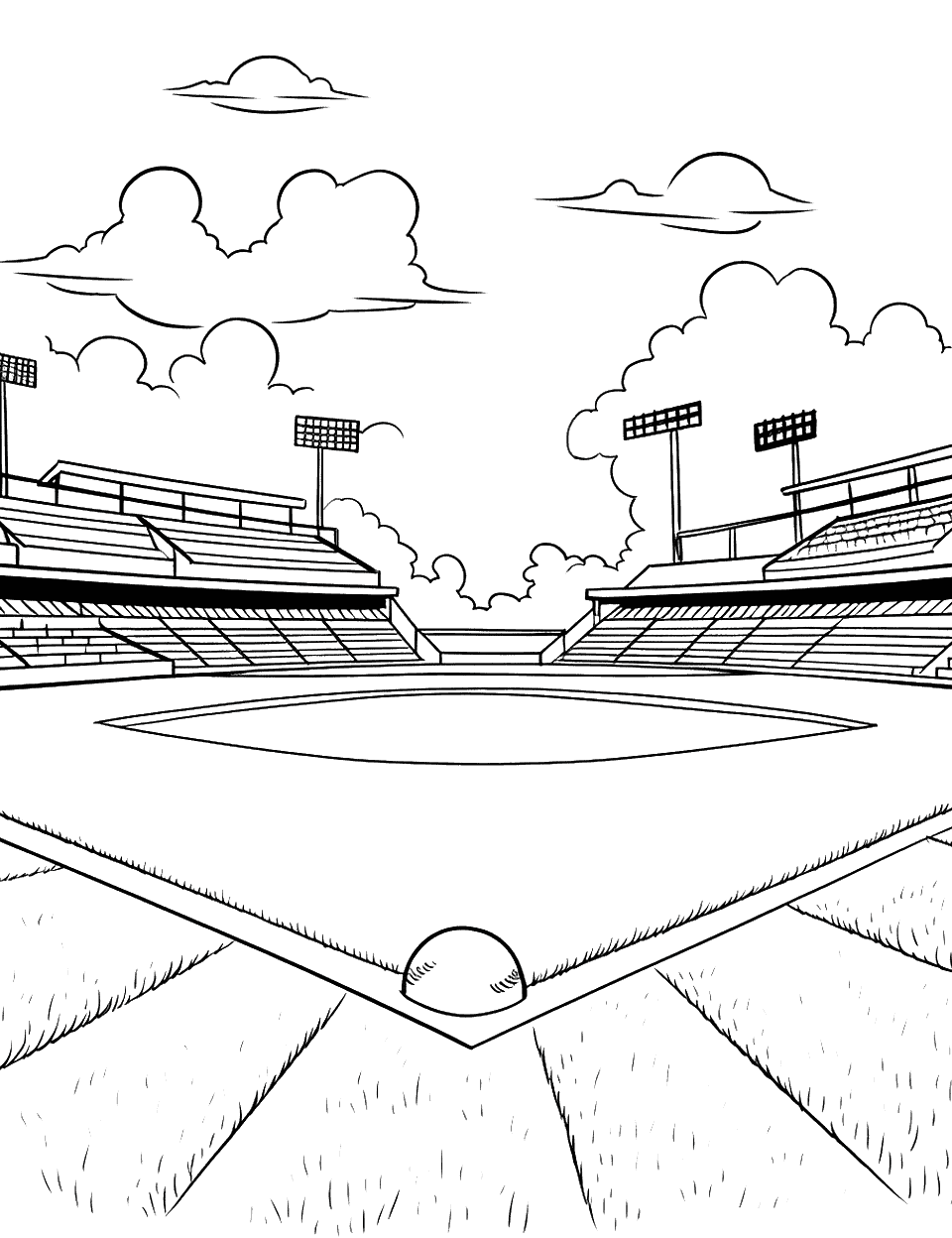
Home plate sits front and center with a ball resting against it and the mown grass fanning out in wedges behind. Beyond the infield are two banks of bleachers, light towers, and a sky full of soft clouds. Nobody is on the field, so the whole page is scenery: green grass, brown dirt, and any color you like for the seats. It also makes a good backdrop if you cut a player out of another sheet and glue him on.
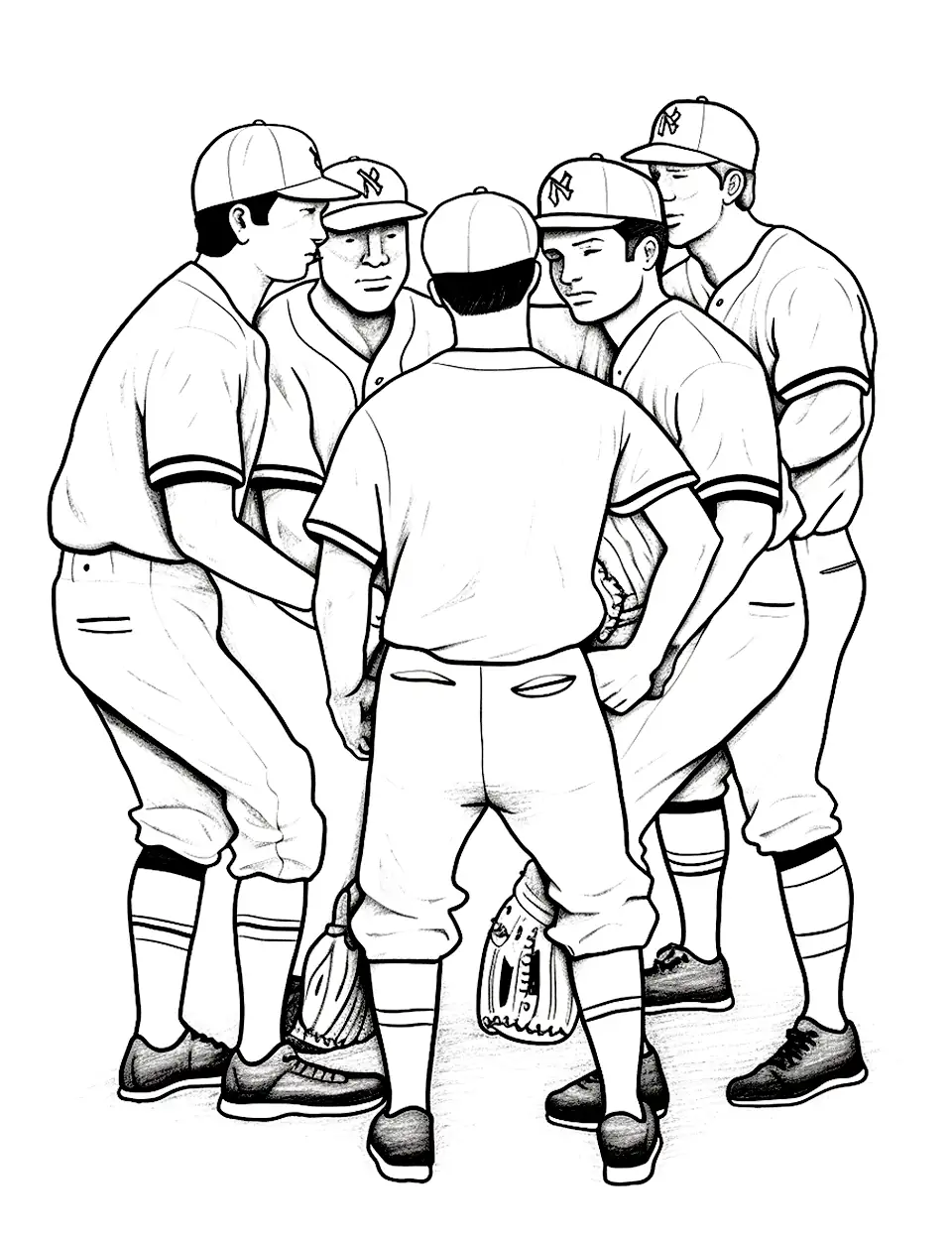
Five players lean into a tight circle with their caps almost touching, one of them drawn from behind so you see only his back. Gloves hang at their sides. Give every uniform the same two colors to make them one team, or mix them up into an all-star huddle. The overlapping arms and legs are easier with pencils than with markers.
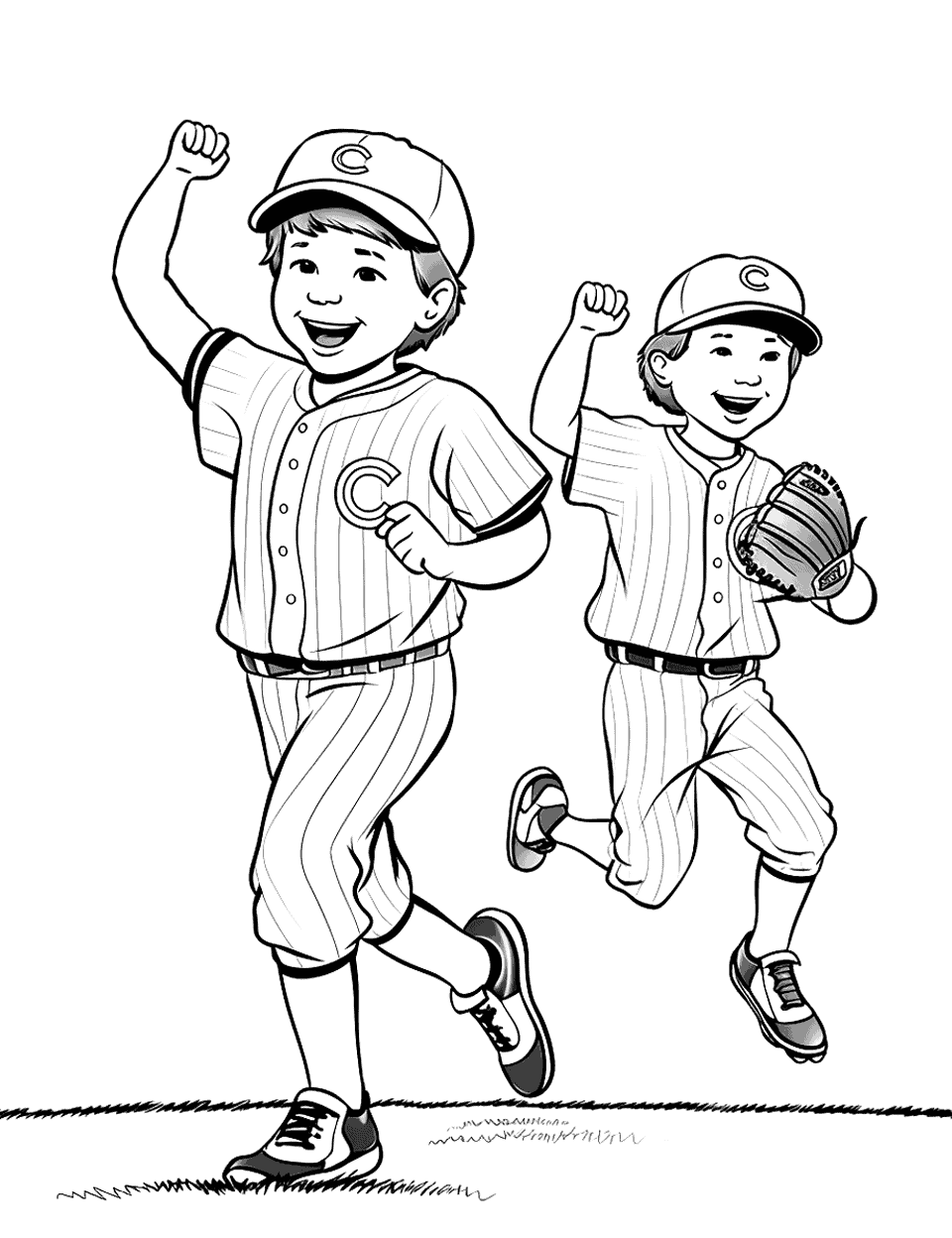
Two young players run in with fists up after a good play, both in pinstriped uniforms and caps with a letter on the front. One still has his glove on his hand. Pinstripes teach a useful trick: color the stripes first, then fill around them. A strip of grass at the bottom gives you an edge to finish on.
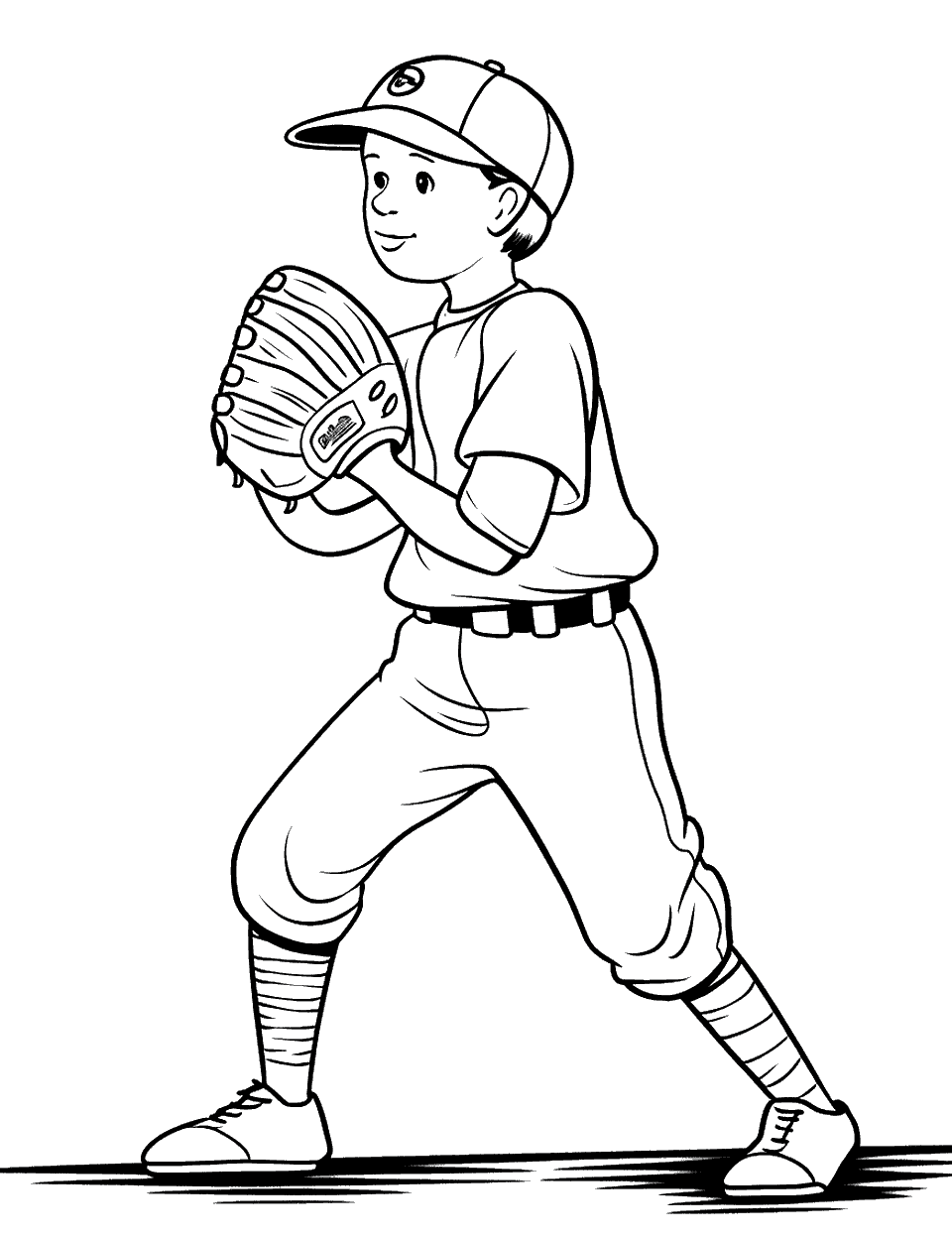
The pitcher stands side-on with both hands together at his chest and the glove up, right before the throw. Clean lines and a plain background keep this one simple for early elementary kids. A dark cap against a light jersey makes the pose read from across the room. Ask your child which pitch he is about to throw and write it in the margin.
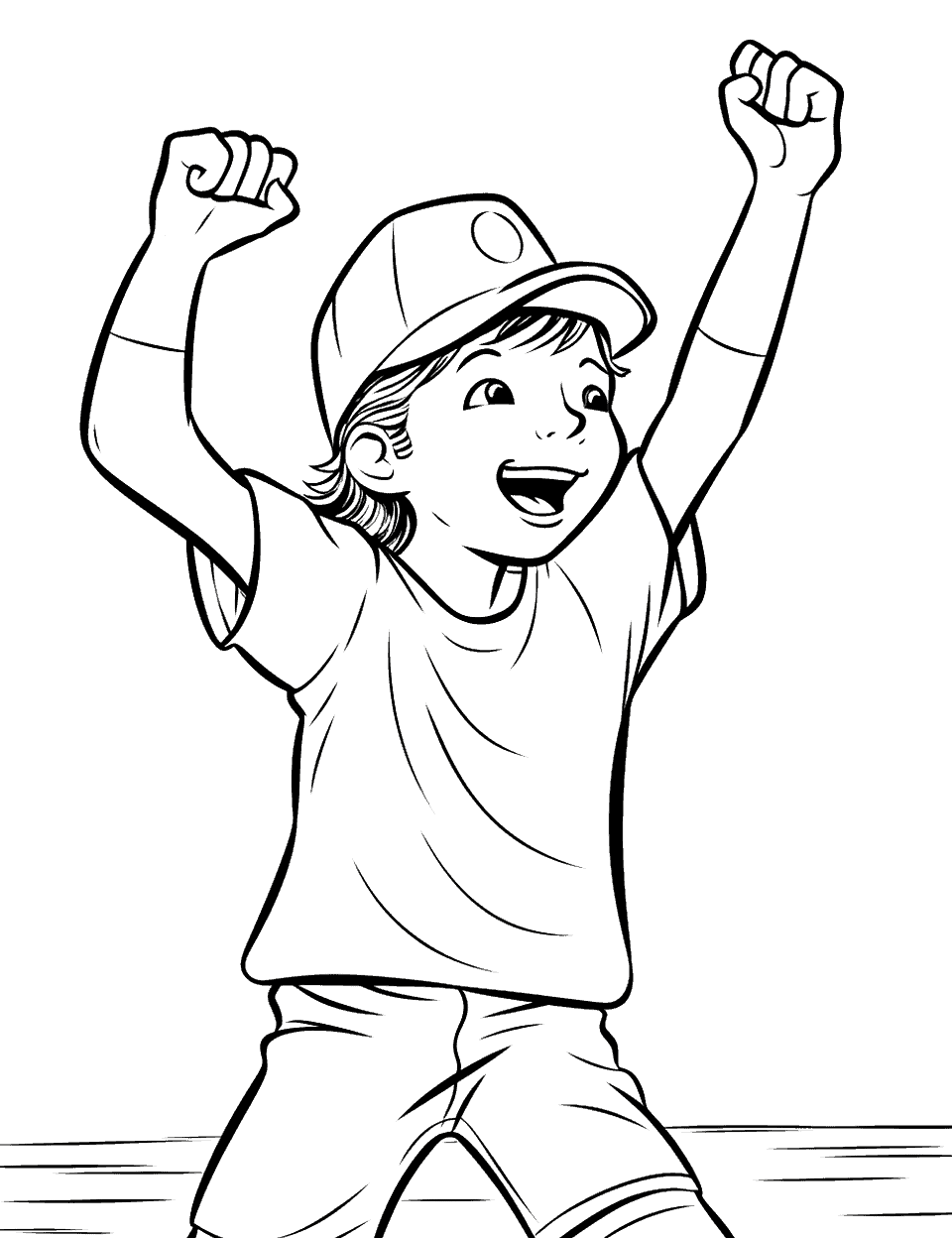
Here the view closes in on a young fan with both fists punched into the air and a mouth open mid-cheer. It is just a cap, a plain tee, and shorts, so there is a lot of open space for pattern practice. Stripes, dots, or a made-up team logo on the shirt all work. Younger colorers can handle this page on their own.
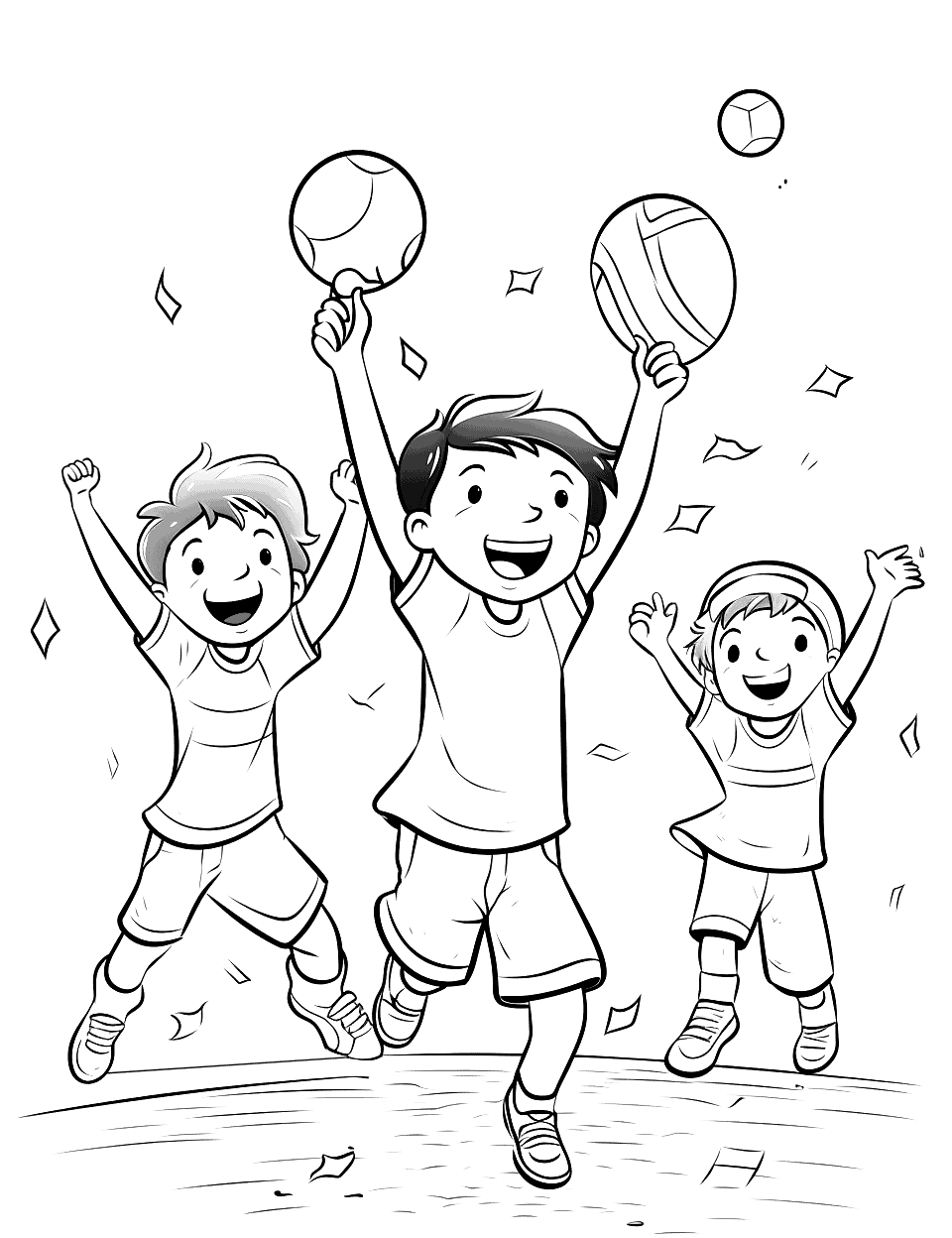
Three cartoon kids leap off the ground with confetti flying around them, and the one in the middle holds a ball up in each hand. Another ball floats near the top corner. Give the confetti scraps a rainbow of colors and keep the shirts to one team color for contrast. It is a cheerful page to hand out at an end-of-season party.
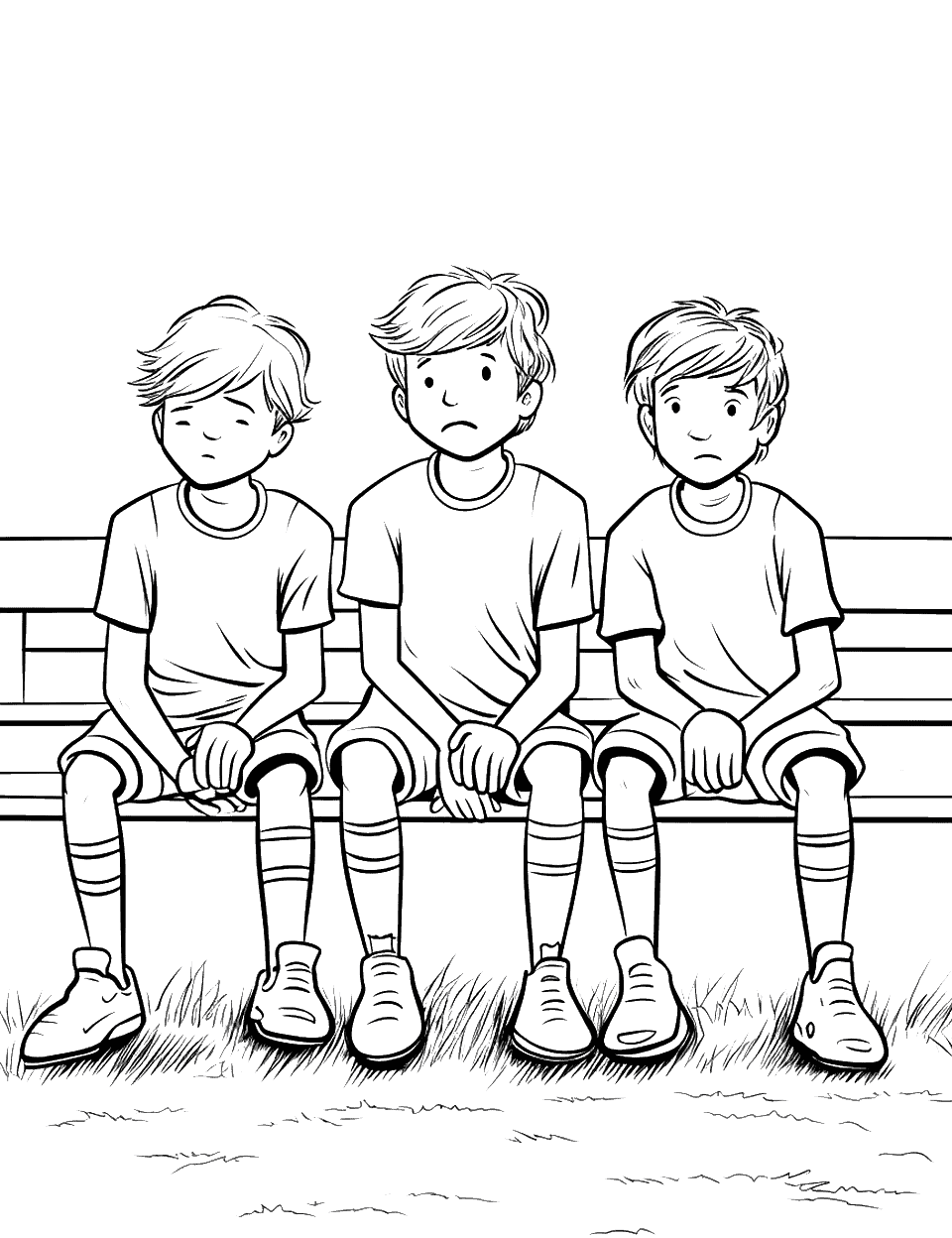
Not every sheet is a celebration. Three players sit slumped on a bench with their hands on their knees, flat expressions, and grass under their cleats. It opens a door to talk about losing, which is half of youth sport. Muted colors suit the mood, and the striped socks give one small pop if you want it.
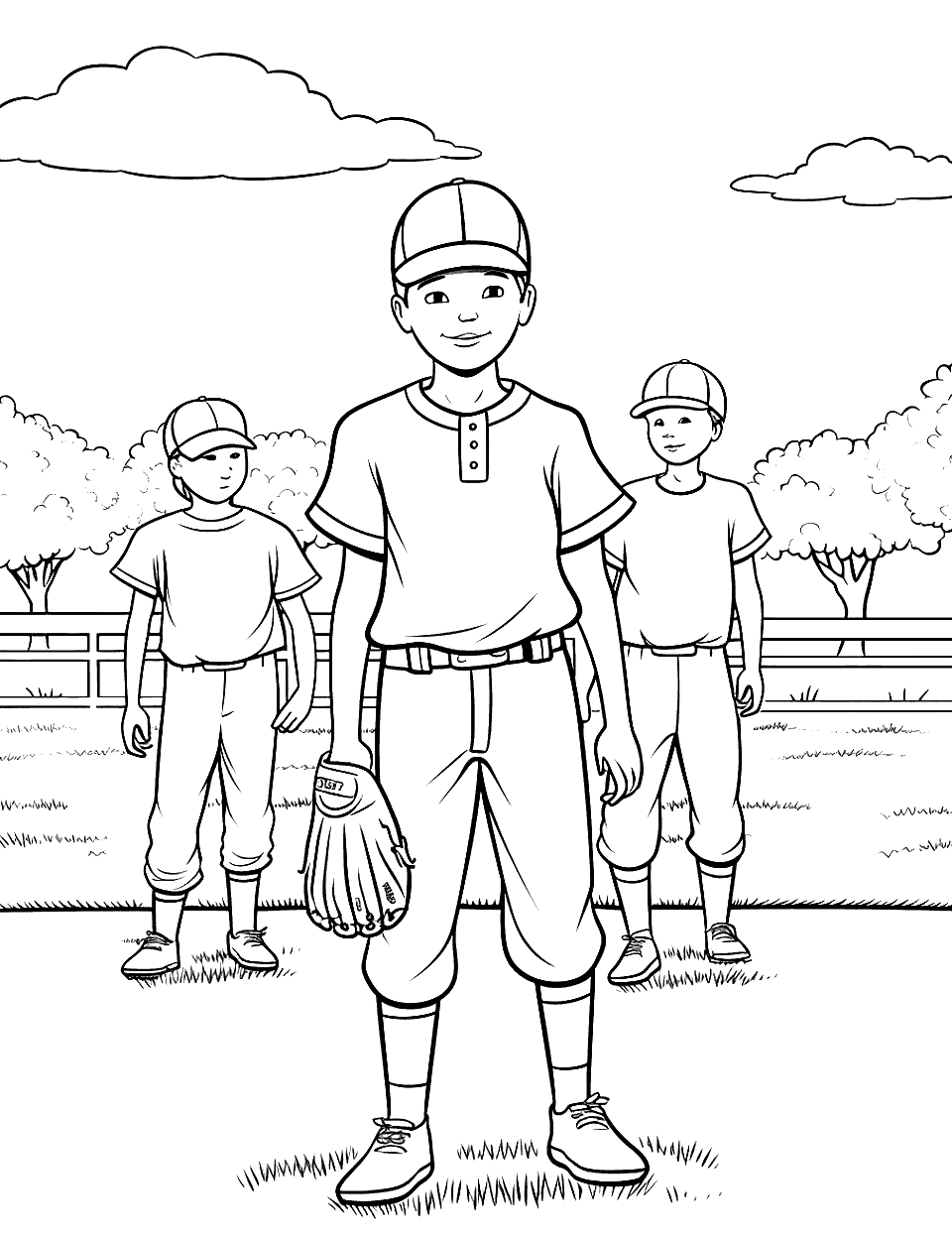
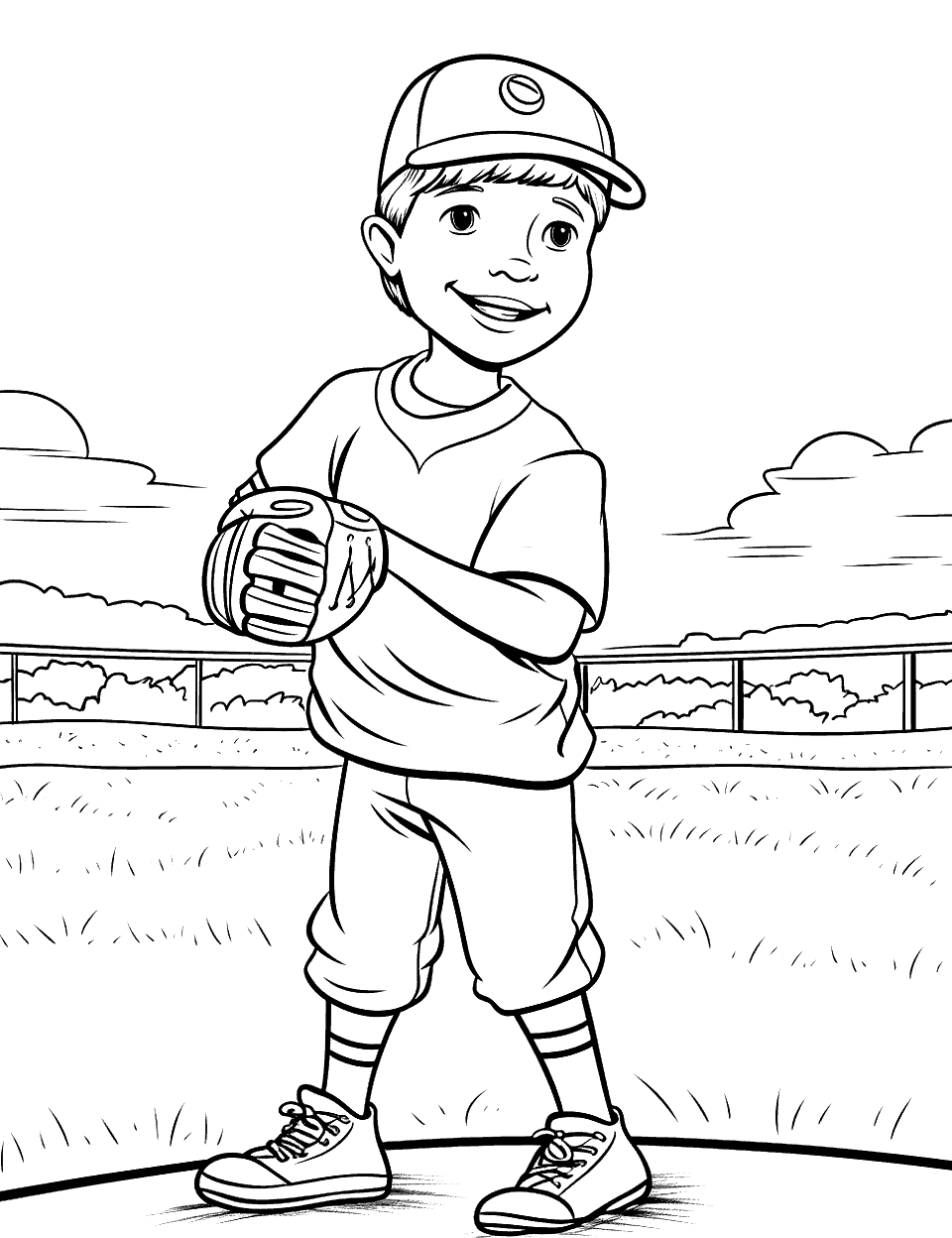
Three kids stand together on a grassy field, the tallest in front with a glove hanging at his hip. Behind them run a rail fence, round leafy trees, and a couple of clouds. That background is the fun part, since it takes a lot of green and lets a younger sibling help fill it in. Keep the three uniforms matching so they look like one camp group.
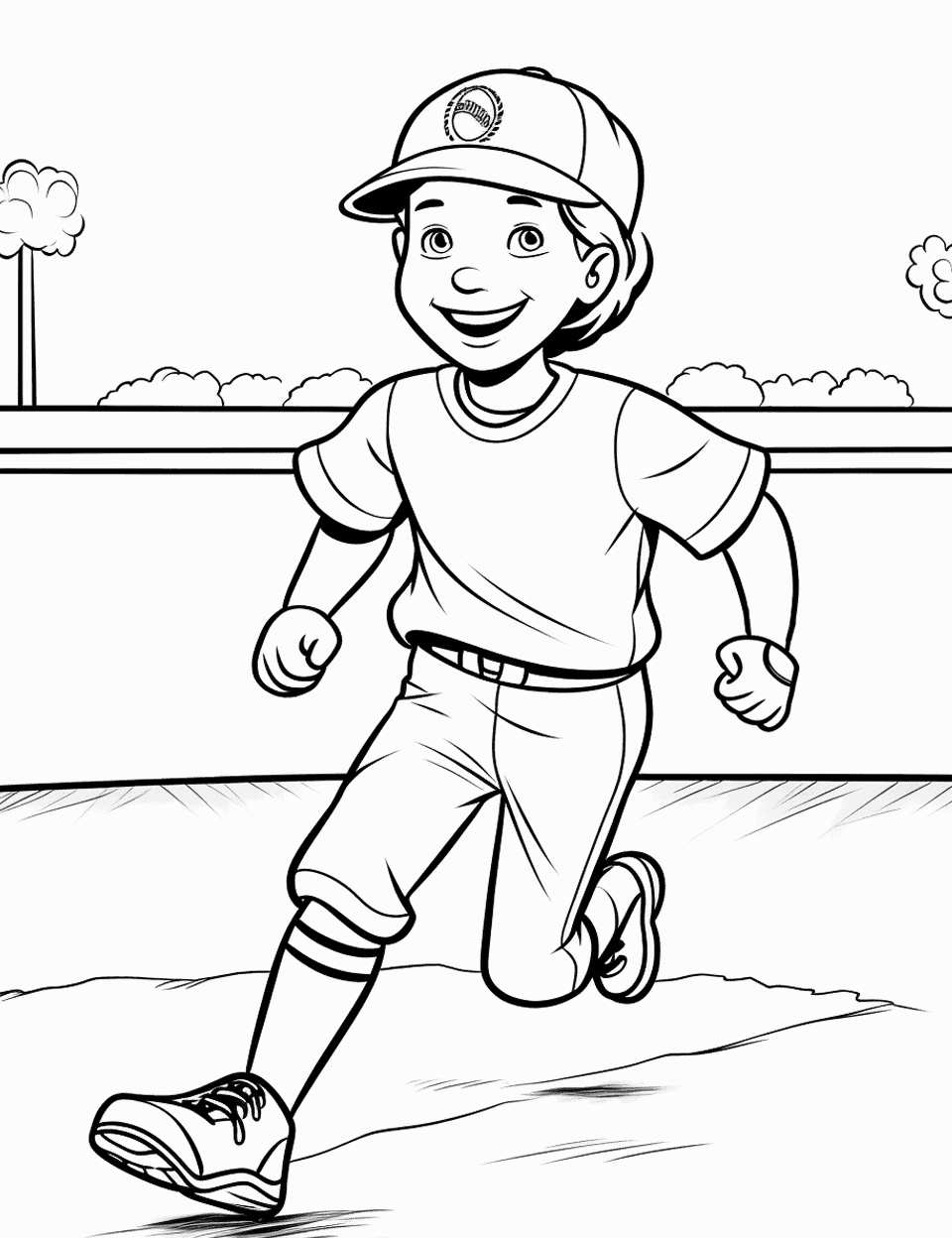
A grinning kid jogs across the dirt with his arms pumping, cap on, fence and trees behind him. Bold and forgiving lines mean crayons are perfectly fine. Try a warm color for the dirt and a cooler one for the grass strip so the two areas separate. Tape the finished page to the fridge after a real game.
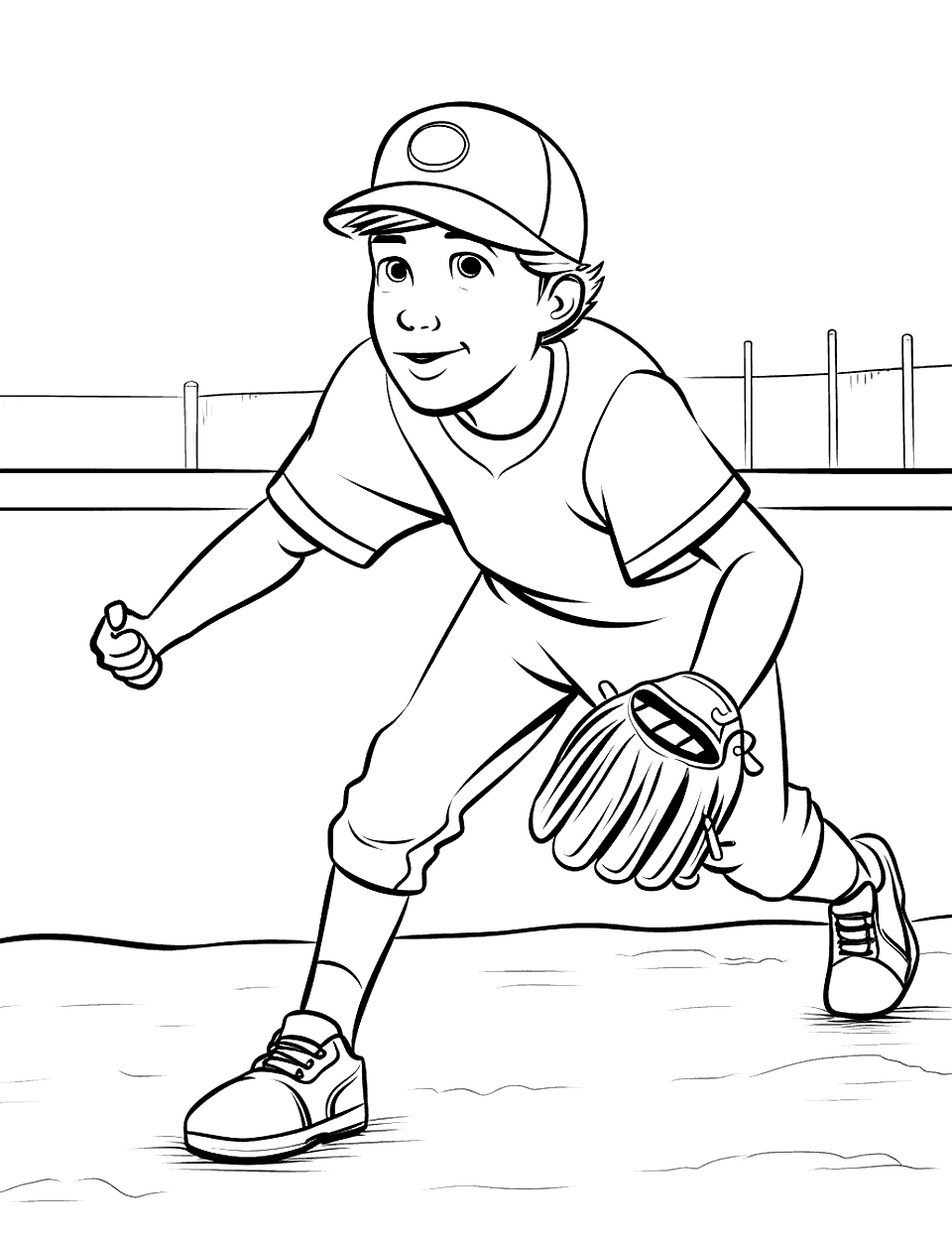
Down low with the glove almost touching the ground, this fielder is set for a grounder. The crouch shows off the creases in the uniform and the laces on the glove. Brown or black on the glove and one bright color on the jersey keeps the focus where the action is. Good for a child who plays the infield and wants to color their own position.
A young player holds his glove with both hands at his chest and looks straight out at you, with a low fence, an open field, and clouds behind. Big shapes and few details make it a smooth first page for a five-year-old. Let them color the glove any wild shade they like. It is a sweet keepsake to date on the back after a first game.
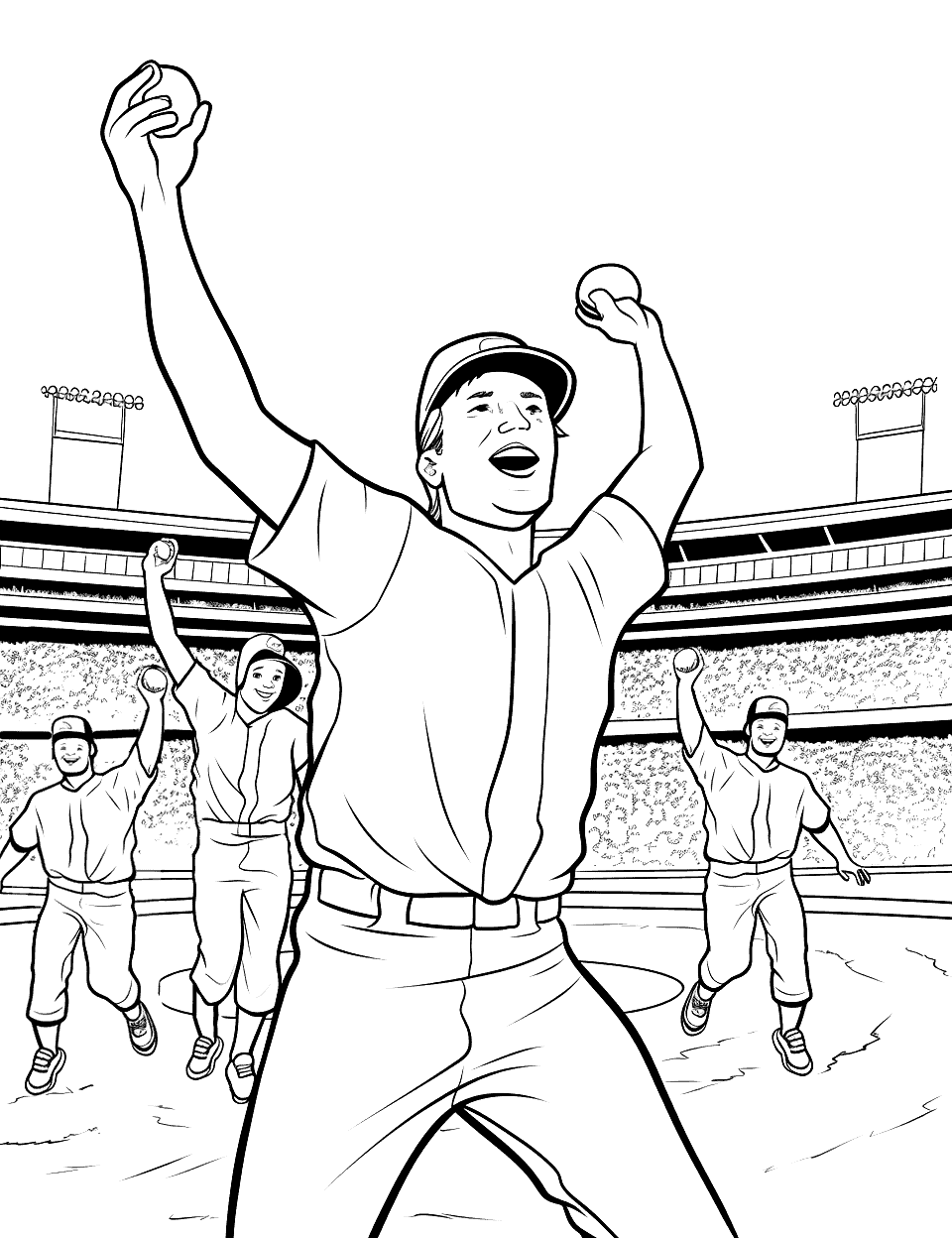
The player in front throws both arms up while three teammates behind him do the same, balls raised over their heads, a packed stadium filling the background. The crowd is drawn as dense little marks, so leave it pale or lay in a gray wash and let the uniforms carry the color. Light towers stand at either side of the stands. This page takes a while and rewards patience.
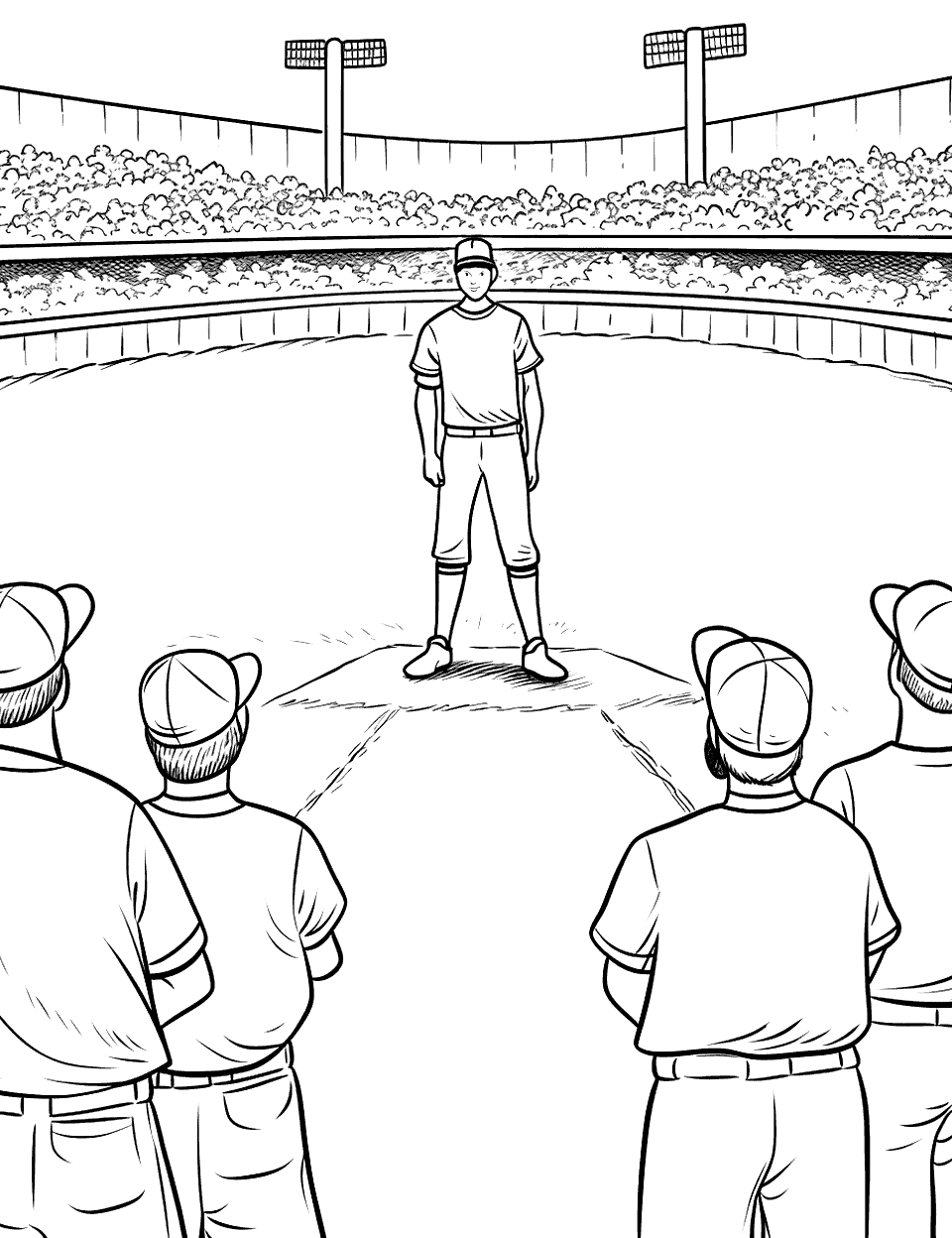
You are looking over the shoulders of a row of capped players toward one teammate standing out on the infield, with the crowd and two light towers behind him. The unusual viewpoint makes it a challenge for an older child. Keep the foreground uniforms dark and the distant crowd light to build some depth. Ask your child what the player out there is about to do.
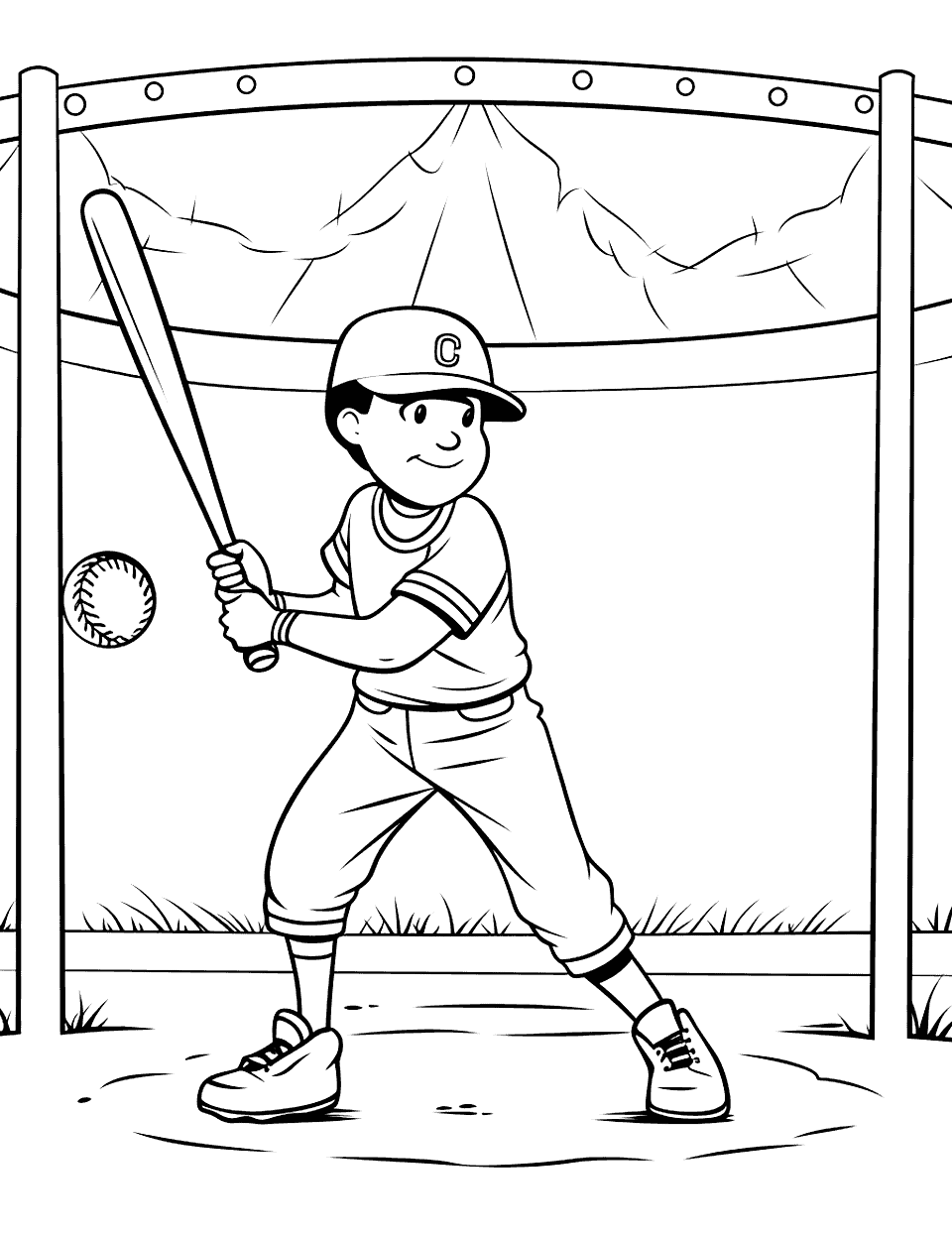
Inside a netted cage, a young batter swings as the ball comes in on his left, cage poles standing on both sides and netting stretched overhead. The mesh gives a repeating pattern that older kids enjoy shading. Leave the net light gray so the batter stays the brightest thing on the page. His cap carries a single letter you can color as your own team’s initial.
Big eyes, a huge grin, and a bat held up in both hands: this cartoon rookie is all excitement. The cap patch, the buttoned jersey, and the striped socks are the only fine details, so crayons handle it fine. Bright primary colors suit the style. Print two and let a younger sibling race you to the finish.
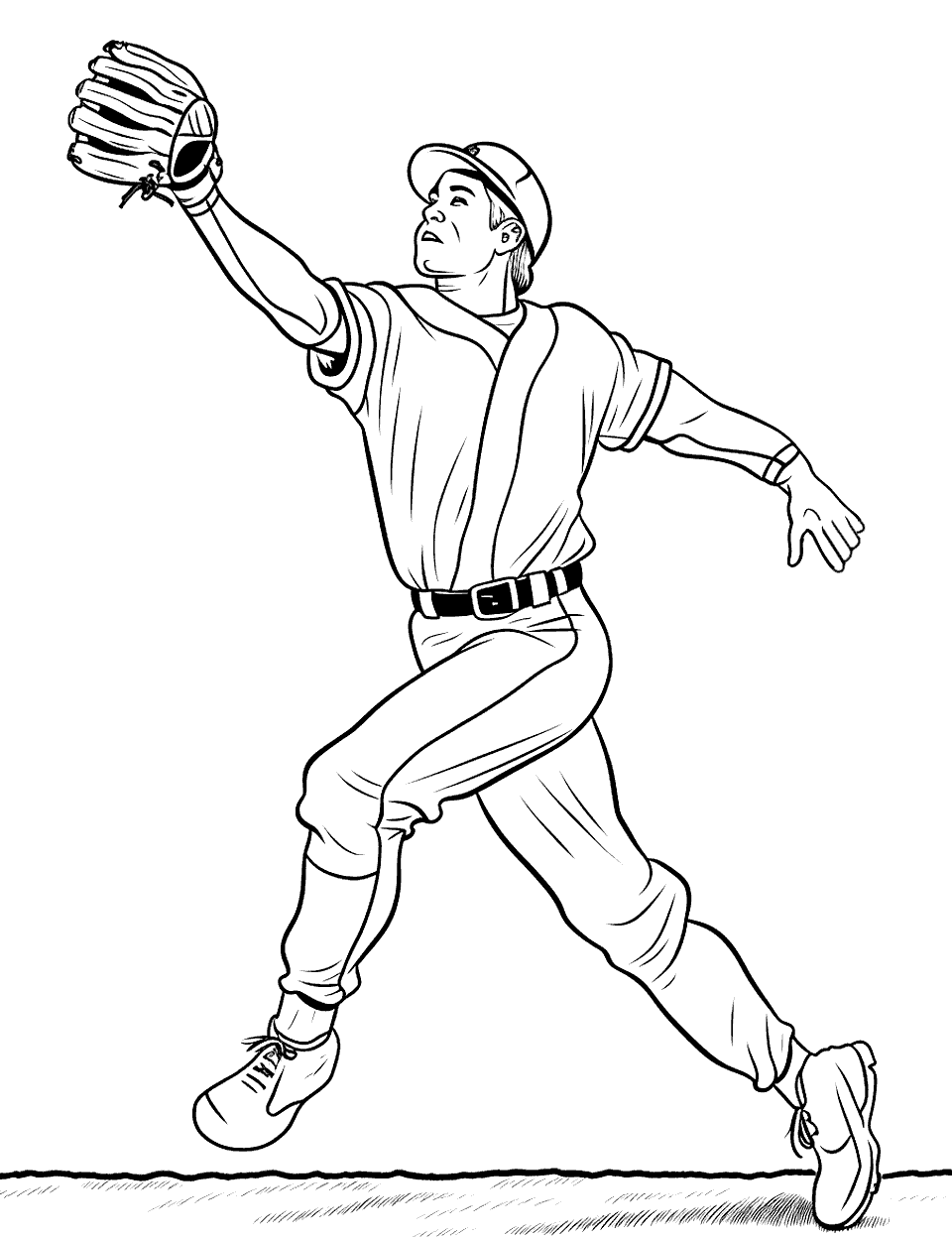
Stretched out full length, this fielder reaches his glove high overhead while the other arm swings back for balance. No ball is drawn, so your child can add one wherever they think it should be. The uniform folds and glove laces are finely drawn and suit pencils. It is one of the harder pages here, which makes it a good pick for a teen or an adult.
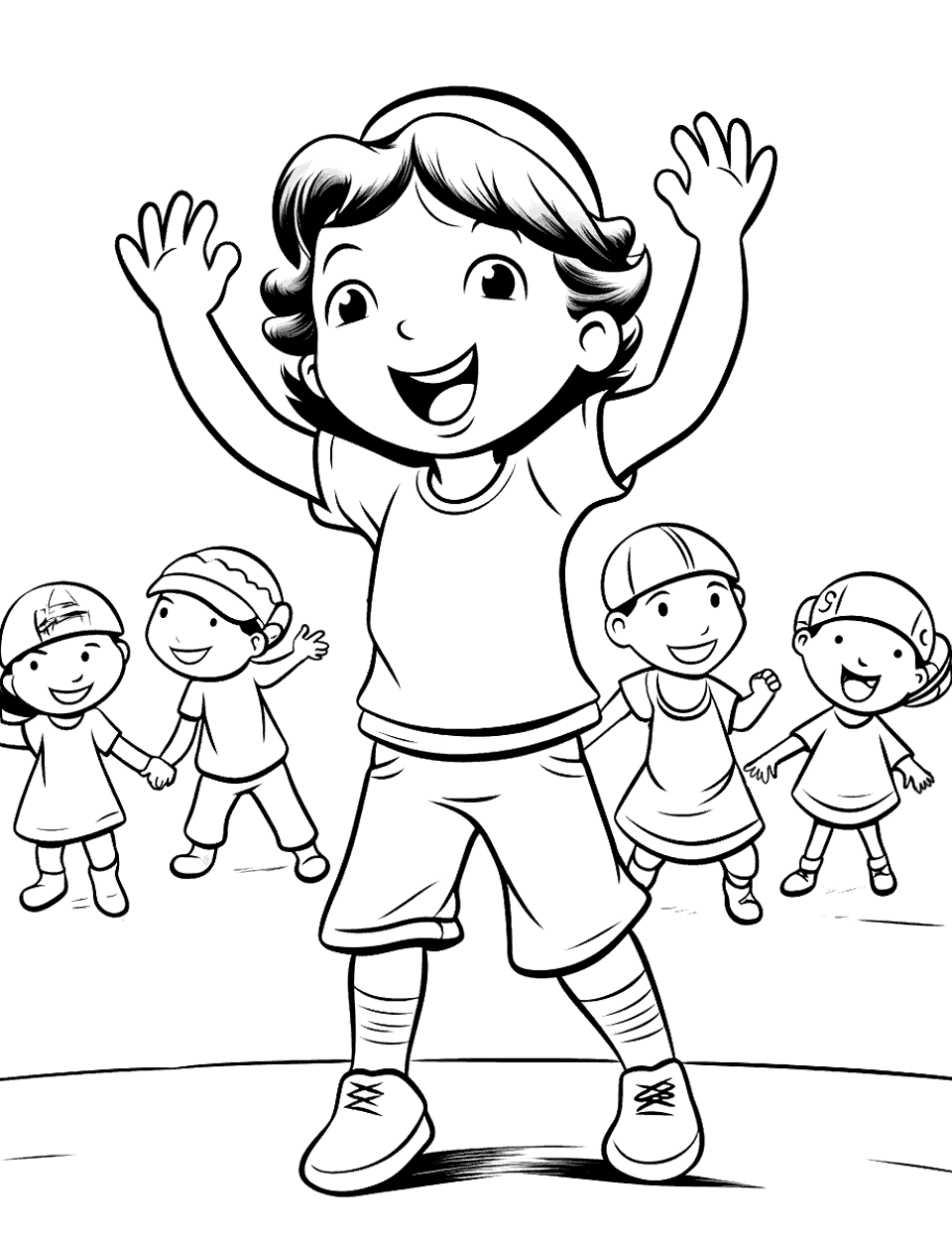
A grinning kid throws both arms up in front while four smaller kids in caps wave and bounce behind. Everyone is in plain shirts and shorts, which leaves the page mostly open space. Give each child in the back a different shirt color and keep the one in front in team colors. Cut it out and it doubles as a card for the end-of-season party.
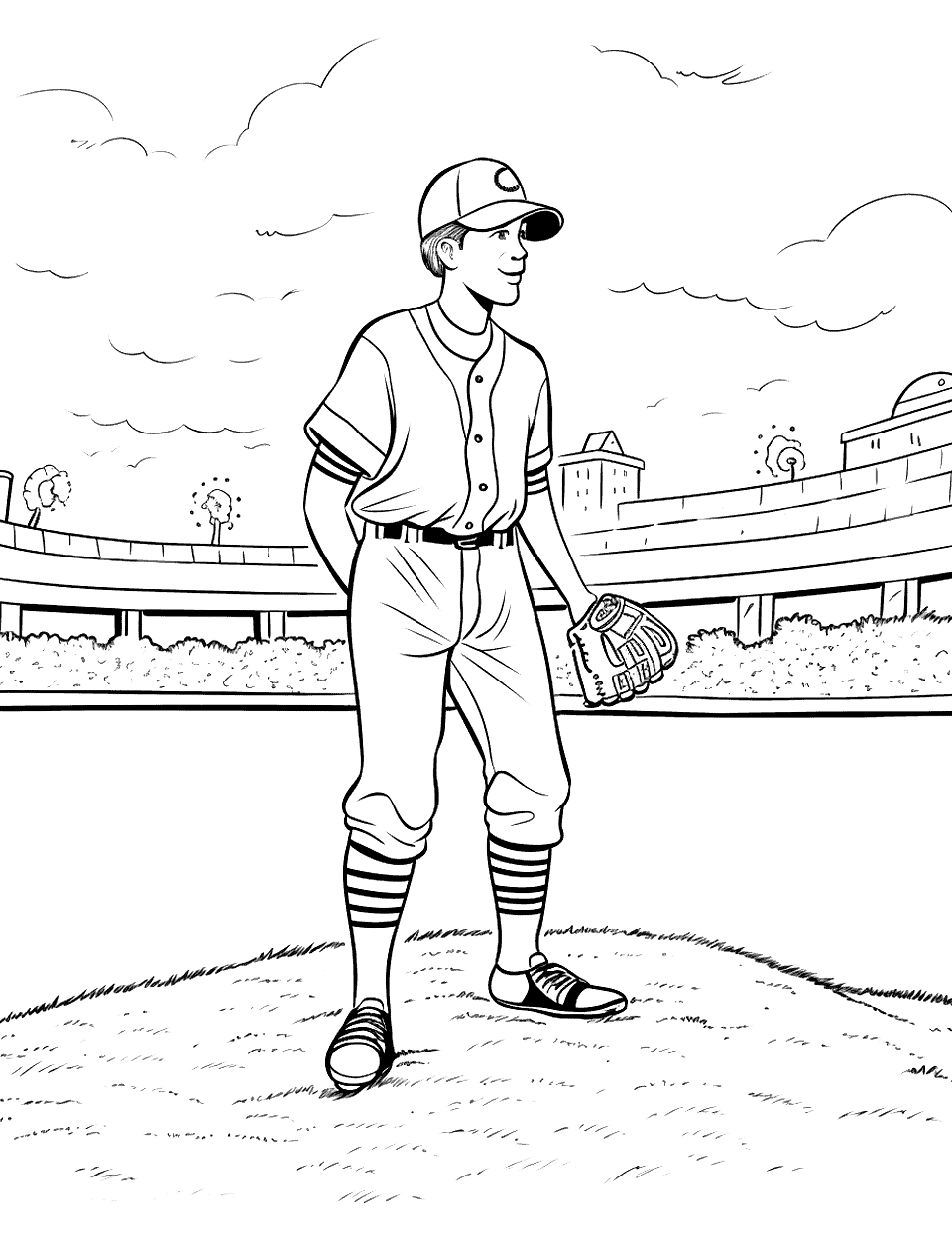
An older-style uniform sets this one apart: a button-front jersey, belted pants, and striped socks, with the glove held down at his side. Behind him a low outfield wall runs across the page, with buildings and clouds beyond it. Cream with a single dark trim color reads as a vintage kit. Pair it with the trading card activity further down.
This cartoon batter holds the bat up beside his ear with both hands and a wide open smile, standing on a patch of grass. Shorts and striped socks instead of long pants make it a summer scene. Two bold colors are all it needs. Toddlers can manage this one with chunky crayons.
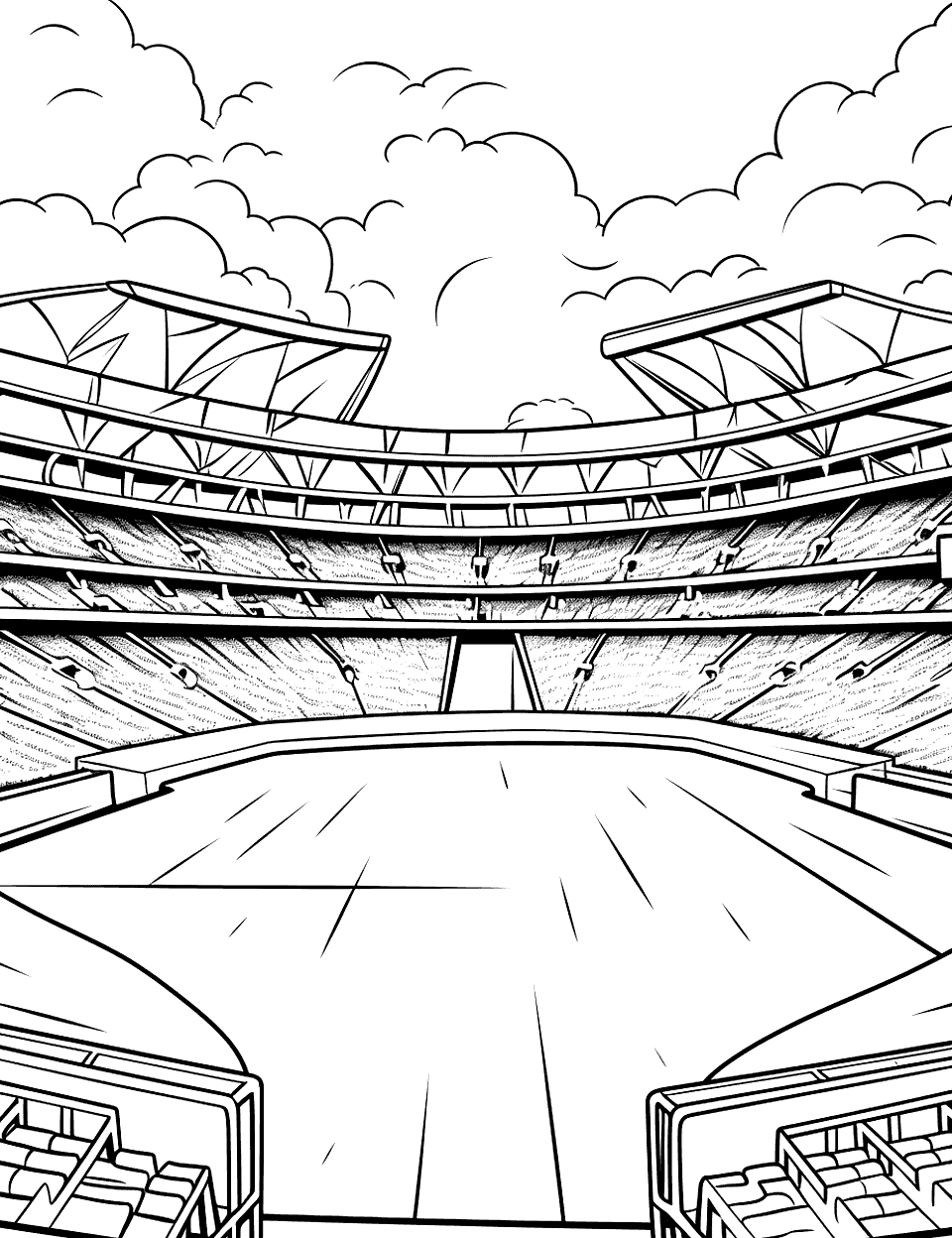
Rows and rows of empty seats curve around a wide field, with a roof canopy over the top deck and clouds behind it. Not one person appears on the page, which turns it into a quiet, almost architectural project. Vary the seat colors by section the way real ballparks do. This is a long sit, better suited to an adult or a patient older child.
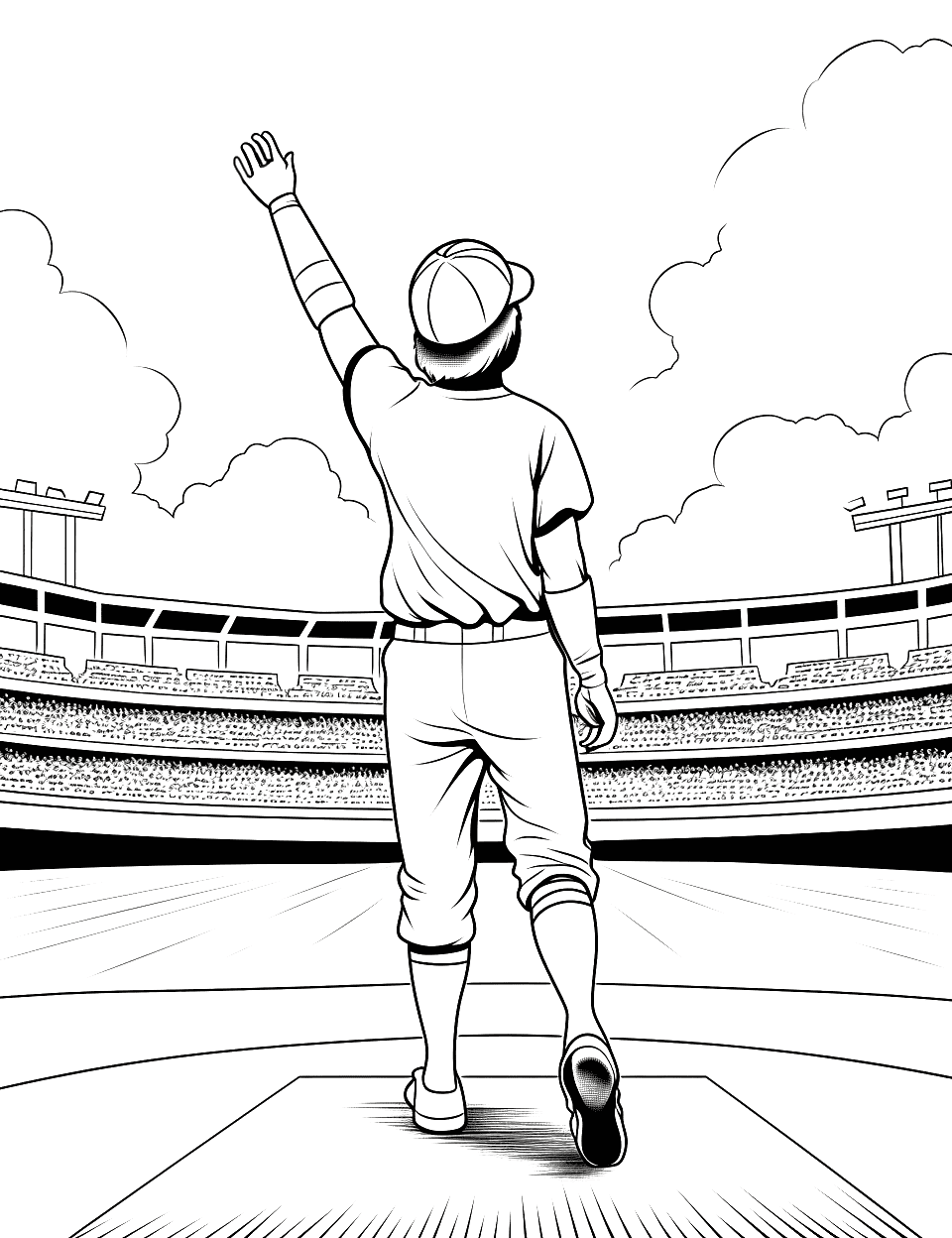
Seen from behind, a player raises one arm to a packed grandstand, standing on a light patch of ground with lines fanning out behind him. The stands are drawn as fine dots and dashes, so keep them pale and put the strong color into the uniform. Clouds fill the upper half for anyone who wants to keep going. Color this one after a family trip to a ballgame.
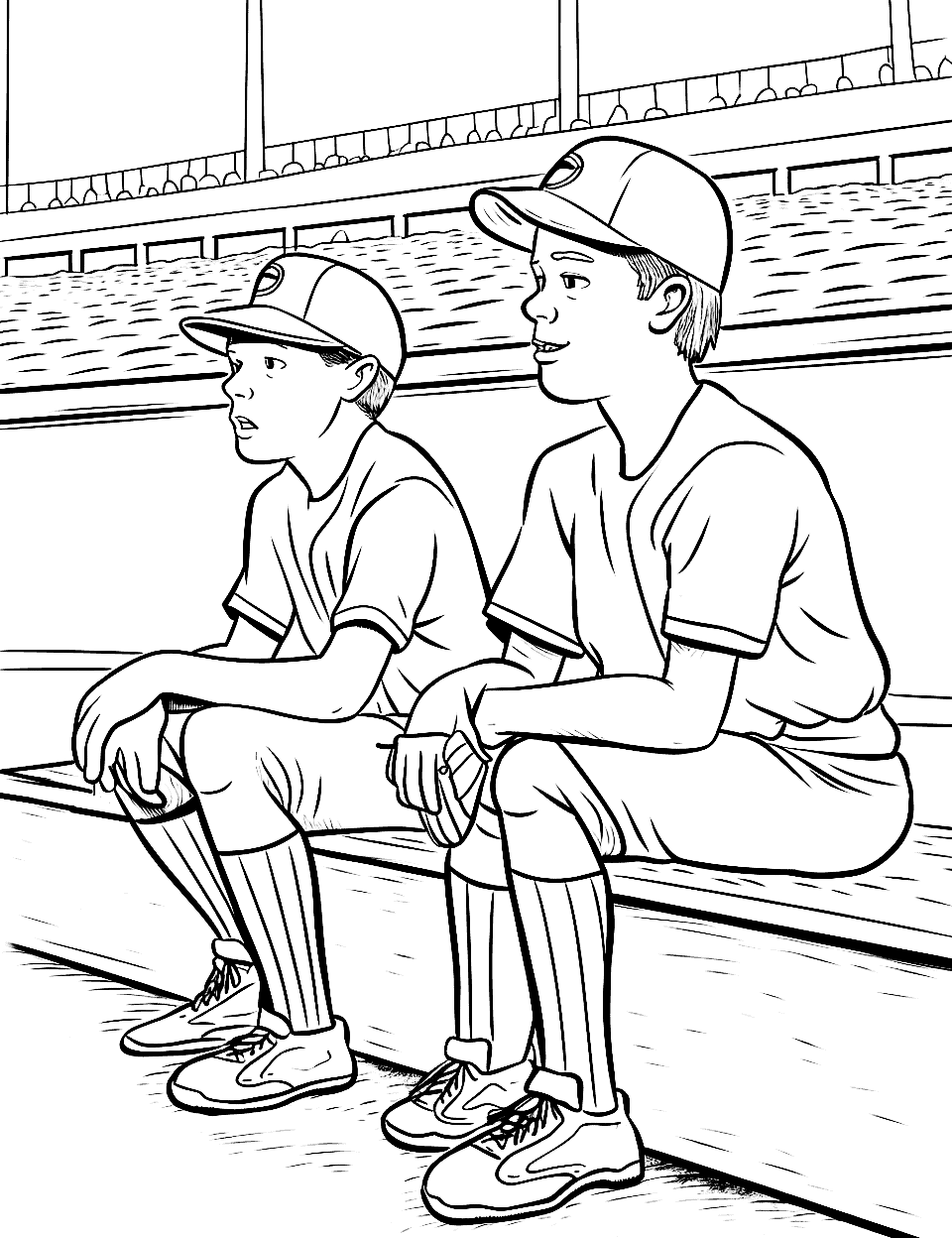
Two players sit side by side on a bench, one turned toward the other mid-conversation, with rows of seats behind them. Both wear caps with a small logo and long socks. Color the bench a plain wood tone so the uniforms stay the loudest thing on the page. It pairs well with the storytelling activity below.
A young player stands at ease with the bat held up near one shoulder and a chain-link fence stretching across behind. The fence mesh is a small patience test that older kids tend to like. Keep the fence gray and give the uniform two strong colors. Fine stripes on the long socks are the last detail to fill.
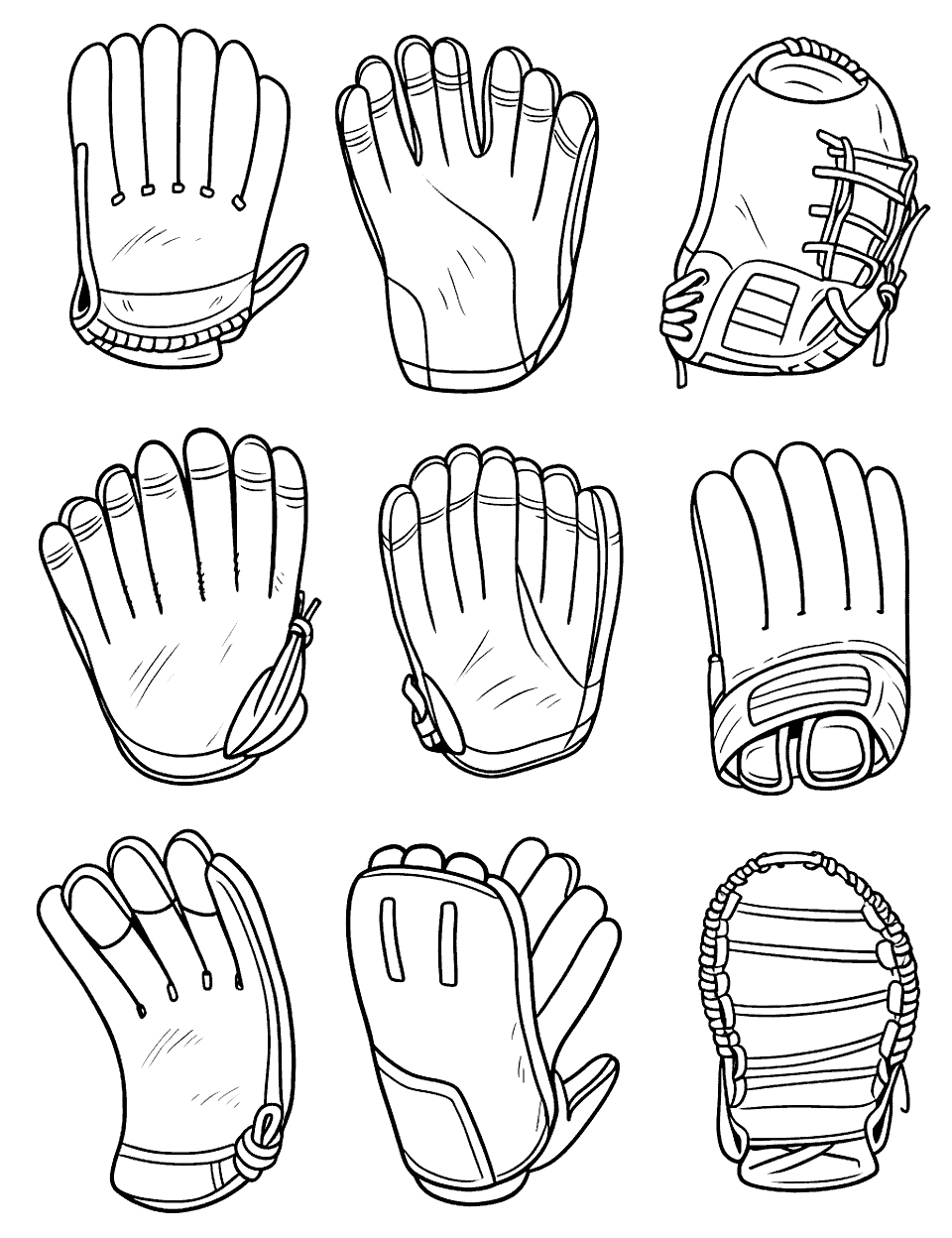
Nine gloves and mitts fill this page in a three-by-three grid, each with different webbing, lacing, and cuff. It is the best sheet here for shading practice, since every glove is the same object drawn a different way. Try browns and tans on most of them and one wild color on a single glove. Teachers can cut the grid into nine cards for a matching game.
By using our free coloring pages, you acknowledge and agree to our full disclaimer. All materials are for personal, non-commercial use only and all rights belong to their respective license holders.
Which Baseball Coloring Page Should You Print First?
Start with the sheet that matches the colorer’s grip rather than their birthday. The thick-outline cartoons, Cartoon Kid With Bat and Ball, Ready to Swing, and Cartoon Rookie Up to Bat, have wide open areas and almost nothing fiddly, so a preschooler can finish one and feel good about it.
The middle of the set has a background but few small parts: First Baseball Game, Home Run Hero, Fan Fever, and Baseball Camp Fun sit here, and they suit roughly first through third grade. Baseball Player at Bat and Focused Pitcher belong in this group too.
The heavy pages are Base Runner in Full Sprint, Outfield Catch, All Eyes on the Field, Grand Slam Celebration, and Big Stadium, Empty Seats. They carry fine lines, crowd texture, and shading marks already drawn in, which asks for colored pencils and a longer attention span.
Why Is Baseball a Good Coloring Theme for Kids?
Baseball works because the child already knows the shapes from the field. Little League has been running in Williamsport since 1939, its baseball divisions take players aged 4 to 16, and it now reaches more than 80 countries, with the Challenger division for players with physical and intellectual challenges running in more than 1,000 communities (1). A glove or a batting stance is familiar enough that kids reach for their own team’s colors without being told.
The quieter sheets do a different job. Coloring a stadium or a bench scene fills the drive home or the hour before a game, and the pages with nobody on them work as backgrounds for cut-out figures from the other sheets.
Activities to Do With Baseball Coloring Pages
The sheets do not have to stop being useful once the coloring is done. Here are six ways to keep them in play.
Create Custom Trading Cards
Print a player sheet at reduced size, or cut the figure out of a full page, and glue it onto an index card or cardstock. On the back, have your child invent the stats: batting average, position, team name, a nickname. The Library of Congress holds 2,100 early baseball cards dating from 1887 to 1914, cards that came inside cigarette packs, the forerunners of modern trading cards (2). Pull a few of those up and let your child copy the layout.
Design a Team Banner
Print several copies of Team Huddle and Players Celebrate, color them, cut them out, and paste them in a row along a length of butcher paper. Add a team name in block letters across the top. It decorates a party room or a bedroom wall, and a whole team can each contribute one figure.
Storytelling and Commentary
Turn your child into the broadcaster. Use All Eyes on the Field or Big Stadium, Empty Seats as the prompt and ask them to call what is happening, or what is about to happen, out loud. They set the score, the inning, and the crowd’s reaction. It is vocabulary practice dressed up as a game.
DIY Jersey Design
Hand over Baseball Player at Bat and Cool Catcher in Action as blank uniform templates. Instead of copying a real club, have kids invent one: a name, two colors, and a logo for the cap. The batter’s helmet already carries a blank round patch to draw that logo into.
Pre-Game Focus Tool
For a child who gets nervous before their own games, a coloring page is a quiet way to fill the wait. Focused Pitcher and Fielding Practice both show the job they are about to go and do. Keep a few sheets and a pencil case in the car for the drive to the field.
Scavenger Hunt
Hide the uncolored sheets around the house or the yard and hand out a checklist: find the catcher, find the page of gloves, find the batting cage. Whoever collects the full set colors first. It rescues a rainy birthday party when the game outside is off.
FAQs
What Is the Best Paper for These Coloring Pages?
Regular printer paper handles crayons and colored pencils on any of these sheets. Switch to cardstock or another heavy paper when markers or watercolors come out, since thin paper lets the ink bleed through onto whatever is underneath. Cardstock also holds its shape if you plan to cut a page into trading cards or paste it onto a banner.
Are These Coloring Pages Free to Use?
Yes, every baseball coloring page here is free for personal and educational use. Print as many copies as your family, your classroom, or your team needs. The only thing to skip is reselling the printed sheets or putting them on merchandise.
Can I Use These Pages for a Birthday Party Activity?
They work well as the quiet station at a baseball party. Set a stack of printed sheets and a bucket of crayons on one table so kids can drop in between games. The cartoon pages suit the youngest guests while the stadium scenes hold older cousins. Rolled up and tied with ribbon, a colored sheet also works as a party favor.
Do These Pages Help With Motor Skills?
Staying inside a line is hand control practice, and these sheets vary in how much of it they ask for. The glove grid, the netting on the batting cage, and the crowd scenes call for the steadiest hand. Thick-outline cartoon pages let a younger child work on grip without the frustration. Let them pick the level rather than assigning one.
How Do I Print the Coloring Pages?
Use the print or download option attached to the sheet you want, then send it to your printer or save the file for later. Choose portrait orientation and the fit-to-page setting so nothing gets clipped at the edges. Draft or grayscale quality is plenty, since you are only printing outlines, and it saves a lot of ink across 30 sheets.
What Ages Are These Coloring Pages For?
The set spans toddlers through adults. Thick-outline cartoon sheets suit ages 3 to 6, the mid-detail player pages suit roughly 6 to 10, and the crowd, stadium, and full-sprint pages are aimed at older kids, teens, and adults who want a long sit. Print one from each group and let the child choose.