Electric scooters are the ultimate neighborhood flex. They get kids off the couch, outside, and cruising with the wind in their hair. It is the perfect blend of freedom and fun without the sweaty effort of pedaling.
Finding the right ride isn’t just about picking a cool color. You need speed that thrills without terrifying, a battery that lasts longer than their attention span, and safety features that give you peace of mind.
We cut through the marketing noise to find the top seven electric scooters for kids. Whether you have a cautious cruiser or a speed demon, we have found the perfect match for your family.
- Powerful motor
- Safety features
- Adjustable handlebar height
- LED light deck
- Quiet but powerful
- Retractable kickstand
How to Choose an Electric Scooter for Kids

Motor Power
The motor is the muscle behind the machine. Power is measured in watts. Generally, higher watts mean more speed and the ability to carry heavier riders.
For younger kids (under 8), a lower-wattage motor is safer and easier to control.
Teenagers need more torque. A powerful motor handles hills better and won’t drag under the weight of a bigger kid. However, big motors add significant weight to the scooter itself.

Battery Type and Lifespan
The battery dictates how long the fun lasts. Most kids’ scooters use lead-acid batteries. They are heavy and take longer to charge, but they keep the price tag down.
Lithium-ion batteries are the upgrade. They are lighter, charge faster, and provide consistent power until the very end of the charge.
Check the manufacturer’s listed “continuous use” time. A high-quality battery should survive hundreds of charge cycles before it stops holding juice.

Chain vs. Hub Drive
You will see two main drive types. Chain-drive motors connect to the wheel with a literal chain, just like a bicycle. They are reliable and easy to fix, but they can be noisy.
Hub motors are built directly inside the wheel. They are whisper-quiet and require zero maintenance since there is no chain to tension or grease.
If you hate the “whirring” sound of an electric motor, opt for a hub motor. If you want a classic, repairable mechanical feel, go with a chain drive.
Braking Systems
Stopping is more important than going. Scooters use either hand brakes or rear fender brakes.
A rear fender brake works by stepping on the back wheel cover. It relies on friction and physical pressure. It is simple but less effective at high speeds.
Hand brakes are superior. They engage a drum or disc brake, similar to a bicycle. They offer better control and faster stopping power. We strongly recommend hand brakes for older kids riding faster models.
Avoid front-only brakes for beginners. Squeezing a front brake too hard can send a rider flipping over the handlebars.
Frame Materials
Durability matters when a vehicle is tossed on the driveway or crashed into a curb. Look for steel or high-grade aluminum frames.
Plastic bodies are fine for toddlers, but school-aged kids need metal. A solid frame feels stable at higher speeds and won’t rattle apart after a month of use.
Check the deck width, too. A wider deck helps kids balance by allowing them to place their feet comfortably.

Speed Limits
Speed varies wildly between models. Entry-level scooters usually top out at 8 to 10 miles per hour. This feels fast to a kid but lets them react to obstacles safely.
Teen models can hit 15 to 20 miles per hour. That is serious speed.
Match the speed to your child’s experience level. Beginners do not need to go 15 mph. Some advanced scooters even have a “parent switch” to lock the speed at a lower setting until the rider is ready for more.

Weight Capacity
Always buy for your child’s future size, not just their current size. Cheaper scooters often max out at 120 pounds.
If your child is near the limit, the scooter will feel sluggish and the battery will drain faster. Look for a buffer of at least 20 pounds between your child’s weight and the max capacity for optimal performance.

Range and Charge Time
Range is usually measured in minutes of continuous use rather than miles. Expect about 40 to 60 minutes of ride time on a standard kid’s scooter.
Charging takes patience. Lead-acid batteries often require 12 hours (overnight) to fill up. Lithium batteries might only need 4 to 6 hours.
Plan ahead. If your kid forgets to plug it in at night, they won’t be riding the next morning.

Portability
Electric scooters are heavy. Unlike kick scooters, you can’t just toss them easily into a trunk if they don’t fold.
Many kids’ electric scooters have fixed stems. They do not fold down. If you plan to take the scooter to the park or on vacation, check the specs specifically for a folding mechanism.
Product Reviews
We analyzed motor types, safety ratings, and battery efficiency to bring you the top seven contenders. Here is the lineup.
Razor E100 Electric Scooter
Most Power for Under 12’s
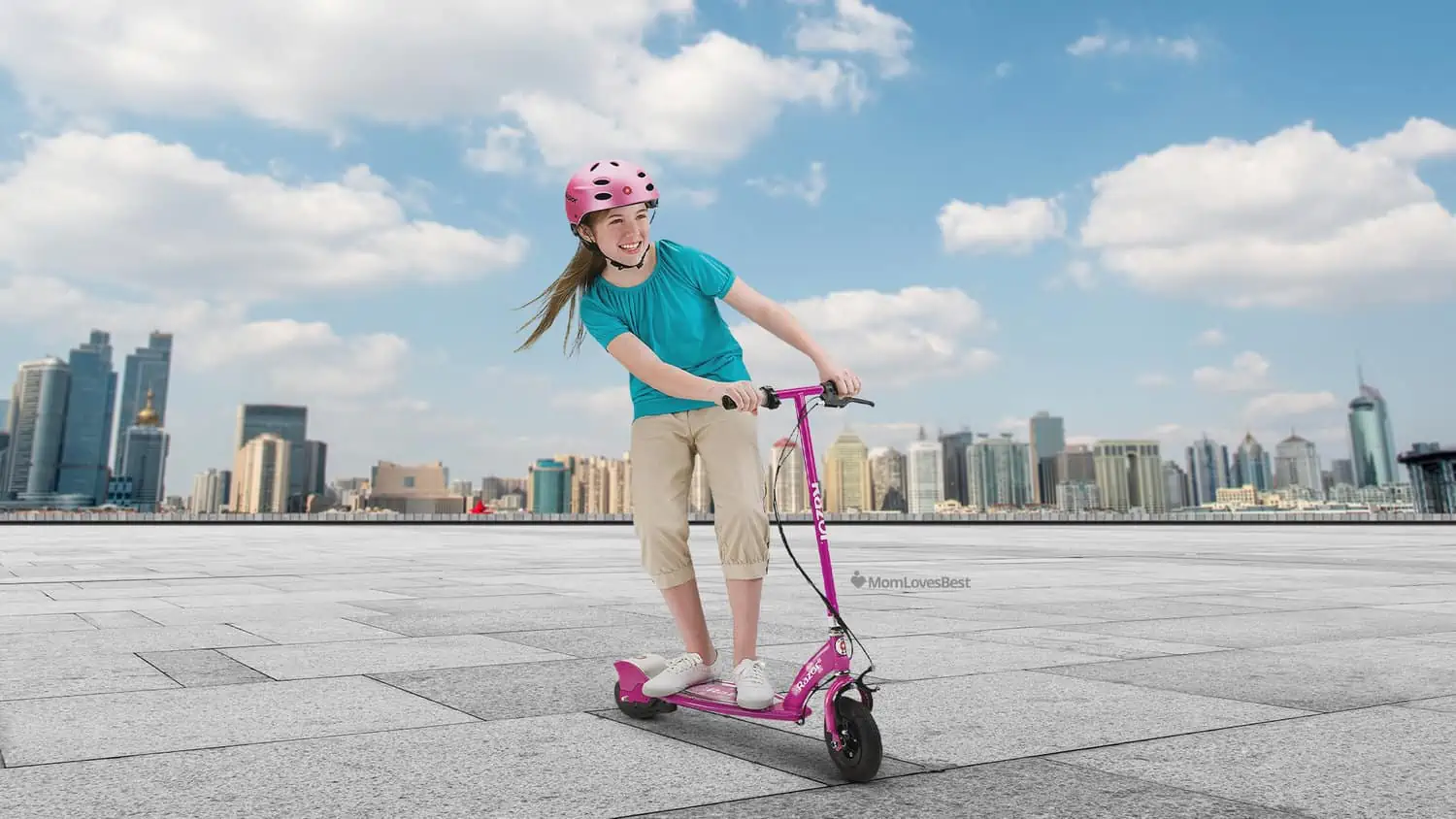
The Razor E100 is the gold standard for transitioning kids from kick scooters to electric power. It bridges the gap perfectly for pre-teens who want a thrill but aren’t quite ready for adult speeds.
This model features a “kick-to-start” safety mechanism. The motor won’t engage from a dead stop; the rider has to push off manually to 3 mph before the throttle works. This prevents accidental launches and saves battery life.
With a pneumatic front tire, it handles sidewalk cracks better than plastic-wheeled competitors. It is sturdy, reliable, and comes in enough colors to please any picky rider.
What We Like
Kick-Start Safety
The motor requires a manual kickoff to reach 3 mph before it engages. This is a brilliant safety feature. It stops the scooter from flying out from under a child if they accidentally twist the throttle while standing still.
Pneumatic Front Tire
The 8-inch air-filled front tire absorbs shock. It makes for a much smoother ride over bumpy driveways or uneven sidewalks compared to solid plastic wheels.
Twist-Grip Throttle
It mimics a real motorcycle. Learning to feather the throttle teaches hand-eye coordination and speed control better than a simple on/off button.
Steel Frame Construction
It is built to take a beating. The all-steel frame and fork can handle the rough-and-tumble play of an 8-year-old without wobbling.
What We Don't Like
Loud Chain Motor
The chain drive makes a distinct buzzing noise. It is not silent, so you will definitely hear your child coming down the street.
On/Off Braking
The hand brake cuts power to the motor immediately, but it isn’t a variable disc brake. It stops effectively, but it can feel a bit abrupt until the rider gets used to it.
Product Specs
| Battery | 24 volts |
| Top speed | 10 miles per hour |
| Charge time | 12 hours |
| Maximum load | 120 pounds |
| Ride time | 40 minutes |
| Brake style | Front hand brake |
Our Ratings
Segway Ninebot eKickScooter
Best Heavy Duty Scooter
Segway brings its high-tech reputation to the playground with the Ninebot eKickScooter. This isn’t just a toy; it is a scaled-down version of their premium adult commuters, optimized for kids.
It features a sleek, futuristic design with a low center of gravity. This makes balancing easier for new riders. The frame is aerospace-grade aluminum, meaning it is incredibly tough but light enough to carry.
We love the different riding modes. You can switch between Safe Mode (slow), Cruise Mode (kick-assist), and Turbo Mode (full electric), allowing the scooter to adapt as your child gains confidence.
What We Like
Three Riding Modes
Versatility is key here. “Safe Mode” limits speed for beginners. “Cruise Mode” maintains speed without holding the throttle, and “Turbo Mode” unlocks full power for experienced riders.
Maintenance-Free Tires
The solid rubber tires are designed to be puncture-proof. You never have to worry about a flat tire ruining the afternoon, and they still provide decent grip.
Lightweight Design
Despite looking bulky, the aluminum frame keeps it manageable. At roughly 17 pounds, it is easy for a parent to carry if the battery dies mid-adventure.
Ambient Lights
Cool factor matters. The under-deck ambient lights change colors, making the rider visible and adding a fun, futuristic vibe to evening rides.
What We Don't Like
Struggles on Hills
While great on flat ground, the motor lacks the torque for steep inclines. Kids will likely need to kick manually to help it up driveway slopes.
Solid Tires Feel Bumps
Because the tires are solid rubber, there is no air cushion. The rider will feel vibrations on rough pavement more than on a scooter with air-filled tires.
Product Specs
| Battery | Not mentioned |
| Top speed | 9.9 miles per hour |
| Charge time | 2-3 hours |
| Maximum load | 110 pounds |
| Ride time | Not mentioned |
| Brake style | Rear wheel hand brake |
Our Ratings
Gotrax GKS Electric Scooter for Kids
Best Unisex Electric Scooter
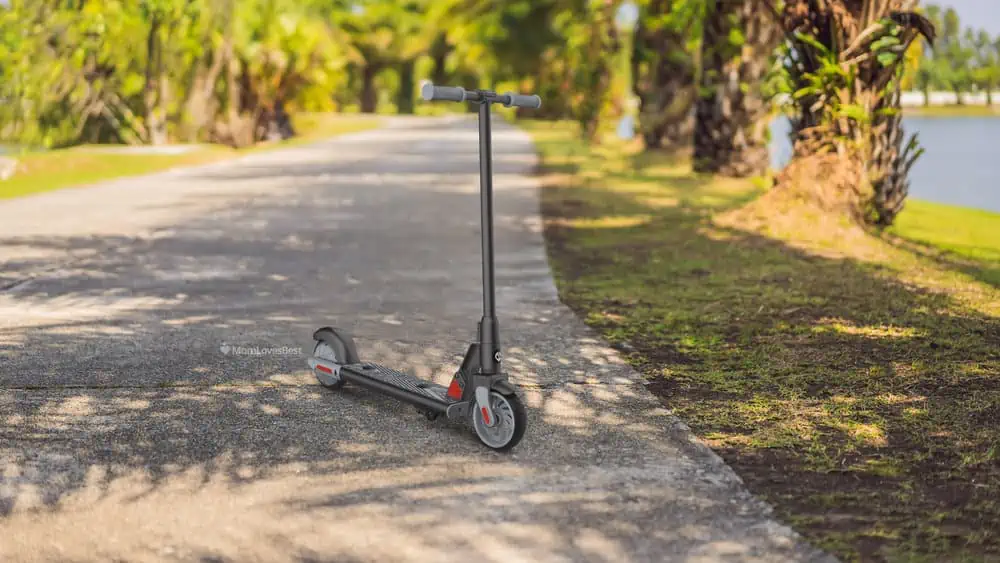
The Gotrax GKS reinvents how kids control their ride by removing the handlebar throttle entirely. It uses intuitive foot sensors to drive, making it one of the most unique options on the market.
To move, the child places one foot on the front button to prime the motor, and kicks off. Placing the second foot on the back button engages the motor. Lifting a foot cuts the power immediately.
This “autopilot” style is fantastic for coordination. It forces the rider to maintain a proper stance to keep moving, which naturally improves balance and safety.
What We Like
Dual-Braking System
Safety is redundant here. The scooter uses an internal electronic brake when the foot is lifted, plus a physical rear fender brake for emergency stops.
No Complicated Cables
Since there is no hand brake or throttle, there are no external cables to snag or break. The clean design is durable and looks sleek.
Lightweight Frame
Weighing in at under 18 pounds, it is one of the easier scooters to transport. If the battery dies, it functions perfectly as a standard kick scooter with zero drag.
Controlled Speed
It tops out at 7.5 mph. This is the “Goldilocks” speed for neighborhood sidewalks; fast enough to be fun, but slow enough to avoid serious accidents.
What We Don't Like
Learning Curve
The foot sensor system is different. It takes kids a few tries to get used to keeping both feet planted to maintain speed.
Small Wheels
The 6-inch hard rubber wheels are small. They can get caught in large sidewalk cracks, so it is best suited for smooth, paved surfaces.
Product Specs
| Battery | 150 watts |
| Top speed | 7.5 miles per hour |
| Battery charge | Five hours |
| Maximum load | 121 pounds |
| Ride time | 30 to 45 minutes |
| Brake style | Rear wheel foot brake |
Our Ratings
Razor Pocket Mod Miniature Euro Electric Scooter
Best Ride-On Scooter
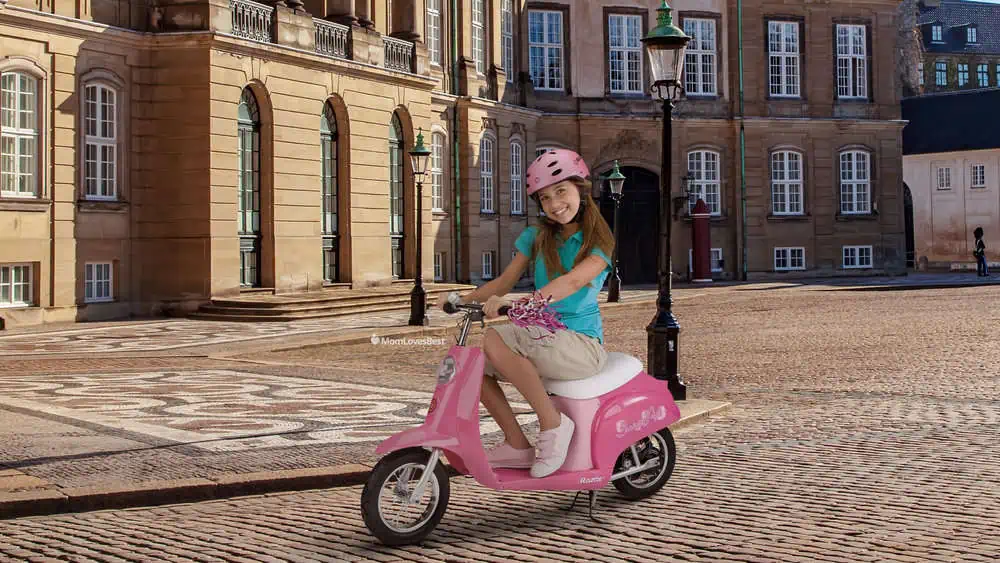
For kids who want style with their speed, the Razor Pocket Mod is unbeatable. It is a miniature vintage moped that offers a seated riding experience rather than standing.
This is a serious vehicle for older kids. It supports up to 170 pounds and hits speeds of 15 mph. It is powerful, fast, and remarkably comfortable thanks to the padded seat and large tires.
The hidden storage compartment under the seat is a game-changer. Your child can stash a water bottle, a jacket, or their favorite book while they cruise to a friend’s house.
What We Like
Vintage Aesthetics
It looks like a classic Italian scooter shrunk down for kids. The design stands out in a sea of generic black standing scooters.
High Weight Capacity
Supporting up to 170 pounds, this scooter can handle taller teenagers or heavier loads without struggling. It is a ride that won’t be outgrown in six months.
Pneumatic Tires
The 12-inch air-filled tires are huge compared to standard scooters. They provide excellent traction and cushion the ride, making it capable of handling light dirt paths.
Storage Space
The under-seat storage is functional and handy. It adds a level of practicality that standing scooters simply can’t match.
What We Don't Like
Heavy and Bulky
This is a beast. It weighs nearly 60 pounds and does not fold. You need a garage or a dedicated parking spot for it.
Long Charge Time
The lead-acid battery system takes up to 12 hours to fully recharge. It is strictly an “overnight charge” situation.
Product Specs
| Battery | 24 volts |
| Top speed | 15 miles per hour |
| Battery charge | 12 hours |
| Maximum load | 170 pounds |
| Ride time | 40 minutes |
| Brake style | Rear hand brake |
Our Ratings
Razor Power Core E90 Electric Scooter
Best Scooter Ride Time
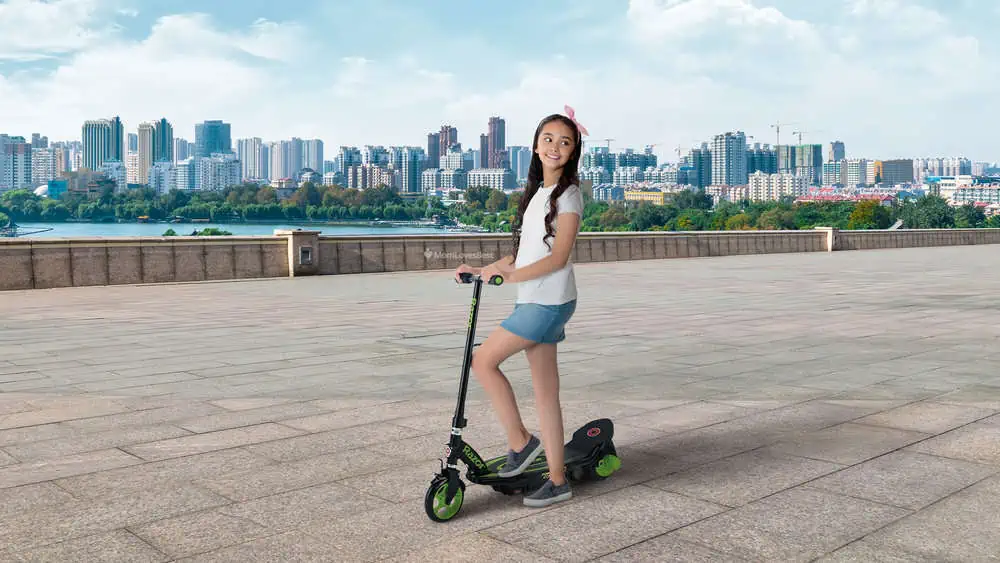
The Razor Power Core E90 is the efficiency king. By moving the motor into the rear wheel hub, Razor eliminated the chain, resulting in a ride that lasts twice as long as the original E90.
This hub motor design means zero maintenance. No chains to tension, no grease on your carpet, and no alignment issues. It is quieter and more reliable.
With up to 80 minutes of continuous ride time, this scooter outlasts almost everything else in its price range. It is the perfect choice for kids who want to ride all afternoon without stopping to plug in.
What We Like
Incredible Battery Life
80 minutes of run time is massive. Most competitors tap out at 40 minutes. This allows for longer adventures and less “range anxiety.”
Hub Motor Tech
The Power Core technology is a major upgrade. It delivers 50% more torque than the chain version and eliminates the annoying maintenance of chain drives.
Push-Button Throttle
Instead of a twist grip, it uses a simple push-button throttle. It is easy for smaller hands to operate and reduces hand fatigue on long rides.
Lightweight Frame
At roughly 22 pounds, it feels sturdy but isn’t impossible for a child to maneuver. The steel frame ensures it holds up to daily abuse.
What We Don't Like
Hard Ride
The rear wheel is a urethane (plastic-like) tire with the motor inside. It has zero shock absorption, so it rattles on rough pavement.
Non-Adjustable Handlebars
The stem height is fixed. While it fits most average-sized kids aged 8-10, very tall or very short riders might find it uncomfortable.
Product Specs
| Battery | 12 volts |
| Top speed | 10 miles per hour |
| Charge time | 12 hours |
| Maximum load | 120 pounds |
| Ride time | 80 minutes |
| Brake style | Hand front brake |
Our Ratings
Razor E100 Glow Electric Scooter
Best Electric Scooter for Boys
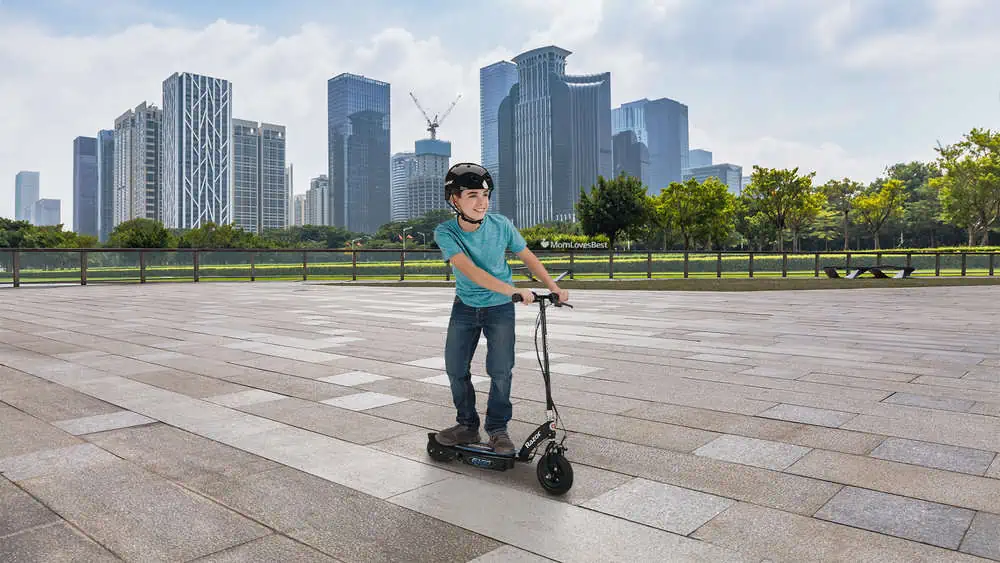
Take the reliable engineering of the classic E100 and give it a sci-fi makeover. The Razor E100 Glow features bright blue LEDs that light up the deck when the throttle is twisted.
It retains the kick-to-start motor and chain drive of the standard E100. It reaches speeds of 10 mph, which is plenty fast for the driveway but controllable enough for parents to supervise.
The lighting isn’t just cosmetic; it adds a layer of visibility during those twilight hours when kids love to ride. It runs on a chain-driven motor, providing that classic scooter feel and torque.
What We Like
LED “Tron” Look
The glowing blue lights are a huge hit with kids. It transforms the scooter from a piece of equipment into a cool gadget.
Hand-Operated Brake
It uses a hand brake lever rather than a foot brake. This helps kids build the muscle memory needed for riding bicycles or larger scooters later in life.
High-Torque Motor
The chain drive provides good torque for acceleration. It feels punchy and responsive once the rider kicks off to start.
Pneumatic Front Tire
Like the standard E100, the air-filled front tire does a great job of smoothing out the ride and providing traction on turns.
What We Don't Like
Drag When Off
Because it is chain-driven, the rear wheel doesn’t spin freely when the motor is off. Pushing it manually as a kick scooter is difficult and tiring.
No Variable Speed
The twist throttle is essentially on or off. There is no variable speed control, which can make low-speed maneuvering tricky.
Product Specs
| Battery | 24 volts |
| Top speed | 10 miles per hour |
| Charge time | 12 hours |
| Maximum load | 120 pounds |
| Ride time | 40 minutes |
| Brake style | Hand front brake |
Our Ratings
Swagtron SK1 Electric Scooter
Best Sturdy Electric Scooter
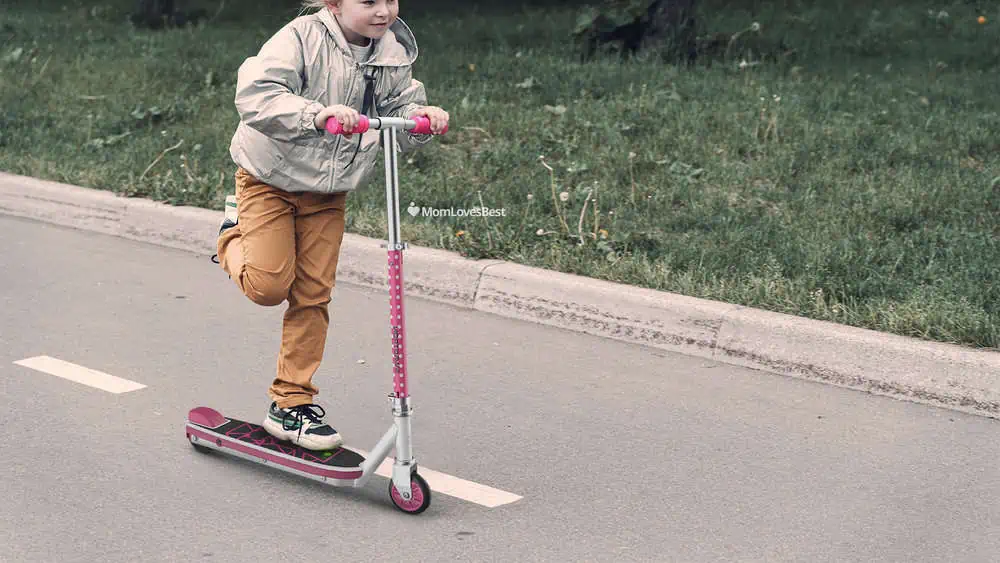
The Swagtron SK1 is designed specifically for the younger end of the riding spectrum. It focuses on simplicity and safety, removing complex controls to let kids focus on balance.
There are no hand throttles here. The rider kicks to get moving, and the motor assists to maintain speed. It tops out at a gentle 6.2 mph, preventing the scooter from getting away from a new rider.
It is ASTM certified, meaning it meets rigorous safety standards. With a durable iron frame and adjustable stem, it is built to grow with your child for several seasons.
What We Like
Kick-Assist Motion
The motor works as a cruise control. You kick to speed up, and the motor sustains that momentum. It feels natural and intuitive for kids used to manual scooters.
Adjustable Stem
Unlike many competitors, the handlebars adjust up and down. This ensures a comfortable ergonomic fit whether your child is 4 feet tall or hitting a growth spurt.
Safety First Speed
Maxing out at 6.2 mph keeps things under control. It is fast enough to be fun but slow enough that a parent can jog alongside if needed.
Quick Charge
The smaller battery charges relatively quickly compared to larger models, getting kids back on the road sooner.
What We Don't Like
Limited Range
It is designed for short bursts of play, not long commutes. The battery life is shorter than the Razor or Segway models.
Non-Foldable
The stem is fixed in place. While the scooter is small, the inability to fold it down makes it slightly awkward to store in tight closets.
Product Specs
| Battery | Not specified |
| Top speed | 6.2 miles per hour |
| Charge time | Around three hours |
| Maximum load | 143 pounds |
| Ride time | 30 to 45 minutes |
| Brake style | Rear foot brake |
Our Ratings
| Product | Best | Battery | Top speed | Charge time | Max load | Ride time | Brake style |
| Razor E100 Electric Scooter | Under 12’s | 24V | 10 mph | 12 hrs | 120 lbs | 40 min | Front hand brake |
| Segway eKickScooter Scooter | Heavy Duty Scooter | N/A | 9.9 mph | 2-3 hrs | 110 lbs | N/A | Rear hand brake |
| Gotrax GKS Electric Scooter | Girls | 12V | 7.5 mph | Five hrs | 121 lbs | 30-45 mins | Rear foot brake |
| Razor Pocket Mod Miniature Euro Scooter | Ride-On | 24V | 15 mph | 12 hrs | 170 lbs | 40 minutes | Rear hand brake |
| Razor Power Core E90 Electric Scooter | Ride Time | 12V | 10 mph | 12 hrs | 120 lbs | 80 min | Front hand brake |
| Razor E100 Glow Electric Scooter | Boys | 24V | 10 mph | 12 hrs | 120 lbs | 40 min | Front hand brake |
| Swagtron SK1 Electric | Sturdy | N/A | 6.2 mph | 3 hrs | 143 lbs | 30-45 minutes | Rear foot brake |
Electric Scooter Safety 101
Electric scooters are vehicles, not just toys. Accidents happen, but most are preventable with the right gear and mindset. The most common injuries involve falls leading to fractures or head bumps (1). Keep your rider safe with these rules:
- Respect the Power: Make sure your child understands this has a motor. It accelerates differently than a bike or kick scooter.
- Gear Up: A helmet is non-negotiable. For new riders, knee and elbow pads save a lot of tears during the learning phase.
- Master the Controls: Before hitting the sidewalk, practice using the brake and throttle in a safe, flat driveway.
- Eyes Up, Phone Down: Distracted riding is dangerous. No headphones and no checking screens while in motion.
- Location Matters: Stick to smooth pavement away from cars. Avoid wet surfaces, as scooter wheels can slip easily on water or wet leaves.
- Defensive Riding: Teach your child to assume cars do not see them. Stop at every driveway and intersection.
FAQs

What Is The Youngest Age For An Electric Scooter?
Most manufacturers recommend electric scooters for children aged 8 and up, though some low-speed “assist” models are designed for kids as young as 6 with proper supervision.

Is Riding An Electric Scooter Healthy?
Yes, it builds core strength, balance, and hand-eye coordination, though it provides less cardiovascular exercise than a traditional kick scooter or bicycle.

What Is A Safe Speed For A Kids’ Electric Scooter?
For beginners and younger children, 6 to 10 mph is considered safe; older teens with experience can safely handle speeds up to 15 mph.

How Powerful Should An Electric Scooter Be?
A 90 to 150-watt motor is perfect for flat neighborhoods and younger kids, while hilly areas or heavier riders benefit from motors with 250 watts or more.

What Are The Common Injuries For Electric Scooters In Children?
The most common injuries are cuts, bruises, and arm fractures caused by falling forward; wearing wrist guards and helmets significantly reduces these risks.

Can Kids Ride Electric Scooters In The Rain?
Generally, no; most kids’ electric scooters are not waterproof, and riding in rain can damage the electronics and make the small wheels dangerously slippery.
Do Electric Scooters Need Maintenance?
Yes, chain-driven scooters need occasional chain lubrication and tensioning, and pneumatic tires need air, whereas hub-motor scooters with solid tires are virtually maintenance-free.