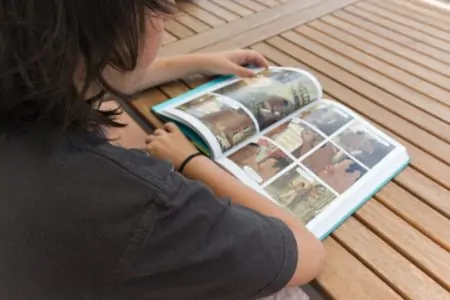
Graphic novels often get a bad rap. For years, people treated them like the “junk food” of the literary world, assuming they were just long comic books without educational value.
If you have hesitated to buy them for your kids, I get it. But as a mom of five, I have seen the magic firsthand. Visual storytelling can turn a reluctant reader into a bookworm overnight.
The truth is, graphic novels are legitimate literature. They build vocabulary, increase reading confidence, and teach complex storytelling skills. Plus, they are incredibly fun.
We have compiled a massive list of the best graphic novels for every age group. Whether you have a six-year-old just starting out or a teenager looking for a deep memoir, there is something here for everyone.
- Beautifully rendered in watercolor
- Hilarious and surprisingly tender
- Suitable for children and adults!
- Features stories-within-the-story
- Utilizes humor & drama, prose & poetry
- Introduces children to creative process
- Plain smart and moving
- Odd and amazingly beautiful world
- Encourages curiosity, bravery, creativity
- Easy-to-read graphic novel
- Inspires children to write & draw
- Includes drawing instructions
- Positive, playful, zero conflict
- 3-book set with 3 stories each
- Comes with 12x16” poster
- Very easy to read
- Engaging and hilarious
- Perfect for early readers
- Clear-cut visual storytelling
- Calm pastel colors
- Readable lettering
- Easy to read
- Perfect for Minecraft fans
- Story about teamwork & friendship
- 3 full-color graphic novels
- Story about overcoming difficulties
- Relatable for anyone with siblings
- Winner of the Newbery Medal
- Story about diversity and belonging
- Excellent choice for tween readers
Graphic Novels vs. Comics: What is the Difference?
People often use the terms interchangeably, but there is a distinct difference. Comic books are usually serialized, meaning they tell a story in short installments over many issues (think of your standard superhero monthly release).
Graphic novels are different in structure:
- Completeness: They usually tell a complete narrative in a single volume, though they can be part of a larger series (1).
- Depth: They often feature more complex plot arcs and character development similar to a traditional novel.
- Format: They are bound like books, whereas comics are often stapled magazines.
Yes, It Counts as “Real” Reading
Let’s bust this myth right now: graphic novels absolutely count as reading. They are powerful tools for literacy.
A study from California State University found that graphic novels often contain more complex language and rare vocabulary words than standard children’s books. They introduce kids to sophisticated sentence structures they might not encounter in oral conversation (2).
Educators and librarians love them because they teach “visual literacy.” Kids have to decode facial expressions, layout, and context clues to understand the story. This requires active engagement, not just passive skimming.
The American Library Association even publishes an annual list of the Best Graphic Novels for Children, proving that these books belong in classrooms and libraries (3).
If you want to spark a love for reading, this format is a fantastic entry point. We struggled to narrow it down, but here are 50 favorites approved by our family and friends.
Product Reviews
A single graphic novel is a treat; a box set is an obsession. These sets are perfect for binge-reading and make fantastic gifts for birthdays or holidays.
[/page-sections]Olympians Boxed Set
Ancient Action

George O’Connor’s retelling of Greek myths is dynamic and powerful. Each book focuses on a different god or goddess (Zeus, Athena, Hera) with distinct art styles for each.
These aren’t Disney versions; they keep the complexity and occasional ruthlessness of the original myths. Best for kids 10+ who love Percy Jackson and want to go deeper into the lore.
DC Super Hero: Girls Box Set
Girl Power

This set reimagines iconic DC characters like Wonder Woman and Batgirl as high school students. They have to balance saving the world with studying for finals.
It is bright, colorful, and focuses heavily on friendship and teamwork. A great entry point for younger girls interested in superheroes without the grimdark tone of some modern comics.
Amulet #1-8: Box Set
Bestsellers

Amulet is a modern classic of children’s fantasy. After their father dies, Emily and Navin move to a creepy old house and fall into a subterranean world of elves and robots.
The art is stunningly atmospheric (Kibuishi is a master of lighting). It is an epic journey that hooks readers immediately. If your child likes Studio Ghibli movies, they will love this.
Hilo: The Great Big Box (Books 1-6)
Humanoid Alien Robots

Hilo is a robot boy who crashes to Earth with no memory but plenty of energy. With his friends DJ and Gina, he fights monsters and tries to save the world.
This series is pure adrenaline and humor. It is incredibly fast-paced and colorful, making it a top pick for elementary schoolers who claim they “don’t like reading.”
Dog Man: The Supa Epic Collection
Canine Crime Fighter

You cannot talk about graphic novels without mentioning Dog Man. Part dog, part cop, all hero. This set collects the first six books of Dav Pilkey’s chaotic, hilarious series.
Parents might find it silly, but kids find it hysterical. It encourages creativity and reading for pleasure. If you want to hear your child giggling while they read, buy this.
The Baby-Sitters Club: Graphic Novels #1-7
Graphic Twist on a Classic

Raina Telgemeier and Gale Galligan breathed new life into Ann M. Martin’s beloved series. This set updates the look while keeping the heart of the original stories about friendship and business.
It allows a new generation to enjoy Kristy, Mary Anne, and Claudia. The visual format makes the distinct personalities of the girls pop even more.
DC Graphic Novels for Kids: Box Set 1
Superhero Teen Life

This slipcase features four standalone stories, including Dear Justice League and Superman of Smallville. They are lighthearted and focused on fun rather than heavy continuity.
The art is cartoony and approachable. It is a great way to let kids enjoy their favorite heroes in age-appropriate stories that don’t require knowing 50 years of backstory.
Why Graphic Novels Belong on Your Bookshelf
The “Gateway Drug” to Literacy
We used to worry that reading graphic novels was “cheating.” I remember gritting my teeth when my son only wanted to read Bone. But I was wrong.
Graphic novels often serve as a bridge. They build the reading habit. Once a child identifies as a “reader,” they are more likely to pick up other formats later. But even if they stick to graphic novels forever, that is okay too. They are reading, processing, and enjoying stories (4).
Lowering the Anxiety Barrier
For some kids, a page full of black text looks like a wall they can’t climb. It induces anxiety before they even read the first word.
Graphic novels break that wall down. The text is chunked into speech bubbles, making it manageable. My daughter went from fearing books to devouring them because the pictures gave her context and confidence (5).
Boosting Comprehension
Reading isn’t just decoding words; it’s understanding the story. Graphic novels force kids to track the plot through dialogue and visual cues simultaneously.
This helps kids with processing issues. Instead of getting lost in a descriptive paragraph about a room, they see the room instantly. This frees up their brain power to focus on the character’s motivations and the plot (6).
Inclusive for Different Learners
Kids with dyslexia or those learning English as a second language often struggle to find age-appropriate books. They might be stuck reading “baby books” because that matches their reading level, which is demoralizing.
Graphic novels level the playing field. A 10-year-old can read a complex, cool graphic novel regardless of their reading fluency. It protects their dignity and keeps them engaged with their peers (7).
A Shared Experience
I am an avid reader, but my daughter wasn’t. Graphic novels gave us common ground. We could sit side-by-side and read, pointing out funny details in the background art. It turned reading from a solitary chore into a bonding activity.
FAQs

Are Graphic Novels Good For Kids With ADHD?
Yes. Graphic novels provide immediate visual feedback and break text into small chunks, which helps maintain focus. The combination of images and words can engage the brain more effectively than text alone for children who struggle with attention span.
What Is The Best Age To Start Reading Graphic Novels?
You can start as early as age 5 or 6 with simple, picture-heavy books like Narwhal and Jelly. However, there are graphic novels written for every age group, from toddlers to adults, so the “best” age is whenever your child shows interest.
Is There A Difference Between Manga And Graphic Novels?
Yes and no. Manga is simply the Japanese word for comics. In the US, “Manga” refers to comics from Japan, which are usually read right-to-left and have a specific art style. “Graphic Novel” generally refers to Western-style comics bound in book format. Both are valid and excellent forms of reading.
Let Them Read What They Love
Graphic novels are a magnificent tool for growing a child’s mind. They are sophisticated, complex, and emotionally resonant.
If you have a reluctant reader, or if you just want to diversify your home library, don’t hesitate to pick up a few of these titles. We’ve been thoroughly put in our place for judging them in the past, now, we can’t get enough of them.
Grab a book, find a comfy spot, and enjoy the art of storytelling together.