Preschoolers are like little sponges. They soak up everything around them! Teaching them colors opens up a whole new way for them to describe their world.
Music makes this process sticky. Songs help kids memorize new concepts without even realizing they’re learning. It turns a lesson into a dance party.
From rainbows to red apples, these preschool color rhymes are perfect for brightening up your day. Get ready to sing, dance, and make learning vibrant!
Easy and Fun Color Songs for Preschoolers
Here are 15 catchy songs about colors for preschoolers. You can start singing these to your baby immediately. Around 18 months, they might start identifying colors on their own.
I’ve included a description of each song, a YouTube link (where available), and the lyrics. We also added printable lyrics so you can jam out even without the internet.
1. Orange Garden Song
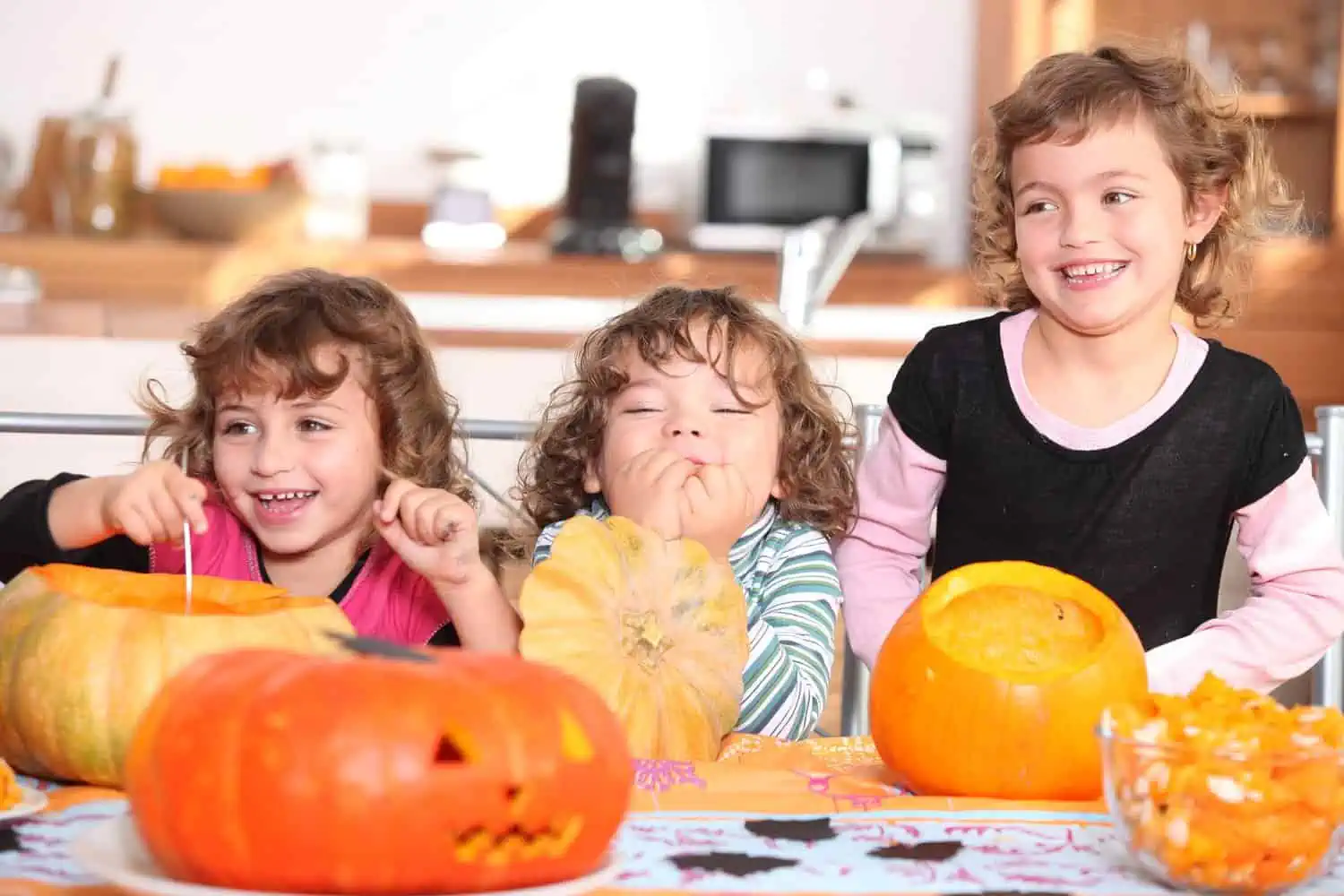
Linking colors to objects is a classic teaching trick. This song connects specific colors to delicious fruits. Luckily, most toddlers love fruit!
You sing this to the tune of The Wheels on the Bus. It is super simple. Just swap the color and the fruit for every verse.
We couldn’t find a video for this one, but you already know the melody.
Lyrics
The pumpkins in my garden are
Orange, orange, orange
Orange, orange, orange
Orange, orange, orange
The pumpkins in my garden are
Orange, orange, orange
Orange, orange, orangeThe apples in my garden are
Red, red, red
Red, red, red
Red, red, red
The apples in my garden are
Red, red, red
Red, red, red
Keep going with yellow bananas, purple plums, and blue blueberries!
2. Kaleidoscope Song
Kaleidoscopes are magical for little eyes. This song covers six colors to keep things manageable.
If you have a toy kaleidoscope, bring it out now. Ask your child what colors they spot inside while you sing.
Lyrics
Red and orange for our
Ka, lei, do, scope!
Yellow and green for our…
Ka, lei, do, scope!
Blue and purple for our…
Ka, lei, do, scope!
Look at all the colors for our…
Ka, lei, do, scope!We’ll find every color,
When we look around.
This is red!
This is orange!
Look at what we found!
Look at all the colors in our
Ka, lei, do, scope!
3. The Apple Is Red
Repetition and catchy tunes are the secret sauce for learning. This track associates colors with items famous for that specific shade. Apples are red, trees are green, and the sky is blue.
Lyrics
Red red
The apple is red
Red red
The apple is red
Red red
The apple is red
The apple is red red red
Green greenThe tree is green
Green green
The tree is green
Green green
The tree is green
The tree is green green green
(Repeat with a blue ball, a yellow lemon, orange juice, and a black hat)
4. Here We Go Round the Rainbow
The rainbow is the ultimate color chart. This song uses the familiar melody of Here We Go Round the Mulberry Bush.
It is a perfect opportunity to teach the correct color order (ROYGBIV). You can also introduce trickier shades like indigo and violet.
Lyrics
Here we go round the rainbow
The rainbow
The rainbow
Here we go round the rainbow
On a wet and rainy morningThis is the way we color it red
Color it red
Color it red
This is the way we color it red
On a wet and rainy morning
(Repeat verses with orange, yellow, green, blue, indigo, and violet)
5. Twinkle, Twinkle, Rainbow Star
Your toddler likely knows Twinkle, Twinkle, Little Star by heart. This version uses that comforting melody but swaps the lyrics to focus on colors.
Grab objects of different colors to hold up during each verse. You can also cut out simple paper stars and color them with crayons.
Lyrics
Twinkle, Twinkle, Yellow Star
How I wonder where you are
Let’s go looking here and there
Let’s go looking everywhere
Twinkle, Twinkle, Yellow Star
How I wonder where you areTwinkle, Twinkle, Blue Star
How I wonder where you are
Let’s go looking here and there
Let’s go looking everywhere
Twinkle, Twinkle, Blue Star
How I wonder where you are
(Repeat for all colors, including green, red, orange, purple, and pink)
6. If You Are Wearing Red
My son starts dancing the second he hears If You’re Happy and You Know It. This educational twist is just as fun. It instructs kids to perform an action if they are wearing a specific color.
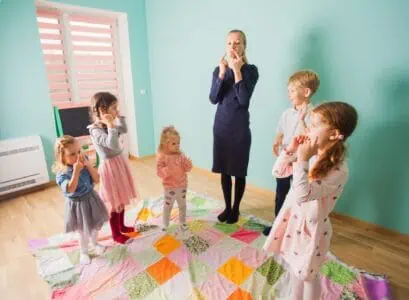
This game kills it in daycare or preschool settings. Gather everyone in a circle and start singing!
Top Tip
Skip the color purple for this one. It is notoriously hard to rhyme with! If you can think of a clever rhyme for it, feel free to add it in.
Lyrics
If you are wearing red, shake your head
If you are wearing red, shake your head
If you are wearing red, then please shake your head
If you are wearing red, shake your headIf you are wearing blue, touch your shoe
If you are wearing blue, touch your shoe
If you are wearing blue, then please touch your shoe
If you are wearing blue, touch your shoe
(Repeat with: if you are wearing green, bow to the queen; if you are wearing yellow, shake like jello; if you are wearing black, pat your back; if you are wearing brown, turn around.)
7. So Many Fishies
Prep for this song by cutting out some paper fish in different colors. You can also use felt pieces or Play-Doh creations.
As you sing, ask the children to point to the correct fish. You can personalize it by asking, “What color fish does [Child’s Name] see?” It works great for one-on-one play or small groups.
Lyrics
There are so many fishies in the deep blue sea
What color fishie do you see?
Can you find the blue fish?
Blue, blue, this one’s blue
This little fishie is blueThere are so many fishies in the deep blue sea
What color fishie does (insert child’s name) see?
I see the (insert color) fish!
(Color, color), this one’s (color)
This little fishie is (color)
(Repeat until you’ve found all the fish)
8. What’s Your Favorite Color?
We are huge fans of Super Simple Songs. The pacing is perfect for toddlers, and it isn’t overstimulating.
This song asks each child to name their favorite color. Turn it into a scavenger hunt! When a child picks a color, have them run and find an object that matches.
Lyrics
My favorite color’s blue
How ‘bout you?
How ‘bout you?
My favorite color’s blue
How ‘bout you?
How ‘bout you?Red.
My favorite color’s red
I like red.
I like red.
My favorite color’s red
I like red.
I like red.Colors, colors, what’s your favorite color?
Colors, colors, what’s your favorite color?
(Repeat with other colors, saying, “I like [color]”)
9. I See Something Blue
Need a boredom buster for a road trip? This is it. Kids choose a color and point out things they see out the window.
The tune is simple and repetitive, so kids catch on fast. You can cycle through everything from blue sky to brown dirt.
Lyrics
Blue, I see something blue
Blue, I see something blue
Blue, blue, blue, blue
I see something blue
Find something blue!Yellow, I see something yellow
Yellow, I see something yellow
Yellow, yellow
I see something yellow
Find something yellow!
(Repeat with brown, pink, green, black, red, and more)
10. Color Finger, Where Are You?
Make this interactive by creating little paper finger puppets in blue, yellow, purple, green, and red.
Sing the song with your hand hidden behind your back, then pop up the correct finger. It’s a “Finger Family” style game that helps with color recognition and fine motor skills.
Lyrics
Blue finger, blue finger
Where are you?
Here I am, here I am
How do you do?Green finger, green finger
Where are you?
Here I am, here I am
How do you do?Yellow finger, yellow finger
Where are you?
Here I am, here I am
How do you do?Red finger, red finger
Where are you?
Here I am, here I am
How do you do?Purple finger, purple finger
Where are you?
Here I am, here I am
How do you do?
(Repeat on the other hand with colors like pink, orange, white, black and brown)
11. Roll Call Color

This rhyme uses the tune of Frère Jacques (Brother John). It’s catchy and easy for adults to remember.
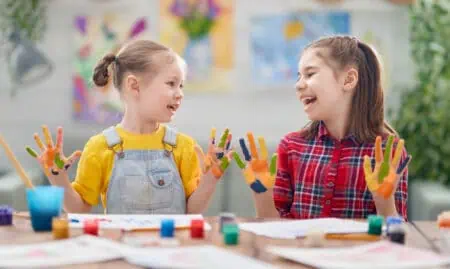
Lay out art supplies like markers or crayons. Before coloring, point to each one and sing its name. It turns setup time into learning time.
Lyrics
Red and green, red and green
Pink and blue, pink and blue
Don’t forget orange, don’t forget orange
And yellow too, and yellow too.
(Repeat with other colors, or the next child can sing their own verse)
12. I See a Red Car
If your child has a collection of toy cars, grab them now! If not, you can draw cars on paper and glue them to popsicle sticks.
Sing the song and hold up the matching car. It is also a lifesaver when your toddler gets fussy in the backseat of the real car.
Lyrics
I see a red car
I see a red car
Yes I do
How ‘bout you?
Do you see a red car?
Do you see a red car?
Yes I doI see a blue car
I see a blue car
Yes I do
How ‘bout you?
Do you see a blue car?
Do you see a blue car?
Yes I do
(Repeat with other colors)
13. Pass the Color
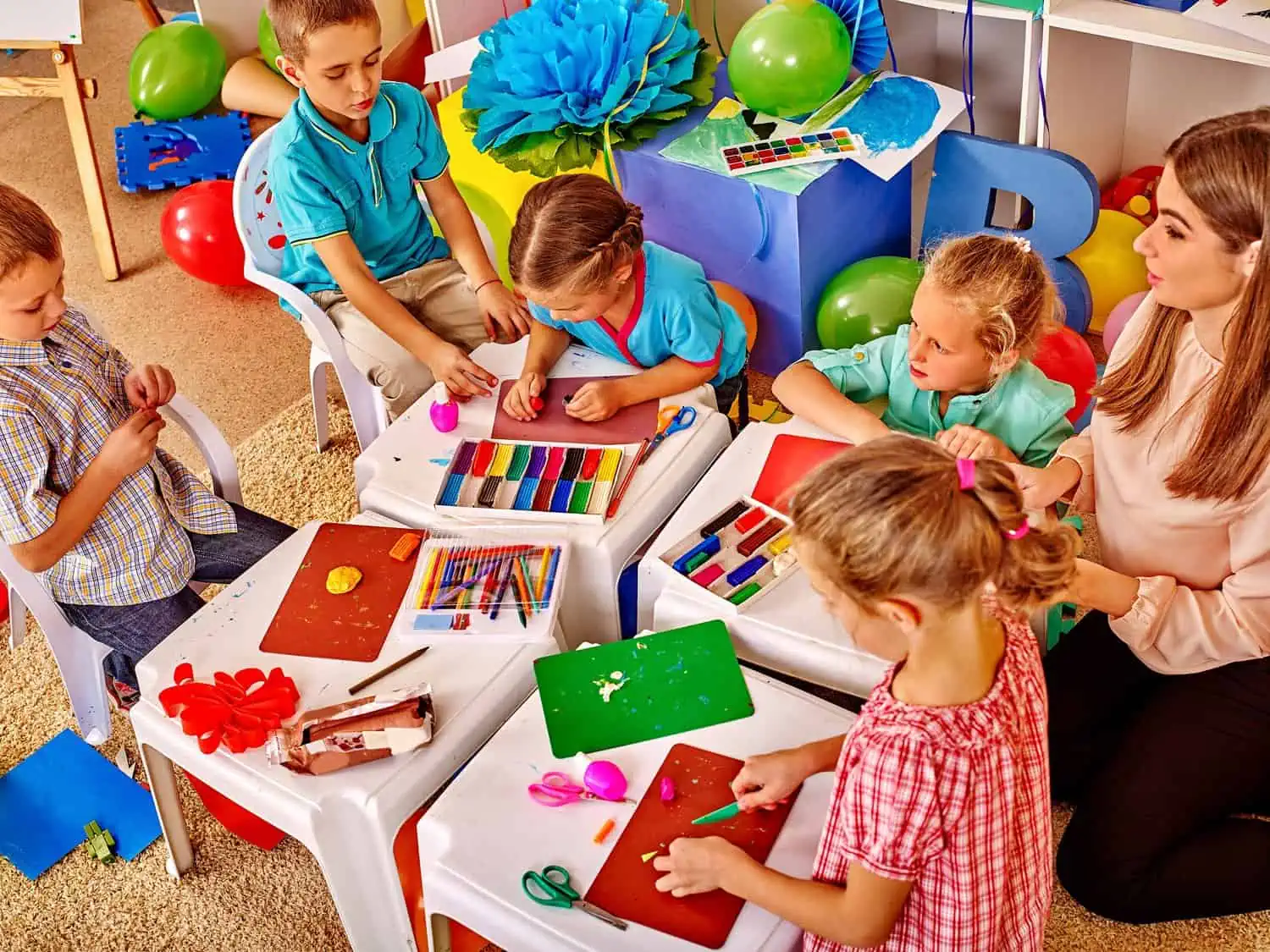
Think of this as “Hot Potato” but educational. Sit in a circle and pass a crayon or colored pencil around while singing to the tune of Row, Row, Row Your Boat.
When the song stops, the person holding the object has to shout out the color name.
Lyrics
Pass, pass, pass the color
This is the game we play
When the little song is through
The color name we’ll say
14. Red Yellow Green Blue
This song focuses on just four main colors. This prevents visual overload for younger toddlers.
I suggest drawing the four main items, an apple, sun, clover, and sky, on a piece of paper. Point to them as the lyrics come up.
Lyrics
Red, yellow, green, blue
Red, yellow, green, blue
Red
Yellow
Green
BlueRed, yellow, green, blue
Red, yellow, green, blue
Red
Yellow
Green
BlueRed is the color of an apple
Yellow is the color of the sun
Green is the color of a four-leaf clover
And blue is the color of the sky aboveRed, yellow, green, blue
Red, yellow, green, blue
Red
Yellow
Green
BlueRed, yellow, green, blue.
Red, yellow, green, blue
Red
Yellow
Green
Blue
15. Find the Yellow
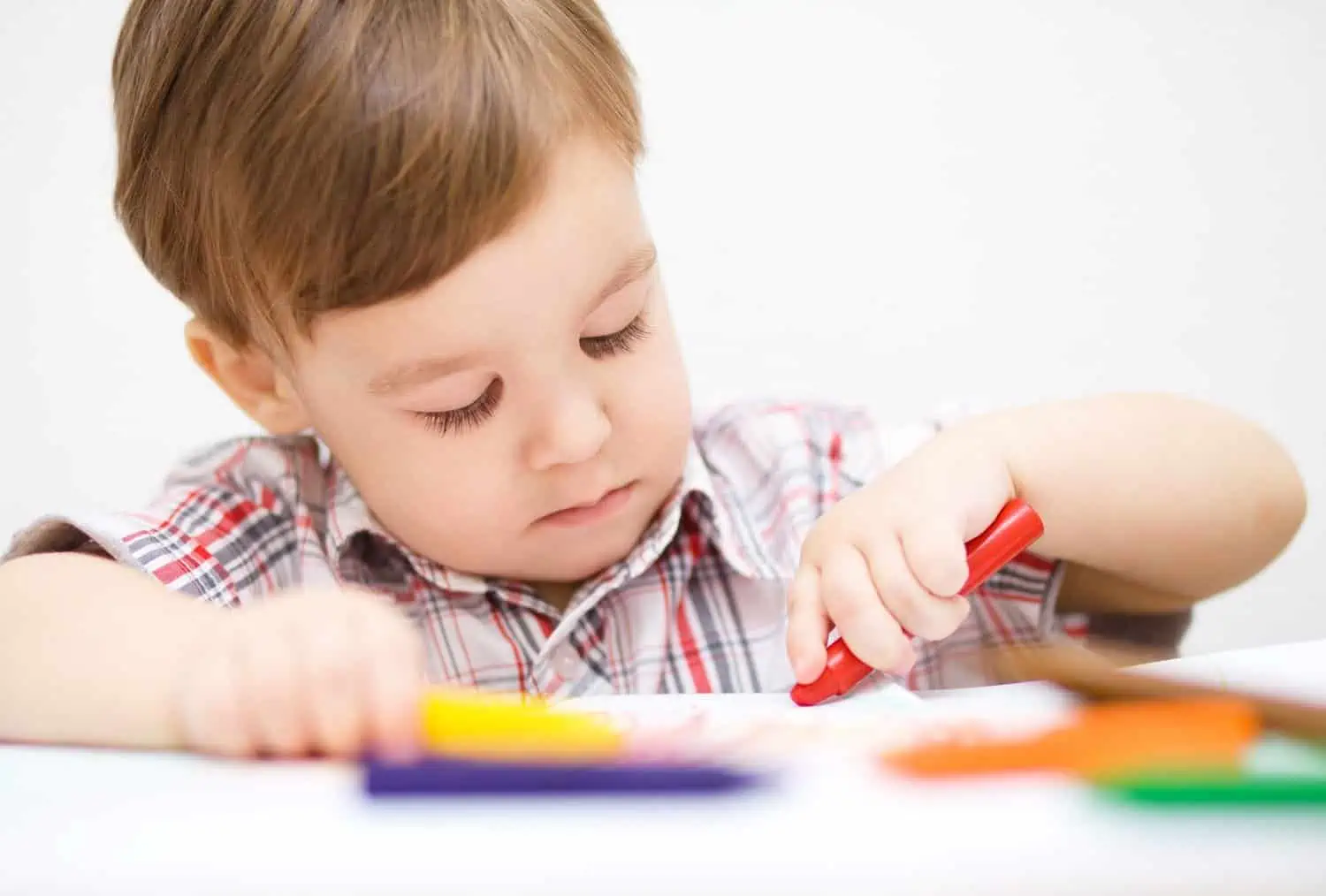
This is a brilliant way to encourage clean-up or setup for art time. Use the tune of Do You Know the Muffin Man?.
Sing a verse for each color, asking your child to find that specific crayon in the box. It turns a chore into a game.
Lyrics
Can you find the yellow?
The yellow? The yellow?
Can you find the yellow?
The yellow crayon.Can you find the white?
The white? The white?
Can you find the white?
The white crayon.
(Repeat with all the other colors)
FAQs

At What Age Do Children Learn Colors?
Most children start recognizing colors around 18 months of age. By age two or three, they can usually name at least one color. However, every child develops at their own pace, so don’t stress if it takes a little longer.
How Can I Teach Colors Without Flashcards?
Use everyday moments! Point out the “red apple” at the grocery store or the “blue shirt” while getting dressed. Songs, rhymes, and coloring books are also much more engaging than standard flashcards.
What Is the Best Order to Teach Colors?
Start with primary colors: red, blue, and yellow. These are distinct and easy to spot. Once they grasp those, move on to secondary colors like green, orange, and purple.
Why Are Nursery Rhymes Good for Development?
Rhymes boost memory, language skills, and cognitive development. The repetition helps children predict words and sounds, which lays the foundation for reading and speaking.
Why Teach Preschoolers Color Rhymes?
I used to worry I didn’t know enough fancy educational methods. But simple rhymes are powerful tools. They bridge the gap between playing and learning.
Here are five reasons to turn up the music:
- They build speech foundations: Songs introduce the sounds of the alphabet in a fun way. This helps children imitate sounds and form words earlier.
- They boost brain power: Rhymes are basically a workout for the brain. They teach kids how language is structured and improve memory through repetition.
- They create bonding moments: Singing together opens up communication. Plus, a soft singing voice soothes toddlers when they are grumpy or tired.
- They explain real-world concepts: Songs provide context. When a child sings about a green tree, they understand the world better when they see one outside. It makes new environments less scary.
- They teach language rhythm: Exposure to rhymes helps kids develop an “ear” for language. This makes learning to read aloud much easier later in school.