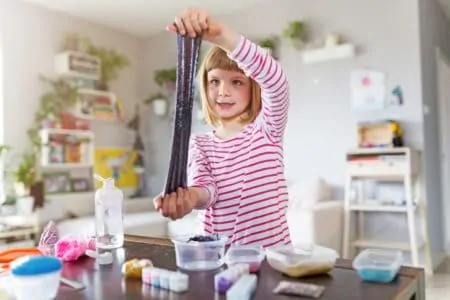
Slime is a fantastic sensory toy that keeps kids entertained for hours. But there is nothing worse than mixing a fresh batch only to have it snap like a dry twig. The best slime needs that satisfying, reliable stretch.
If your masterpiece has lost its “oomph,” don’t toss it in the trash just yet. We have the science-backed tips you need to fix rubbery messes and keep your slime stretchy for days.
Key Takeaways
- Kneading is essential: The heat from your hands warms up the polymers and increases elasticity.
- Fixing over-activation: Adding hot water, lotion, or baby oil can relax stiff slime.
- Storage matters: Air is the enemy; always store slime in an airtight container to prevent drying.
- The right glue: PVA (white) glue typically offers a better stretch foundation than clear glue.
The Science Behind the Stretch
To understand why slime snaps, you have to look at the chemistry. Slime is a non-Newtonian fluid created by mixing two main components: a polymer and an activator (1).
Imagine the polymer (usually glue) as long strands of spaghetti sliding over one another. This allows the liquid to flow.
The activator acts like a clip or a link. It connects those spaghetti strands together. When you add the right amount of activator, the strands are loosely linked. They can still slide around, but they hold their shape enough to be picked up (2).
If you add too much activator, those links become too tight. The strands can’t slide anymore. Instead of flowing into a long stretch, the structure snaps under pressure.
To get the perfect stretch, you need to balance these ingredients:
- Polymers: White PVA glue or clear glue.
- Activators: Borax, saline solution with baking soda, or liquid laundry detergent.
- Softeners: Lotion, glycerin, baby oil, or warm water.
How to Make Slime Stretchy
If you are mixing a fresh batch, these tips will help you get the texture right the first time.
- Use PVA glue: Standard white school glue usually creates a thicker, stretchier base than clear glue.
- Add the activator slowly: This is the golden rule. Add a few drops, knead, and repeat. It is much easier to add more activator than to fix a rubbery brick.
- Knead thoroughly: Chemical reactions take time. Knead the mix for several minutes before adding more activator. The warmth of your hands helps the ingredients meld.
- Add a moisturizer: Mixing in a few pumps of lotion or a teaspoon of baby oil during the creation process prevents the slime from getting tough later.
How to Fix Stiff or Rubber Slime
If your slime is already made and snaps when you pull it, you likely have “over-activated” slime. Use these methods to rescue it.
1. The Hot Water Bath
Heat is a great deactivator. It loosens the chemical bonds and brings moisture back into the mix.
- Soak it: Place the slime in a bowl of hot (not boiling) water. Let it sit for a minute.
- Work it in: While the slime is still in the water, poke holes in it with your fingers.
- Knead it: Take it out and knead it. It will be slippery and gross at first, but keep going. The water will eventually absorb, leaving you with soft slime.
2. Add Lotion or Baby Oil
This is the most common fix for slime that is just a little too tough.
- Apply lotion: Flatten your slime and add a squirt of hand lotion or body lotion.
- Fold and knead: Fold the slime over the lotion and knead it in. It might separate briefly, but it will come back together.
- Repeat: Keep adding lotion until you reach the desired consistency.
3. Use a Deactivator
If you used Borax or laundry detergent, you can neutralize the chemical reaction with an acid.
- Lemon juice or vinegar: Add a teaspoon of lemon juice or white vinegar to the slime.
- Watch the magic: The acid breaks down the activator links. Be careful, though; if you add too much, your slime will turn back into liquid glue.
FAQs on Slime Consistency
Here are the most common questions we see about perfecting that slime stretch.

Why Did My Slime Break Apart?
Slime breaks when it is over-activated. The chemical bonds holding the glue molecules together are too tight, preventing them from sliding past one another. This usually happens when you add too much borax, saline, or detergent too quickly.

Why Is My Slime Sticky?
Sticky slime is under-activated. The polymer strands aren’t connected tightly enough yet. To fix this, knead it for a few more minutes to see if it firms up. If it is still sticky, add a tiny amount of activator (just a drop or two) and keep kneading.

Why Does My Slime Get Hard After Playing?
Slime gets hard because moisture evaporates from it, or because it cools down. If you leave it out of its container, it dries into a rock. Even with proper storage, slime naturally loses water over time. Revive it with hot water or lotion.

Why Is My Homemade Slime So Rubbery?
Rubbery slime has too much activator or too much glue and not enough softener. It acts more like a bouncy ball than a fluid. You can fix this by soaking it in warm water or kneading in a generous amount of hair gel or lotion.

What Does Baking Soda Do to Slime?
Baking soda works alongside saline solution to activate the slime. It thickens the mixture and makes it firmer. However, it is potent; adding too much baking soda will make your slime snap instantly.

What Can Deactivate Slime?
Acids are excellent deactivators. Lemon juice, lime juice, vinegar, or even citric acid powder dissolved in water will break the chemical bonds. Add these slowly, or you will end up with a puddle of glue.

How Do You Make Slime Stretchy Without Lotion?
If you don’t have lotion, you can use hot water, baby oil, clear hair gel, or glycerin. Even microwaving the slime for 10 to 15 seconds (in a microwave-safe bowl) can heat the polymers enough to make them stretchy again.

Does Toothpaste Make Slime Stretchy?
Yes, toothpaste can help soften slime. The ingredients in opaque toothpaste act similarly to lotion. Add a small dollop and knead it in. Just be aware that it might change the smell and color of your slime.
Embrace the Experiment
Slime science isn’t always exact. Factors like the brand of glue, the temperature of your room, and even the humidity can change how your batch turns out.
If your slime snaps, don’t worry. Treat it as a mini science experiment. Add some heat, mix in some lotion, and enjoy the process of transforming that rubbery lump into a satisfying, stretchy masterpiece.