Pregnancy changes your body in wild ways. Between the loosening ligaments, the extra weight, and the shifting center of gravity, it is no surprise that your back and hips are screaming for relief.
You might be eyeing that heating pad in the closet, but is it safe? The short answer is yes, usually. Most heating pads are safe for pregnancy when used correctly.
We will explain the safety guidelines, show you where to place the pad for maximum relief, and help you pick the right model for your needs.
We also tested and reviewed the top heating pads on the market. These five picks stood out for their safety features, comfort, and ability to soothe those nagging pregnancy aches.
- Large size
- Multiple heat settings
- Soft, flexible exterior
- Hot and cold functions
- No electricity needed
- Safe and durable material
Why Use a Heating Pad During Pregnancy?
Pregnancy is magical, but it is also physically demanding. For some women, the “glow” is replaced by stiffness, soreness, and exhaustion.
By the third trimester, just rolling out of bed feels like an Olympic event. Muscle fatigue is real, and finding relief is a top priority for getting a good night’s sleep.
Heating pads are a simple, drug-free way to manage this discomfort. Heat therapy opens up blood vessels, which increases circulation. This brings fresh oxygen to sore tissues and helps flush out the lactic acid that causes stiffness (1).
Back pain, sciatica, and leg cramps are standard territory during pregnancy. Here is why your body is aching:

Your Baby Is Growing
Your uterus is expanding, and your center of gravity is shifting forward. This puts massive strain on your lower back muscles as they work overtime to keep you upright (2).

Hormonal Changes
Your body produces a hormone called relaxin to prepare for birth. This loosens your ligaments and joints, specifically in the pelvic area. While helpful for delivery, it makes you less stable and prone to pain.

Postural Shifts
As your belly grows, your posture naturally changes to compensate. This often leads to a swayback position that compresses the spine and tires out your back muscles.

Stress
Anxiety and stress cause your muscles to tense up involuntarily. If you are worried about the baby or the birth, that tension often settles in your shoulders and back.
Are Heating Pads Safe During Pregnancy?
Yes, using a heating pad on isolated areas like your hips, back, or shoulders is generally considered safe.
The main concern with heat during pregnancy involves raising your core body temperature. This is why doctors say no to hot tubs and saunas. If your core temp rises too high (over 102 degrees Fahrenheit), it can pose risks to the baby.
However, a heating pad applied to a specific muscle group does not raise your overall body temperature (3).
Important: Do not apply the heating pad directly to your belly.
Abdominal pain can be tricky. While it might just be round ligament pain, heat on the uterus isn’t recommended. Abdominal discomfort could be caused by:
- Gas and digestion issues.
- Braxton Hicks contractions.
- Round ligament stretching.
- Constipation.
If you have sharp, consistent, or severe abdominal pain, put the heating pad away and call your doctor immediately. This could signal something serious like placental abruption or preterm labor (4).
Risks and Safety Precautions
While useful, heat therapy requires caution. Overheating, especially in the first trimester, has been linked to a slight increase in the risk of neural tube defects (5).
To keep you and your little one safe, follow these rules:
- Watch the Clock: Limit sessions to 15 or 20 minutes maximum. Prolonged heat can damage skin or raise your temperature.
- Don’t Sleep With It: It is tempting to drift off with that warm cozy feeling, but falling asleep with a heating pad is a fire and burn hazard.
- Layer Up: Never put the heat source directly against your skin. Use a towel or clothing as a barrier to prevent burns.
- Low and Slow: Use the lowest effective setting. If it feels hot to the touch, it is probably too hot for pregnancy use.
Call your provider right away if you experience back pain accompanied by (6):
- Vaginal bleeding.
- Unusual discharge.
- Fever or chills.
- Dizziness.
- Pain when you pee.
- Severe nausea.
Product Reviews
We evaluated these heating pads based on safety features, ease of use, and comfort for pregnant bodies.
Pure Enrichment PureRelief Heating Pad
Best Electrical Heating Pad

When you are nearing the finish line of pregnancy, lower back pain can feel all-consuming. The Pure Enrichment pad is our top pick because of its generous size.
At 12 by 24 inches, it covers your entire lower back and hips simultaneously. The microplush fabric is incredibly soft against sensitive skin, and the pad is flexible enough to mold to your curves.
You get six heat settings, ranging from 105 to 140 degrees Fahrenheit. For pregnancy, stick to the lower settings to stay safe. A standout feature is the option for moist heat therapy; simply dampen the pad slightly for deeper muscle penetration.
It includes a two-hour auto-shutoff. While that is a great failsafe, remember to manually turn it off after 20 minutes to adhere to pregnancy safety guidelines.
Pros
- Extra-large coverage: Hits the lower back and hips at once.
- Moist heat option: Great for deep muscle tension.
- Machine washable: Easy to keep clean.
Cons
- Long timer: Two-hour shutoff is longer than the recommended 20-minute session.
Our Ratings
Comfytemp Weighted Neck Heating Pad
Best Neck Heating Wrap
As your bump grows, your shoulders often hunch forward to compensate, leading to tension headaches and neck strain.
This Comfytemp wrap is designed specifically for that upper-body tension. It is weighted (2.2 pounds), which provides a comforting “hug” sensation that helps ground you when anxiety or stress kicks in.
The snap button on the front keeps it secure, so you can sit upright and read a pregnancy book without it sliding off. It features nine heat settings and 11 timer options, giving you plenty of control.
The flannel material is soft and cozy. If you are tall or have broader shoulders, this design offers good coverage without feeling restrictive.
Pros
- Hands-free: Snap button keeps it in place.
- Weighted pressure: Adds a layer of stress relief.
- Customizable: Many heat and timer settings.
- Hygienic: Controller detaches for washing.
Cons
- Niche use: Hard to use on hips or lower back due to the shape.
Our Ratings
Aikotoo Hot Water Bottle
Best Budget-Friendly Heating Pad
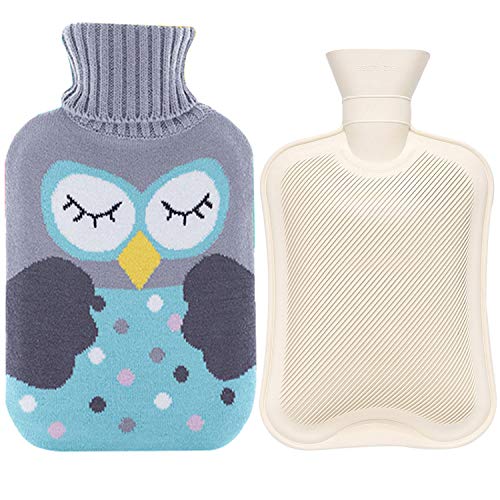
If you are wary of using electric devices near your body during pregnancy, a classic hot water bottle is a fantastic, low-tech alternative.
The Aikotoo set is simple, effective, and very affordable. It comes with two bottles, allowing you to treat two areas at once, like your feet and your lower back. The PVC material is durable and retains heat surprisingly well.
You cannot control the temperature as precisely as an electric pad, so be sure the water isn’t boiling when you fill it. The included knit covers (with cute owl or penguin designs) act as a necessary barrier between the bottle and your skin.
They are compact, making them perfect for wedging behind your back while sitting on the couch or tucking near your feet in bed.
Pros
- No EMFs: Zero electricity required.
- Portable: Use it anywhere, even without an outlet.
- Value: Comes with two bottles.
- Cute covers: Protects skin from direct heat.
Cons
- Rigid: Not very flexible when full.
- No temp control: You have to manage water temp manually.
Our Ratings
TheraPAQ Refreezable and Microwavable Gel Pad
Best Microwavable Pad
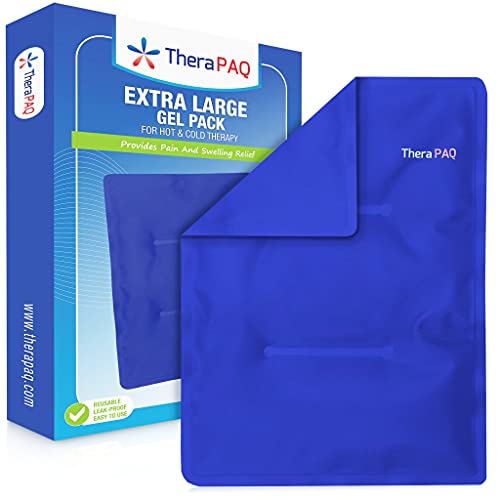
Sometimes you need heat for a backache, and sometimes you need ice for swollen ankles. The TheraPAQ gel pad handles both with ease.
For heat therapy, pop it in the microwave for 30 seconds or submerge it in hot water. For cold therapy, leave it in the freezer. It remains flexible even when frozen, which is a huge plus compared to rigid ice packs.
This versatility makes it a great investment for postpartum recovery, too, cold packs are often recommended for C-section incision healing or perineal soreness.
The pad is made from non-toxic, leak-proof plastic. Just make sure to wrap it in a thin towel before applying it, as it does not come with a fabric cover.
Pros
- Dual-use: Works for both heat and cold therapy.
- Cordless: No being tethered to a wall.
- Flexible: Molds to the body even when cold.
- Large size: 11 x 14 inches covers good ground.
Cons
- No cover included: You must use a towel.
- Manual heating: Requires a microwave or stove.
Our Ratings
Glamigee Heating Pad
Best Moist Heat Heating Pad
When you are dealing with deep, stubborn muscle cramps, dry heat sometimes isn’t enough. This Glamigee pad excels at delivering consistent heat that penetrates tissue quickly (7).
It heats up in minutes and features an auto-shutoff for safety. The controller is simple to use, offering six temperature settings and four timer options so you can dial in exactly what you need.
The medium size (12 x 24 inches) is versatile enough for the back, thighs, or shoulders. It makes a thoughtful gift for any expecting mom dealing with winter pregnancies or chronic stiffness.
Pros
- Fast heating: No waiting around for relief.
- Versatile settings: 6 heat levels and 4 timer options.
- Soft fabric: Comfortable for daily use.
Cons
- Heat retention: Cools down quickly once turned off.
Our Ratings
Heating Pad DIY
If you are in pain right now and cannot wait for a delivery, you can easily make a safe heating pad with items you already have at home.
1. The Wet Towel Method
This uses moist heat, which is excellent for relaxing tight muscles.
- What you need: Two small hand towels and a microwave-safe Ziploc bag (freezer bags usually work best).
Wet one towel with water and wring it out so it is damp, not dripping. Place it inside the Ziploc bag, leaving the bag open. Microwave for about two minutes.
Carefully remove the bag (it will be hot). Seal the bag and wrap the second dry towel around it. This prevents the hot plastic from touching your skin. Apply to your sore spot for up to 20 minutes.
If you do not have a microwave, you can heat the damp towel in an oven set to 300 degrees Fahrenheit for 5 to 10 minutes.
2. The Rice Sock
This is a classic DIY that provides a nice weight and holds heat well.
- What you need: A long cotton sock (clean, obviously), uncooked rice, and a microwave.
Fill the sock with uncooked rice. Leave enough room at the top to tie a knot or secure it with a rubber band. If you want to get fancy, add a few drops of lavender essential oil to the rice for a calming scent.
Microwave the sock for one to two minutes. Shake it to distribute the heat. Test it on your inner arm to ensure it isn’t too hot, then apply it to your neck or back. It usually stays warm for about 15 to 20 minutes.
FAQs

Is a Hot or Cold Compress Better for Pregnancy Cramps?
It depends on the type of pain. For muscle stiffness and cramps, heat is usually best because it relaxes the tissue and improves blood flow. For swelling (edema) or inflammation, a cold compress is more effective.

Is It OK to Use Biofreeze While Pregnant?
You should always ask your doctor before using topical analgesics like Biofreeze. While some providers give the green light for limited use, others prefer you avoid the active ingredients (like menthol) during pregnancy.

Why Should You Only Use a Heating Pad for 20 Minutes?
Twenty minutes is the safety sweet spot. Longer exposure increases the risk of burns and can potentially raise your body temperature. It also prevents “rebound phenomenon,” where prolonged heat actually causes blood vessels to constrict rather than dilate.

How Many Times a Day Can I Use a Heating Pad?
You can use it multiple times a day, provided you take breaks. Allow your skin to return to its normal temperature for at least an hour between sessions.

What Is the Best Way to Lay When Your Stomach Hurts?
Lying on your side, specifically the left side, is generally best. Bending your knees slightly can take the pressure off your abdomen and lower back. The left side improves circulation to your heart and the placenta.

Where Should You Not Put a Heating Pad?
Avoid placing a heating pad directly on your belly. Also, do not use it on areas where your skin is numb or has poor sensation, as you might not feel a burn developing. Never apply it to broken or infected skin.

How Hot Should a Heating Pad Be?
It should be warm, not hot. If you have an electric pad, stick to the “low” setting. If you are using a DIY method, test it on the inside of your wrist first. If it makes you sweat or turns your skin bright red, it is too hot.

Can a Heating Pad Cause a Miscarriage?
There is no evidence that localized heat (like a pad on your back) causes miscarriage. The risk comes from raising your core body temperature (hyperthermia) in early pregnancy, which is why hot tubs are avoided. Using a heating pad on your back for short periods does not raise your core temperature.
In Conclusion
Pregnancy aches are par for the course, but you don’t have to suffer through them without help. A heating pad can be a safe, effective way to get through the day (and night).
Just remember the golden rules: keep it off your belly, keep the setting low, and keep the sessions short. Whether you choose an electric pad, a weighted wrap, or a simple DIY rice sock, we hope you find the relief you deserve.