
You feel a rhythmic tapping or a sudden spasm deep in your belly. Is that a kick? A shiver? Something else?
When your baby starts moving in ways that don’t feel like standard kicks or punches, it’s natural to worry. However, babies have a wide repertoire of movements, and most of them are signs of a healthy, developing nervous system.
In this guide, we’ll break down exactly what those weird twitches mean, what causes them, and when you should actually call your doctor.
Key Takeaways
- Strange sensations often result from fetal hiccups, the startle reflex, or muscle spasms.
- Rhythmic, repetitive twitching is almost always hiccups (practice breathing).
- Fetal seizures are incredibly rare and typically linked to diagnosed anomalies.
- Trust your instincts; if movement decreases or changes drastically, consult your provider.
What Causes Strange Womb Movements?
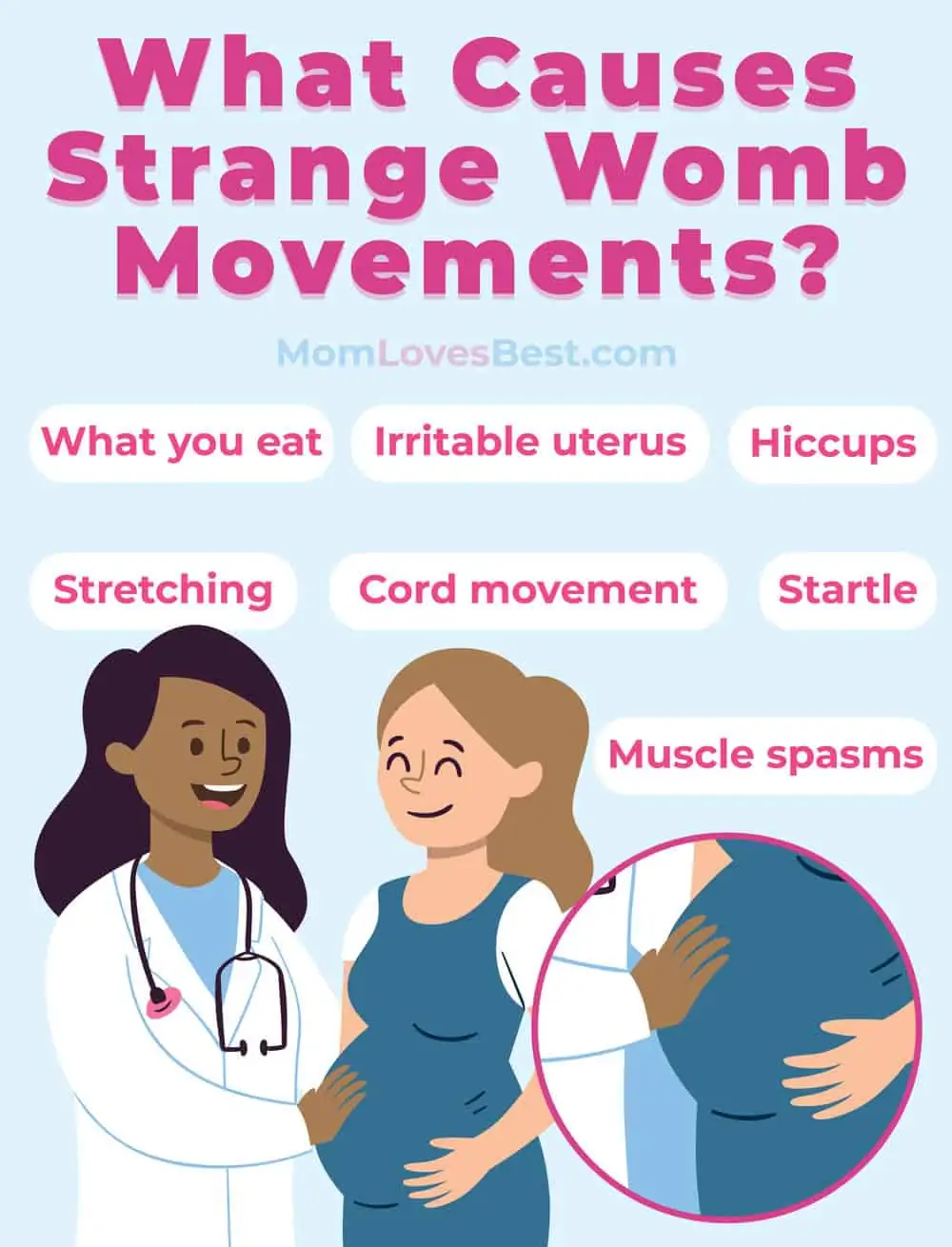
Once you learn to distinguish a kick from a twitch, the movements become less scary and more fascinating. Here is what is likely happening inside your bump (1):
- Hiccups: This is the most common cause of rhythmic twitching. As your baby practices breathing movements by inhaling amniotic fluid, their diaphragm can spasm. To you, it feels like a consistent heartbeat or a rhythmic tap in one spot. It can last for a minute or up to an hour.
- The Startle Reflex: Just like newborns, fetuses have a Moro reflex (startle reflex). If there is a sudden loud noise, like a door slamming or a dog barking, your baby might stiffen or “jump.” You will feel this as a sudden, sharp jolt.
- Muscle Spasms: Your baby’s nervous system is rapidly developing. Occasionally, their muscles will fire involuntarily as they figure out how to control their limbs. These spasms feel like quick, erratic twitches rather than strong kicks.
- Stretching: As your baby grows, real estate in the womb gets tight. When they stretch out a cramping leg or arm, it can feel like a long, rolling shudder or a scrape against your insides rather than a punch.
- Cord Entanglement: Babies float in fluid with the umbilical cord. Sometimes, they get briefly tangled or brush against it. You might feel a frantic, “thrashing” sensation as they wiggle free. While it sounds scary, babies are slippery, and the cord is designed to withstand this.
- Uterine Spasms: Sometimes the twitching isn’t the baby at all. An “irritable uterus” or Braxton Hicks contractions can cause the uterine muscle itself to spasm or tighten, which you might mistake for fetal movement.
- Sugar or Caffeine Rushes: Your diet plays a role. If you drink a cold glass of orange juice or a coffee, the sugar and temperature change can wake the baby up. They might react with a burst of jittery energy.
Keep It In Perspective
What Does It Say About Your Baby’s Health?
Movement is the best indicator of fetal well-being. Once you pass the 28-week mark, doctors generally want you to feel consistent activity.
Strange movements are rarely a bad sign. In fact, an active baby who hiccups, stretches, and reacts to noise is demonstrating healthy brain and muscle development.
Can the Twitching Be a Seizure?
This is a very common fear among expectant mothers. You feel a rapid, vibration-like motion and worry it is a seizure.
While not impossible, fetal seizures are statistically extremely rare. They are usually caused by severe congenital anomalies or genetic disorders that are typically identified during your 20-week anatomy scan.
If your ultrasounds have been normal and your doctor hasn’t raised concerns about brain development, the likelihood of your baby having a seizure in utero is incredibly low.
However, if you feel a frantic, seizure-like thrashing that feels “wrong” to you, always go to the hospital to get checked. It is better to get hooked up to a monitor for peace of mind.
What Is Normal?
“Normal” varies wildly from pregnancy to pregnancy. Some babies are chill and sleepy; others are future soccer players who never stop moving.
Eventually, you will learn your baby’s specific routine. You might notice they get the hiccups after you eat dinner, or they get the “zoomies” right when you lay down to sleep.
The type of movement will also change as they grow.
- Second Trimester: Flutters, bubbles, and erratic flips.
- Third Trimester: Strong kicks, rolls, rhythmic hiccups, and elbows dragging across your belly.
Remember
Is Your Baby Moving Too Much?
Generally, there is no such thing as “too much” movement. An active baby is a healthy baby.
However, medical professionals do look out for a specific type of movement called a “sudden, frantic increase.” If your baby suddenly starts thrashing violently in a way that is totally out of character, it can rarely be a sign of distress (2).
If you ever feel this sudden, frantic shift, or if movement stops entirely, contact your provider immediately.
Many of my patients’ questions involve concerns regarding fetal movement. I expect my patients to have regular fetal movement after 24 weeks of gestation. Ten distinct fetal movements in 2 hours is usually a reassuring sign of fetal well-being. While your baby’s movements plateau around the 32nd week of pregnancy, movements do not decrease in the third trimester. If you notice a decrease in your baby’s movements at any point, you should notify your doctor or midwife.

Editor's Note:
Caitlin Goodwin, MSN, RN, CNM
FAQs

How Many Times a Day Is Normal for Fetal Hiccups?
It varies, but feeling hiccups once or twice a day is very common, especially in the third trimester. Some babies hiccup multiple times a day, while others rarely do. Both are normal.

How Long Should Baby Hiccups Last?
Fetal hiccups typically last anywhere from one minute to an hour. If they persist for a very long time or occur constantly throughout the day, mention it to your doctor at your next checkup just to be safe.

What Is Abnormal Fetal Movement?
Abnormal movement usually refers to a lack of movement (decreased fetal activity). However, a sudden, explosive, and frantic episode of thrashing that feels different from normal activity can also warrant a checkup.

When Should I Be Concerned About Fetal Hiccups?
Hiccups are almost always harmless practice breathing. However, if you notice a sudden, drastic increase in hiccups after 28 weeks (e.g., happening 4+ times daily when they never did before), consult your provider to rule out cord compression issues.
The Bottom Line
Feeling your baby move is the highlight of pregnancy, but it can also be a source of anxiety. Remember that rhythmic twitching is usually just a case of the hiccups, and jerky spasms are often just a startle reflex or muscle development.
Trust your gut. You are the expert on your baby. If something feels “off,” or if the movement pattern changes drastically, never hesitate to call your labor and delivery unit.